
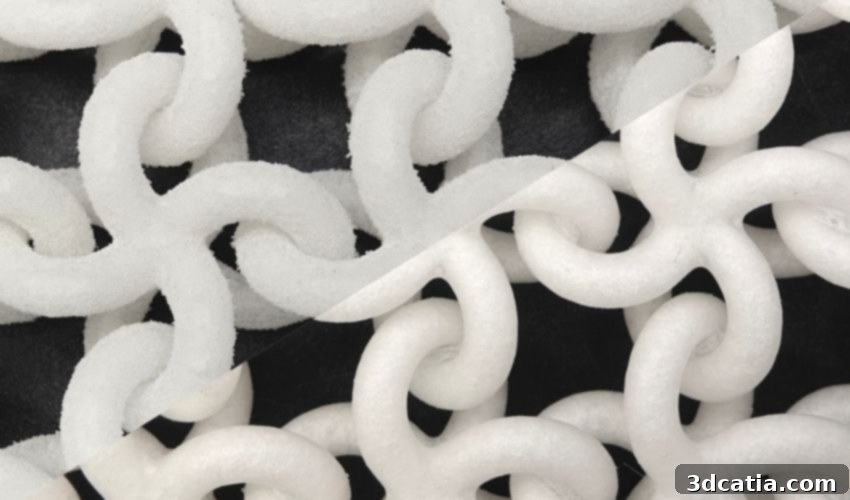
Expanding the Horizon of Industrial 3D Printing: A Deep Dive with AM Polymers on Advanced Materials for Additive Manufacturing
3D printing, once primarily a tool for rapid prototyping, has undergone a significant transformation to emerge as a robust and popular manufacturing process. Today, an increasing number of technical components for industrial purposes are being expertly crafted using additive manufacturing (AM). This evolution has brought immense benefits to a wide spectrum of industries, from the high-stakes world of automotive engineering to the rigorous demands of aerospace. However, for companies to truly harness the competitive advantages of 3D printing over conventional manufacturing methods, the choice of process alone is insufficient. The true potential of these new technologies can only be unlocked and fully realized in industrial applications through a careful and suitable selection of advanced materials.
At the forefront of this material revolution is AM Polymers, a recognized expert in the production of qualified plastic powders specifically designed for Selective Laser Sintering (SLS) and High Speed Sintering (HSS). AM Polymers stands as a pioneer in the market, dedicated to developing powder materials that exhibit properties remarkably similar to those achieved through injection molding. To gain deeper insights into the diverse material landscape available for additive manufacturing and understand how AM Polymers is expanding this critical range, we sat down with the company’s two visionary founders, Andreas Wegner and Timur Ünlü.
Meet the Innovators: Andreas Wegner and Timur Ünlü
3DN: Can you briefly introduce yourself and your connection to 3D printing?

Andreas Wegner: My journey with 3D printing began in 2007, and it’s a field that has since captivated the entire AM Polymers team, many of whom first encountered the technology during their studies or through personal 3D printer use. My doctoral research at the University of Duisburg was specifically focused on SLS and plastics. During this time, I delved deep into understanding the core technology and developing robust processes. It became clear to me early on that the existing material range for laser sintering was a significant barrier, preventing 3D printing from being utilized in numerous applications where its advantages could be truly transformative. This realization sparked my commitment to innovation, leading me to initiate the development of new, high-performance powder materials in 2012. My goal was to create materials that would open up previously inaccessible industrial applications for additive manufacturing, addressing the critical gap in the market.

Timur Ünlü: As a physics engineer, I often consider myself the “exotic” member of the AM Polymers team, yet the underlying principles of lasers, light absorption, light-solid interaction, voxels, and 3-dimensional technical orientation were all very familiar concepts to me. My deep interest in 3D printing was ignited in 2012 after reading a compelling article in the Neue Züricher Zeitung, a renowned Swiss newspaper, which highlighted the laser sintering process. At that point in my career, I was serving as the technical managing director at a Swiss polymer powder manufacturer. A key part of my role was identifying and developing new markets, which naturally led me to explore powder-based 3D printing processes. Through my scouting efforts in 2013, I discovered Andreas’ groundbreaking publications. This led to a swift and productive professional exchange, which soon became the catalyst for launching the development of industrially applicable plastic powders for 3D printing, a crucial step towards AM Polymers’ future.
Revolutionizing Industrial Additive Manufacturing with “Plug-and-Play” Materials
3DN: What mission was AM Polymers founded on?
AW: The foundational developments that emerged from my doctoral work directly led to the establishment of AM Polymers in 2014. After Timur and I successfully qualified the first materials for laser sintering in 2013, the natural progression was to consider the commercialization of these innovative powder materials. From that moment, our core mission has been clear: to offer qualified powder materials that not only boast properties closely mirroring those of injection-molded parts but also ensure exceptionally easy processing. Our primary focus is on thermoplastics traditionally utilized in injection molding. By expanding the diversity of materials available for 3D printing, we aim to significantly broaden its areas of application across various industries, making additive manufacturing a more versatile and accessible technology.
In essence, we firmly adhere to the plug-and-play philosophy for all our materials. This means that ease of processing and consistently high material quality are paramount in every stage of our development. We consider short run-in times, typically just a few days, to be an absolute mandatory requirement. We understand that prolonged and complex attempts to get materials operational on machines are a source of frustration for users. Such difficulties can unfairly tarnish the reputation of alternative materials when compared to widely accepted options like PA12 and PA11, thereby hindering the crucial market adoption and expansion into new application areas. Our approach ensures a smooth integration and immediate utility for our customers.
Leveraging over two decades of accumulated experience, we are uniquely positioned to provide material solutions that are not only easy to process but also compatible with all common plant systems. We view ourselves as much more than mere suppliers of powder materials; we are providers of comprehensive material solutions. This includes not only the advanced powders themselves but also the essential processing know-how required to optimize their use and achieve superior results in additive manufacturing.
TÜ: Exactly. The astonishing fact that for an extended period, almost 25 years, PA12 remained virtually the sole material truly suitable for the laser-sintering process was a critical motivating factor for us. This glaring limitation propelled us to address the pressing demand for genuine injection-molding-grade polymers within the additive manufacturing space. We recognized the immense untapped potential that could be unlocked by offering a wider array of high-performance materials.
Unleashing the Potential of SLS and HSS with a Broad Polymer Range
3DN: Can you tell us a little more about the range of your materials and their compatibility with 3D printing processes?
AW: AM Polymers currently offers an exceptionally wide and continuously expanding range of materials tailored for selective laser sintering and high-speed sintering. Our overarching objective is to make as many well-known and reliable materials as possible available for the additive manufacturing industry. Beyond the classic and widely used PA12 and PA11, our portfolio now includes a significant selection of standard thermoplastics and high-performance engineering plastics. This includes materials such as Polyethylene (PE), Polypropylene (PP), Thermoplastic Polyurethane (TPU), Polybutylene Terephthalate (PBT), Polyamide 6 (PA6), and Polyamide 66 (PA66). This extensive range ensures that designers and engineers have access to the right material for a broad array of applications, pushing the boundaries of what’s achievable with 3D printing.
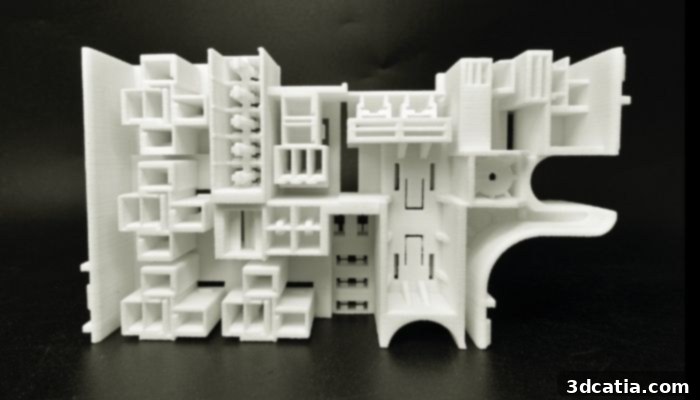
A 3D printed component made of ROLASERIT® PBT01 polyethylene terephthalate powder
TÜ: With a portfolio comprising eight distinct base polymers, AM Polymers proudly offers the broadest and most comprehensive material selection for selective laser sintering available on the market today. This extensive offering is further enriched by additional variants, which include options with or without various fillers, specifically designed to meet highly specialized application requirements. Moreover, recognizing the unique demands of our clients, we are also equipped to offer customized materials tailored precisely to customer specifications. We don’t just supply powders; we see ourselves as true AM system engineers, bringing unparalleled expert knowledge across the critical fields of polymer science, powder technology, and process optimization. This holistic approach ensures our clients receive not just a product, but a complete material solution.
Game-Changing Materials: PA66 and PBT for Series Production
3DN: With the materials PA66 and PBT, you have expanded the once very limited range of materials for series production in laser-sintering. What are the benefits of this for the market?
AW: The materials market for additive manufacturing has historically been heavily dominated by PA12 and PA11. However, for a vast array of technical applications, traditional manufacturing overwhelmingly relies on materials like PA6 and PA66, which often outperform PA12 and PA11, as well as higher-end polymers like PEK or PEKK, in terms of specific performance characteristics. Consequently, many classic application areas, despite their innovative potential in sectors such as automotive, aerospace, electronics, electrical engineering, and mechanical engineering, have remained largely inaccessible to additive manufacturing due to a critical lack of suitable materials. With the introduction of PA6, PA66, and PBT, AM Polymers effectively closes this crucial material gap. We can now offer a broad spectrum of materials that boast superior mechanical properties compared to PA12, all while maintaining an efficient and competitive price point. This expansion unlocks significant new possibilities for industrial 3D printing.
Our ROLASERIT® PA66-01 represents a groundbreaking achievement: for the first time ever, a PA66 powder material is available for the laser-sintering process. Compared to other polymers, PA66 is particularly distinguished by its exceptional high heat distortion and aging resistance, making it ideal for demanding environments. Simultaneously, this material exhibits impressive hardness and stiffness, coupled with excellent abrasion resistance, ensuring long-lasting performance. ROLASERIT® PA66-01 was meticulously developed as a flame-retardant material in a close and successful collaboration with industry giants Airbus and Siemens. It underwent rigorous testing and was successfully validated for the production of demonstrators intended for critical applications in both the aerospace and electronics industries, proving its reliability and performance under stringent conditions.
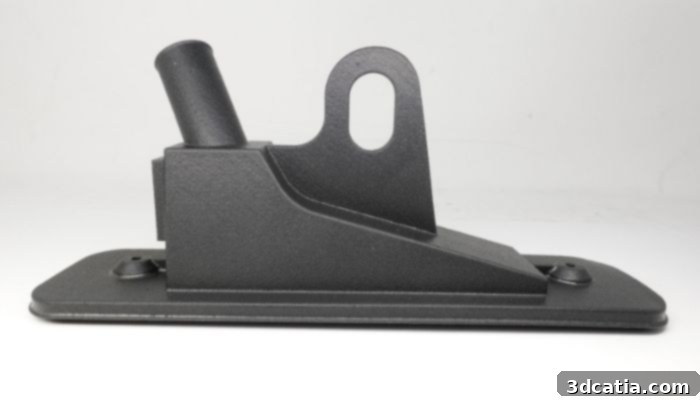
AIRBUS temperature sensor holder made of ROLASERIT® PA66-01 polyamide 6.6 which was printed and chemically smoothed
TÜ: Building on our innovative spirit, a further significant new development involved the creation of various PBT grades specifically engineered for use in laser sintering. This breakthrough was achieved through a productive collaboration with MITSUBISHI CHEMICAL. As a polymer, PBT is highly valued for its excellent sliding and wear properties, which makes it ideal for components subjected to friction. It also offers superior electrical insulation properties that remain robust and independent of moisture absorption, a critical feature for electronic applications. Furthermore, PBT is known for its high dimensional stability, ensuring parts retain their precise shape and size under various conditions. Typical applications that significantly benefit from these properties include plain bearings, valve moldings, rollers, pump housings, impellers, and couplings. Notably, PBT is an outstanding material for the electrical industry, commonly used in coilformers, terminal blocks, and plug connectors, where its insulation and stability are paramount.
From Prototypes to Production: Impactful 3D Printing Applications
3DN: Can give us some application examples in more detail for our readers?
TÜ: Sharing specifics about current applications can often be challenging, as they frequently involve proprietary developments that provide our customers with a crucial competitive edge. However, we are proud to confirm that our advanced PBT material has already successfully found its place in demanding applications within the automotive sector and is on track to be utilized in series production very soon. This adoption signifies a major milestone, demonstrating PBT’s reliability and performance for high-volume, critical components in the automotive industry.
AW: Indeed, another compelling example of our materials’ impact can be seen with our PP (Polypropylene). Since 2017, this material has been successfully employed in the production of automotive brake fluid tanks. This application allows nearly all global OEMs to benefit from the unparalleled design flexibility and efficiency offered by 3D printing. Furthermore, our elastic TPU material has become firmly established in the production of robot grippers for manufacturing lines. In this particular application, the selective laser sintering process proved to be a significantly more cost-effective and faster method for manufacturing these intricate robotic grippers compared to traditional techniques. For those interested in seeing this innovation in action, a video demonstrating the production of these grippers is available at the conclusion of this article.
3DN: How do you plan to expand the AM Polymers product range in the future? Are there plans to collaborate with existing/new users?
AW: Our commitment to innovation is unwavering, and we currently have several exciting new materials in various stages of development. These upcoming additions include not only reinforced and flame-retardant versions of existing polymers, designed to meet even more stringent performance and safety requirements, but also entirely new polymer variants. Our development roadmap is heavily influenced by direct customer feedback and market demand; we prioritize the materials that our customers most frequently request and need. Therefore, readers can certainly anticipate a continuous stream of cutting-edge materials from AM Polymers in the near future, further expanding the possibilities of additive manufacturing.
TÜ: Absolutely. We engage in a wide array of collaborations with equipment manufacturers, material processors, and end-users. Beyond the critical task of introducing new materials to the market, a significant portion of our work involves developing highly customized material solutions tailored to specific customer applications. In many instances, the primary focus of these collaborations is on facilitating series applications with larger production quantities. Our aim is to seamlessly transition from materials traditionally used in injection molding to their 3D printable counterparts, enabling high-volume production with the benefits of additive manufacturing. This collaborative approach ensures that our material innovations directly address real-world industrial needs and accelerate the adoption of 3D printing for critical manufacturing processes.
Experience the Future of Additive Manufacturing at Formnext 2021
3DN: AM Polymers will have a booth at Formnext, where can visitors find it and what can they expect there?
AW: We are thrilled to be back at Formnext! Visitors will find our booth conveniently located in hall 12.1, stand G127. At our booth, visitors can expect to discover the widest and most diverse range of materials available for selective laser sintering on the market today. We will be showcasing the incredible variety of possibilities that our materials offer, presenting numerous application examples and demonstrating their unique properties. Our expert team will be on hand to provide personalized advice, helping you determine which material is best suited for your specific application requirements and guiding you toward the optimal approach, service, or system technology to achieve the best solution for your needs. It’s a fantastic opportunity to see our innovations firsthand and engage with our specialists.
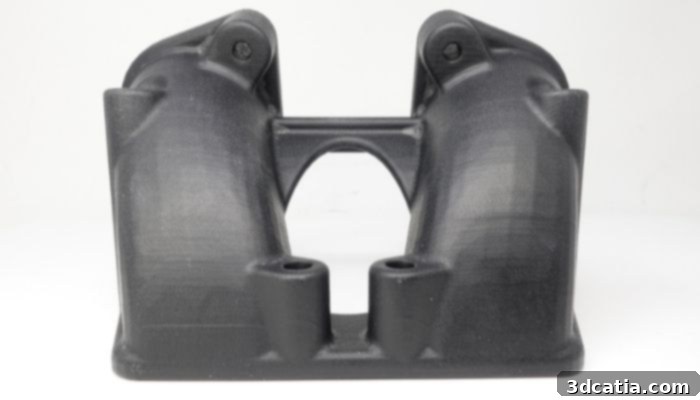
A manifold made of ROLASERIT® PA6-01 polyamide 6 powder printed and chemically smoothed
TÜ: In addition to the comprehensive display at our booth, Andreas will be delivering a compelling presentation titled “Availability of the traditional injection molding plastics PA66, PBT and PP for powder bed fusion as an enabler for new applications of additive manufacturing.” This presentation promises invaluable insights into how these advanced materials are unlocking entirely new application frontiers for additive manufacturing. We strongly recommend attending his presentation, which will take place at the TCT Introducing Stage @ Formnext, located in Hall 12 Level 0, E41 on November 16, 2021, from 14:40 to 15:00. It’s an opportunity not to be missed for anyone interested in the future of industrial 3D printing materials.
The Transformative Power of Material Diversity in 3D Printing
3DN: Do you have any final words for our readers?
TÜ: It’s crucial for our readers to understand that the world of polymer powder-based 3D printing is not confined to just a few handfuls of materials. We are entering an exciting era where the diversity of materials is set to increase rapidly in the coming years. This material expansion will enable 3D printing to make an even more significant contribution to fulfilling the goals of decentralized plastic parts production and, crucially, to enhancing associated sustainability efforts. The ability to produce a wider range of parts locally and on demand will revolutionize supply chains and reduce environmental impact.
AW: After a two-year hiatus, we are absolutely delighted to reconnect with the 3D printing industry live and in person at Formnext 2021. We have genuinely missed the engaging conversations and insightful discussions that take place at such events. We warmly invite you to visit us spontaneously at our booth to explore our latest innovations, or feel free to contact us via in**@*********rs.de to schedule a dedicated appointment. You can also find more comprehensive information about our company and our cutting-edge material solutions on our official website HERE. We look forward to connecting with you and exploring how AM Polymers can help advance your additive manufacturing capabilities.
Will we see you at the AM Polymers booth at Formnext? Let us know in a comment below or on our Linkedin, Facebook, and Twitter pages! Don’t forget to sign up for our free weekly Newsletter here, the latest 3D printing news straight to your inbox! You can also find all our videos on our YouTube channel.