
From Peel to Print: Carlo Ratti’s ‘Feel the Peel’ Project Creates Sustainable 3D Printed Cups
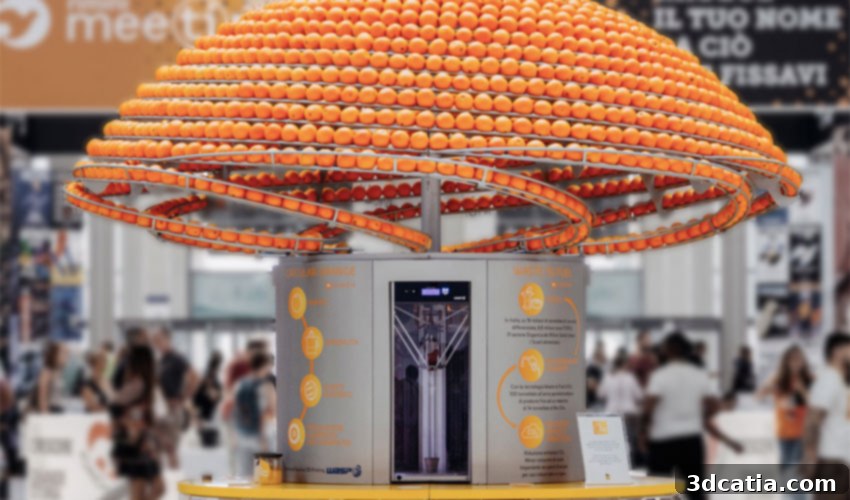
Imagine savoring a refreshing orange juice, not from a conventional plastic cup, but from a vessel uniquely crafted from the very peels of the oranges you just consumed. This visionary concept is at the heart of “Feel the Peel,” an innovative juice bar developed by renowned architect and innovator Carlo Ratti. More than just a simple beverage dispenser, this groundbreaking machine is a powerful statement on sustainable design and the circular economy, demonstrating how everyday food waste can be transformed into valuable, functional objects right before our eyes. The project successfully redefines our understanding of waste, turning it into a resource for practical, bio-based products.
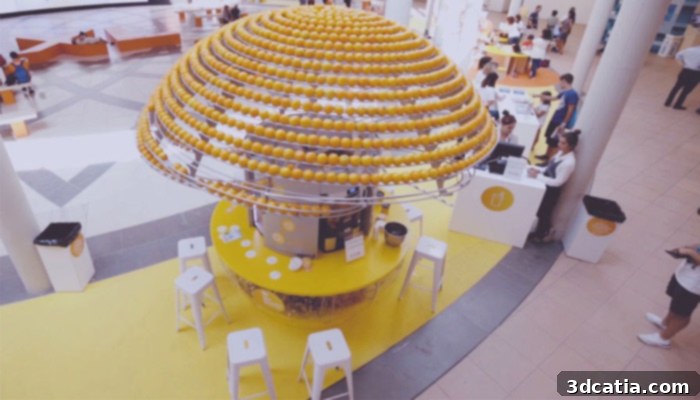
Feel the Peel serves as an experimental public installation, designed not only to quench thirst but also to educate and inspire. Standing at an impressive 3.10 meters tall, the device has been strategically placed in various locations to allow numerous visitors to experience this unique process firsthand. Each freshly squeezed orange juice is served in a small, yet sturdy, 3D printed bioplastic cup, entirely derived from the discarded orange peels. This direct, tangible interaction makes the abstract concept of the circular economy remarkably concrete, showcasing a closed-loop system where waste from one process becomes the raw material for another.
The burgeoning field of 3D printing is continuously expanding its material horizons beyond conventional plastics. While the recycling of traditional plastics into new filaments is a well-established practice, a significant paradigm shift is occurring with the integration of organic and food waste materials. This innovation opens up a vast new realm of possibilities for sustainable manufacturing. After undergoing rigorous transformation processes, various types of food waste can be converted into original, durable, and environmentally friendly materials for 3D printing. A prime example of this ingenuity is the Dutch project Upprinting Food, which champions the valorization of discarded produce. This initiative ingeniously transforms rotten fruits, vegetables, and stale bread into appetizing and nutritious 3D printed dishes, effectively combating food waste while creating culinary delights. In the case of “Feel the Peel,” Carlo Ratti’s team ingeniously focused on the abundant and often overlooked waste product of orange peels, turning what was once destined for the bin into a resource for new products.
Credits: Nicola Giorgetti
The engineering marvel behind “Feel the Peel” is a testament to sophisticated design and practical application. The towering 3.10-meter machine is engineered to hold an impressive capacity of up to 1,500 oranges, creating a visually striking display of potential resources. A distinctive dome-shaped reservoir at the top allows citrus fruits to gravity-feed into the system. Upon a customer’s order, a designated orange slides seamlessly into the integrated citrus press. Here, it is expertly cut in half, and its fresh juice is extracted, while the discarded peels gracefully fall into the lower chamber of the machine, gradually accumulating. This collection process is critical to the machine’s circular function. Once collected, these peels are not simply disposed of; instead, they embark on a transformative journey. They are first dried thoroughly to remove moisture, then meticulously crushed into a fine powder. This organic powder is then ingeniously combined with polylactic acid (PLA), a biodegradable and biocompatible thermoplastic, to create a robust and printable bioplastic material. This innovative composite is then extruded into a filament, which acts as the ‘ink’ for the integrated 3D printer.
The custom-designed 3D printer, cleverly housed within the large juicer apparatus itself, was developed by the renowned Italian manufacturer WASP. WASP is a pioneer in sustainable 3D printing solutions, known for its commitment to circular economy projects, exemplified by their groundbreaking Gaia house, which uses local earth for construction. This collaboration ensures that the cups produced are not only functional but also align with the highest standards of eco-conscious manufacturing. The 3D printer works diligently, layer by layer, to construct durable and fully recyclable cups. These cups are then immediately ready for use, allowing patrons to enjoy their freshly squeezed orange juice in a truly sustainable vessel, closing the loop from fruit to cup in a matter of minutes. This entire automated process not only minimizes human intervention but also maximizes efficiency, making the concept of waste-to-product incredibly streamlined and accessible.
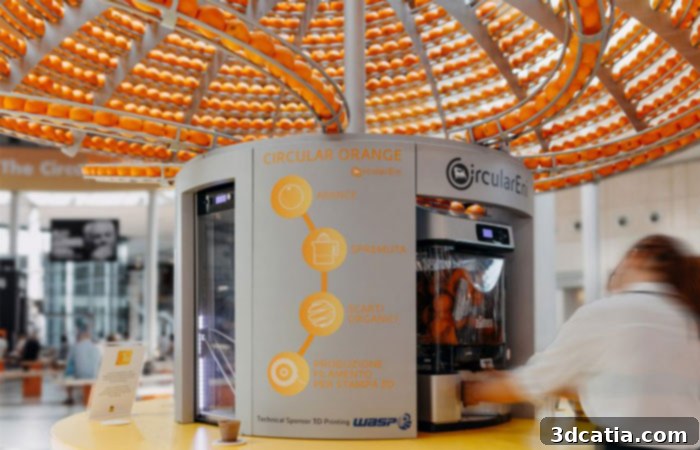
The machine can contain up to 1,500 oranges | Credits: Nicola Giorgetti
Carlo Ratti eloquently articulates the driving philosophy behind this project: “The principle of circularity is an imperative for today’s objects. We have tried to show it in a very concrete way, by developing a machine that helps us understand how oranges can be used far beyond their juice. Future iterations of Feel the Peel could include new features, such as printing fabrics to create orange peel clothing.” This statement underscores the project’s ambition to go beyond merely addressing a single waste stream. It aims to fundamentally shift perceptions, encouraging a deeper understanding of how materials can be endlessly reutilized and revalorized. Ratti’s vision for future iterations, such as transforming orange peels into sustainable fabrics for clothing, highlights the immense, untapped potential of bio-waste as a versatile raw material for various industries. This foresight positions “Feel the Peel” not just as a juice bar, but as a pioneering prototype for future sustainable manufacturing models that could impact textiles, packaging, and even construction.
The impact of “Feel the Peel” extends far beyond its innovative mechanics; it serves as a powerful educational tool. By making the intricate process of waste transformation visible and interactive, it helps demystify the circular economy for the general public. It’s an engaging way to raise awareness about the environmental challenges of food waste and the creative solutions offered by advanced manufacturing technologies like 3D printing. To further disseminate this crucial message, the experimental juice bar is embarking on a tour across Italy. This strategic deployment allows a broader audience to witness the magic of “Feel the Peel” firsthand, fostering a greater appreciation for sustainable practices. One of its significant stops included the Singularity University Summit in Milan on October 8 and 9, 2019, where it captivated an audience of innovators, entrepreneurs, and thinkers, stimulating discussions on the future of sustainable technology and design. These public appearances are vital in inspiring individuals and industries to reconsider their relationship with waste and embrace circular solutions. For more detailed information on Carlo Ratti’s visionary work, you can explore his official website HERE.
The “Feel the Peel” project by Carlo Ratti represents a remarkable fusion of architectural ingenuity, technological innovation, and environmental responsibility. It’s a compelling example of how creative thinking can tackle pressing global issues like waste management and resource depletion. By transforming discarded orange peels into functional 3D printed cups, the project not only offers a sustainable alternative to single-use plastics but also sparks critical conversations about material cycles and product lifespans. This pioneering effort encourages us to look at everyday waste not as an end, but as a beginning—a valuable resource brimming with potential for a more sustainable future. This type of tangible demonstration of the circular economy is crucial for driving widespread adoption and inspiring the next generation of eco-innovators. What are your thoughts on this inspiring initiative and its potential to reshape our approach to sustainability? We encourage you to share your perspective. Leave a comment below or join the conversation on our Facebook and Twitter pages! Don’t forget to sign up for our free weekly Newsletter to receive all the latest news and innovations in the world of 3D printing directly to your inbox!