
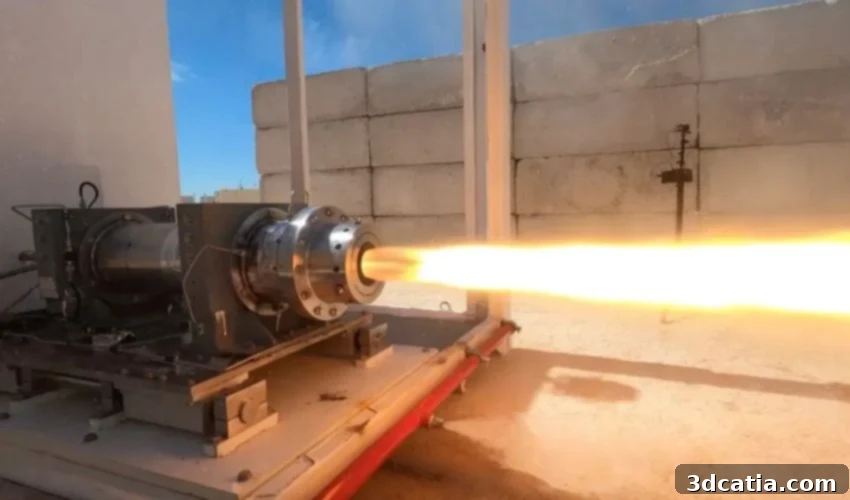
Firehawk Aerospace Secures $60M for 3D Printed Rocket Fuel Revolutionizing Defense and Space
Firehawk Aerospace, a pioneering Dallas-based defense technology company, has recently garnered significant attention and capital, announcing a successful $60 million Series C investment round. This substantial funding, spearheaded by 1789 Capital, underscores the growing confidence in Firehawk’s groundbreaking approach to solid rocket propulsion. The company’s core mission centers on enabling the next generation of defense systems through advanced solid rocket motors, powered by their uniquely additively manufactured propellant. Firehawk asserts that its innovative 3D printing process yields a propellant that is not only more cost-effective and faster to produce than conventional alternatives but also boasts enhanced safety, reliability, and superior performance characteristics. This strategic investment positions Firehawk Aerospace at the forefront of a technological revolution, promising to redefine capabilities in both defense and space exploration.
Strategic Investment and the Rise of the Parallel Economy
The $60 million Series C investment is a landmark achievement for Firehawk Aerospace, signaling strong investor belief in its proprietary 3D printing technology for solid rocket fuel. Leading this significant funding round is 1789 Capital, a firm making its inaugural foray into defense tech ventures with this $15 million contribution. The deal, which also includes substantial checks from other prominent firms such as Draper Associates and Boka Capital, is expected to finalize this month. 1789 Capital, founded in 2023 by Omeed Malik and named in homage to the year the Bill of Rights was ratified, stands out for its distinctive investment philosophy. The firm explicitly targets non-“woke” companies, aiming to cultivate a “parallel economy” as an alternative to businesses perceived as aligned with the “woke” agenda. Its official website emphasizes a commitment to “Entrepreneurship, Innovation and Growth” and proudly identifies as “Anti-ESG,” a stance that rejects investment principles prioritizing environmental, social, and corporate governance issues. Adding further prominence to the firm, Donald Trump Junior, son of President-elect Donald Trump, recently joined 1789 Capital as a partner, amplifying its profile and specific ideological alignment. This investment therefore transcends mere financial backing, carrying notable implications regarding broader economic and political currents.
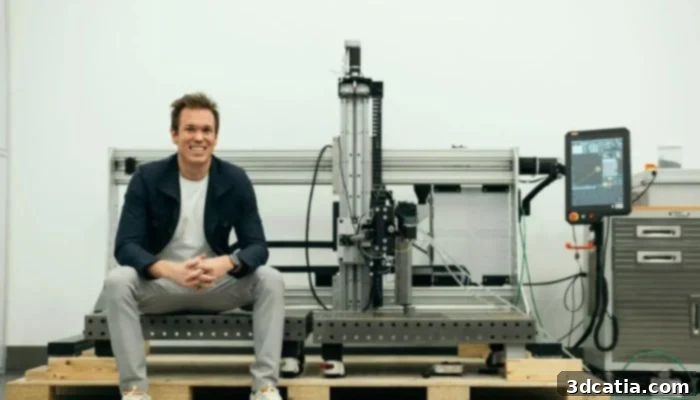
Firehawk Aerospace CEO and founder Will Edwards
The Blurring Lines: Aerospace, Defense, and Funding Innovation
The realms of aerospace and defense, while distinct in their primary objectives, share an inherent technological overlap, particularly when it comes to propulsion systems. Rocket fuel, fundamentally, powers both peaceful space exploration and military ordnance such as missiles. This duality presents a unique challenge and opportunity for companies operating in this space. Firehawk Aerospace CEO and founder Will Edwards candidly explained in a 2023 interview with Space Insider that successfully navigating this landscape for funding requires deliberately blurring the lines between the two sectors. His provocative statement, “Every space company is a defense company,” encapsulates this strategic perspective. For Edwards, highlighting the inherent overlap between space and defense is crucial for attracting investors, especially since purely futuristic space endeavors might not offer the immediate, near-term revenue opportunities that many venture capitalists seek. By demonstrating the applicability and critical importance of their propulsion technology to national defense, Firehawk can tap into a broader and more urgent pool of investment.
Firehawk Aerospace’s strategic focus is unequivocally aligned with serving the United States’ national interests. Edwards affirmed this commitment to Forbes, stating, “My big investors in later stage happen to be politically outspoken, [but] we do have investors on the cap table who are pretty far left…there’s no motive beyond doing what’s best for our country, and our company.” This sentiment underscores the company’s non-partisan dedication to advancing American defense capabilities. Omeed Malik of 1789 Capital further elaborated on his firm’s motivations for investing in Firehawk, highlighting a critical strategic need. “There’s a missile shortage in the United States,” Malik told Forbes, emphasizing, “This is part of a defense tech investment that enhances the security and competitiveness of the United States.” This perspective positions Firehawk’s 3D printed rocket fuel as a vital component in addressing national security challenges and bolstering the country’s defense infrastructure, making the investment not just about technological innovation but also about geopolitical strategy.
The Game-Changing Technology: Why 3D Print Rocket Fuel?
Rocket fuel is fundamental to achieving “delta V,” the critical change in relative velocity necessary for a rocket to fire and propel through space. Traditionally, propellants come in two main forms: liquid, which can boil off and requires complex storage, and solid, which are typically single-use and often manufactured through labor-intensive casting and curing processes. Firehawk Aerospace has engineered a revolutionary hybrid approach, developing a thermoplastic-based solid propellant system that leverages the power of additive manufacturing. This innovative method promises to dramatically increase efficiency and mitigate the chronic supply chain constraints that plague traditional rocket fuel production.
Dr. Justin Karl, Chief Engineer at Firehawk Aerospace, shed light on the technical brilliance behind their method in the same Space Insider interview. He explained, “Our 3D printing is really just fancy plastics that have roughly the same chemical makeup as the fuels that have been used for decades and decades, but they perform better because you can tailor those surfaces perfectly. …[Using] layer by layer deposition, there’s no chance of getting gaps or bubbles or any deficiencies.” This precise control offered by 3D printing allows for custom geometries and internal structures within the propellant grain that are impossible to achieve with traditional casting. Such tailored designs can optimize burn rates, thrust profiles, and overall performance, leading to more efficient and powerful rocket motors. The elimination of imperfections like gaps or bubbles, common in cast propellants, significantly enhances safety and reliability by preventing catastrophic failures that can arise from inconsistent combustion.
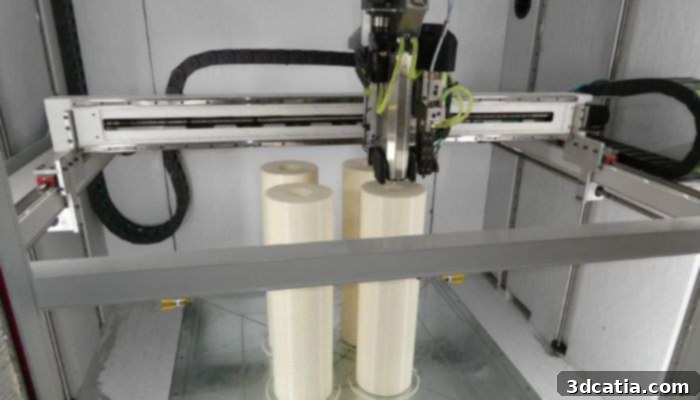
Firehawk’s 3D printer
From Concept to Battlefield: Real-World Applications and Advantages
The practical implications of Firehawk’s 3D printed rocket fuel technology are profound. Current methods for producing rocket engine propellant, involving casting and curing, can extend over two months, making rapid response and large-scale production challenging and expensive. In stark contrast, Firehawk asserts that its revolutionary propellant can be manufactured within mere hours, utilizing an off-the-shelf 3D printer. This dramatic reduction in production time signifies a paradigm shift in the industry. Furthermore, the portability of this manufacturing process is a game-changer. The fuel can be produced in virtually any location capable of accommodating a standard 20 by 40-foot shipping container, including, critically, on the battlefield itself. This capability promises unprecedented logistical flexibility, reduced reliance on vulnerable supply chains, and the ability to produce mission-critical components exactly where and when they are needed. Such on-demand manufacturing greatly enhances military readiness and responsiveness, offering a significant strategic advantage in modern defense operations.
Forging Alliances: Government and Commercial Partnerships
A cornerstone of Firehawk Aerospace’s rapid ascent and impressive success lies in its robust network of partnerships. CEO Will Edwards emphasized this point in his 2023 interview with Space Insider, stating, “We have some of the biggest companies in the world coming into our facilities, that we’re [then] working with and securing large contracts through our partnership approach.” These strategic collaborations have only continued to expand, solidifying Firehawk’s position within the defense and aerospace ecosystems. Notable partnerships include a pivotal trial contract with the Army Applications Laboratory, ongoing development work with industry giant Raytheon, and crucial trials conducted with both the Air Force Research Laboratory and NASA. These alliances not only provide Firehawk with invaluable resources and testing capabilities but also validate the efficacy and potential of their 3D printed propulsion technology across diverse applications, from terrestrial defense to ambitious space missions. Such high-profile collaborations are instrumental in de-risking the technology and paving the way for its widespread adoption.
The Future of Propulsion: Firehawk’s Ambitious Vision
Looking to the future, Will Edwards articulated a bold and uncompromising vision for Firehawk Aerospace to Forbes, reflecting the high stakes and transformative potential of their technology. “Either Firehawk is going to be the company that makes 3D printing solid propellant the industry standard,” Edwards declared, “or we’re going to shut our doors.” This statement underscores the company’s unwavering commitment to fundamentally reshaping the rocket propellant landscape. Firehawk’s ambition is not merely to offer an alternative but to establish 3D printed solid propellant as the prevailing norm across the aerospace and defense sectors. This pioneering spirit, combined with significant investment and strategic partnerships, positions Firehawk Aerospace as a formidable innovator poised to deliver on its promise of cheaper, faster, safer, and higher-performing rocket propulsion. Their success could herald a new era of manufacturing agility and performance for both national security and the commercial space industry, truly revolutionizing how we power our rockets into the future.
What are your thoughts on Firehawk’s 3D printed rocket propellant and its potential impact on defense and space? We encourage you to share your insights in a comment below or join the conversation on our LinkedIn, Facebook, and Twitter pages! For more comprehensive coverage on the aerospace and defense sectors within additive manufacturing, explore our dedicated landing page. Don’t miss out on the latest advancements; sign up for our free weekly Newsletter here to receive breaking 3D printing news directly in your inbox! You can also discover all our insightful videos on our YouTube channel.
*All Photo Credits: Firehawk