
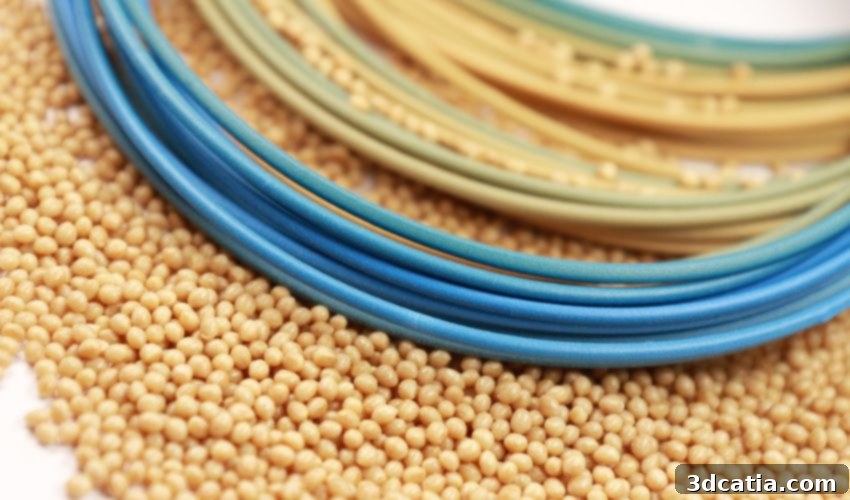
Revolutionizing Electronics: Fraunhofer’s Flame-Retardant Bioplastics for 3D Printing and Sustainable Innovation
In the rapidly evolving fields of electrical engineering and electronics, the demands placed on material properties are exceptionally high. Foremost among these requirements is flame resistance, a critical safety feature essential for preventing fires and ensuring the longevity and reliability of electronic components and systems. Traditionally, conventional plastics have been the go-to materials, offering robust performance in meeting stringent flame retardancy standards. However, with a growing global emphasis on sustainability and environmental responsibility, the industry is increasingly seeking greener alternatives.
This imperative raises a crucial question: can bioplastics, derived from renewable resources, also deliver the necessary flame-retardant properties to compete with their petroleum-based counterparts? This very challenge has been at the heart of groundbreaking research conducted by experts at the Fraunhofer Institute for Wood Research (WKI) and the Fraunhofer Institute for Applied Polymer Research (IAP). In a collaborative effort with various industrial partners, these institutes have not only successfully developed innovative flame-retardant bioplastics but have also demonstrated their remarkable compatibility with advanced manufacturing techniques, including additive manufacturing (more commonly known as 3D printing). This significant achievement marks a pivotal moment for sustainable materials in high-tech applications.
Pioneering Bio-Based Flame Retardants: Addressing a Critical Gap
Before the recent breakthroughs by the Fraunhofer Institutes, the scientific community faced a considerable hurdle: there was no widely recognized or commercially viable bio-based flame retardant suitable for the large-scale development of high-performance bioplastics. This absence presented a significant impediment to integrating sustainable materials into critical sectors like electrical and electronic manufacturing, where safety regulations are paramount. The research initiative was thus launched with a clear objective: to develop novel, effective, and environmentally friendly flame retardant solutions.
The primary focus of the Fraunhofer team was on identifying and synthesizing a halogen-free flame retardant. Halogenated flame retardants, while effective, have raised environmental and health concerns due to their potential to release toxic substances during combustion or at the end of a product’s life cycle. Shifting to halogen-free alternatives aligns perfectly with modern sustainability goals and regulatory trends aimed at reducing hazardous materials. Furthermore, the researchers prioritized a solution that would be extremely cost-effective, particularly given that flame retardants are typically needed only in very small quantities to achieve the desired effect. This economic viability is crucial for the widespread adoption of such innovations in industrial applications.
The initial phase of this ambitious research project, aimed at developing bio-composite materials suitable for both electrical engineering and electronics, concentrated on the fundamental chemistry: the production of new, bio-based flame retardants from the ground up. To achieve this, scientists performed intricate syntheses primarily utilizing bio-based alcohols and phosphorus-containing compounds. Phosphorus-based flame retardants are known for their efficiency and increasingly favored as an eco-friendlier alternative to halogenated substances. By integrating these phosphorus compounds into bio-based alcohols, the team successfully created novel molecular structures that could impart flame resistance to bioplastics without compromising their bio-origin or introducing harmful elements. This meticulous chemical engineering laid the groundwork for the subsequent material development phases, promising a future where high-performance electronics can be built with both safety and sustainability in mind.
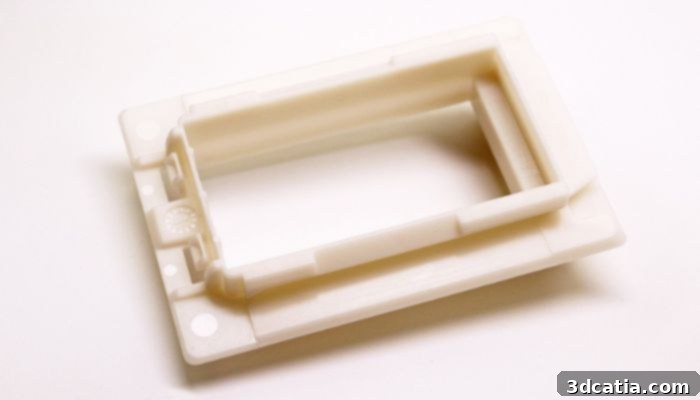
Together with Hager Electro, for example, they produced a tunnel slide made of flame-retardant polybutylene succinate (PBS) (photo credits: Fraunhofer WKI | Manuela Lingnau)
Advanced Processing for Enhanced Bioplastic Performance
The journey to develop functional flame-retardant bioplastics extends beyond merely synthesizing the active flame retardant agent. A critical step involves ensuring that this agent is uniformly distributed and effectively integrated within the biopolymer matrix. Achieving this seamless integration is paramount, as an uneven distribution would compromise the material’s overall flame resistance. For biopolymers like Polylactic Acid (PLA), which was a key focus of this research, conventional mixing methods often prove insufficient to create the necessary homogeneous structure required for high-performance applications.
To address this challenge and ensure proper bonding of the flame retardant to the biopolymer matrix, the Fraunhofer researchers employed an advanced technique known as electron beam crosslinking. This non-thermal process involves exposing the material to a beam of high-energy electrons, which induces chemical crosslinks within the polymer chains. These crosslinks significantly alter the material’s properties, improving its mechanical strength, thermal stability, and, crucially, facilitating a more effective and durable incorporation of the flame retardant. While electron beam crosslinking is a well-established and common process for traditional plastics, its application to bioplastics, particularly for enhancing flame retardancy, is relatively novel and less proven. The team’s pioneering work in this area required extensive research into modifying the inherent properties of biopolymers to make them amenable to this advanced processing method, thereby unlocking new possibilities for their industrial use.
Achieving Dual Performance: Flame Retardancy and Heat Resistance
The stringent requirements for materials used in electrical engineering and electronics demand more than just flame retardancy; they also necessitate high heat resistance. Components must be able to withstand operational temperatures without deforming, degrading, or losing their insulating properties. Therefore, the Fraunhofer team faced the dual challenge of developing bioplastics that were not only flame-retardant but also possessed enhanced thermal stability. This complexity required a meticulous approach to material formulation and extensive iterative testing.
After countless experiments and detailed analyses, the researchers successfully developed specific formulations for two key bioplastics: Polylactic Acid (PLA) and Polybutylene Succinate (PBS). These new formulations met the critical flame retardancy requirements while simultaneously demonstrating improved heat resistance. This breakthrough significantly broadens the potential applications for these bioplastics, making them viable contenders for use in environments where both fire safety and thermal performance are crucial. The research confirmed that these advanced materials could be effectively processed using both additive manufacturing (3D printing) and traditional injection molding techniques, thereby opening up a vast number of new applications across various industries.
Rigorous Validation through Industry-Standard Testing
To ensure that the newly developed bioplastics met the highest industry standards for electrical and electronic applications, the Fraunhofer team subjected their materials to a comprehensive suite of rigorous tests. These tests are internationally recognized and critical for validating the safety and performance of materials in demanding environments:
- UL94 Testing: This widely recognized standard measures a material’s ability to extinguish or spread flames once ignited. The tests classify materials based on factors such as burning time, dripping characteristics, and whether they self-extinguish or continue to burn. Achieving a high UL94 rating is essential for electronic enclosures and components, indicating superior fire safety.
- Glow-Wire Testing: Particularly relevant for electrical products, glow-wire testing evaluates a material’s tendency to resist ignition, self-extinguish flames, and, importantly, its ability not to spread or propagate fire via dripping. This test simulates the heat effects of overloaded or faulty electrical components, making it crucial for materials intended for electrical housings and insulation.
- Tracking-Resistance Testing: This test assesses the resistance of insulating materials to the formation of conductive paths (tracking) on their surface under electrical stress in the presence of contaminants. Tracking can lead to electrical breakdowns and fires, so high tracking resistance is vital for the safety and reliability of electrical components.
The successful performance of the Fraunhofer bioplastics in these demanding tests unequivocally validates their suitability for a wide array of applications in electrical engineering and electronics. This means that sustainable, bio-based materials can now reliably replace conventional plastics in critical components, contributing significantly to a greener and safer technological future.
Future Directions and Scaling Up Production
Despite the remarkable successes achieved in the laboratory, the journey from pioneering research to widespread industrial application often involves further developmental steps. Dr. Arne Schirp, project manager at the Fraunhofer WKI, emphasizes this point in his summary: “The formulations on the basis of Bio-PA have so far only been processed on a small scale in the laboratory compounder and mini injection molding. Further research is therefore required in order to find out how processing can be achieved using twin-screw extruders and in injection molding. Optimization of the flame-retardant PA-based compounds should also be carried out with regard to the entire range of requirements from the electrical engineering and electronics.”
This statement highlights the ongoing commitment to refine and scale up the technology. Moving from laboratory-scale equipment to industrial-scale machinery, such as twin-screw extruders and larger injection molding machines, presents unique challenges that require dedicated research and optimization. These larger machines operate under different conditions (e.g., higher shear forces, longer residence times) that can affect material properties and processing characteristics. Therefore, adapting the existing formulations and developing new processing parameters are crucial steps toward commercialization.
Furthermore, the optimization of flame-retardant polyamide (PA)-based compounds is a key focus. Polyamides are renowned for their excellent mechanical properties and high-temperature resistance, making them highly desirable for various engineering applications. Integrating effective flame retardancy into bio-based PA variants would open even more doors for sustainable high-performance materials. The goal is to ensure that these compounds meet the full spectrum of rigorous requirements demanded by the electrical engineering and electronics industries, which encompass not only flame retardancy and heat resistance but also electrical insulation properties, mechanical strength, and long-term durability. The successful culmination of this ongoing research will pave the way for a new generation of sustainable and safe materials, marking a significant stride towards a circular economy in critical technological sectors.
For more in-depth information regarding these exciting developments, interested parties can consult the official Fraunhofer WKI press release.
What are your thoughts on the Fraunhofer Institutes’ pioneering research into flame-retardant bioplastics for 3D printing and beyond? Share your insights and join the conversation in a comment below or connect with us on ourLinkedIn,Facebook, andTwitter pages! Don’t miss out on the latest advancements in additive manufacturing—sign up for our free weeklyNewsletter hereto get 3D printing news delivered straight to your inbox! You can also find all our compelling videos and interviews on ourYouTube channel.
*Cover Photo Credits: Fraunhofer WKI | Manuela Lingnau