
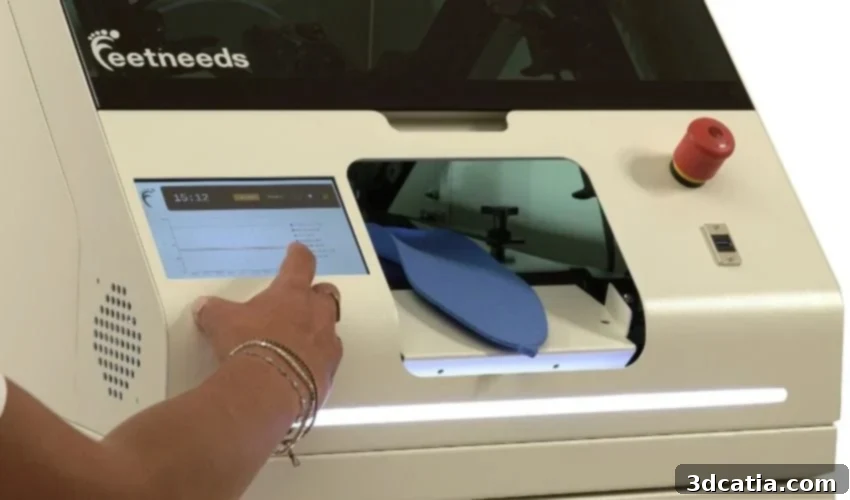
Revolutionizing Orthopedic Insoles: How Plasmics’ Feetneeds Platform Embraces 3D Printing for Personalized Foot Care
Our feet and legs are the foundation of our mobility, carrying us through every step, run, jump, and dance of life. Their critical role often becomes apparent only when pain or discomfort limits our movement. Conditions such as injuries, structural deformities like high arches or flat feet, underlying medical issues, or even prolonged standing can lead to significant pain, impacting daily activities and overall quality of life. For decades, orthopedic insoles have offered a crucial solution, providing support, correction, and relief. However, the traditional process of creating these custom insoles has historically been labor-intensive, time-consuming, and highly dependent on manual craftsmanship. This often translates to longer waiting times for patients, inconsistent results, and higher costs for healthcare providers.
Fortunately, technological advancements are paving the way for a revolutionary approach. The emergence of 3D printing, also known as additive manufacturing, presents an exciting alternative to these age-old challenges. This innovative technology promises to transform the production of orthopedic insoles, making it more efficient, precise, and accessible. At the forefront of this transformation is the Austrian company Plasmics, which is harnessing the power of additive manufacturing to elevate orthopedic insole production. Their cutting-edge platform, Feetneeds, is specifically engineered to deliver personalized, digital, and highly efficient solutions, fundamentally reshaping how custom foot orthotics are made and delivered to patients in need.
The Challenges of Traditional Insole Manufacturing and the Dawn of Digital Solutions
The conventional method of manufacturing orthopedic insoles involves a series of intricate manual steps, each performed by skilled specialists. This process typically begins with taking a physical impression of the patient’s foot, often using a plaster cast or foam box. From this impression, a negative mold is created, followed by a positive mold. The orthopedic technician then carefully modifies and shapes materials onto this positive mold, often involving significant carving, grinding, and sanding. These manual stages are not only lengthy, extending production times significantly, but they also introduce variability. Achieving exact consistency across multiple insoles, or reproducing a specific design with perfect fidelity, becomes a considerable challenge. Consequently, large-scale production, while maintaining a high standard of customization, is not practical or cost-effective with traditional methods.
Furthermore, traditional manufacturing methods are inherently subtractive, meaning they start with a larger block of material and remove parts until the desired shape is achieved. This inevitably leads to a substantial amount of material waste and the generation of dust particles, which can pose environmental concerns and require specialized waste management. The impact on clinic environments, with potential noise and particulate matter, also cannot be overlooked. In stark contrast, 3D printing operates on an additive principle, building an object layer by layer from a digital design. This method dramatically reduces material waste, allowing for precise material placement only where it’s needed. This is precisely what Plasmics aims to achieve with its Feetneeds platform. By seamlessly integrating expert-level customization with automated additive manufacturing, Feetneeds offers a modern, sustainable, and highly efficient solution for producing high-quality orthopedic insoles, addressing the shortcomings of conventional practices head-on.
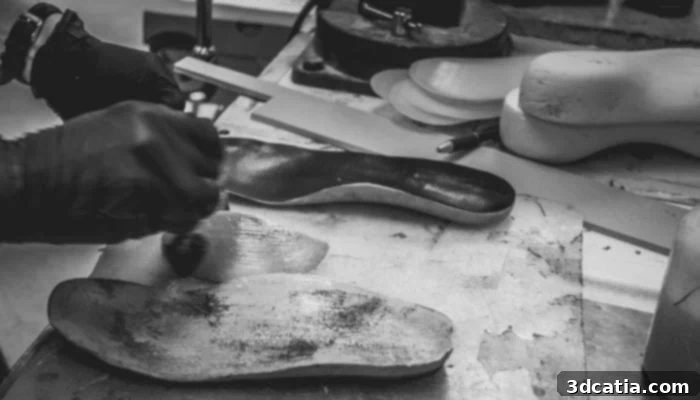
Traditional orthopedic insole manufacturing involves many steps, is costly, time-consuming, and produces waste. 3D printing significantly reduces these challenges.
Introducing Feetneeds: An Automated End-to-End 3D Printing Solution for Orthopedic Insoles
Feetneeds represents a groundbreaking, fully automated, and end-to-end 3D printing solution specifically engineered for the production of custom orthopedic insoles. Its core mission is to deliver rapid, accurate, and cost-effective manufacturing, thereby eliminating the cumbersome and often inefficient manual steps inherent in traditional production. This paradigm shift empowers orthopedic specialists, medical supply professionals, and podiatrists to dedicate more of their invaluable time and specialized expertise to direct patient care and individual needs. Instead of being bogged down by the intricate and laborious manufacturing process, practitioners can focus on assessment, diagnosis, and personalized treatment plans, knowing that the production of their prescribed insoles is handled with unparalleled precision and efficiency.
With Feetneeds, the process for users is remarkably straightforward and streamlined: medical professionals simply submit their meticulously designed insole files, and Plasmics takes care of the entire subsequent manufacturing workflow. This automation encompasses everything from file processing to the final printed product, ensuring a seamless and reliable experience. The platform is designed to integrate effortlessly into existing clinical workflows, minimizing disruption while maximizing the benefits of advanced additive manufacturing. But how exactly does this innovative process unfold from a patient’s foot measurement to a perfectly tailored orthopedic insole?
The Feetneeds Process: From Digital Scan to Precision-Printed Insole
Every custom orthopedic insole journey with Feetneeds begins with a precise and detailed foot measurement. The platform offers exceptional flexibility, supporting various input methods to accommodate diverse clinical setups and preferences. Users can upload data from modern 2D or 3D foot scanners, traditional foam box impressions, or even detailed blueprints. This versatility ensures that clinics can adopt Feetneeds without needing to completely overhaul their initial patient assessment procedures. Once the foot data is captured, the next crucial step is designing the individualized insole. This is typically performed using any standard orthopedic CAD/CAM (Computer-Aided Design/Computer-Aided Manufacturing) software available on the market. These specialized software packages allow orthopedic technicians to digitally sculpt and refine the insole design, incorporating specific biomechanical corrections, support structures, and comfort zones tailored to the patient’s unique needs and condition.
The resulting digital design, commonly an STL (stereolithography) file, is then seamlessly integrated into the Feetneeds workflow. Users can either upload this STL file directly to the Feetneeds platform or, for even greater efficiency, send it straight to the printer through a dedicated data interface from their CAD software. Once the design file is received, the 3D printing process initiates automatically. While the system is designed for autonomous operation, the print schedule can be conveniently adjusted if specific timing or prioritization is required. This automated initiation significantly reduces manual intervention, speeds up production, and minimizes the potential for human error, ensuring that each insole begins its physical manifestation accurately and without delay.
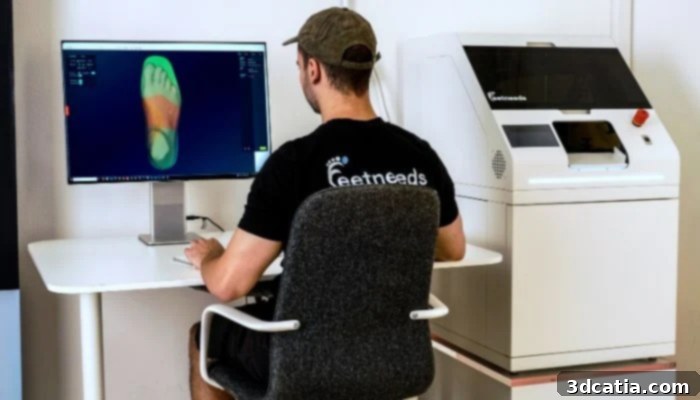
The automated workflow of Feetneeds unlocks unparalleled flexibility in usage models, catering to a broad spectrum of clinical needs. High-volume users or larger medical institutions might opt to invest in their own dedicated Feetneeds platform, allowing for maximum control and immediate in-house production. Conversely, smaller clinics or those with intermittent demand have the convenient option to utilize an on-demand printing model, outsourcing the production to Plasmics’ centralized facilities, thus benefiting from the technology without the upfront capital investment. This adaptability makes advanced orthopedic insole production accessible to a wider range of healthcare providers.
The entire process, from the moment the STL file is uploaded to the delivery of the finished insole, is orchestrated with full automation. The system intelligently handles critical pre-printing steps such as slicing the 3D model into printable layers, efficiently managing the print queue, and prioritizing products based on urgency or batching requirements. This level of automation ensures a smooth, uninterrupted production flow. A remarkable feature of Feetneeds is its speed: each individual insole takes less than 90 minutes to print, a drastic improvement over traditional methods that often require days. Furthermore, with continuous printing capabilities, the system can produce insoles back-to-back for several days without any human intervention, enabling true lights-out manufacturing and significantly boosting throughput. To maintain optimal and consistent print quality, a heated storage chamber for the filament ensures the material is always in prime condition for printing. The material of choice is recyclable expanded TPU (Thermoplastic Polyurethane), a high-performance polymer known for its durability, flexibility, and comfort. A key innovation lies in the customizable honeycomb structure of the insole, which allows for precise variation of hardness within a single insole. This can range from a very soft Shore A0 30 to a firmer Shore A0 90, providing orthopedic technicians with unprecedented flexibility to meet highly specific requirements for patient comfort, biomechanical performance, and targeted therapeutic support for diverse foot conditions.
Plasmics’ Vision: 3D Printing for Advanced Medical Products and Sustainable Healthcare
With the Feetneeds platform, Plasmics is not merely introducing a new manufacturing method; it is strategically responding to the escalating demand for highly personalized orthopedic solutions within the healthcare sector. This platform provides healthcare professionals with a sophisticated tool that not only enhances patient care but also helps them remain agile and adaptable in the face of evolving regulatory landscapes and increasingly stringent actuarial requirements. As the medical field pushes towards individualized medicine, Feetneeds positions clinicians at the forefront, equipped to offer bespoke solutions that were previously difficult or impossible to achieve efficiently.
Beyond personalization, Feetneeds directly addresses another critical market need: scalability. The system is meticulously designed to support sustainable, scalable production, making it equally effective for small, independent clinics needing a few custom insoles daily as it is for large medical institutions requiring high-volume output. This dual capability ensures that advanced 3D printing technology for orthotics is accessible and beneficial across the entire spectrum of healthcare providers, democratizing access to superior patient outcomes.
Environmental considerations played a profoundly significant role in the development and philosophy behind Feetneeds. A stark contrast to subtractive manufacturing methods, which are notorious for generating substantial amounts of material waste, additive technologies like 3D printing produce significantly less waste. This not only translates into notable reductions in material costs for clinics and manufacturers but also eliminates the issues of noise pollution and airborne dust particles associated with traditional carving and grinding processes, thereby fostering a much cleaner, healthier, and safer working environment for technicians and staff. The chosen material, TPU, is not only optimized for patient comfort, exceptional durability, and long-term performance but is also fully recyclable. This commitment to sustainability underscores Plasmics’ dedication to responsible manufacturing practices and a greener future for medical device production.
In essence, Feetneeds brilliantly converges advanced 3D printing technology with profound orthopedic expertise, culminating in a user-friendly and highly effective medical product. It serves as compelling proof of the feasibility and immense scalability of producing high-quality, end-use parts within the healthcare sector. More profoundly, it unequivocally highlights the compelling environmental and economic advantages that additive manufacturing holds over outdated, traditional subtractive methods. The platform empowers clinicians to provide superior, customized care with greater efficiency and less environmental impact, marking a significant stride in the evolution of orthotics. If you are keen to experience the transformative benefits of the Feetneeds platform in person and witness its capabilities firsthand, we invite you to visit the ORTHOPÄDIE SCHUH TECHNIK trade show in Cologne, Germany. Plasmics will be proudly presenting its innovative solution there from October 24 to 25, 2025. To delve deeper and learn more comprehensive details about Feetneeds and its potential to revolutionize your practice, please click HERE.
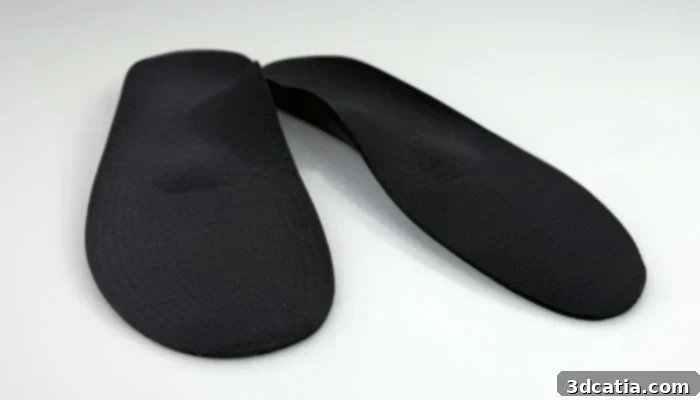
The 3D-printed insoles are finished in just 90 minutes
What are your thoughts on Plasmics’ innovative Feetneeds platform and its potential to reshape orthopedic care? We encourage you to share your insights in a comment below or connect with us on our LinkedIn or Facebook pages! Additionally, ensure you don’t miss out on the latest advancements and news in the 3D printing industry by signing up for our free weekly Newsletter, delivered directly to your inbox. You can also explore all our engaging videos and exclusive content on our YouTube channel. For those particularly interested in more news and developments within medical and dental 3D printing, visit our dedicated page HERE.
*Photo Credits: Plasmics