
Saudi Arabia’s Vision 2030: COBOD’s World-Record BOD2 3D Printer Revolutionizes Construction in the Middle East
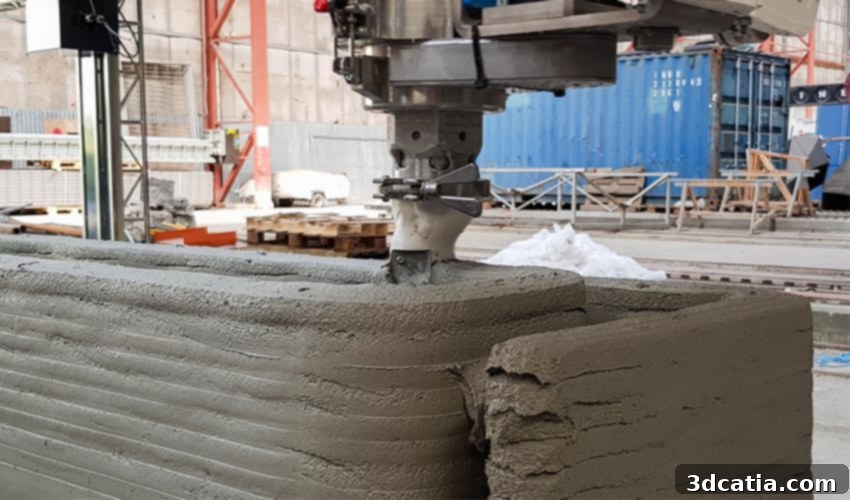
In a monumental leap for the global construction industry and a significant milestone for Saudi Arabia, COBOD International successfully completed the manufacturing and rigorous testing of its record-breaking BOD2 construction 3D printer. This extraordinary machine, now prepared for shipment to the Middle East, was acquired by the prominent Saudi Arabian firm, Elite for Construction & Development Co., as reported earlier this year. This particular iteration of the BOD2 stands as the largest construction 3D printer ever built, a testament to the rapid advancements in additive manufacturing for large-scale projects. Its impressive capabilities include the ability to print structures up to 12 meters high, 27 meters long, and 9 meters wide. This translates to the capacity to construct three-story buildings, each floor boasting more than 300 square meters of usable space, ushering in an era of unprecedented scale and efficiency in building fabrication.
The excitement surrounding this achievement is palpable within COBOD. Henrik Lund-Nielsen, CEO of COBOD, articulated the company’s enthusiasm, stating, “We are thrilled to have concluded the manufacturing and exhaustive testing of this enormous 3D construction printer. The specific requirements from our Saudi partners for such a massive printer unequivocally validated our strategic decision to develop the BOD2 using a modular system. This modularity is a game-changer, as it grants unparalleled flexibility and scalability, allowing us to configure printers to meet virtually any project specification. We are confident that no other company currently possesses the capability to deliver a printer with the same advanced features and immense printing envelope. It is a source of immense pride for us to provide Elite for Construction & Development Co. with a machine capable of erecting buildings on a scale previously unseen within the market, truly pushing the boundaries of what is possible with 3D concrete printing technology.”
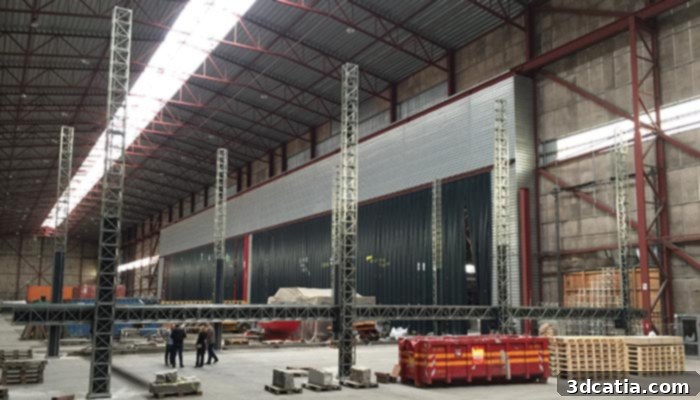
The world’s biggest 3D construction printer to be delivered to Saudi Arabian construction company Elite Construction & Development Co | Credits: COBOD
The Future of Construction: Saudi Arabia’s Ambitious Vision 2030 Embraces 3D Printing
This groundbreaking acquisition is a cornerstone of Saudi Arabia’s ambitious Vision 2030, a transformative national program designed to diversify its economy and build a sustainable future. At the heart of this vision lies a monumental commitment to urban development and housing. The Kingdom plans to construct more than 1.5 million private houses over the next decade, a challenge of immense proportions that traditional construction methods would struggle to meet efficiently and economically. By integrating 3D construction printing, Saudi Arabia aims to significantly accelerate housing development, reduce costs, and introduce a higher degree of design flexibility and sustainability into its building practices. The BOD2 printer is not merely a tool; it represents a strategic investment in disrupting the conventional construction sector, moving towards industrial-scale digital fabrication.
The journey towards embracing advanced additive manufacturing in Saudi Arabia began with smaller, experimental projects, such as the construction of a private house in Riyadh. This initial success sparked considerable interest, leading multiple private and public organizations to actively explore the potential of large-scale 3D printing. The decision by Elite for Construction & Development Co. to invest in COBOD’s flagship printer signifies a robust belief in the technology’s capability to deliver on the promises of Vision 2030. Jakob Jørgensen, Head of Technology at COBOD, reflected on this rapid adoption: “When we engineered the BOD2 as a modular 3D construction printer, our initial projections didn’t anticipate deploying a model of this enormous scale so swiftly after its industry release. However, we have been incredibly fortunate to partner with Elite for Construction & Development Co., who have demonstrated immense faith in our system and its capabilities. I am personally looking forward to traveling to Saudi Arabia, overseeing the setup of their BOD2 printer, and commencing the comprehensive training for their dedicated operators, ensuring they can harness the full potential of this revolutionary technology.” This hands-on approach underscores COBOD’s commitment to not only providing advanced machinery but also fostering local expertise and operational excellence.
The implementation of 3D construction printing also aligns with global trends towards sustainable building practices. By optimizing material usage, reducing waste, and potentially using locally sourced aggregates, the BOD2 can significantly lower the environmental footprint of construction projects. This aligns perfectly with the sustainability goals embedded within Vision 2030, which seeks to create vibrant communities and a thriving environment. Furthermore, the speed and efficiency of 3D printing can help address the critical shortage of affordable housing by dramatically shortening construction timelines, enabling faster delivery of projects, and potentially reducing overall construction costs. The technology also allows for greater architectural freedom, facilitating the creation of innovative designs and complex geometries that would be challenging or prohibitively expensive with traditional methods. This opens doors for more personalized and aesthetically diverse housing options, contributing to the quality of life for Saudi citizens.
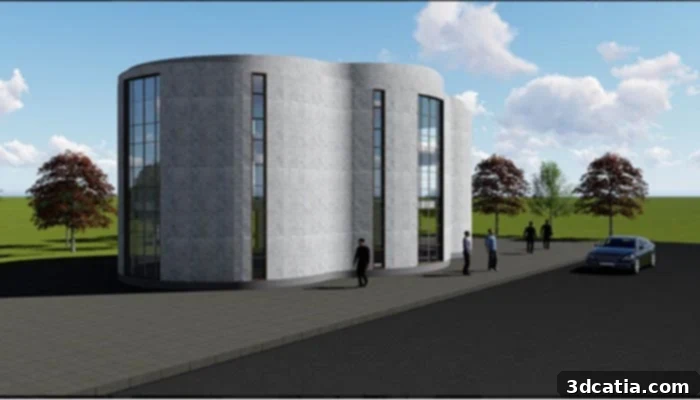
Rendering of buildings possible to be constructed with the the BOD2 5-11-4 version, soon coming to Saudi Arabia | Credits: COBOD
From a technical standpoint, the BOD2 represents the pinnacle of current 3D construction printing technology. According to COBOD, the Danish manufacturer, the machine boasts a theoretical printing speed of up to 1000 mm per second. While practical limitations in real-world scenarios, such as material flow and structural curing times, may prevent reaching this absolute maximum, the potential remains tremendous. Michael Holm, Head of R&D at COBOD, elaborated on the printer’s exceptional performance: “This is, without a doubt, the most impressive printer we have ever produced. Like all BOD2 printers delivered this year, it adheres to our stringent standards for speed and quality. This is largely thanks to its specially designed robust steel structure, advanced weather-sealed electronics for reliable operation in diverse environments, and a high level of integrated control and safety features that ensure both precision and operator well-being. During our live print testing of this particular printer, we achieved an astonishing speed of 35 cm per second, which not only marks another significant record for COBOD but also highlights the machine’s incredible real-world efficiency. For the past two years, the industry has seen numerous demonstrations of very small, often experimental, 3D printed houses around the world. However, with a state-of-the-art 3D construction printer like this BOD2, the technology is now taking another monumental leap forward. We are no longer talking about prototypes; we are now capable of printing structures encompassing 300 square meters over three stories, and crucially, we can achieve this at remarkable speeds, making large-scale, cost-effective additive construction a tangible reality.”
This deployment marks a pivotal moment for both COBOD and the construction industry as a whole. It positions COBOD as a leader in industrial-scale 3D construction printing and firmly places Saudi Arabia at the forefront of technological adoption in urban development. The modularity of the BOD2, which allowed for the creation of this record-breaking machine, speaks to COBOD’s foresight in designing a scalable and adaptable platform. This adaptability ensures that as construction needs evolve, the BOD2 system can be modified and expanded to meet future demands. The successful integration of such advanced robotics into construction workflows will pave the way for increased automation, improved worker safety, and the development of new skill sets within the workforce, ultimately transforming the entire value chain of building construction in the region. The partnership between COBOD and Elite for Construction & Development Co. serves as a powerful case study for how innovative technology can be leveraged to achieve ambitious national development goals, setting a new benchmark for what is possible in modern building.
You can find more information HERE.
What are your thoughts on Saudi Arabia’s bold adoption of 3D printing for large-scale building construction and its potential impact on global housing initiatives? We invite you to share your insights in a comment below or join the conversation on our Facebook and Twitter pages! Don’t miss out on the latest advancements and news in additive manufacturing; remember to sign up for our free weekly Newsletter, delivering all the essential updates directly to your inbox!