

FCA & Fraunhofer Revolutionize Automotive Design with 3D Printed Wheel Carrier and Integrated Brake Caliper
The landscape of automotive engineering is undergoing a significant transformation, driven by advancements in additive manufacturing. At the forefront of this innovation is a groundbreaking collaboration between a dedicated team of engineers from Fiat Chrysler Automobiles (FCA) and pioneering researchers from the Fraunhofer Institute. Their joint effort has yielded a truly revolutionary component: a 3D printed wheel carrier with an integrated brake caliper, specifically designed for one of FCA’s high-performance sports cars. This project, currently in its advanced prototyping stage, showcases the immense potential of consolidating complex assemblies. What was originally an intricate system comprising 12 separate components has been ingeniously redesigned and fabricated as a single, unified piece. This radical approach not only dramatically reduces the overall manufacturing complexity and time but also achieves a substantial weight reduction of 36%, a critical factor for enhancing vehicle performance and dynamics in the competitive sports car segment. While the specific car model that will benefit from this cutting-edge suspension system remains undisclosed, the implications for future automotive design are undeniably profound.
For many years, additive manufacturing, commonly known as 3D printing, has steadily proven its indispensable value across the entire automotive sector. Its applications range from the rapid development of entirely new vehicle architectures to the meticulous optimization and bespoke production of spare parts and components. A clear indicator of its strategic importance is the widespread investment in 3D printing technologies by almost all major car manufacturers. These industry giants are increasingly convinced that additive manufacturing offers a more agile, efficient, and flexible method for both rapid prototyping and, for certain parts, eventual series production. The FCA group, a conglomerate that encompasses iconic brands such as Alfa Romeo, Jeep, Maserati, and RAM, has been a proactive adopter, with its various subsidiaries consistently demonstrating a keen interest and ongoing investment in leveraging additive manufacturing capabilities.
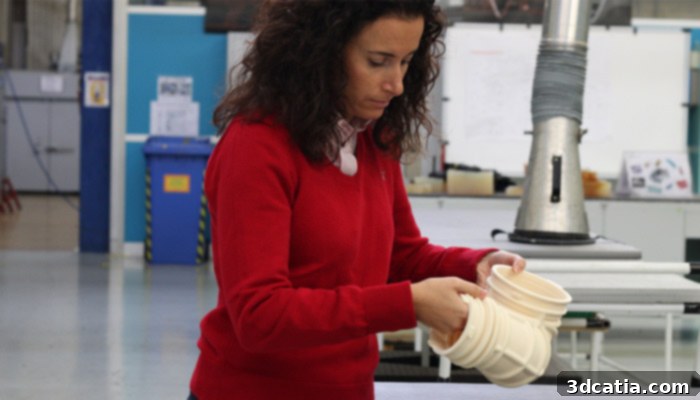
The FCA group now uses additive manufacturing for prototyping and enhancing vehicle components | Photo Credits: FCA
The Challenge: Redefining Automotive Component Complexity
In this particular endeavor, the overarching goal for the car manufacturer was to significantly decrease the total number of individual components typically required in the assembly of a suspension system. The traditional design of a wheel carrier and brake caliper assembly is notoriously complex, conventionally consisting of up to 12 distinct components. These often include a wheel support, a sophisticated hydraulic system, a heat shield to manage thermal loads, and the brake caliper itself. Producing such an assembly through conventional means is inherently challenging, demanding numerous labor-intensive assembly steps, each involving multiple joints, fasteners, and intricate alignment procedures. This complexity not only drives up manufacturing costs and time but also introduces potential points of failure and variations in quality due to assembly tolerances. Ruben Meuth, Head of Business Development at the Fraunhofer Institute, articulated the project’s strategic focus: “The overall focus is on the reduction of manufacturing costs, for example, by significantly increasing production speed. This innovation project is an excellent example of the collaboration between industry and research. This component shows how Additive Manufacturing can be implemented into series production for luxury and sports cars.” His statement underscores the broader objective of transforming manufacturing processes to achieve greater efficiency and economic viability, paving the way for advanced solutions in high-end automotive production.
Simplified Manufacturing Process through Integrated Design
Therefore, the primary objective driving this innovative project was to minimize, as much as technically feasible, the multi-stage assembly process traditionally associated with this critical automotive part. This was an ambitious undertaking, as the consolidated component had to simultaneously meet a stringent set of performance, safety, and durability requirements. Yanik Senkel, an Industrial Design Engineer at the Fraunhofer Institute, elaborated on the collaborative benefits: “Together with our innovation partner Fraunhofer IAPT, we are cutting the costs and production effort for key vehicle parts. The knowledge transfer will help us to improve Additive Manufacturing competence in the fields of integrated design, materials, and process technology across the group.” This emphasizes not just the immediate project outcome but also the strategic importance of transferring advanced manufacturing expertise across the entire FCA group, fostering a culture of innovation in design, material science, and process optimization.
The interdisciplinary team ingeniously turned to topology optimization, a sophisticated computational design method that represents a paradigm shift in engineering. This process involves using specialized software to meticulously analyze a component’s structural loads and performance requirements, then ‘removing’ material from areas where mechanical stress is inherently low. This data-driven approach allows engineers to create highly optimized, often organic-looking geometries that are both incredibly lightweight and structurally robust. It was this powerful process that enabled the researchers to consolidate the original twelve disparate components of the wheel carrier and brake caliper into a single, cohesive, and fully functional piece. The results are compelling: the new 3D printed part boasts an impressive 36% weight reduction compared to its conventionally manufactured predecessor. Beyond just weight savings, the consolidated component exhibits superior fatigue resistance, a critical attribute for the longevity and reliability of a suspension system in high-performance applications. Furthermore, the 3D printed wheel carrier with its integrated brake caliper is anticipated to deliver enhanced performance across several key metrics, including reduced vibration, improved hardness, and lower noise levels, all of which contribute significantly to a more refined and exhilarating driving experience in a luxury sports car. The team also posits that additive manufacturing could potentially extend the overall life of the part, though this promising aspect still requires thorough validation under real-life operating conditions. For more detailed technical insights, the official press release from the Fraunhofer Institute can be accessed HERE.
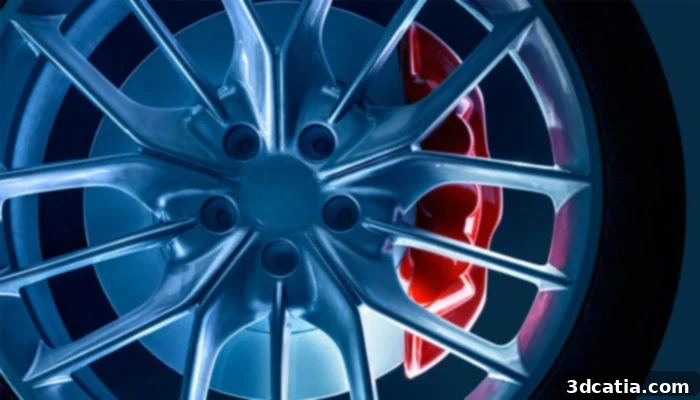
The consolidated 3D printed component showcasing advanced design | Photo Credits: FCA
Beyond Prototypes: The Future of High-Performance Automotive Manufacturing
This innovative project by FCA and Fraunhofer represents far more than just a successful prototype; it signals a transformative shift in how high-performance automotive components can be designed and produced. The move from 12 individual parts to a single, integrated unit, achieved through advanced additive manufacturing and topology optimization, offers a multitude of benefits that extend beyond mere weight reduction. It streamlines the supply chain, minimizes assembly errors, and could potentially lead to faster product development cycles. For the luxury and sports car segments, where every gram of weight and every millisecond of performance counts, such innovations are invaluable. Lightweighting is not just about speed; it also contributes to improved fuel efficiency in internal combustion engine vehicles and significantly extends the range of electric vehicles, aligning with broader industry goals for sustainability. While the path from prototyping to full-scale series production involves rigorous testing, qualification, and scalability challenges, the success of this project clearly demonstrates the feasibility and immense potential for additive manufacturing to become a cornerstone of future automotive production, particularly for specialized, high-value components.
The collaboration between industry leaders like FCA and research powerhouses such as the Fraunhofer Institute is crucial for pushing the boundaries of engineering and manufacturing. This project exemplifies how shared expertise and a commitment to innovation can overcome traditional manufacturing constraints, leading to smarter, more efficient, and higher-performing vehicle components. As additive manufacturing technologies continue to evolve, offering wider material choices and faster production speeds, we can anticipate even more sophisticated integrations and optimizations in automotive design. This heralds an exciting era where vehicles are not just assembled from parts but are intelligently designed and manufactured as cohesive, high-performance systems from the ground up.
What are your thoughts on this latest application of additive manufacturing in the automotive industry, particularly its potential for high-performance vehicles? We invite you to share your insights and comments below, or engage with us on our Facebook and Twitter pages! Don’t miss out on the cutting-edge developments in 3D printing; make sure to sign up for our free weekly Newsletter, delivering all the latest news directly to your inbox!