
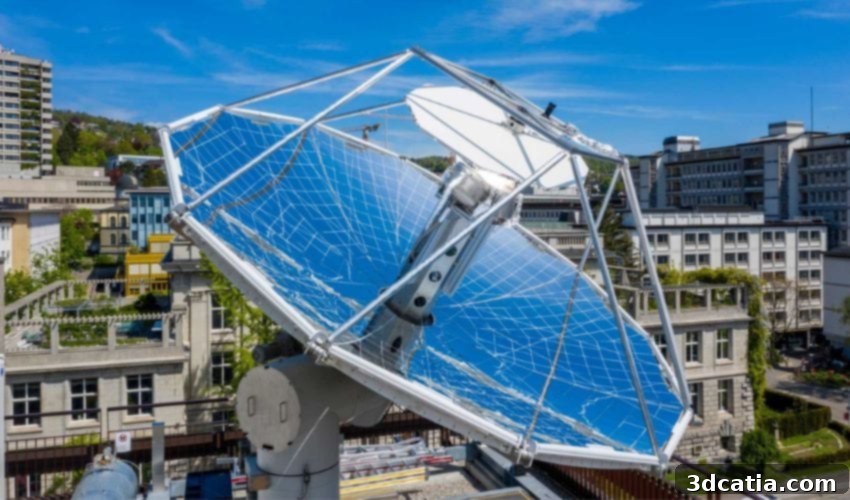
Revolutionizing Sustainable Aviation: ETH Zurich’s 3D-Printed Ceramic Solar Reactor Boosts Carbon-Neutral Fuel Production
The global demand for sustainable energy solutions continues to accelerate, particularly within sectors like aviation that face significant challenges in decarbonization. In a groundbreaking development, researchers from ETH Zurich’s Departments of Complex Materials and Renewable Energy Sources have achieved a significant milestone: the successful production of a solar reactor core crafted from individually 3D-printed ceramic components. This innovative solar reactor is specifically designed to produce carbon-neutral liquid fuels, such as solar kerosene, which are vital for the future of the aerospace industry. This technological breakthrough holds immense potential for enabling lower-emission aviation, a vision made increasingly tangible through the advanced capabilities of additive manufacturing. The integration of 3D printing into solar fuel production promises not only a greener alternative but also an increase in efficiency, leading to greater quantities of these environmentally friendly fuels. This pioneering project at ETH Zurich has been made possible through crucial funding from the Swiss Federal Office of Energy, underscoring national commitment to sustainable energy research.
Advanced Solar Reactor Design: Harnessing the Power of 3D-Printed Ceramics
At its core, the solar reactor operates by concentrating sunlight, typically from a parabolic mirror, onto its internal structure. The true innovation lies in the reactor’s new structure, which incorporates a sophisticated complex of hierarchically arranged ceramic structures created through precision 3D printing. This intricate design is strategically engineered: it opens broadly on the surface facing the sun, progressively narrowing towards the rear of the reactor. This unique geometric configuration is critical for efficiently trapping and concentrating solar thermal energy, preventing its escape and maximizing heat retention within the reactor’s core. Initial successful tests conducted at ETH Zurich have demonstrated the remarkable capability of this entire 3D-printed structure to achieve an astounding reaction temperature of 1500°C, solely through concentrated solar radiation. Furthermore, the meticulously designed internal architecture facilitates a significantly more efficient transport of solar radiation into the reactor’s interior. This enhanced thermal management and radiation delivery, attributed directly to the 3D-printed components, has a profound impact on performance. The result is a doubling of carbon-neutral solar fuel production with the same amount of solar radiation, when compared to earlier reactor designs that utilized isotropic structures. The ceramic structures themselves are fabricated using an extrusion-based 3D printing process, employing a specially developed paste. This advanced paste is rich in cerium oxide particles, a material chosen for its exceptional reactivity and high-temperature stability, ensuring that the solar reactor operates at peak efficiency and maximizes the conversion of solar energy into fuel precursors.
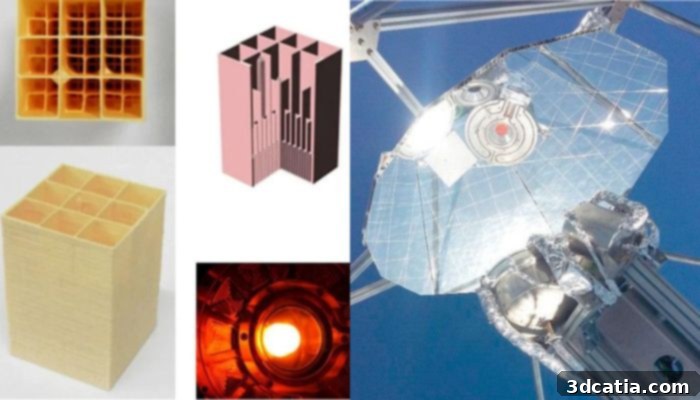
Left: A detailed view of the innovative 3D-printed ceramic structure. Right: The complete solar reactor system in action.
A Decade of Innovation: ETH Zurich’s Journey in Solar Fuel Research
ETH Zurich boasts a long-standing commitment to the advancement of solar fuels, with research efforts spanning over a decade. This rich history culminated in a significant demonstration in 2019, where the university successfully showcased the entire process for solar fuel production on its campus. Building on this foundation, engineers at the prestigious Swiss university had previously developed an earlier iteration of a solar reactor. This predecessor reactor harnessed the energy from concentrated solar radiation to produce synthesis gas—a crucial mixture of hydrogen and carbon monoxide—through a series of sophisticated thermochemical cycles. These cycles were specifically engineered to split water (H2O) and carbon dioxide (CO2), the fundamental building blocks for sustainable fuels. The resulting synthesis gas is then further processed into liquid solar fuels, such as solar kerosene, which serves as a direct replacement for conventional aircraft fuel. A key advantage of these innovative fuels is their CO2-neutral nature. During combustion, they release only as much carbon into the atmosphere as was initially extracted from the air for their production, thereby closing the carbon loop and ensuring a minimal environmental footprint. However, the structures used in these earlier reactor designs presented certain limitations. They typically exhibited isotropic porosity, meaning their internal structure was uniform in all directions. While functional, this uniformity meant that incoming solar rays were attenuated as they penetrated deeper into the reactor due to inherent surface properties and absorption characteristics. Consequently, the optimal internal temperature required for peak efficiency could not always be achieved consistently throughout the reactor, thus limiting its overall performance and the quantity of fuel produced. The new 3D-printed hierarchical design directly addresses these previous challenges, pushing the boundaries of solar fuel production efficiency.
Commercialization and Future Impact: Powering Sustainable Aviation
The newly developed solar reactor technology from ETH Zurich is not merely a laboratory marvel; it is already highly advanced and poised for commercial application. Recognizing its immense potential, ETH spin-offs, Climeworks and Synhelion, are actively driving efforts to further develop, market, and scale this groundbreaking technology commercially. Their strategic collaborations with prominent industry partners, including Zurich Airport and Lufthansa, underscore the tangible pathway towards integrating solar fuels into mainstream aviation. This commitment to commercialization is further solidified by the fact that the innovative 3D printing technology used for fabricating the ceramic structures has already been patented, securing its intellectual property. Moreover, Synhelion has successfully obtained a license from ETH Zurich, granting them the rights to utilize and commercialize this advanced solar fuel production method. Professor Steinfeld, a full professor at the Department of Mechanical and Process Engineering at ETH Zurich and a leading figure in this research, emphatically highlights the transformative impact of this innovation. He emphasizes, “This technology has the potential to boost the solar reactor’s energy efficiency and thus to significantly improve the economic viability of sustainable aviation fuels.” This statement encapsulates the dual benefit of the breakthrough: not only does it offer a more environmentally friendly fuel source, but it also makes the production process more economically attractive, which is crucial for widespread adoption. The enhanced efficiency means lower operational costs per unit of fuel, making solar kerosene a more competitive alternative to fossil fuels. This increased viability is critical for convincing airlines and the broader aerospace industry to transition to sustainable solutions, paving the way for a truly carbon-neutral future for air travel. For those interested in delving deeper into ETH Zurich’s extensive research and developments in this field, further information can be found by viewing their official page HERE.
The Broader Implications of Additive Manufacturing in Renewable Energy
The success of ETH Zurich’s 3D-printed ceramic solar reactor underscores the transformative potential of additive manufacturing beyond traditional industrial applications. By enabling the creation of complex, high-performance materials and geometries that were previously impossible or prohibitively expensive to produce with conventional methods, 3D printing is opening new frontiers in renewable energy. The ability to precisely control the internal structure and porosity of ceramic components at a micro-scale allows for unprecedented levels of thermal efficiency and material reactivity, directly impacting the performance of solar reactors. This methodology can be extended to other areas of renewable energy, such as advanced heat exchangers, catalytic converters, and energy storage systems, where material properties and intricate designs are paramount. As 3D printing technology continues to evolve, we can expect to see even more innovative solutions emerge, accelerating the transition to a sustainable energy future. The focus on cerium oxide, a material known for its redox properties, also highlights the interdisciplinary nature of this research, combining advanced materials science with engineering and thermodynamics to create highly efficient energy conversion systems. This not only promises greener aviation but also sets a precedent for how other energy-intensive industries might leverage advanced manufacturing to achieve their decarbonization goals.
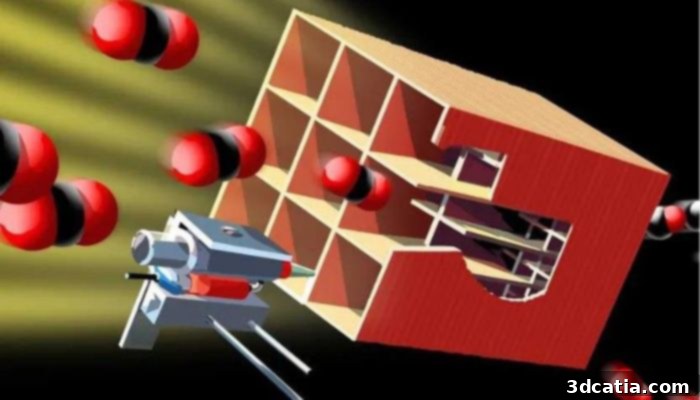
An illustrative representation of the cutting-edge 3D-printed reactor at ETH Zurich, showcasing its intricate design.
Engage with the Future of Sustainable Aviation
What are your thoughts on ETH Zurich’s pioneering 3D-printed ceramic solar reactor and its potential to revolutionize sustainable aviation? The advancement in producing carbon-neutral fuels for the aerospace industry marks a pivotal step towards a greener future. We invite you to share your insights and opinions in a comment below or join the conversation on our LinkedIn, Facebook, and Twitter pages! Don’t miss out on the latest advancements in additive manufacturing and sustainable technologies. Be sure to sign up for our free weekly Newsletter here, delivering the most up-to-date 3D printing news directly to your inbox! You can also find all our comprehensive videos and interviews on our YouTube channel.
*All photo credits: ETH Zurich