
Unveiling the Future: Top 5 Transformative 3D Printing Innovations Shaping Our World
Welcome to a fascinating exploration of the rapidly evolving landscape of 3D printing, also known as additive manufacturing. This revolutionary technology is no longer confined to industrial workshops; it is actively reshaping various sectors of our society, from healthcare and aerospace to construction and even consumer goods. The advancements in 3D printing are not just incremental; they represent a paradigm shift in how we design, produce, and interact with physical objects. In this special feature, we’ve curated the TOP 5 most compelling videos of the week that brilliantly showcase these groundbreaking developments and illustrate the profound impact additive manufacturing is having on our lives. These selections offer a glimpse into the incredible potential and current applications of 3D printing, highlighting its versatility, efficiency, and capacity for innovation. If you find these insights captivating, we encourage you to delve deeper into the world of 3D printing by visiting our dedicated Youtube channel, where a wealth of additional content awaits. Prepare to be inspired by the ingenious ways technology is being harnessed to solve complex problems, create unprecedented opportunities, and build a more efficient, sustainable, and personalized future.
Top 1: Revolutionizing Construction with 3D Printing in Real Estate
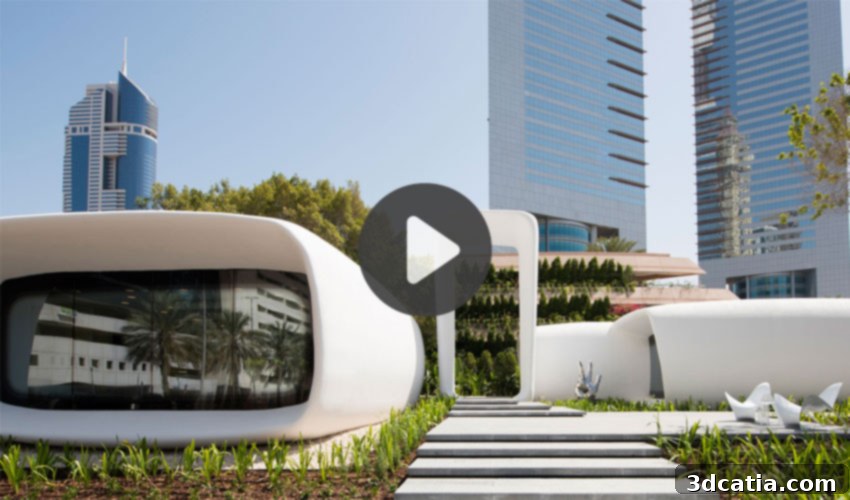
The construction industry, often perceived as traditional and slow to adapt, is undergoing a remarkable transformation thanks to the advent of 3D printing. This segment dives into the various pioneering initiatives propelling 3D construction and printing into the mainstream, promising faster, more affordable, and environmentally friendlier building solutions. A prime example of this innovation can be seen in Dubai, a city renowned for its ambitious architectural projects. The Emirate has set an extraordinary goal: by 2025, an impressive 25% of all new buildings are projected to be constructed using additive manufacturing techniques. This ambitious target underscores the government’s commitment to embracing cutting-edge technology to drive efficiency and sustainability in its urban development. Early successes in Dubai include the construction of office buildings, which were astonishingly completed in just seven days using advanced 3D printing technologies and subsequently inaugurated in 2016. The immediate benefits observed were significant reductions in lead times for projects and substantial savings in labor costs, demonstrating the economic viability and practical advantages of this approach. Beyond commercial applications, 3D printing is also addressing critical social needs. The video highlights inspiring projects such as 3D printed social housing initiatives in Nantes, France, which aim to provide dignified and affordable homes to communities in need. Furthermore, it showcases the impactful collaborations like the New Story and ICON projects, which are focused on creating sustainable, resilient, and rapidly deployable housing solutions for underserved populations globally. These efforts signify a monumental shift towards a future where housing crises could be mitigated through technological ingenuity, making quality shelter accessible to more people. This innovative use of 3D printing not only accelerates the building process but also opens doors to architectural designs that were previously too complex or expensive to realize, paving the way for a more innovative and inclusive urban landscape.
Top 2: Advancing Healthcare: 3D Printing’s Crucial Role in Medical Surgeries and Patient Care
The medical sector is another frontier where 3D printing is making profound and life-changing contributions, especially in enhancing surgical precision and patient education. The ability to create highly accurate, patient-specific models has revolutionized preparation for complex operations, significantly improving outcomes and reducing risks. A testament to this is the St. Louis Medical Center, which opened its doors on the campus of the University of Washington last year. This state-of-the-art facility is equipped with various Stratasys 3D printers, enabling medical professionals to produce a wide array of medical devices, most notably detailed surgical models. These models serve multiple critical purposes: they allow surgeons to meticulously plan and rehearse delicate procedures beforehand, anticipate potential challenges, and explore different approaches, thereby increasing confidence and efficiency in the operating room. Surgeons can physically interact with a replica of a patient’s anatomy, enabling them to foresee complications and develop precise strategies. Crucially, these physical models also act as invaluable communication tools, helping to explain intricate conditions and proposed surgical interventions to patients and their families in an easily understandable way. The video illustrates this with the poignant case of Sasha, a 10-year-old girl born with a severe spinal malformation. The medical team at the center utilized 3D printing to create an exact replica of her spine, a process that required 16 hours of continuous printing. This tangible model allowed Sasha and her family to visualize her condition clearly and comprehend the complexities of the upcoming operation. Such personalized insights empower patients and their families, alleviating anxiety and fostering informed decision-making, which are vital components of modern, compassionate healthcare. Beyond surgical planning, medical 3D printing is also advancing in areas like custom prosthetics, implants, and even bioprinting of tissues and organs, promising a future of highly personalized and effective treatments. The precision and customization offered by 3D printing are fundamentally transforming patient care and surgical success rates, making previously impossible interventions now a reality.
Top 3: Soaring to New Heights: 3D Printing’s Indispensable Role in Aerospace Engineering
The aerospace industry, characterized by its demand for extreme precision, lightweight components, and high-performance materials, has found an invaluable ally in 3D printing, particularly metal additive manufacturing. This technology enables the creation of complex geometries that are impossible or cost-prohibitive with traditional manufacturing methods, leading to revolutionary designs and enhanced operational efficiency. In this insightful video, a distinguished engineer from GE Aviation articulates the profound importance of 3D metal printing in the company’s day-to-day operations and long-term strategic goals. GE Aviation, a global leader in jet engine manufacturing, has embraced additive manufacturing as a core component of its production strategy due to its ability to produce stronger, lighter parts with fewer assembly steps. As highlighted, one of its advanced manufacturing plants in the United States has been outfitted with approximately 40 state-of-the-art metal additive manufacturing solutions. This significant investment is dedicated to the mass production of critical components, specifically more than 30,000 fuel injectors for the high-performance LEAP engine. The LEAP engine is a testament to modern aerospace engineering, known for its fuel efficiency and reduced emissions, and the intricate design of its fuel injectors plays a vital role in achieving these benchmarks. Manufacturing such a vast quantity of highly complex, precision-engineered parts presented a formidable challenge, one that GE Aviation’s team of engineers has met with resounding success through the strategic implementation of 3D metal printing. This achievement not only demonstrates the scalability and reliability of additive manufacturing for crucial aerospace applications but also paves the way for future innovations in aircraft design, performance, and fuel economy. The ability to consolidate multiple parts into a single 3D-printed component, reduce material waste, and optimize part geometry for superior performance solidifies 3D printing’s status as an indispensable technology for aerospace, pushing the boundaries of what’s possible in flight.
Top 4: The Sweet Side of Innovation: Personalizing Treats with 3D Printed Candy
Beyond industrial applications and life-saving medical devices, 3D printing is also bringing innovation to the delightful world of food, particularly confections. If you’ve ever wondered about the intriguing mechanics behind 3D printed food, this video offers a mouth-watering demonstration. The specific 3D printer featured is designed to transform confectionery creation into an art form, allowing for the precise production of candy in virtually any desired shape, size, and vibrant color. This level of customization was once unimaginable in mass production, offering consumers and businesses an unprecedented degree of personalization. This isn’t just about novelty; it opens doors for highly specialized dietary needs, allergen-free options, and creative culinary artistry. What makes this particular candy printer truly remarkable and a favorite among customers is its innovative ability to print a “selfie” in candy form. Users can simply send a digital image of their face, or any other image, through their device to the printer, which then meticulously recreates it in edible form in less than five minutes. This unique feature transcends traditional candy-making, turning a simple treat into a highly personalized and memorable experience. Imagine a birthday party where each guest receives a candy replica of their own face, or a corporate event offering branded edible logos. This fusion of digital technology and culinary art opens up exciting possibilities for bespoke gifts, marketing stunts, and interactive food experiences. The popularity of such personalized candies highlights a growing consumer demand for unique, customized products, and 3D printing is perfectly positioned to meet this demand, offering a glimpse into the future of food production where imagination is the only limit, and every treat can tell a personal story.
Top 5: Sustainable Solutions: Recycling Plastic Waste to Create 3D Printed Prosthetic Limbs
Perhaps one of the most heartwarming and impactful applications of 3D printing lies in its capacity to drive sustainable solutions and provide critical aid to those in need. This inspiring video demonstrates how everyday plastic waste, often destined for overflowing landfills, can be ingeniously repurposed to create life-changing medical devices. Imagine a world where your empty shampoo bottles not only avoid contributing to environmental pollution but also directly benefit a child born without a limb. This is precisely the vision and mission of Bernie Craven, a retired hairdresser from Australia. Mr. Craven has launched an incredible initiative, collecting plastic waste from 38 hair salons across Gympie and the Sunshine Coast in south-east Queensland. His innovative process involves converting these discarded bottles into high-quality plastic filament, which then serves as the raw material for 3D printing prosthetic limbs. This not only tackles the pressing issue of plastic waste but also addresses the critical need for affordable prosthetic devices. Traditional prosthetic limbs can be prohibitively expensive, often costing upwards of $20,000, placing them out of reach for many families and healthcare systems. Bernie Craven’s new company, Waste Free Systems, is set to revolutionize this by providing a significantly more economical alternative. Twelve-year-old Haley Wright and 11-year-old Connor Wyvill will be among the very first children in Australia to receive these recycled 3D printed prosthetics, benefiting from a substantial cost saving compared to conventional alternatives. This remarkable endeavor highlights the immense potential of combining recycling efforts with advanced manufacturing technologies to create truly impactful and sustainable solutions, demonstrating how local communities can transform waste into hope and opportunity. It’s a powerful example of the circular economy in action, where waste materials are given a second, highly valuable life, improving both environmental health and human well-being.
We hope you’ve enjoyed this insightful journey through the innovative world of 3D printing and its diverse applications. From revolutionizing construction to personalizing confectionery, and from advancing life-saving surgeries to providing sustainable solutions for prosthetic limbs, the transformative power of additive manufacturing is undeniable. These five videos merely scratch the surface of what’s possible, showcasing how this technology is not just changing industries but also positively impacting individual lives and fostering a more sustainable future. The rapid pace of innovation in this field promises even more astounding developments in the years to come, further integrating 3D printing into our daily lives and industries. What are your thoughts on this week’s TOP 5 VIDEOS? We’d love to hear your perspectives, insights, and any other exciting 3D printing developments you’ve come across. Please feel free to drop a comment below or engage with us on our vibrant social media platforms, including our Facebook and Twitter pages. Your feedback and contributions are invaluable to our community of 3D printing enthusiasts. To ensure you never miss out on the latest breakthroughs, news, and exclusive content in the fast-paced 3D printing industry, don’t forget to sign up for our free weekly Newsletter. Get all the essential updates delivered straight to your inbox, keeping you at the forefront of additive manufacturing innovation!