

Mastering TPU 3D Printing: A Comprehensive Guide to Thermoplastic Polyurethane for Flexible Parts
Thermoplastic Polyurethane (TPU) stands out as an exceptional elastomer, a synthetic plastic renowned for its unique combination of properties derived from both thermoplastics and elastomers. This versatile material offers high flexibility and impressive resistance, making it a staple in various manufacturing processes, particularly in the realm of 3D printing. Unlike more rigid materials such as PLA and ABS, TPU can withstand significantly higher compressive and tensile forces, making it ideal for applications requiring robust elasticity and durability. The material’s remarkable ability to vary in softness and hardness is a direct result of its intricate chemical composition. By adjusting the proportion of hard and soft segments within its polymer chains, manufacturers can precisely control the final mechanical characteristics, ranging from highly pliable to moderately rigid. Furthermore, a lower infill density during 3D printing can enhance the flexibility of the final part, providing an additional layer of customization. These compositional and printing nuances collectively influence critical aspects such as the transparency of finished components, their tactile feel, and the adhesion properties. Beyond its inherent flexibility, TPU boasts superior resistance to a wide array of greases and oils, significantly extending its utility in demanding environments. This comprehensive guide delves into the specifics of TPU, exploring its production, characteristics, optimal 3D printing techniques, and diverse applications across various industries. What crucial considerations should be kept in mind when working with this remarkable material?
Production and Characteristics of Thermoplastic Polyurethane (TPU)
While Thermoplastic Polyurethane is most commonly encountered in the form of filaments for Fused Deposition Modeling (FDM) 3D printing, its versatility extends to other formats, including fine powder for Selective Laser Sintering (SLS) and liquid resin for Stereolithography (SLA) or Digital Light Processing (DLP) technologies. Regardless of its form, TPU polymers consistently deliver a compelling suite of benefits. These include exceptional impact resistance, making parts resilient to sudden forces and collisions. They also exhibit high wear and abrasion resistance, ensuring longevity even in contact with abrasive surfaces or under repetitive stress. Its resistance to cuts further enhances its durability in demanding applications. A defining characteristic of TPU in additive manufacturing is its relatively high layer cohesion. This property leads to excellent mechanical homogeneity within manufactured parts, meaning the material exhibits consistent strength and flexibility in all directions. This isotropic nature is highly beneficial for functional prototypes and end-use parts, as it ensures predictable performance irrespective of print orientation, a significant advantage over many other 3D printing materials.
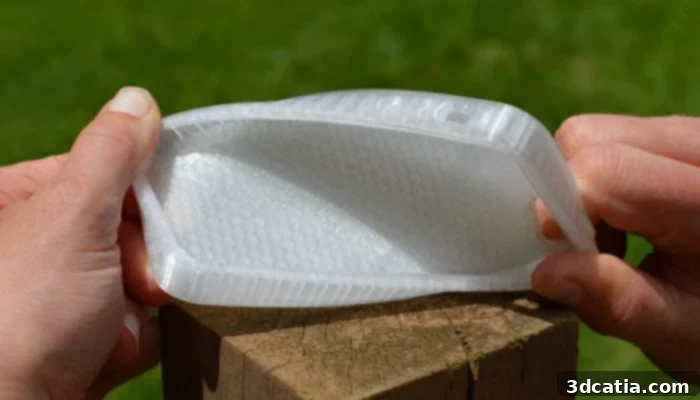
Due to its flexibility, TPU is often used for the production of cell phone cases.
Despite its numerous advantages, Thermoplastic Polyurethane does present certain limitations that warrant careful consideration during design and production. Primarily, TPU does not perform optimally in consistently hot environments. While it possesses a broad operational temperature range, it generally struggles to maintain its structural integrity and elastic properties when exposed to significantly elevated temperatures for prolonged periods. This sensitivity can limit its application in high-heat industrial components or environments where thermal stability is paramount. Furthermore, optimal 3D printing parameters for TPU can vary considerably depending on the specific additive manufacturing technology being used and the particular 3D printer model. Success with TPU often requires fine-tuning print settings to match the machine’s capabilities and the material’s characteristics. When compared to Thermoplastic Elastomer (TPE), another popular flexible filament, TPU is generally considered easier to print, offering a smoother and more reliable extrusion process for many users. TPU also tends to retain its elastic properties more effectively at lower temperatures than TPE, broadening its utility in cooler conditions. A notable advantage of TPU over TPE is its superior resistance to abrasion, oils, and greases, which makes it a preferred choice for parts exposed to such elements. Critically, unlike many stiffer thermoplastics that are prone to warping and delamination during the 3D printing process, TPU filament exhibits inherent flexibility and conformability, virtually eliminating these common challenges and contributing to higher print success rates for complex geometries.
Optimizing 3D Printing with TPU Filaments: Tips and Techniques
Successfully printing parts with TPU on an FDM 3D printer requires careful attention to specific settings and practices to achieve optimal results. One crucial recommendation is to apply a thin, uniform layer of adhesive to the print bed. This helps to significantly improve the material’s initial adhesion, preventing warping or detachment during the early stages of printing, which is particularly important for flexible materials that can exert unusual stresses. The extrusion nozzle typically needs to reach a temperature between 210 °C and 235 °C to ensure the TPU filament melts consistently and flows smoothly. However, it is vital to remember that this range can vary based on the specific TPU manufacturer and product line, necessitating a check of their recommended temperatures. These are general guidelines; the ultimate success of printing with TPU is heavily dependent on the individual configuration of each 3D printer and meticulous calibration. Therefore, it is highly advisable to conduct small test prints with any new TPU material or printer setup before attempting more complex or critical projects. This iterative testing helps identify the optimal settings for your specific environment. Furthermore, the extrusion system itself must be robust enough to handle flexible and compressible materials effectively. A direct-drive extruder system, where the extruder motor is positioned directly above the hotend, is often preferred over Bowden systems for TPU due to its superior control over filament movement, reducing the likelihood of tangles, kinks, or under-extrusion. Maintaining a constant temperature, often around 250 °C for the hotend components, is also crucial to prevent heat creep and ensure uninterrupted flow.
When considering Stereolithography (SLA) for TPU, it’s generally not recommended for models with extremely small or thin features, or for parts that are particularly sensitive to expansion or distortion during the curing and post-processing stages. The inherent flexibility of TPU resins can make it challenging to maintain precise dimensions in delicate structures. For FDM printing, proper configuration of the 3D model is paramount. It is recommended that models are designed with their final intended shape in mind and are positioned as close to the print bed as possible to minimize leverage and potential for movement. When orienting parts, avoid positioning them too flat or with angles less than 20°C if it results in excessive overhangs or insufficient bed adhesion. Thin and tall parts, by their nature, are more difficult to print with flexible materials like TPU due to their susceptibility to wobble and instability during the printing process; however, strategic use of additional supports can significantly enhance stability and ensure optimal print quality. A common challenge with flexible filaments like TPU is their propensity to cause clogs in the nozzle. The material’s elasticity can lead to it compressing and deforming within the extruder rather than pushing through the nozzle, especially during retractions or rapid movements. To mitigate these printing problems, many filament manufacturers and slicer software recommend utilizing the Z-hop function. This feature instructs the extruder to lift a few millimeters vertically after completing a layer and before moving to the next position. This slight elevation prevents the nozzle from dragging across the freshly printed layer, effectively avoiding unintentional contact that can deform the part, strip the filament, or leave unwanted material behind, thus preventing clogs and ensuring a smoother print.

Photo Credits: BCN3D
Furthermore, recognizing that each 3D printer and every specific TPU filament batch can behave differently is crucial. Consequently, performing iterative tests to determine the optimal shrinkage value for your particular setup is highly recommended. This value, which quantifies how much the material contracts upon cooling, directly impacts the dimensional accuracy of the final printed object and can vary significantly between different TPU filaments from various manufacturers. While TPU does not inherently require extensive post-treatment, certain techniques can be employed to enhance its functional properties or improve its aesthetic appearance. A popular option is a polishing treatment, which helps to smooth the surface of the printed object and effectively remove visible layer lines. This not only refines the final appearance but can also improve the tactile feel and reduce friction. Additionally, applying a layer of paint or varnish can provide an extra level of protection, improving the part’s resistance to environmental factors such as water, dust, and dirt, thereby extending its lifespan and maintaining its visual appeal.
Diverse Applications for TPU in Modern Industries
In the rapidly expanding additive manufacturing industry, Thermoplastic Polyurethane has unlocked a vast array of possibilities across diverse markets, revolutionizing product design and functionality. Its unique combination of flexibility, durability, and resistance makes it an indispensable material for innovative applications. In the footwear sector, TPU is extensively utilized for producing highly elastic and comfortable soles for athletic shoes and everyday wear, offering superior shock absorption and longevity. The medical sector benefits greatly from TPU’s biocompatibility and flexibility, leading to the creation of advanced orthopedic models, prosthetics, and even flexible components for medical devices that require patient comfort and resilience. For the demanding aerospace sector, TPU is employed in developing specialized instruments, sensors, and protective covers that must withstand vibration and offer impact resistance without compromising flexibility. The automotive sector leverages TPU for durable components such as tires, interior trim elements, gaskets, and shock absorbers, where its elasticity and resistance to oils and fuels are critical for performance and safety. Moreover, in the sports and fitness industry, TPU is a prime choice for manufacturing protective gear, padding, and components in fitness equipment, ensuring both user safety and product longevity under strenuous use.
TPU is exceptionally well-suited for a broad range of 3D printing applications, including the production of high-performance end-use parts, functional prototypes that accurately mimic final product performance, concept models for design visualization, and highly customized components. Its ability to absorb impacts and resist breakage makes it an ideal material for protective applications. A prime example of its widespread use is in the production of cell phone cases, where TPU’s inherent flexibility and shock-absorbing properties provide excellent protection against drops, impacts, and daily wear and tear, safeguarding the device effectively.

The cohesion of the coatings achieves excellent mechanical homogeneity (photo credits: The Lubrizol Corporation)
Leading Manufacturers and Pricing of TPU for 3D Printing
The market for TPU in 3D printing is robust, with numerous prominent companies offering innovative solutions to enable users to create flexible, durable parts. UltiMaker, a leading name in desktop FDM 3D printing, provides a high-quality TPU filament known as TPU 95A. This material is compatible with a range of their popular printers, including the Ultimaker S5, Ultimaker 3, Ultimaker 2+, and their newest offering, the UltiMaker S7 3D printer. The “95A” in its name refers to its Shore Hardness, a common scale used to measure the hardness of elastomers, where higher numbers indicate greater resistance to indentation and thus a harder material. With a Shore Hardness of 95A, this TPU offers a good balance of flexibility and rigidity. According to UltiMaker, this particular filament boasts an impressive elongation at break of up to 580%, meaning it can stretch significantly before fracturing, which is crucial for parts requiring high deformation tolerance. Furthermore, the filament is conveniently available in four different colors, offering aesthetic versatility.
Another major player, Formlabs, has made significant strides in the SLA resin market with its innovative “Elastic Resin.” Introduced specifically for their SLA technology, this resin provides exceptional elastic properties. It features a Shore Hardness of 50A, indicating a considerably softer and more pliable material compared to UltiMaker’s 95A TPU. This low Shore Hardness, combined with its high elongation and excellent energy return, makes it ideal for applications requiring considerable deformation and subsequent recovery, such as gaskets, flexible prototypes, or medical models. “Shore” hardness, as mentioned, is a standard measurement for the indentation hardness of materials. Lower Shore numbers signify less resistance to indentation, translating to softer and more flexible materials. The outstanding elasticity and inherent strength of Formlabs’ Elastic Resin allow parts printed with it to endure multiple cycles of compression, stretching, and bending without experiencing permanent deformation or material degradation, making it highly valuable for dynamic applications.
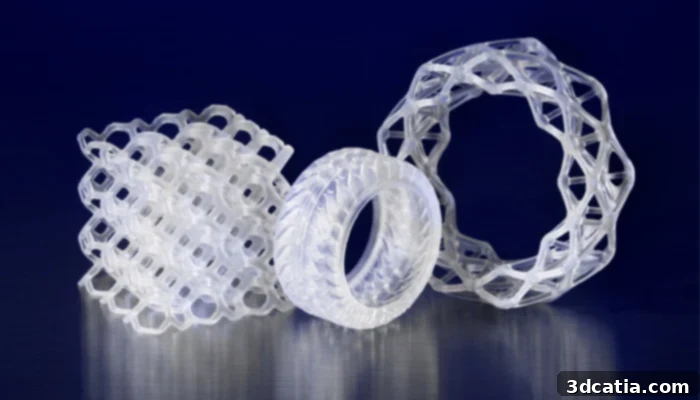
Photo Credits: Formlabs
Beyond these general 3D printer manufacturers, there are specialized companies primarily focused on the advanced development of TPU materials. Recreus is one such company that has carved out a niche for its diverse range of 3D printing filaments. Notably, their renowned FilaFlex filament was conceived from a clear need to push the boundaries of traditional 3D printing, enabling the creation of truly flexible parts. Ignacio Garcia, CEO of Recreus, highlighted this vision, stating, “3D printing technology in itself was already innovative, and together with the flexibility of the material to produce flexible parts, such as sneakers, the potential of additive manufacturing and FilaFlex became clear.” This reflects a commitment to empowering designers and engineers with materials that open up new product categories. Furthermore, TPU is also available in powder form for advanced additive manufacturing processes like Selective Laser Sintering (SLS). Companies like BASF offer a comprehensive range of TPU powders under their Ultrasint® name. For instance, their Ultrasint® TPU01 powder is specifically engineered for use with HP’s Multi Jet Fusion 5200 series printers, demonstrating optimized properties for industrial-scale flexible part production. In terms of cost, TPU filament is generally accessible, with prices typically ranging around $30-40 per kilogram, making it a cost-effective choice for many applications. However, specialized resins and powders for SLA and SLS processes often command higher price points due to the complexity of their formulation and specific technological requirements.
Do you use TPU for your 3D printing projects? We’d love to hear about your experiences and creations! Let us know in a comment below or connect with us on ourLinkedIn,Facebook, andTwitter pages. Don’t miss out on the latest advancements and news in the additive manufacturing world – be sure to sign up for our free weeklyNewsletter here, delivering the freshest 3D printing updates straight to your inbox! You can also explore all our informative videos and tutorials on our dedicatedYouTube channel for more insights into the world of 3D printing.