
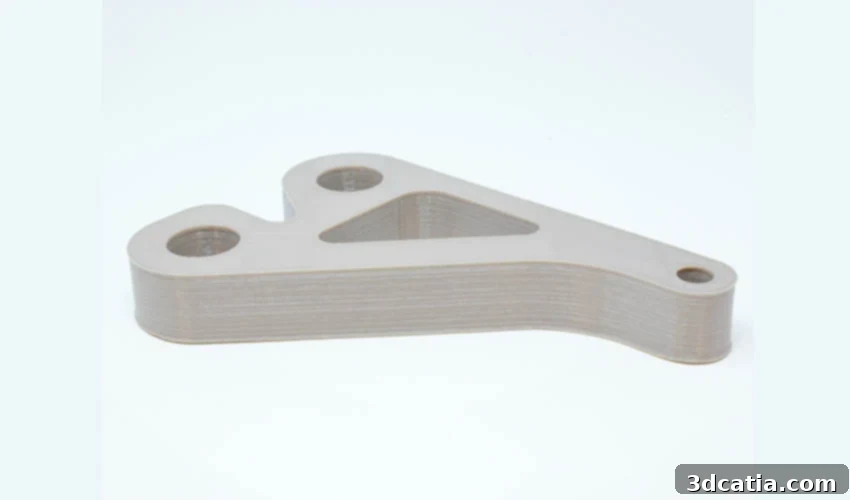
Essentium and LEHVOSS Group Forge Partnership to Elevate Industrial Additive Manufacturing with Advanced Engineering-Grade Materials
For an extended period, additive manufacturing (AM) was predominantly perceived as a technology exclusively suited for rapid prototyping. Its initial applications primarily involved creating quick iterations and conceptual models, proving invaluable for design validation and accelerating product development cycles. However, the landscape of AM has undergone a transformative shift in recent years. Today, these advanced manufacturing technologies are increasingly being adopted for the series production of functional parts, especially those requiring high degrees of customization or intricate designs that are simply unachievable through conventional manufacturing methods. This evolution signifies a pivotal moment for the industry, moving beyond its prototyping roots to become a true production powerhouse.
A compelling study conducted by Essentium last year shed light on this crucial trend. The research revealed that while the adoption of 3D printing for full-scale production had previously been constrained by limitations in scalability, there has been a remarkable surge in the number of companies integrating the technology into their industrial-scale manufacturing processes. More precisely, the proportion of manufacturers leveraging 3D printing for comprehensive production saw a dramatic increase, jumping from 21% in 2018 to an impressive 40% in 2019. This substantial growth underscores a growing confidence in AM’s ability to deliver robust, repeatable, and cost-effective solutions for end-use applications.
This wider adoption of industrial 3D printing is not occurring in isolation; it is intrinsically linked to a parallel rise in the availability and sophistication of 3D printing materials. The demand is no longer just for basic plastics, but for engineering-grade materials that can meet the stringent standards and performance requirements of diverse industrial applications. These advanced materials are essential for sectors such as aerospace, automotive, biomedical, and electronics, where components must exhibit exceptional mechanical strength, thermal stability, chemical resistance, and long-term durability. Without these high-performance polymers and composites, the promise of industrial additive manufacturing would remain largely unfulfilled.
The Strategic Partnership: Essentium and LEHVOSS Group
Recognizing this critical need for advanced materials to fuel industrial-scale additive manufacturing, Essentium, a leading manufacturer renowned for its innovative HSE (High Speed Extrusion) 3D printing platform, has entered into a strategic partnership with the LEHVOSS Group. This collaboration is specifically aimed at developing and delivering high-performance materials engineered to enable and optimize industrial additive manufacturing applications. Essentium’s HSE platform is designed for speed, accuracy, and reliability in production environments, making it an ideal partner for advanced material development.
The LEHVOSS Group, a distinguished international player, specializes in the production and marketing of chemical and mineral specialties. With a deep heritage in materials science, LEHVOSS has a proven track record of developing highly customized polymer compounds specifically tailored for various 3D printing technologies, including advanced methods like Powder Bed Fusion (PBF) and extrusion-based processes such as Fused Filament Fabrication (FFF). This extensive expertise positions LEHVOSS as an ideal collaborator for Essentium in addressing the complex material challenges of industrial AM.
Essentium emphasizes that this groundbreaking new partnership will specifically focus on bringing a robust portfolio of engineering-grade materials to the forefront for extrusion-based 3D printing processes. This focus is crucial, as extrusion remains one of the most accessible and cost-effective additive manufacturing technologies, yet its potential for industrial applications has often been limited by the available material palette. By combining Essentium’s hardware innovation with LEHVOSS’s material science prowess, the collaboration aims to unlock new possibilities for manufacturers seeking reliable and high-performance solutions for their production needs. The joint efforts promise to deliver materials that not only perform exceptionally well but are also optimized for Essentium’s high-speed extrusion platform, ensuring seamless integration and superior print quality.
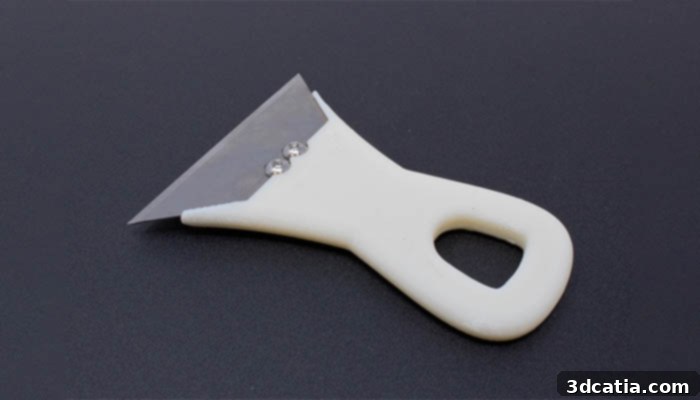
A scrapper made with Essentium’s High-Temperature Nylon
Introducing High-Performance Materials: PEEK and High-Temperature Nylon
The additive manufacturing sector has an ever-growing appetite for high-performance materials, which are critical for expanding the boundaries of what 3D printing can achieve. Among these, two materials stand out for their exceptional properties and increasing relevance in AM: PEEK and High-Temperature Nylon (HTN). Their unique characteristics make them indispensable for demanding industrial applications where conventional plastics simply won’t suffice.
The Power of PEEK for Extreme Environments
Generally, Polyether Ether Ketone (PEEK) is celebrated as a high-performance engineering thermoplastic renowned for its exceptionally high temperature resistance. This semi-crystalline polymer can withstand continuous operating temperatures up to 260°C (500°F), and even higher for short durations, making it suitable for applications in extreme thermal environments. Beyond its thermal capabilities, PEEK also boasts excellent chemical resistance, rendering it impervious to a wide range of organic and inorganic chemicals, solvents, and fuels. This makes it a material of choice for components exposed to harsh corrosive agents.
Historically, PEEK has been extensively utilized in conventional manufacturing processes such as injection molding, compression molding, and extrusion for producing high-demand parts across industries like aerospace, automotive, and medical. Its outstanding mechanical properties, including high stiffness, strength, and wear resistance, coupled with its biocompatibility, have cemented its status as a premium engineering polymer. More recently, PEEK has witnessed a significant surge in popularity within the 3D printing industry for industrial applications. Its ability to produce lightweight, robust parts with complex geometries, without compromising on performance, is opening up new avenues for innovation in critical sectors. Leveraging PEEK in additive manufacturing allows for on-demand production of highly specialized components, reducing lead times and waste associated with traditional methods.
The Versatility of High-Temperature Nylon (HTN)
On the other hand, Nylon (polyamide) is a synthetic polymer celebrated for its exceptionally strong and elastic properties. Traditional nylon is known for its excellent impact and abrasion resistance, making it a staple in numerous industrial and consumer applications. However, standard nylon can sometimes fall short in high-temperature environments or where greater stiffness and creep resistance are required. This is where High-Temperature Nylon (HTN) variants come into play.
High-Temperature Nylon offers enhanced thermal stability and improved mechanical properties compared to its conventional counterparts. It retains the inherent toughness and ductility of nylon but can perform reliably at elevated temperatures, expanding its utility significantly. HTN materials are often engineered to provide superior chemical resistance, lower moisture absorption, and higher stiffness, making them ideal for automotive under-the-hood components, industrial tooling, and protective gear. Their ability to resist repeated impacts and abrasion very effectively, even under challenging conditions, makes them invaluable for components subjected to significant wear and tear. When brought to additive manufacturing, HTN allows for the creation of durable, functional prototypes and end-use parts that can withstand demanding operational environments, offering a versatile solution for numerous engineering challenges.
Innovation Through Collaboration: The LUVOCOM® 3F Line
The strategic partnership between Essentium and LEHVOSS Group is not merely a theoretical alliance but a dynamic collaboration that has already yielded tangible results. Following two years of intensive collaborative research and development, Essentium successfully launched a groundbreaking line of PEEK and High-Temperature Nylon (HTN) materials. These advanced materials leverage LEHVOSS Group’s cutting-edge LUVOCOM® 3F compounds, specifically formulated and optimized for additive manufacturing. This long-term dedication to R&D highlights the commitment of both companies to push the boundaries of industrial 3D printing.
The newly introduced LUVOCOM® 3F PEEK and HTN materials are meticulously engineered for 3D printing, offering a suite of properties that directly address the challenges often associated with printing high-performance polymers. Key advantages include exceptionally easy printability and excellent non-warping characteristics, which are critical for achieving dimensionally accurate and reliable parts. These materials also boast superior heat and chemical resistance, ensuring components maintain their integrity and performance in harsh operating environments. Furthermore, they exhibit high mechanical strengths, making them capable of withstanding significant stresses and strains encountered in demanding industrial applications.
These combined attributes enable the production of high-quality end-parts that can robustly endure the rigors of the factory floor, from impact and abrasion to exposure to chemicals and high temperatures. Crucially, these materials are certified on the Essentium 3D printing platform, guaranteeing seamless compatibility and optimal performance. This certification provides manufacturers with the confidence that the materials will perform as intended on Essentium’s HSE systems, minimizing trial-and-error and accelerating time-to-market for new applications.
Transforming Industrial Applications Across Sectors
The development of these advanced PEEK and High-Temperature Nylon materials, optimized for Essentium’s high-speed extrusion platform, opens up a vast array of possibilities across multiple industries. Their unique combination of properties makes them suitable for an expansive range of applications that demand both high performance and the design flexibility inherent in additive manufacturing.
In **mechanical engineering**, these materials can be utilized for producing custom jigs, fixtures, tooling, and functional prototypes. The high mechanical strength and thermal resistance of PEEK and HTN ensure that these components can withstand the operational stresses of industrial machinery, improving efficiency and reducing downtime. For intricate parts that require precise tolerances and robust performance, 3D printing with these advanced polymers offers unparalleled advantages over traditional manufacturing methods.
The **medical technology** sector stands to benefit immensely. PEEK, with its inherent biocompatibility and ability to be sterilized, is already a preferred material for implants and surgical instruments. The partnership’s ability to 3D print PEEK components allows for patient-specific devices, custom surgical guides, and lightweight, high-performance medical tools. High-Temperature Nylon can also contribute to instrument housings and other non-implantable components requiring strength and sterilizability.
Perhaps one of the most significant impacts will be felt in the **automotive sector**. Here, the materials are particularly suited for parts subject to high stresses and extreme conditions, such as components within the engine compartment and drive train. The high heat resistance of PEEK and HTN makes them ideal for structural elements, fluid handling components, and protective housings that need to perform reliably under fluctuating temperatures and exposure to oils and chemicals. Furthermore, the ability to 3D print these parts can enable lightweighting initiatives, contributing to improved fuel efficiency and reduced emissions, while also facilitating the production of complex geometries for optimized performance and quicker iterations for concept vehicles and custom modifications.
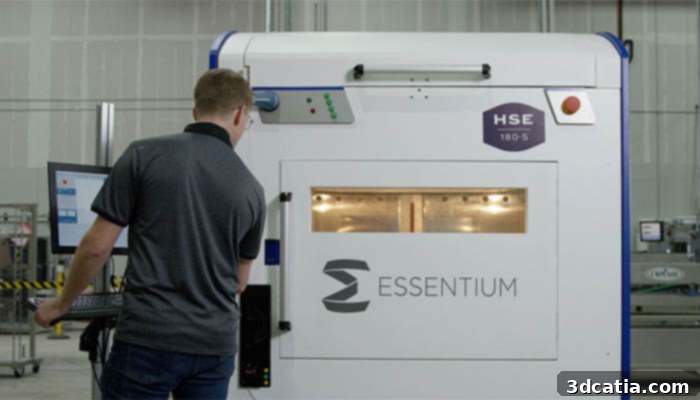
The HSE platform | Image via Essentium
A Vision for the Future of Additive Manufacturing
Thomas Collet, Director of 3D Printing Materials & Marketing for the LEHVOSS Group, articulated the profound implications of this partnership, stating: “Partnering with Essentium is a win-win for our industrial customers. Not only will this speed time-to-market and lower the cost to produce the highest quality parts, it will also spur innovation for new additive manufacturing applications.” This statement encapsulates the core benefits of the collaboration: accelerating product cycles, enhancing cost-efficiency, and, most importantly, fostering an environment ripe for groundbreaking innovation within the additive manufacturing ecosystem.
The synergy between Essentium’s advanced 3D printing platforms and LEHVOSS’s expertise in customized high-performance polymer compounds is set to democratize access to industrial-grade additive manufacturing. By making these sophisticated materials more accessible and easier to process, the partnership helps to remove significant barriers to adoption for many manufacturers. This ensures that more companies, regardless of their current AM maturity, can leverage the benefits of producing end-use parts with exceptional properties.
This collaboration represents a significant leap forward in the journey of additive manufacturing from niche prototyping to mainstream industrial production. It addresses the crucial need for reliable, high-performance materials that can meet the rigorous demands of various sectors. As the industrial 3D printing market continues to expand, partnerships like the one between Essentium and LEHVOSS Group will be instrumental in driving technological advancements, fostering innovation, and ultimately, transforming the way complex components are designed, produced, and deployed across industries worldwide. For more detailed information on Essentium’s offerings and the impact of this partnership, you can find more information HERE.
What are your thoughts on this transformative partnership and its potential impact on industrial 3D printing? We encourage you to share your insights and opinions in a comment below or join the conversation on our Facebook and Twitter pages! Don’t miss out on the latest advancements and news in the world of additive manufacturing. Sign up for our free weekly Newsletter, delivering all the essential updates straight to your inbox every week.