
Revolutionizing Climate Resilience: Dominican Republic Pioneers Low-Cost 3D-Printed Weather Stations
The global challenge of climate change, characterized by increasingly unpredictable and extreme weather events, necessitates robust and accessible monitoring systems. Accurate hydrometeorological data is crucial for effective early warning systems, agricultural planning, and disaster preparedness, particularly in vulnerable regions. Recognizing this critical need, the Dominican Institute of Meteorology (Indomet), in a groundbreaking collaboration with the University Corporation for Atmospheric Research (UCAR) and the United States National Hurricane Center (NHC), is leading an innovative project. This initiative focuses on developing and deploying low-cost, 3D-printed, automatic weather stations across the Dominican Republic. With a substantial investment of $250,000, the project aims to significantly bolster the nation’s early warning capabilities and sustainably expand its vital hydrometeorological monitoring network.
The Genesis of Innovation: The 3D-PAWS Project
This visionary project, formally named 3D-PAWS (3D-Printed Automatic Weather Stations), was first conceptualized and launched in 2013. Since its inception, 3D-PAWS has evolved into an exceptionally efficient and game-changing alternative for climate monitoring, especially in areas where traditional, expensive weather stations are economically unfeasible or difficult to maintain. The core innovation of 3D-PAWS lies in its unique approach to station manufacturing: leveraging readily available 3D printers to produce robust components, which are then integrated with commercially available, off-the-shelf sensors. This ingenious combination drastically reduces the overall cost of the equipment, making these stations not only affordable but also durable and remarkably easy to maintain.
One of the most significant advantages of this modular, 3D-printed design is the empowerment it offers to local meteorological agencies. Instead of relying on external suppliers for complex parts, these agencies can simply print and replace damaged components on-site, using standard 3D printing technology. This capability ensures the longevity and continuous operation of the monitoring network, even in remote locations. The data collected by these innovative stations has a wide range of applications, from enhancing regional weather forecasting models to optimizing agricultural management practices and even assisting in the tracking and prevention of climate-related diseases. By providing granular, real-time data, 3D-PAWS contributes to a more informed and proactive response to environmental challenges.
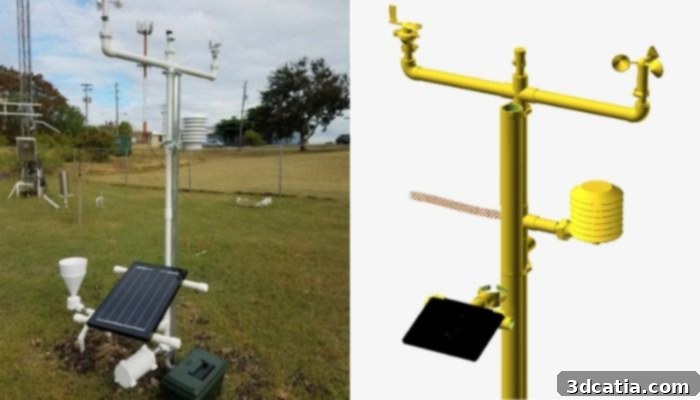
The 3D printed weather station, along with its mockup design. (Credits: 3D-PAWS)
Enhancing Preparedness: The Dominican Republic’s Third Phase Deployment
In the Dominican Republic, the 3D-PAWS project is now entering its crucial third phase, marking a significant milestone in the country’s efforts to enhance climate resilience. This phase involves the strategic installation of these advanced weather stations within the Yaque del Norte River basin. This particular basin holds immense importance for the Dominican Republic, not only due to its vast size but also because of its profound social, economic, and environmental impact on the surrounding communities and the nation as a whole. The basin is a vital source of water for agriculture, human consumption, and hydroelectric power, making accurate and continuous monitoring imperative for sustainable resource management and disaster mitigation.
During this deployment, a comprehensive array of hydrometeorological instruments will be installed. Specifically, five Automatic Weather Stations (AWS) will provide essential atmospheric data, while four rain gauges will offer precise measurements of precipitation, crucial for flood early warnings. Two flow meters will monitor river levels, and one tide gauge will be critical for coastal communities, especially during hurricane season. Furthermore, several soil stations equipped with temperature and humidity sensors will be deployed to provide valuable data for agriculturalists and drought monitoring. The rich, diverse data collected from this expanded network will profoundly strengthen the country’s capacity to monitor various environmental parameters and respond more effectively and rapidly to extreme weather events, safeguarding lives and livelihoods.
Empowering Local Expertise and Expanding the Network
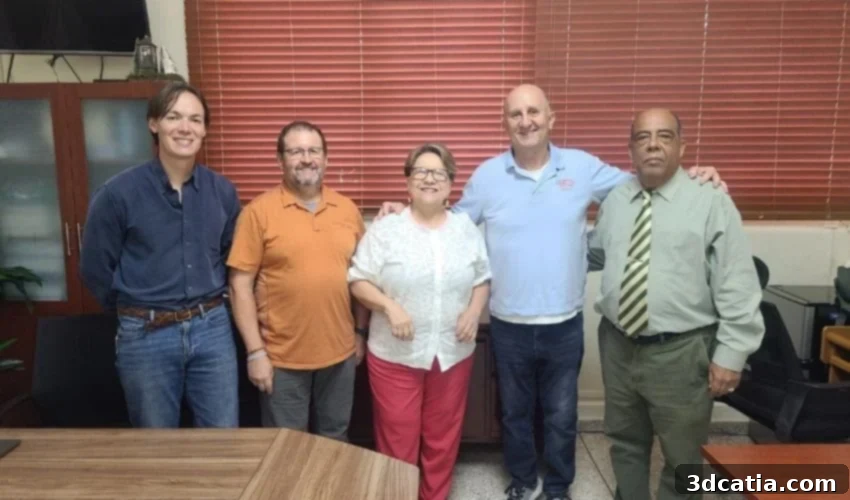
A cornerstone of the 3D-PAWS project’s success and sustainability is its commitment to local empowerment and knowledge transfer. Indomet director Gloria Ceballos highlighted this aspect, explaining to the press, “Experts have provided Indomet with materials and equipment, including 3D printers, and they will be traveling to the interior of the country to install the stations alongside our technical team, which has been trained for this work.” This hands-on approach ensures that local personnel gain invaluable experience in the installation, operation, and maintenance of these advanced stations, fostering long-term self-sufficiency. Director Ceballos further emphasized the profound importance of this initiative: “As a meteorological service, we consider the impact of this project to be highly significant for the country. These stations will allow us to expand our monitoring network at low cost, especially in areas with diverse microclimates.” The ability to cost-effectively monitor microclimates is particularly vital in a country like the Dominican Republic, which features varied topographies and climate zones, each with unique vulnerabilities to weather fluctuations.
The efficiency and cost-effectiveness of these 3D-printed stations are truly remarkable. Each station can be manufactured in approximately one week, demonstrating the speed and agility of 3D printing technology. More impressively, the cost per station ranges between a highly affordable $300 and $500, making them accessible even for tight budgets. This economic viability has already led to successful installations not only across various locations in the United States but also in 17 other countries worldwide, where they have consistently yielded positive results in improving climate monitoring and early warning capabilities. The proven track record of 3D-PAWS underscores its potential as a global model for sustainable hydrometeorological infrastructure.
Future Steps and Global Impact
The immediate next steps for the 3D-PAWS project in the Dominican Republic are clear and focused. These include the comprehensive installation of all planned equipment, ensuring optimal placement and functionality. Concurrently, continuous training will be provided for local personnel, building a robust cadre of experts capable of managing and maintaining the network independently. Crucially, all the newly collected data will be seamlessly integrated into the national early warning system. This integration will create a more comprehensive and responsive disaster management framework, enabling swifter decisions and better public information dissemination during critical weather events. The long-term vision is to create a resilient, self-sustaining network that significantly enhances the Dominican Republic’s ability to adapt to and mitigate the impacts of climate change, serving as an inspiration for other developing nations facing similar challenges.
What are your thoughts on these innovative 3D-printed weather stations being deployed in the Dominican Republic? We encourage you to share your insights in a comment below or connect with us on our LinkedIn or Facebook pages! Plus, don’t forget to sign up for our free weekly Newsletter to get the latest 3D printing news straight to your inbox. You can also find all our videos on our YouTube channel.
*Cover photo credits: COMET Program at the University Corporation for Atmospheric Research (UCAR), via Facebook