
Unlocking the Future: Penn State’s $4.5M Research Revolutionizes High-Performance Ceramics 3D Printing for Defense and Aerospace
The United States has long been at the forefront of adopting additive manufacturing technologies, particularly within the defense sector. The Department of Defense (DoD) consistently champions innovation, investing substantial resources into advanced research to push the boundaries of manufacturing capabilities. This commitment is evident in their ongoing funding for additive manufacturing research, recognizing its potential to deliver unprecedented advantages in material science and component production. A prime example of this strategic investment is a significant $4.5 million Multidisciplinary University Research Initiative (MURI) grant awarded by the DoD, through the Office of Naval Research (ONR), to a dedicated team of researchers at Penn State University. Their critical mission is to delve into the intricate process of optimizing ceramic fabrication specifically for 3D printing applications, aiming to overcome long-standing challenges in this vital field.
The Critical Role and Challenges of High-Performance Ceramics
High-performance ceramics are indispensable materials across a multitude of advanced industries, especially in aerospace and defense. Their extraordinary properties make them ideal for demanding environments; they can endure temperatures soaring thousands of degrees Celsius and withstand rapid, extreme temperature fluctuations without any significant degradation. This makes them perfect for components in jet engines, thermal protection systems for spacecraft, hypersonic vehicles, and advanced armor. However, despite their superior characteristics, these materials present formidable manufacturing hurdles. Traditional methods for producing high-performance ceramics are inherently complex, energy-intensive, and often result in material waste. Incorporating them into additive manufacturing, or 3D printing, introduces an even greater layer of difficulty, limiting their widespread adoption in custom, complex geometries. The DoD’s substantial grant directly addresses this bottleneck, empowering researchers to explore groundbreaking techniques like laser processing to facilitate the production of these critical ceramics at significantly lower temperatures, thereby revolutionizing their integration into advanced manufacturing paradigms.
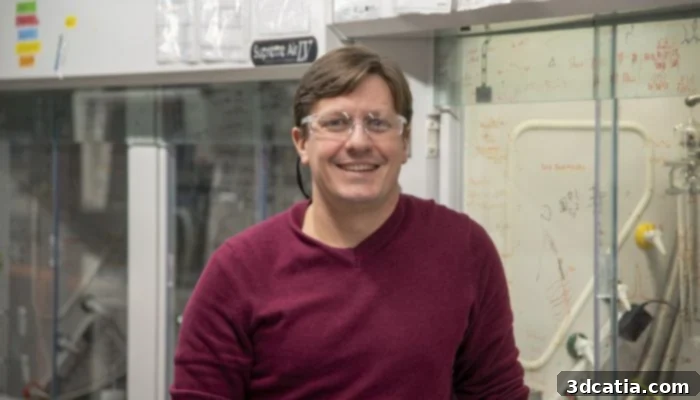
Robert Hickey, one of the leaders of the research team (photo credits: Matthew Carroll)
Pioneering Research: Photochemical and Photothermal Additive Manufacturing
The ambitious project, aptly titled “Photochemical and Photothermal Additive Manufacturing of Preceramic Polymers,” is spearheaded by a formidable team of experts. Robert Hickey, an esteemed associate professor of materials science and engineering at Penn State, leads the Penn State contingent, collaborating closely with Michael Hickner, a distinguished professor at Michigan State University. Their collective vision, as articulated in an article from Penn State, is to devise a revolutionary “one-step process to produce ultra-high-temperature ceramic materials without bulk heating.” This endeavor seeks to dismantle the traditional energy-intensive, multi-stage methods of ceramic production, paving the way for a more efficient and precise additive manufacturing workflow.
Professor Hickey candidly articulated the core dilemma currently plaguing ceramic manufacturing: “The big problem currently in forming ceramics is the high temperatures and high energy required.” This necessity for extreme heat is not only costly but also fundamentally antithetical to the precision demands of advanced 3D printing. He further elaborated, “That has been a detriment, especially for 3D printing, which is currently very hard to do precisely with these materials.” The inherent challenges include uncontrolled shrinkage and warpage, which are direct consequences of the immense thermal energy applied during traditional processing. This project aims to meticulously address these issues by fundamentally rethinking the energy input required for ceramic conversion.
Overcoming Traditional Limitations: The Promise of Light-Based Curing
The established method for creating ceramics typically involves taking a polymer precursor material – a substance that can be converted into ceramic through chemical reactions – and subjecting it to extremely high temperatures in a bulk heating process. While this heating effectively transforms the polymer precursors into hardened ceramics, it comes with significant drawbacks. A staggering amount, often as much as 50 percent, of the valuable precursor material can be lost during this thermal conversion, primarily due to outgassing and uncontrolled structural changes. Furthermore, the intense and pervasive heat can drastically alter the intended geometry of the ceramic part, leading to deformations, cracks, and internal stresses that compromise structural integrity. This lack of control over the final shape severely limits the geometric complexity achievable with traditional methods, hindering the potential of additive manufacturing.
To circumvent these inherent limitations, the Penn State team is pioneering a radical departure from conventional approaches. Their research centers on harnessing the power of light to convert polymer precursor models into the final ceramic product. Instead of relying on indiscriminate bulk heating, they propose a targeted, energy-efficient method. The scientific premise is that high-intensity lasers can precisely trigger the necessary chemical reactions within the precursor materials. This localized energy input allows the material to rapidly densify and transform into hardened ceramic, critically, without requiring the entire mass to be heated. This light-based heating approach promises faster processing speeds compared to traditional furnace-based methods, enabling far more rapid and controlled 3D printing of complex ceramic components. This targeted energy delivery is key to mitigating material loss and preserving intricate geometries, opening up a new frontier for ceramic additive manufacturing.
“There’s a major need to try to reduce the energy necessary to convert or make these ceramics and to prevent major geometry changes after printing and processing,” Hickey emphasized. This highlights the dual objective of their research: enhancing energy efficiency and maintaining geometric fidelity. “So, really, we are looking at how to convert polymers into ceramics using light with the ultimate goal of 3D printing high-performance ceramics.” This statement encapsulates the ambitious yet practical vision behind their work – to bring advanced ceramics fully into the realm of high-precision additive manufacturing.
How Will This Research Further Ceramics 3D Printing?
The Penn State project is meticulously structured to yield comprehensive insights and practical advancements. As detailed in the university’s article, the scientists’ methodology is multifaceted: “The project will involve synthesizing novel precursors, exploring different ways to promote light-based ceramic conversion, gaining computational insights into the reaction conversion pathways and feeding the insights back to precursor design and synthesis.” This iterative process, integrating material synthesis with advanced computational modeling, is crucial for optimizing the entire workflow. The development of new precursor materials specifically designed for light-based curing will be foundational. Understanding the precise mechanisms of how light triggers ceramic conversion at a molecular level will be facilitated by cutting-edge computational tools. These insights will then inform the design of even more efficient and effective precursors, creating a virtuous cycle of innovation.
The potential applications stemming from this research are vast and strategically important. One of the most immediate beneficiaries will be the production of advanced hypersonic vehicles. These vehicles operate at extreme speeds, generating immense heat, and therefore demand materials that can withstand ultra-high temperatures and severe thermal stresses. The ability to 3D print complex ceramic components with superior thermal resistance and precise geometries will be a game-changer for hypersonic propulsion systems and thermal protection elements. Beyond defense applications, these breakthroughs could also impact sectors like commercial aerospace, energy generation, and even industrial tooling, where extreme heat resistance and wear performance are critical.
Adri van Duin, a distinguished professor of mechanical engineering at Penn State and a co-principal investigator (co-PI) on the project, underscored the broad impact of their work. “This program will open new avenues to additive manufacturing ceramic materials across a number of high-temperature metal carbides, such as tungsten carbide, and silicon-based ceramics, such as silicon carbide and silicon nitride,” he stated. These specific materials, known for their exceptional hardness, strength, and thermal properties, are currently challenging to process with high precision. The research promises to make these materials more accessible for additive manufacturing, expanding the toolkit for engineers and designers. Professor van Duin further highlighted the computational aspect: “Additionally, new computational capability will be built to predict high-energy reaction intermediates, which will be used to design new precursors and processing regimes.” This predictive modeling capability will significantly accelerate the discovery and optimization of new ceramic materials and their processing methods, moving from empirical trial-and-error to data-driven design. For those interested in a deeper dive into the project’s specifics, the original article from Penn State provides further details and can be accessed here.
The Penn State team’s innovative approach to use light for creating ceramics for 3D printing represents a significant leap forward in materials science and additive manufacturing. This research not only addresses critical challenges in defense and aerospace but also lays the groundwork for broader industrial applications where high-performance, complex ceramic parts are essential. What are your thoughts on this groundbreaking research? Let us know in a comment below or on our LinkedIn, Facebook, and Twitter pages! Don’t forget to sign up for our free weekly Newsletter here, the latest 3D printing news straight to your inbox! You can also find all our videos on our YouTube channel.
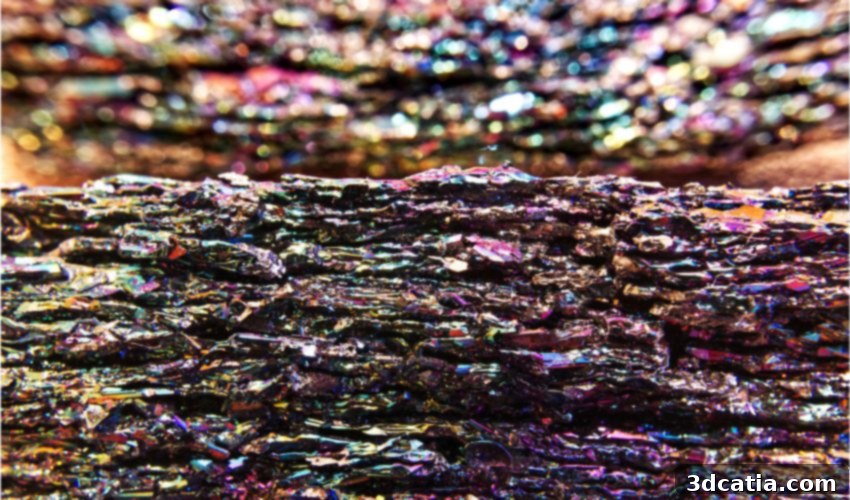
*Cover photo: Silicon carbide, one of the materials that will be worked with, in its mineral form.