
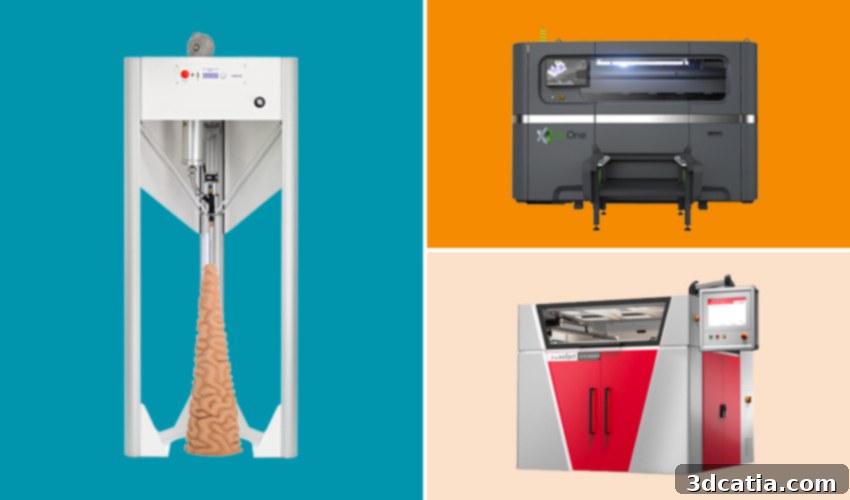
The Ultimate Guide to Ceramic 3D Printers: Professional & Desktop Solutions Explored
The world of additive manufacturing continues to evolve at an astonishing pace, and ceramic 3D printing stands out as a particularly dynamic sector. A report published by the research firm IDTechEx at the close of 2021 projected that the ceramic additive manufacturing market would soar to a valuation of $400 million by 2032, marking a seven-fold increase from its 2022 forecast. This substantial growth underscores the increasing interest and investment from manufacturers in this specialized niche. The expansion is evident not only in market value but also in the burgeoning number of ceramic 3D printers becoming available, catering to a diverse range of applications and user needs.
Ceramics, as a material class, offer unique properties such as high heat resistance, chemical inertness, and exceptional hardness, making them indispensable in various high-performance industries. The versatility of ceramic materials is matched by the array of 3D printing processes compatible with them, including stereolithography (SLA), powder bonding (binder jetting), and material extrusion. This technological flexibility allows for the processing of a wide spectrum of ceramics. While traditional materials like porcelain and clay are popular for artistic and consumer applications, industrial manufacturers increasingly gravitate towards technical ceramics such as alumina, zirconia, and tungsten carbide for their superior mechanical and thermal properties. This comprehensive guide delves into leading ceramic 3D printers, categorizing them by their intended application: robust professional solutions designed for industrial demands and accessible desktop models ideal for personal use, education, and artistic exploration.
Professional Ceramic Solutions: Advancing Industrial Additive Manufacturing
For demanding industrial applications where precision, strength, and scalability are paramount, professional-grade ceramic 3D printers offer advanced capabilities. These machines are engineered to handle complex geometries, produce highly dense and functional parts, and often work with high-performance technical ceramics. They serve industries ranging from aerospace and medical to automotive and tooling, enabling the creation of prototypes, specialized components, and even end-use parts with unparalleled material properties. Below, we highlight some of the top professional ceramic 3D printers on the market.
C3600 ULTIMATE From 3DCeram
3DCeram stands as a specialist in ceramic additive manufacturing, with significant expertise in stereolithography and the formulation of technical ceramics. Their flagship C3600 Ultimate 3D printer is engineered for large-scale mass production and the fabrication of substantial industrial parts. Utilizing advanced stereolithography technology, this machine is uniquely capable of producing objects without the need for support structures, simplifying post-processing and reducing material waste. With a substantial weight of approximately 4,000 kg and imposing dimensions of 2,100 x 1,800 x 2,500 mm, the C3600 Ultimate offers an expansive printing area of 600 x 600 x 300 mm. It delivers exceptional detail with a layer thickness ranging between 0.025 and 0.125 mm. The printer integrates four powerful UV lasers, each featuring a precise beam diameter of around 60 µm, ensuring consistent and high-quality ceramic part production.
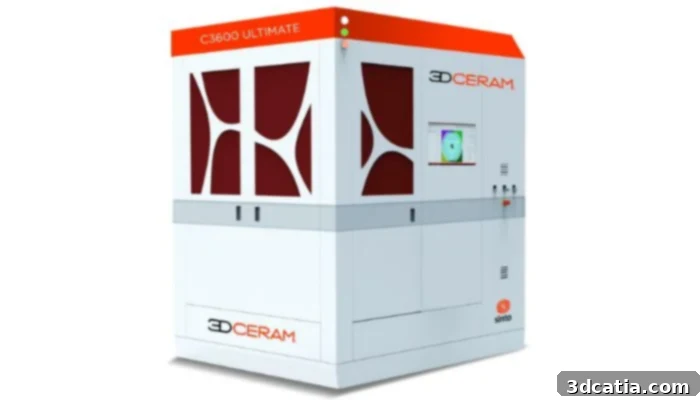
Photo Credits: 3DCeram
Admaflex 130 From Admatec
Hailing from the Netherlands, Admatec introduces the Admaflex 130, a ceramic 3D printer meticulously designed for rigorous industrial applications. Launched in 2018, the Admaflex 130 employs Digital Light Processing (DLP) technology to achieve high-resolution ceramic prints. It boasts a build plate measuring 96 × 54 × 120 mm, capable of achieving a minimum layer width of 0.03 mm and an impressive XY precision of 0.05 mm. Weighing in at 300 kilograms, this robust ceramic 3D printer excels in the production of functional and aesthetically refined parts, particularly those requiring intricate geometries and exceptionally smooth surface finishes. Admatec highlights the machine’s remarkable production capabilities, citing figures such as the ability to print 300 layers of material per hour, making it a highly efficient solution for advanced ceramic manufacturing.
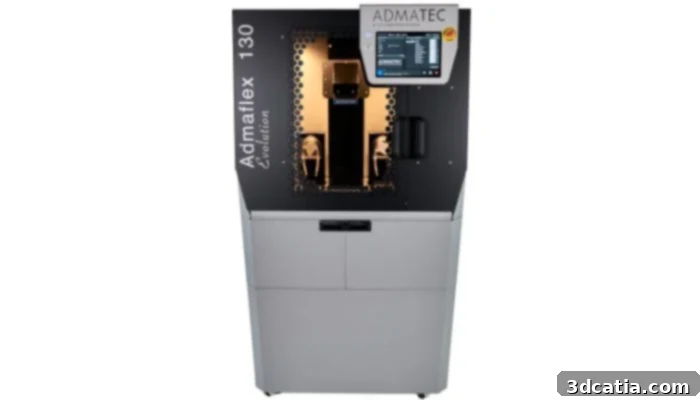
Photo Credits: Admatec
X1 160PRO From Desktop Metal
The X1 160PRO is a powerhouse industrial machine, originally developed by ExOne and now integrated under the Desktop Metal brand following its acquisition in 2021. Utilizing binder jetting technology, this printer boasts an impressive build volume of 800 x 500 x 400 mm, positioning it as the world’s largest binder jet 3D printer for the production of metal, ceramic, or composite parts, according to Desktop Metal. As the largest model in the X-Series, the X1 160PRO is renowned for its capabilities in metal 3D printing, but it demonstrates equal proficiency when working with ceramics, enabling the creation of parts with high density and excellent repeatability. Beyond its generous build volume, the machine can print layers with thicknesses ranging from 30 to 200 microns, achieving remarkable speeds of up to 10,000 cm³ per hour. This makes it an ideal solution for high-throughput manufacturing of intricate ceramic components for demanding industrial applications.
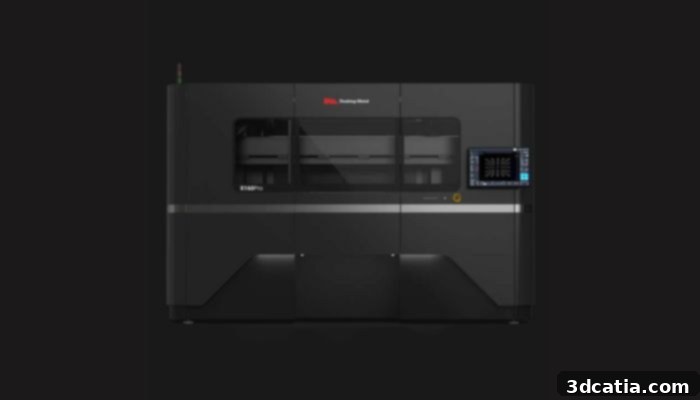
Photo Credits: Desktop Metal
CeraMax Vario V900 from Lithoz
The CeraMax Vario V900 3D printer from Lithoz represents a significant advancement in ceramic additive manufacturing, being the first machine capable of producing large, thick-walled, fully dense parts from both oxide and non-oxide ceramics. Its advanced capabilities extend to processing challenging dark ceramics, such as silicon carbide, to achieve full density. This innovative printer leverages Lithoz’s proprietary LIS (Lithography-based Ceramic Manufacturing with Industrial Suspensions) technology, which facilitates additive manufacturing using industrial water-based suspensions that contain very low levels of organic binders. The CeraMax Vario V900 is also designed for seamless data management, storing and organizing all process data with robust database support, thereby guaranteeing comprehensive documentation of every print job. For enhanced control and monitoring, the entire printing process can be observed in real-time via remote video transmission, ensuring optimal quality and operational oversight. For a deeper dive, watch the video below.
The S600D Ceramic 3D Printer From Lynxter
Lynxter, a French manufacturer, specializes in professional-grade machines that offer compatibility with an extensive array of materials, including various ceramics. Among their cutting-edge solutions is the S600D, a versatile 3D printer distinguished by its ability to quickly and easily swap tool-heads and nozzles. This modular design significantly expands the range of applications and materials that can be processed. For ceramic applications, the PAS11 tool-head is particularly suitable, designed specifically for ceramic pastes. The S600D provides a generous printing volume of Ø390mm x 600mm and is compatible with a wide range of advanced ceramics, including alumina, stoneware, porcelain, zirconia, and cordierite. The specialized tool-head incorporates a micro-dosing pump to ensure precise paste dosage, guaranteeing high-quality and consistent prints. Lynxter further supports its users by offering its own line of high-quality ceramic materials in convenient 55 ml syringes, streamlining the workflow for ceramic printing professionals.
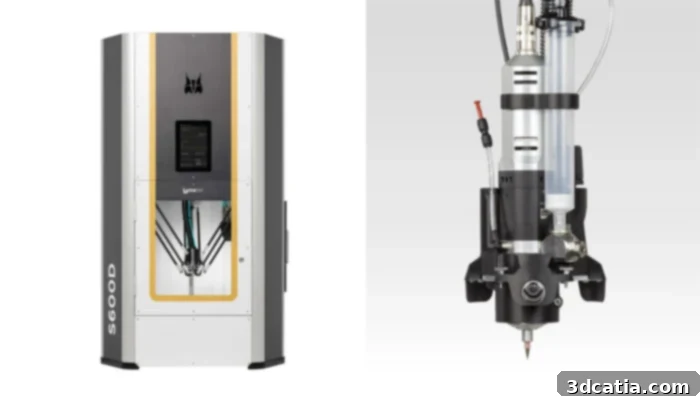
Left, the S600D 3D printer; right, the PAS11 tool head (photo credits: Lynxter)
The Pam o2 MC From Pollen
The French company Pollen offers the PAM MC series, a line of highly versatile ceramic 3D printers designed to process a wide variety of industrial materials for the creation of functional parts. These innovative 3D printers utilize an extrusion-based process, working with ceramic pellets rather than pastes or resins, which allows for broader material choices and potentially lower material costs. Specifically, the Pam o2 MC printer, measuring 834 x 834 x 925 mm, delivers a robust print speed of up to 160 mm/s within a respectable print volume of 300 x 300 mm. This machine is the culmination of significant advancements in power electronics and features a reinforced, lightweight architecture. This design ensures ease of use while simultaneously offering high-speed print quality and achieving professional-grade results, making it an excellent choice for manufacturers seeking reliable and efficient ceramic additive manufacturing solutions.
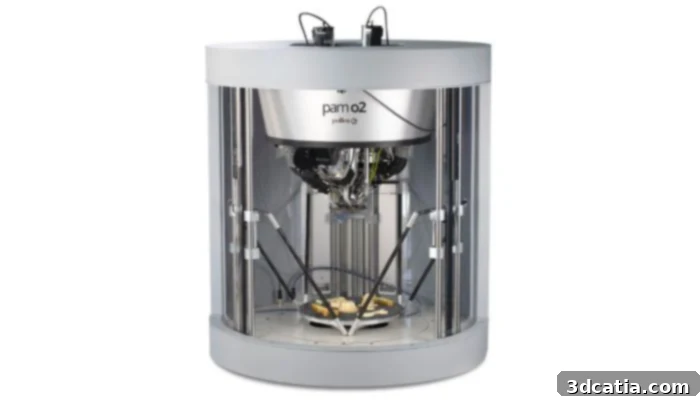
Photo Credits: Pollen AM
ProMaker LF10 From Prodways
The ProMaker LF10 is an advanced industrial 3D printer developed by the renowned French manufacturer Prodways. This machine is particularly adept at processing highly viscous materials, making it an optimal choice for the precise production of ceramic parts. It employs Prodways’ patented DLP MOVINGLight® technology, which is celebrated for its ability to deliver exceptional precision alongside rapid production speeds. With a resolution reaching up to 30µ and a powerful output of 150mW/cm², the ProMaker LF10 is capable of handling even the most challenging ceramic materials with ease. It features a relatively large printing area of 300 x 445 x 200 mm, accommodating a variety of part sizes. Furthermore, the printer utilizes a 365nm wavelength, which ensures fully controlled curing and effectively mitigates the risk of light-scattering effects. This precise control results in superior detail reproduction and the production of high-quality ceramic components with consistent properties.
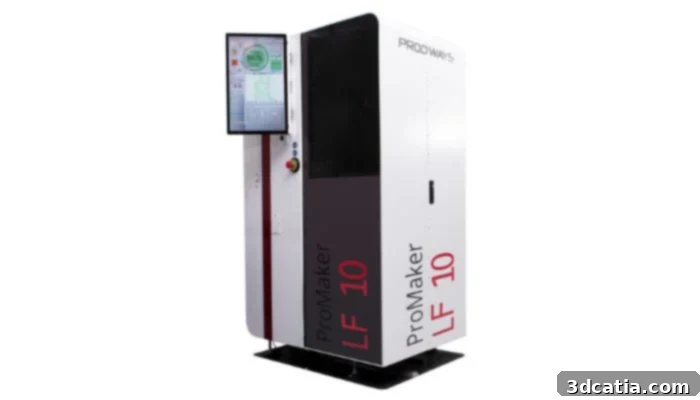
Photo Credits: Prodways
VX1000 from Voxeljet
Next on our curated list of professional ceramic 3D printers is the VX1000, a sophisticated machine developed by the German manufacturer Voxeljet, widely recognized for its robust industrial range. This printer leverages Binder Jetting technology, a process ideal for manufacturing with a diverse array of materials, including ceramic powders, sand, and certain polymers like polymethacrylate. The VX1000 is an industrial-grade printer specifically designed for the rapid development of complex molds and small to medium production runs of ceramic parts. Its versatility also makes it a valuable tool for research and development due to its broad material compatibility. It offers an expansive printing volume of 1000 × 600 × 500 mm and can achieve a layer thickness ranging from 80 to 300 μm, allowing for flexibility in balancing resolution and build speed. This makes the VX1000 a powerful solution for applications demanding both detail and size in ceramic additive manufacturing.
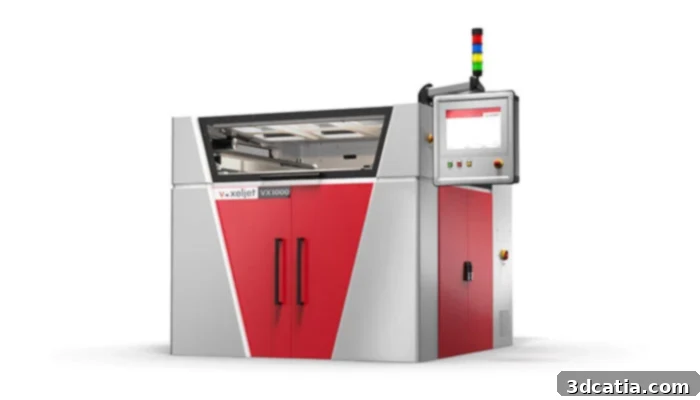
Photo Credits: Voxeljet
The Carmel 1400C Ceramic 3D Printer From XJet
The Carmel 1400C ceramic 3D printer from XJet stands apart with its unique and highly innovative approach to additive manufacturing. This system utilizes the company’s patented NanoParticle Jetting (NPJ) technology, a sophisticated form of material jetting. The NPJ process involves jetting liquid suspensions containing ceramic (or metal) nanoparticles directly onto the build platform. Simultaneously, soluble support material is jetted alongside the ceramic, which can later be safely and easily washed away with water. This distinctive method enables the creation of highly complex geometries with exceptional detail and surface finish, resulting in high-quality end-use parts with minimal environmental waste. The Carmel 1400C, XJet’s dedicated ceramic solution, features a generous build volume of 500 x 140 mm (19.7 x 5.5 in) and offers remarkable precision with a layer thickness of 7-10 microns. It achieves a build speed of up to 0.7mm height per hour. Crucially, it is compatible with demanding technical ceramics like Zirconia and Alumina, which maintain their intrinsic strength and density even after the printing and sintering processes, ensuring robust and accurate end-use parts for critical applications.
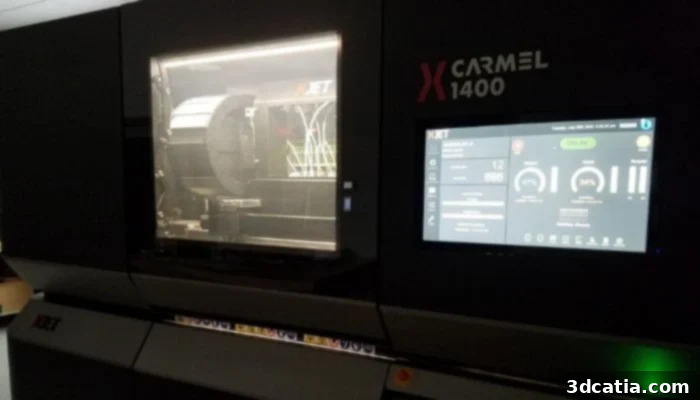
A look inside the X Carmel 1400C ceramic 3D printer (photo credits: XJet)
Desktop Ceramic 3D Printers: Accessibility and Artistic Expression
While industrial machines push the boundaries of technical ceramic applications, desktop ceramic 3D printers make this exciting technology accessible to a broader audience. These compact and often more affordable solutions are perfect for artists, educators, small businesses, and hobbyists looking to explore ceramic fabrication without the need for large-scale industrial infrastructure. They typically focus on easier-to-process materials like clay and porcelain, offering creative freedom for prototyping, artistic endeavors, and educational purposes. Here are some of the notable desktop ceramic 3D printers that empower users with accessibility and innovation.
3D PotterBot Micro 10 from 3D Potter
3D Potter, an American manufacturer, has carved a niche in ceramic 3D printing, specializing in material deposition technologies. They proudly assert that their range of ceramic 3D printers are among the few on the market capable of fabricating with real clay, offering an authentic artistic and functional medium. The Micro 10 stands as their entry-level ceramic 3D printer, perfectly suited for educational environments, classrooms, or individual artists keen to explore ceramic 3D printing technology. This compact yet capable machine features a 1,000 ml extruder and a build envelope extending up to 1 foot. Despite being the smallest clay printer offered by the company, it delivers impressive printing speeds. Its compact and efficient design ensures it can fit comfortably into virtually any workspace, making advanced ceramic creation accessible and convenient for a wide range of users.
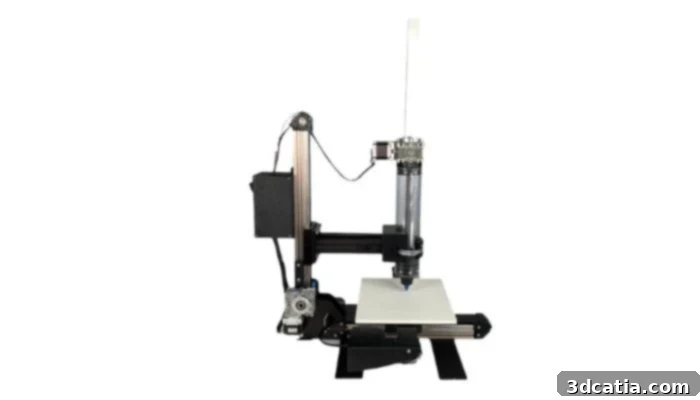
Photo Credits: 3D Potter
Matrix M700 From Eazao
Eazao, a Chinese manufacturer, offers an innovative range of ceramic 3D printers under the Matrix series, designed to empower users to create a diverse array of ceramic structures. These include original vases, intricate decorative wall panels, and expressive sculptures. The Matrix series comprises three distinct models: the M500, M600, and M700, differing primarily in their build size. The Matrix M700, being the largest, measures 900 x 1200 x 1100 mm and provides a maximum print volume of 500 x 500 x 700 mm. It delivers versatile output with a layer resolution ranging from 0.4 to 1 mm, utilizing a 1.5 mm nozzle diameter. A key strength of the Matrix M700 is its compatibility with a wide variety of materials, such as porcelain and clay, printing at speeds from 10 to 40 mm/s. It employs Direct-Ink Writing (DIW) technology for precise material deposition. The printer is equipped with a user-friendly color touch screen and offers USB and SD card connectivity. Furthermore, the Matrix range is broadly compatible with Linux, Windows, and Mac operating systems, supports popular slicing software like Cura, Slic3r, and Simplify3D, and accepts common input formats such as STL and OBJ, ensuring a seamless user experience. Explore its capabilities in the video below.
The Bison 1000 Ceramic 3D Printer From Tethon 3D
The DLP Bison 1000 printer from Tethon 3D is a testament to precision, reliability, and quality in ceramic additive manufacturing, making it particularly well-suited for demanding applications in space and defense. Educational institutions utilizing this printer for teaching purposes in these specialized fields can even benefit from a price reduction, though its official website lists the printer at $19,950. A significant advantage of the Bison 1000 is its open materials system, ensuring compatibility with a wide range of materials from various manufacturers. This flexibility empowers users to experiment with different ceramic formulations and fine-tune their own print settings, fostering innovation and customization. The printer features a build plate measuring 110 x 60 x 138 mm, offering fine detail with layer thicknesses configurable between 25, 50, and 100 μm. For enhanced control and oversight, a built-in camera and a dedicated app facilitate remote monitoring and management of the printing process. The printer also includes specific Tethonware software, streamlining the workflow and ensuring optimal performance for ceramic part creation.
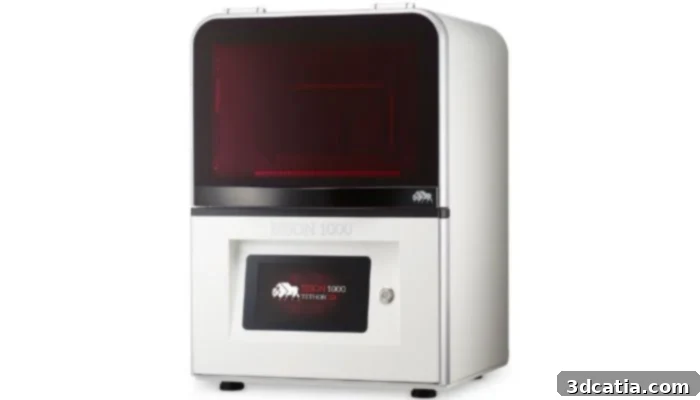
Photo Credits: Tethon 3D
The LUTUM Series From Vorm Vrij
VormVrij, a Dutch manufacturer, presents the acclaimed LUTUM range of ceramic 3D printers, known for their robust design, durability, and ease of maintenance. These desktop machines are engineered to provide a reliable platform for ceramic creation. The latest iterations in the series include the advanced LUTUM 4 M and 5 M models, though other versions remain popular. The LUTUM 5 M, for instance, builds upon the success of its predecessor, the LUTUM 5. This earlier model featured a sophisticated 32-bit operating system, a responsive 7-inch touchscreen, convenient Wi-Fi connectivity, and a generous 32 GB memory. A standout feature is its dual extruder system, which allows for sequential printing with different ceramic types and colors, or parallel operation to significantly boost output volume and print speed. The robust stainless steel V10 extruder is designed for continuous printing over extended sessions, enabling users to load a file and run the printer for hours without interruption. While the LUTUM 5 is one of the brand’s larger machines, its print volume is slightly smaller than that of the LUTUM 4.6 (95 liters compared to 100 liters), offering flexibility for various project sizes.
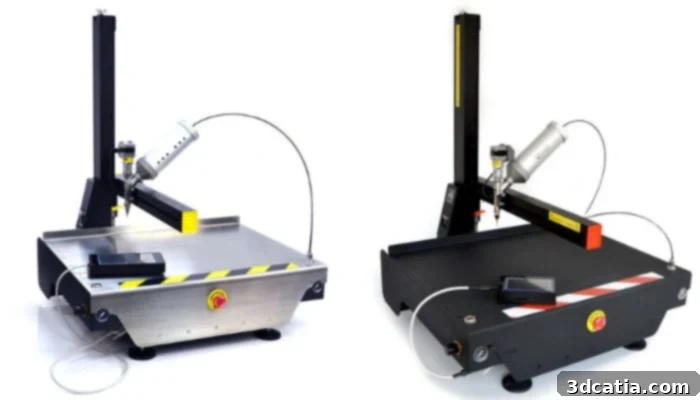
The LUTUM 5 (left) and LUTUM 4 (right) are part of VormVrij’s LUTUM range (photo credits: VormVrij)
Delta WASP 40100 Clay from WASP
From the renowned Italian manufacturer WASP comes the Delta WASP 40100 Clay, a distinctive desktop-sized ceramic 3D printer with a groundbreaking feature: it prints directly onto the desired surface, such as a floor, effectively bypassing the need for a traditional printing plate. This innovative approach offers the significant advantage of eliminating the necessary waiting time for drying, accelerating the production process. An optional XL extruder is available, further enhancing the printer’s capabilities by allowing for larger prints to be created in less time. The Delta WASP 40100 Clay boasts broad material compatibility, working seamlessly with various ceramics including porcelain, stoneware, refractory materials, and natural clay. The printer can be augmented with a professional clay kit, which includes the specialized clay extruder and the LDM WASP Extruder 3.0. This comprehensive setup is designed to handle all types of liquid-tight and ceramic materials, making it a versatile tool for both artistic and functional ceramic additive manufacturing.
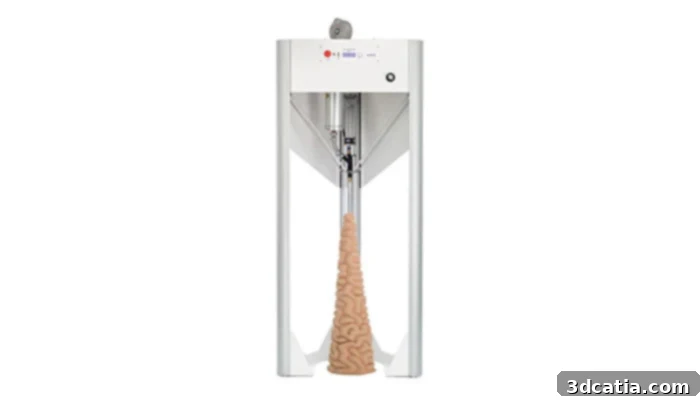
Photo Credits: WASP
StoneFlower 3.0 from StoneFlower
StoneFlower, a company founded by a dedicated team of researchers, scientists, and engineers, is committed to developing advanced 3D printers specifically designed to handle ceramic materials with precision and reliability. Among their impressive lineup of solutions is the StoneFlower 3.0, an extrusion-based printer boasting a substantial print volume of 50 x 50 x 50 cm. This machine incorporates a robust all-metal chassis, ensuring exceptional stability during operation and enabling high-speed printing. For enhanced user experience, the 3D printer is equipped with an intuitive touch screen interface and offers the convenient option to pause and resume the printing process at any point. Weighing 35 kg, the StoneFlower 3.0 provides flexible printing speeds ranging between 30 and 100 mm/s. Its broad compatibility with the vast majority of slicing software available on the market further simplifies its integration into existing workflows. According to StoneFlower, this printer is the ideal tool for effortlessly designing and fabricating intricate ceramic parts, catering to both professional and educational users.
We hope this comprehensive overview of professional and desktop ceramic 3D printers has provided valuable insights into the burgeoning world of ceramic additive manufacturing. Whether you’re an industrial manufacturer seeking high-performance technical ceramics or an artist exploring creative applications with clay, the innovations in this field offer exciting possibilities. Did you find the perfect ceramic 3D printer for your needs in our listing? Share your thoughts and experiences in a comment below, or connect with us on our Facebook and Twitter pages! Don’t forget to sign up for our free weekly Newsletter to get all the latest news in 3D printing delivered straight to your inbox.