
Revolutionizing 3D Printing with Recycled Fishing Nets: Fishy Filaments & Fillamentum’s Sustainable Vision
As the world grapples with the undeniable realities of climate change and the urgent need to meet global environmental targets like those outlined in the Paris Agreement, sustainability has become a paramount concern across virtually every industry. Additive manufacturing, commonly known as 3D printing, is no exception to this critical dialogue. While often celebrated for its potential to reduce waste through optimized designs and on-demand production, the widespread reliance on plastic-based materials has frequently raised questions about its true environmental footprint. In response, there’s a growing imperative within the industry to innovate and develop more eco-friendly alternatives. This drive is brilliantly exemplified by Cornish startup Fishy Filaments. This pioneering company is tackling two significant environmental issues simultaneously: the pervasive problem of marine plastic pollution from discarded fishing nets and the demand for sustainable raw materials for 3D printing. By transforming polluting fishing nets into high-quality nylon filaments, Fishy Filaments is setting a new standard. Their impactful work is further amplified through a strategic collaboration with leading material manufacturer Fillamentum, a company already recognized for its strong commitment to sustainable practices in polymer 3D printing. We recently had the opportunity to speak with Ian Falconer, the visionary founder of Fishy Filaments, and Josef Doleček, the accomplished CEO and founder of Fillamentum. Our conversation delved into the origins and missions of their respective companies, explored the critical importance of sustainable 3D printing materials in today’s world, and highlighted the synergies and achievements of their groundbreaking collaboration.
Bridging Worlds: Introductions to Fishy Filaments and Fillamentum
We began our discussion by asking the founders to introduce themselves and their connection to the dynamic field of 3D printing, specifically focusing on how their backgrounds led them to this innovative space.
IF: My name is Ian Falconer, and I am the proud founder of Fishy Filaments. My academic journey began in mining and mineral processing, which essentially means my expertise lies in materials science rather than manufacturing technologies like 3D printing itself. However, I also bring a decade of practical experience as an engineer in the global telecoms infrastructure sector. Fishy Filaments, in essence, represents a powerful synthesis of these two seemingly disparate worlds. It’s about taking innovative ideas and proven technologies from both materials engineering and global infrastructure management, then applying them to deliver high-performance materials without the complexities and environmental costs associated with a vast global supply chain. This interdisciplinary approach allows us to create solutions that are both technically robust and environmentally conscious.
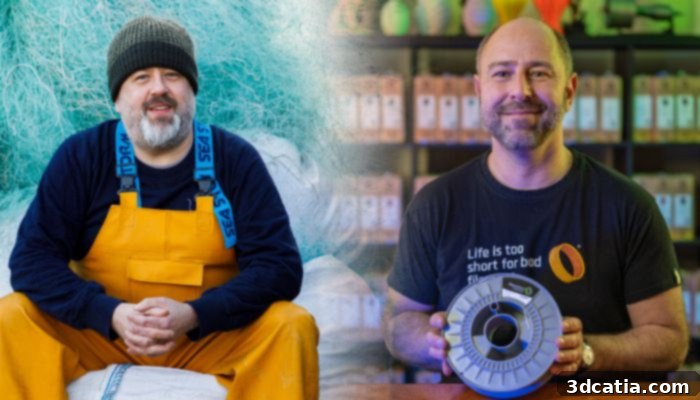
Ian Falconer (left) and Josef Doleček (right), pioneers in eco-friendly 3D printing materials.
JD: My name is Josef Doleček, and my professional life has been deeply immersed in the field of plastics processing since 2008. I initially started as an employee in a plastics company, gaining invaluable hands-on experience. Then, in 2011, I took the entrepreneurial leap and founded my own company specializing in the precision extrusion of plastics, primarily serving the demanding automotive industry. It was during this period, when I first encountered 3D printing technology, that I immediately recognized its immense potential. I felt a strong conviction that my extensive experience in processing polymer materials could bring significant value to this nascent field. This conviction has been a guiding principle and a primary goal since the very inception of our 3D printing materials business, which we proudly operate under our renowned 3D printing filament brand, Fillamentum. Our dedication has always been to pushing the boundaries of what’s possible with polymers in additive manufacturing.
The Genesis of Fishy Filaments: From Metals to Marine Plastics
Understanding the inspiration behind such an innovative venture, we asked Ian how the idea to develop Fishy Filaments originally came about.
IF: The journey to Fishy Filaments began somewhat indirectly. I was working in the mine finance sector for a company that had ambitious plans to develop a very large metals mine. My specific task was to conduct a multi-decadal analysis of their target markets. They were involved in mining titanium and vanadium, with high-purity iron ore as a valuable by-product – all processed into powders. During this analysis, I identified several significant roadblocks that would prevent them from serving the burgeoning Additive Manufacturing industry at a truly sustainable price point. Recognizing these challenges, I decided to dedicate myself to finding solutions for them. My goal was to unlock the potential for these advanced materials within additive manufacturing, ensuring both economic viability and environmental responsibility.
For a variety of reasons, those specific solutions didn’t come to full fruition within the metals sector at that time. However, I soon discovered that the underlying technological approaches I had developed worked just as effectively, if not even better, within the realm of polymer recycling. Fishy Filaments, therefore, is the embodiment of a robust technological solution that was initially seeking a significant problem to solve. It ultimately found its powerful application in addressing the global issue of end-of-life fishing gear, transforming what was once waste into a valuable resource for advanced manufacturing. This pivot allowed us to leverage our expertise in a way that has a profound environmental impact.
The Critical Importance of Recycling Fishing Nets into Filaments
Given the unique focus of Fishy Filaments, we inquired about the specific importance of recycling fishing nets into 3D printing filaments and the broader implications of this initiative.
IF: While our solution is undoubtedly driven by engineering principles and scientific innovation, the problem of fishing gear management and disposal is incredibly nuanced and complex, yet globally significant. The particular type of nets we target, primarily made from nylon monofilaments, are responsible for an astonishing approximately 20% of the global fishing catch, both by tonnage and by value. These nets are incredibly versatile and are utilized by a vast spectrum of fishers – from individual artisanal and sport fishers who might use a simple throw net from the shores of the Ganges to catch bait, all the way up to giant industrial trawlers operating on the high seas with nets extending several kilometers in length. It often comes as a surprise to many that the underlying materials used across this incredibly wide scale of fishing operations are essentially the same: they are all nylon monofilament.
The global plastics industry estimates that it sells approximately 200,000 tonnes of nylon monofilament into the fishing industry each year. At Fishy Filaments, based on our research and observations, we believe this figure might be considerably higher, potentially reaching up to 400,000 tonnes annually. This expanded estimate accounts for some overlap with agricultural nets, mosquito nets, and other uses for what Cornish fishers affectionately refer to as ‘nylon mono.’ Disturbingly, very little of this vast quantity of material ever gets recycled. The vast majority is either burned or buried after its operational life. Furthermore, according to compelling data from researchers at Australia’s CSIRO, a staggering 1-2% of monofilament nets are lost at sea each year. Once submerged, scientific studies suggest that a nylon monofilament netting can take over six centuries to degrade. This means that once lost, it effectively remains in the marine environment indefinitely, posing a permanent and devastating hazard to non-target species through the phenomenon chillingly known as ‘ghost netting.’ From an engineer’s perspective, the disposal of this material – an engineering-grade plastic specifically designed for incredibly tough and demanding applications – represents a tragic and profound waste of a valuable resource. Our mission is to transform this waste into a sustainable solution.
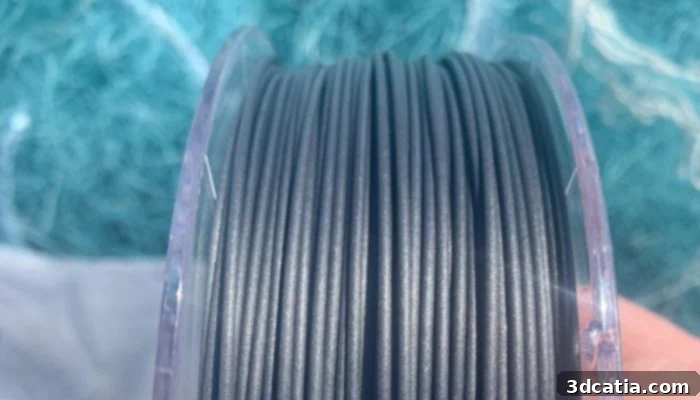
A close-up of an 0rCA spool intertwined with a fishing net, illustrating the source material (photo credits: Fillamentum).
JD: The issues Ian highlighted are precisely what deeply concern us at Fillamentum as well. I must admit that when I first encountered the concept of the circular economy many years ago, my understanding was quite vague, and I struggled to envision concrete, practical applications. This was partly because, until relatively recently, truly meaningful circular projects were few and far between. As a professional working extensively with plastics, I felt a deep frustration that our industry often carried a negative perception. I embraced it as a significant personal and professional task to demonstrate to both end-users and the general public that there are genuinely environmentally friendly, alternative pathways for plastics. Given that we had previously introduced a material of this sustainable nature ourselves, Nonoilen, and witnessed a very positive reception, it felt like a completely logical and necessary step to include Fishy Filaments in our product portfolio. This decision was driven by the fact that Fishy Filaments represents a truly beautiful and compelling example of how the complex problem of reusing plastic waste can be approached in an intelligent, impactful, and sensible manner, turning environmental challenges into valuable opportunities.
Spotlight on Fishy Filaments by Fillamentum: Products and Vision
To delve deeper into the tangible outcomes of this collaboration, we asked Ian to elaborate on the product lines under the “Fishy Filaments by Fillamentum” brand.
IF: Our core target consumers are advanced and industrial users who demand both superior performance and demonstrable sustainability. To meet these rigorous demands, we provide comprehensive Life Cycle Assessments (LCAs) for each of our products. Furthermore, we are committed to undertaking corporate-grade sustainability certification in the coming years, reinforcing our dedication to transparency and accountability. All our current products boast world-leading carbon impact credentials, and we make this vital information readily available to support our clients’ marketing efforts and their financial reporting for ESG (Environmental, Social, and Governance) compliance. This empowers our customers to make truly informed choices about their materials.
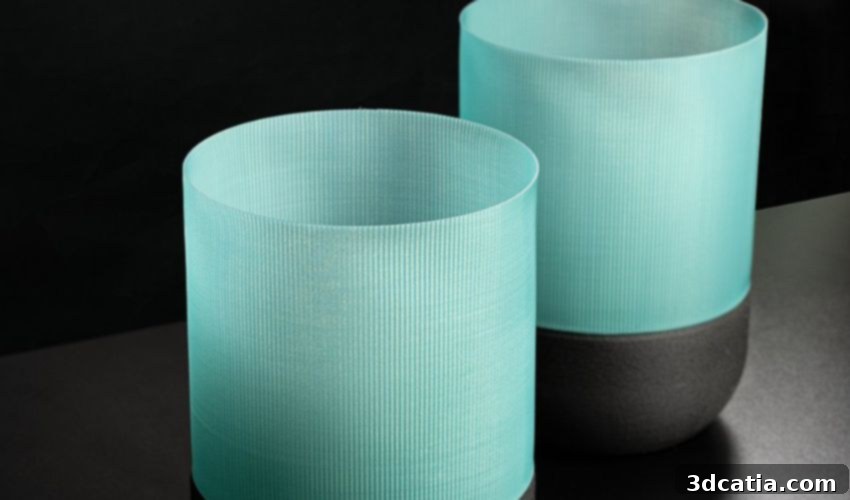
Currently, we offer two distinct product groups: unfilled and filled filaments. A key characteristic of all our current offerings is that they are crafted from 100% recycled materials. However, our commitment to innovation means we also have several advanced formulations in research and development, incorporating cutting-edge materials like graphene and other specialized additives to push performance boundaries even further. Our unfilled blends include Porthcurno and Longships. Both of these exhibit a beautiful translucence when extruded thinly and have found diverse applications in homewares, cosmetic packaging, unique jewelry pieces, and various fashion items, demonstrating their aesthetic and functional versatility.
Porthcurno, in particular, captivates with its especially attractive light blue-green hue, a color profile that has taken the world of lighting design by storm. We achieved a significant milestone by winning (a share of) an IDSA (Industrial Design Society of America) IDEA Gold prize, in collaboration with Signify/Philips Lighting, for their exquisite Coastal Breeze collection of 3D printed luminaires. This prestigious award places us among industry giants like Microsoft, Google, and Rolls Royce, validating the quality and innovation embedded in our materials. Longships, while having a different, darker color profile and being slightly stiffer, has yet to be made available as a filament due to certain technical hurdles. However, we are actively working to address these, and it remains a possibility for future release. Our primary current use for Longships is as a compounding base for our innovative 0rCA® family of carbon-filled filaments. The inaugural product in the 0rCA® family features a 10% carbon fiber fill, and critically, this is a recycled carbon fiber, ensuring that the filament derived from it fully meets our stringent 100% recycled criteria. The carbon fiber we utilize is a custom blend of precisely cut and milled fibers, specifically engineered to overcome the unique challenges of 3D printing while simultaneously maximizing the flexibility of its application across various industries.
Our ambition with these advanced materials is to serve manufacturers who require exceptional strength, superior impact resistance, and a mid-range of heat resistance. This makes them ideal for applications such as hot engine compartments (where they perform admirably) but perhaps not for direct hot engine components. We have already garnered significant interest from sectors focused on sustainable and inclusive mobility, including electric vehicles (EVs), cycling accessories, and mobility aids. Furthermore, the sports industry, encompassing extreme sports, water sports, racquet sports, and motor sports, has shown considerable enthusiasm. We’re also seeing strong adoption in industrial component manufacturing and many other areas. In due course, we plan to expand the 0rCA® family with a version offering even higher stiffness. This will be specifically targeted at applications within high-G and higher-torque environments, such as the critical blade tips of wind turbines, advanced unmanned aerial vehicles (UAVs), and sophisticated robotics applications.
Beyond our filament products, we are actively collaborating with various manufacturing methods, spanning both conventional and high-tech processes. Our aim here is to further develop the innovative concept of mono-materiality. This approach seeks to simplify the recycling potential of complex structures by constructing them entirely from the same core chemistry, ensuring that all components can be recycled together within the same material stream. We will be sharing more detailed insights about this overarching concept as a powerful strategy for truly closing the materials loop in advanced manufacturing. While this idea is still gaining traction, it is already a significant part of the conversation in both the fashion and automotive markets, indicating its broad applicability and future importance.
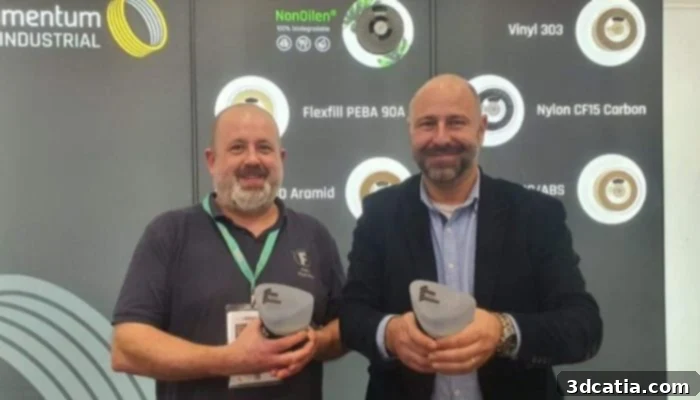
Josef Doleček and Ian Falconer proudly holding their 3DPI 2021 Awards for Sustainability in AM (Fishy Filaments) and Materials Company of the Year (Fillamentum) (photo credits: Fillamentum).
JD: To add to Ian’s comprehensive explanation, what we have here is truly a unique product that not only meets but often exceeds strict criteria in terms of performance. Fishy Filaments are crafted from high-quality PA6 polyamide, which inherently allows them to be utilized in demanding technical, and indeed industrial, applications such as those found in the automotive sector. However, what makes this material truly stand out is its distinctive visual aesthetic and compelling origin story. These attributes primarily appeal to designers and innovators who seek to combine these exceptional technical properties with a powerful narrative for their 3D printed consumer design items. It’s a material that delivers both function and form, with a story that resonates deeply with conscious consumers and creative professionals alike.
A Sustainable Future: Final Words from the Founders
As our insightful conversation drew to a close, we asked both Ian and Josef if they had any final words or messages they wished to share with our readers.
IF: We are a relatively small company, operating from the very edge of Europe, yet we have already initiated significant global change. In 2019, we proudly launched the world’s first-ever commercial 3D printer filament made entirely from used fishing gear. This groundbreaking action wasn’t just a product launch; it served as a powerful catalyst, compelling other, far larger, companies to reconsider their material sourcing and sustainability strategies. Our innovation effectively opened up an entirely new market segment focused on recycled and eco-conscious filaments. Four years on, that market is maturing at an impressive pace, but our journey of innovation has not stopped there.
Our products consistently remain at the cutting edge of sustainability, where the advanced capabilities of engineering technology must be carefully balanced against its inherent environmental impact. We firmly believe that the choice of materials can make an enormous difference, not only to a product’s performance but also to its overall environmental footprint. We empower product designers and manufacturers to find their own clear, unambiguous, and guilt-free voice when they choose to utilize our products. We are convinced that the widespread proliferation of such sustainable solutions is absolutely essential if we are to collectively meet the formidable global environmental challenges that face us all. In this critical mission, we have found an absolutely brilliant partner in Fillamentum. Their collaboration has been instrumental in helping us to upscale our innovative ideas, adding their profound expertise and resources, and together, we are excited to bring even more ground-breaking products to market. Our dedication remains guided by robust data, with carbon impact serving as our unequivocal moral compass. It is truly fantastic to be working alongside Josef and his team, as we know they share our deep belief in, and unwavering commitment to, a positive and sustainable future for additive manufacturing.
JD: At Fillamentum, we view sustainability and a profound respect for our environment not merely as a fleeting modern trend, but as a fundamental principle. Above all, we are committed to demonstrating that this focus on sustainability is not just empty rhetoric; it represents a tangible pathway for the betterment of all. We would be incredibly pleased if our worldview, which we encapsulated years ago in a simple yet powerful slogan – “think before you print” – were to be wholeheartedly adopted by both everyday enthusiasts and, crucially, by professional users of 3D printing technology. Our mission is to unequivocally show that embracing the sustainable way – specifically through the use of recycled materials – does not in any way mean compromising on performance or quality. On the contrary, we want to highlight that it is precisely these new technologies, driven by innovation and a forward-thinking mindset, that are uniquely positioned to confront environmental challenges head-on and offer viable, impactful solutions. I am personally very pleased to have found in Fishy Filaments, and particularly in Ian Falconer, a kindred spirit. We share not only a very similar perspective on the pressing sustainability issues within 3D printing but also the same professional honor and integrity that motivates us to relentlessly pursue solutions. These solutions, we believe, must truly reflect the advanced level of scientific knowledge and the heightened social maturity characteristic of the 21st century. You can learn more about Fishy Filaments HERE and Fillamentum HERE.
What are your thoughts on this remarkable collaboration between Fishy Filaments and Fillamentum? We invite you to share your insights in a comment below or join the conversation on our LinkedIn, Facebook, and Twitter pages! Don’t forget to sign up for our free weekly Newsletter here to get the latest 3D printing news delivered straight to your inbox! You can also find all our compelling videos on our YouTube channel for more visual content and insights.
*Cover Photo Credits: Fillamentum