
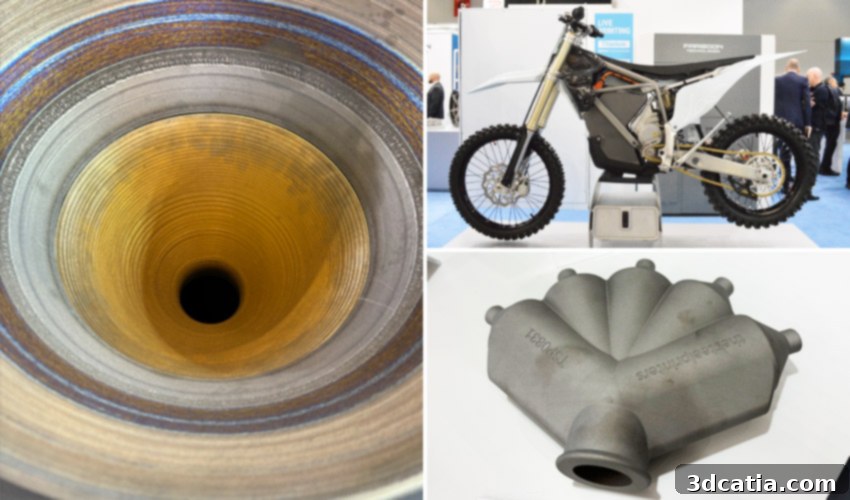
Unveiling the Future: Top Metal 3D Printing Innovations at Formnext 2024
Formnext, the premier global exhibition for additive manufacturing and industrial 3D printing, consistently serves as a critical platform for showcasing groundbreaking advancements across the entire industry spectrum. From revolutionary software solutions to cutting-edge materials and sophisticated 3D printing hardware, attendees are always presented with an unparalleled glimpse into the future of manufacturing. Beyond the core technologies, however, the true magic of Formnext lies in the remarkable real-world applications brought to life by innovative companies from around the globe. Formnext 2024, in particular, stood out for its incredible array of metal additive manufacturing applications, demonstrating the technology’s transformative impact across diverse high-stakes sectors such as aerospace, automotive, dentistry, sports, and heavy industry. These applications underscore the growing maturity and versatility of metal 3D printing, moving it from a niche prototyping tool to a robust solution for complex, high-performance, and cost-effective production. This year, we were especially impressed by several standout examples that pushed the boundaries of what’s possible with metal AM. Join us as we explore some of the most captivating metal 3D printed parts and innovative applications witnessed at Formnext 2024, presented here in no particular order, each offering a unique insight into the evolving landscape of advanced manufacturing.
InssTek’s Multi-Material Rocket Nozzle: A Leap in Aerospace Propulsion
One of the most jaw-dropping exhibits at Formnext 2024 was undoubtedly the multi-material rocket nozzle displayed at InssTek’s booth. This monumental achievement in additive manufacturing, developed in partnership with the Korea Aerospace Research Institute (KARI), exemplifies the power of advanced multi-material processing. The impressive 3-ton rocket nozzle, measuring 301 x 201 x 567 mm and meticulously crafted over 600 hours, along with its extension (432 x 270 x 169 mm, produced in 64 hours), was created using Directed Energy Deposition (DED) 3D printing technology. InssTek’s proprietary DMT (Direct Metal Tooling) technology enabled the innovative multi-material factor, allowing each part of the nozzle system to be manufactured using the optimal material for its specific function. For instance, the inner section of the nozzle, which endures extreme thermal loads, was fabricated from Al-Bronze, incorporating intricate cooling channels at 1mm intervals to manage heat dissipation effectively. Conversely, the outer part, requiring high structural integrity and resistance to external stresses, was made from Inconel 625, a high-performance nickel-based superalloy known for its exceptional strength and corrosion resistance at elevated temperatures. The extension component further showcased material optimization, utilizing C-103, a Niobium alloy highly favored in the space industry for its excellent high-temperature strength and ductility. This strategic combination of materials within a single, unified structure is a game-changer for rocket engine design, enabling engineers to harness the unique strengths of each metal where they are most needed.
The resulting high-performance unit represents a significant breakthrough, offering superior efficiency and reliability for rocket engine components. By integrating different metals, InssTek has demonstrated the capability to create complex structures and functionalities that were previously unattainable or prohibitively expensive with conventional manufacturing methods. According to InssTek, this innovation is backed by extensive research and rigorous testing, including successful combustion trials that validated the structural and thermal performance of the multi-material components. The reliability of these multi-material parts was ensured through comprehensive material research conducted using InssTek’s MX-Lab, covering critical properties like tensile strength and thermal conductivity. The success of this project is expected to pave the way for tailored additive manufacturing solutions that can meet the increasingly complex demands of modern aerospace, fostering further breakthroughs in rocket propulsion systems. This incredible feat from the Korean space sector highlights the potential of additive manufacturing to revolutionize the design and production of critical aerospace components. Attendees at Formnext could learn more about InssTek’s solutions HERE or visit their booth D98 in hall 12.0 to see the application firsthand.
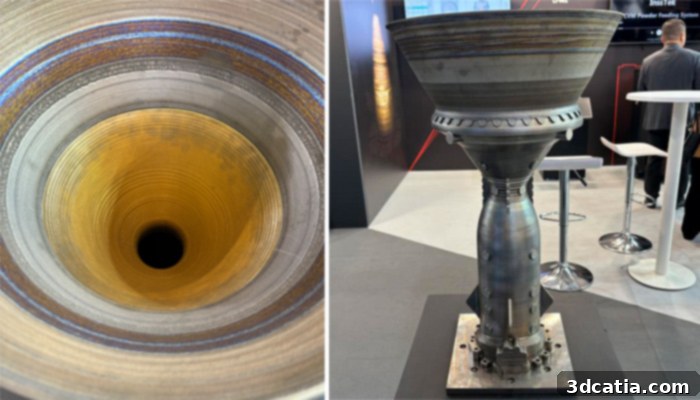
InssTek’s multi-material rocket nozzle showing the inside (left) and outside (right)
Farsoon Europe and Stark Future: Redefining Electric Motorcycle Frames with Metal AM
The automotive and motorsports sectors are increasingly embracing additive manufacturing for its ability to produce lightweight, high-performance components with complex geometries. At Formnext, Farsoon Europe, a company renowned for its comprehensive 3D printing solutions for both metals and polymers, presented a captivating application stemming from its collaboration with Stark Future. This strategic partnership is focused on developing scalable, high-performance manufacturing solutions tailored for the burgeoning premium electric motorcycle market. A prime example of this synergy was a complete motorcycle frame, meticulously 3D printed from a titanium alloy on Farsoon’s formidable FS721M-H-8-CAMS 3D printer. This industrial-grade metal additive manufacturing system is specifically engineered to address the demanding requirements of large-format production. Boasting an impressive build volume of 720 x 420 x 650 mm and equipped with eight powerful 1000W fiber lasers, the FS721M-H-8-CAMS maximizes productivity, enabling faster build times and consequently, reducing the per-part cost, a critical factor for industrial adoption. The use of titanium alloy for the motorcycle frame offers an exceptional strength-to-weight ratio, crucial for enhancing performance and rider dynamics in premium electric motorcycles. Titanium components contribute to a lighter overall vehicle, which translates to better acceleration, handling, and energy efficiency, vital for electric powertrains. The inherent design freedom of additive manufacturing also allowed for optimized internal structures and intricate geometries that would be impossible to achieve with traditional welding or casting methods, further improving structural rigidity and aesthetic appeal.
Furthermore, the FS721M-H-8-CAMS system integrates Farsoon’s innovative Continuous Additive Manufacturing Solution (CAMS). This advanced feature utilizes a unique conveyor system and an interchangeable cartridge strategy to maintain continuous printing operations, significantly minimizing downtime between builds. The ability to run the printer almost non-stop is a massive advantage for high-volume production, ensuring that manufacturing lines remain efficient and productive. This continuous operation capability, combined with the machine’s large build envelope and multi-laser efficiency, positions the FS721M-H-8-CAMS as a powerful tool for scaling up metal additive manufacturing for demanding applications. By leveraging such advanced technology, Farsoon and Stark Future are not just producing parts; they are setting new benchmarks for design innovation, performance optimization, and manufacturing efficiency in the electric motorcycle industry. The collaboration highlights how additive manufacturing can enable rapid iteration and customization, allowing Stark Future to quickly adapt and refine their designs, bringing cutting-edge motorcycles to market faster. For those interested in witnessing this impressive metal motorcycle part firsthand, Farsoon extended an invitation to visit their booth E11 in hall 11.0 at Formnext. More comprehensive information about their pioneering solutions can be found on Farsoon’s official website HERE.
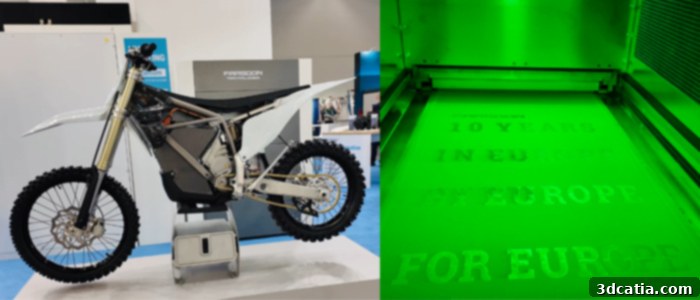
Farsoon’s 3D printed motorcycle frame (left) and its technology (right)
FIDENTIS and Multi-Material Metal Dentures: Revolutionizing Dental Prosthetics
While additive manufacturing applications in dentistry have been a long-standing trend, the direct metal 3D printing of multi-material dental prosthetics introduces a new level of sophistication and personalization. This is precisely where FIDENTIS, an innovative startup spun out of Fraunhofer IGCV, is making significant waves. FIDENTIS has pioneered a multi-material laser powder bed fusion (LPBF) solution specifically optimized for the creation of advanced dentures. This cutting-edge technology uniquely combines a standard laser powder bed system with an integrated robotic arm, enabling the precise deposition of additional materials for the simultaneous processing of two or more distinct metal alloys. This capability allows for an unprecedented level of material tailoring within a single component, addressing the complex functional and aesthetic requirements of dental applications. For the specific application showcased at Formnext, the dentures were primarily fabricated from Cobalt-Chrome (CoCr), a biocompatible and strong alloy commonly used in dentistry. Crucially, the technology allowed for gold to be fused directly onto the friction surfaces of the denture. This strategic material combination leverages the excellent mechanical properties and biocompatibility of CoCr for the main structure, while incorporating the superior wear resistance and aesthetic qualities of gold on critical contact points, enhancing both durability and patient comfort. The ability to integrate these different materials in a single build process ensures excellent bonding and eliminates the need for post-assembly of separate components, streamlining production.
The advantages of FIDENTIS’s approach extend beyond material innovation. The company proudly states that their multi-material LPBF process is remarkably efficient, achieving a 20x acceleration in production speed and a substantial 60% reduction in manufacturing costs compared to conventional methods. These improvements are transformative for the dental industry, promising faster turnaround times for patients and more economical production for dental labs. The success and ingenuity of this metal application have garnered significant attention, not only from attendees who could view the advanced dental multi-material dentures at Fraunhofer IGCV’s booth but also from the industry at large. FIDENTIS’s innovative solution earned them a well-deserved finalist position in the prestigious new Rookie Award at Formnext 2024, recognizing their potential to revolutionize dental prosthetics with additive manufacturing. This application underscores the immense potential of multi-material metal 3D printing to create highly customized, functionally superior, and economically viable solutions for critical medical and dental needs, pushing the boundaries of personalized healthcare. The combination of precision, material choice, and cost-efficiency marks a significant step forward for patient-specific dental treatments.
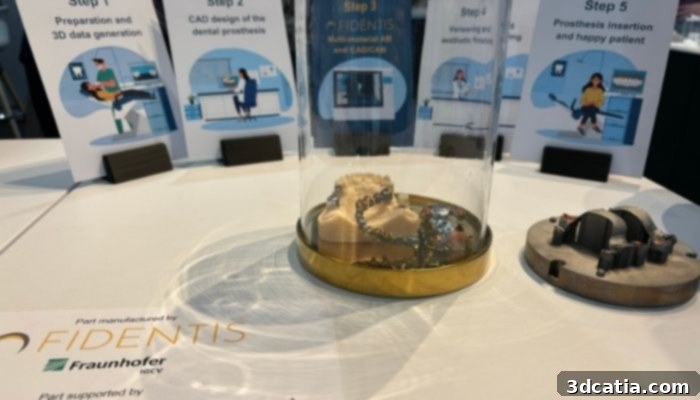
The metal dentures on display at Formnext
Earfit’s Titanium In-Ear Monitors: Crystal-Clear Audio Through Metal AM
In-ear monitors (IEMs) are indispensable tools for musicians and singers, providing critical on-stage audio feedback. While customized IEMs have traditionally been produced using resin 3D printing for their shells, the application showcased at Bright Laser Technologies’ (BLT) booth presented a remarkable evolution: in-ear monitors fabricated using metal additive manufacturing. Earfit, a specialist in high-fidelity acoustic solutions, has harnessed the power of metal AM to create personalized, high-quality, and crystal-clear audio devices. The titanium in-ear monitors, measuring 160 mm x 160 mm x 160 mm, were produced using BLT’s advanced BLT A160 500W metal 3D printer. The choice of titanium as the material for these IEMs is particularly significant. Titanium offers an exceptional combination of lightweight properties, high strength, and biocompatibility, making it an ideal material for devices that sit directly in the ear canal. Its durability ensures a longer lifespan for the monitors, while its inherent stiffness contributes to superior acoustic performance by minimizing unwanted vibrations and resonance, thereby delivering purer sound. Furthermore, titanium is hypoallergenic, making it suitable for prolonged contact with skin, an essential consideration for professional musicians who wear IEMs for extended periods.
Earfit specifically selected additive manufacturing for its ability to create cost-effective, reliable, and highly practical solutions that surpass the limitations of traditional manufacturing methods. The design freedom offered by metal 3D printing allowed Earfit to create intricate internal structures within the IEM shells, optimizing acoustic pathways and driver placement for unparalleled sound fidelity and personalized fit. This level of customization ensures that each monitor is perfectly tailored to the musician’s ear canal, providing maximum comfort and passive noise isolation, which is crucial for stage performance. The ability to produce complex, patient-specific geometries efficiently with metal AM enables Earfit to make personalized, high-quality audio experiences accessible to a wider audience, from professional touring artists to serious audiophiles. This innovative application perfectly demonstrates how metal 3D printing can be leveraged to enhance performance, comfort, and aesthetic appeal in consumer electronics, especially those requiring precision and personalized fit. It’s certainly music to our ears to see additive manufacturing deliver such sophisticated and high-performing products, pushing the boundaries of what is possible in the world of professional audio equipment. The combination of advanced materials and manufacturing techniques leads to a product that is not only functionally superior but also incredibly durable and user-friendly, setting a new standard for in-ear monitoring systems.
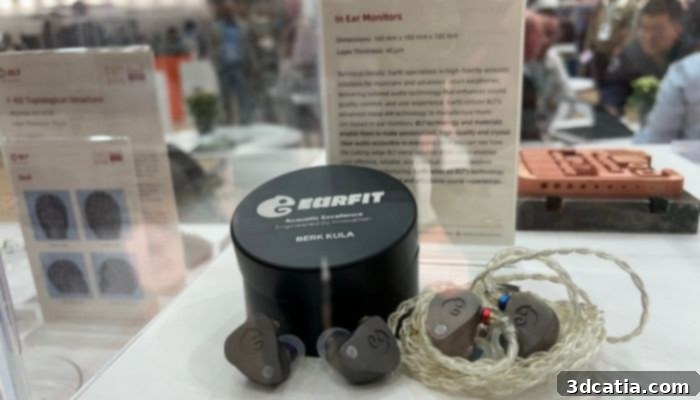
The titanium in-ear monitors at BLT’s booth
Renishaw’s Olympic-Medal Winning Bike: A Testament to AM in Sports
While the excitement of Paris 2024 may have concluded, Formnext offered a unique opportunity to revisit one of the most compelling additive manufacturing applications from the Olympic Games. British manufacturer Renishaw, a global leader in engineering and scientific technologies, proudly showcased the innovative track bike developed for British Cycling in collaboration with Lotus Engineering and Hope Technology. This high-performance bicycle played a pivotal role in securing eight medals for Great Britain at the recent Olympics, a testament to the cutting-edge design and manufacturing techniques employed. What makes this bike particularly noteworthy for additive manufacturing enthusiasts is the inclusion of critical components 3D printed using Renishaw’s advanced RenAM 500Q system in titanium. Specifically, the bike featured an additively manufactured seat post and crank, along with smaller yet equally important components such as a seat bridge and dropouts. The utilization of titanium for these parts is a strategic choice, leveraging the material’s unparalleled strength-to-weight ratio. In elite cycling, every gram saved can translate into a tangible performance advantage, and titanium allows for robust components that are significantly lighter than their conventionally manufactured counterparts. The design freedom afforded by 3D printing enables the creation of highly optimized geometries that maximize aerodynamic efficiency and structural stiffness, both crucial for competitive track cycling.
A particular highlight was the bike crank, fabricated from Ti6Al4V, a high-strength titanium alloy. This component ingeniously incorporated an internal lattice structure. This advanced design maintains the exceptional strength and rigidity required to withstand the immense forces exerted by professional cyclists, while simultaneously accommodating the stringent weight requirements of competitive cycling. The lattice structure allows for the strategic removal of material from non-load-bearing areas, creating a lighter part without compromising its structural integrity. This optimization is impossible with traditional manufacturing methods, which are limited by the constraints of tooling and subtractive processes. Renishaw’s application beautifully demonstrates how 3D printing can be used to dramatically improve equipment in professional sports, offering a competitive edge through superior design and material optimization. Beyond the immediate performance benefits, additive manufacturing also facilitates rapid prototyping and design iterations, allowing engineers to quickly test and refine new concepts, a crucial advantage in the fast-paced world of professional sports development. The success of the Olympic bike serves as a powerful illustration of additive manufacturing’s capacity to deliver functionally superior and lighter components, proving its value in extreme performance environments. It highlights a future where customized, high-performance sports equipment is increasingly designed and produced using advanced 3D printing technologies, continually pushing the boundaries of human athletic achievement. This collaboration exemplifies engineering excellence and the innovative spirit driving both sports and manufacturing.
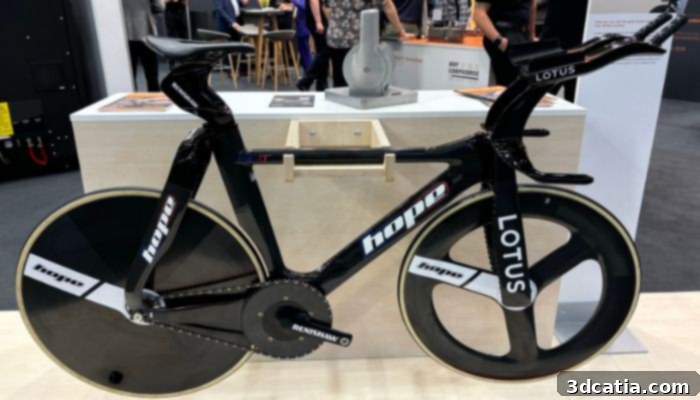
The gold-medal winning bike with the metal bike crank behind it
Finland’s Largest Metal 3D Printed Part: A Giant Leap for Industrial Additive Manufacturing
Following the strong presence of Nordic nations at Formnext 2023, where the growth of additive manufacturing in the region was highlighted, Formnext 2024 once again shone a spotlight on their innovations within a dedicated new pavilion in Hall 11.1. Among the remarkable applications on display, one stood out for its sheer scale and engineering prowess: Finland’s largest metal 3D printed part. This impressive pressure vessel is not only a record-breaking print for the country but also a significant achievement in industrial additive manufacturing, having been rigorously tested according to the demanding pressure vessel standard EN 13445-3. The colossal 300 kg part, measuring 900 mm in diameter and 1600 mm in height, was produced using Wire Arc Additive Manufacturing (WAAM), a process renowned for its ability to create large-scale metal components efficiently. The material chosen for this formidable print was acid-resistant stainless steel, specifically selected for its corrosion resistance and mechanical properties suitable for demanding industrial environments where pressure vessels operate. WAAM offers distinct advantages for such large parts, including a high deposition rate and the ability to process readily available welding wires, making it a cost-effective solution for significant metallic structures. The build process for such a large component required careful control of heat input and material deposition to ensure structural integrity and minimize residual stresses, showcasing the expertise involved in its creation.
What makes this pressure vessel truly remarkable is its performance during testing. Although originally designed for an operating pressure of 10 bar, the 3D printed part was able to withstand testing until an astounding pressure of 111 bar, demonstrating an incredible margin of safety and the robustness of the WAAM process for critical applications. This exceptional performance is a testament to the quality and reliability achievable with large-scale metal additive manufacturing. This groundbreaking project is the result of a collaborative effort between ANDRITZ Savonlinna Works Oy, an industrial engineering company, and the FAME ecosystem, a Finnish network dedicated to advancing additive manufacturing. The crucial non-destructive and destructive tests were meticulously carried out by LUT University, further validating the part’s integrity and compliance with stringent industry standards. This application underscores the increasing confidence in additive manufacturing for producing critical industrial components that meet and exceed traditional performance benchmarks. It highlights the potential of WAAM technology to revolutionize heavy industry by enabling the production of custom, high-performance parts with reduced lead times and material waste, while pushing the boundaries of size and complexity in metal 3D printing. The success of Finland’s largest metal 3D print represents a significant milestone, reinforcing the country’s position as an innovator in industrial additive manufacturing and proving the technology’s viability for demanding, large-scale applications.
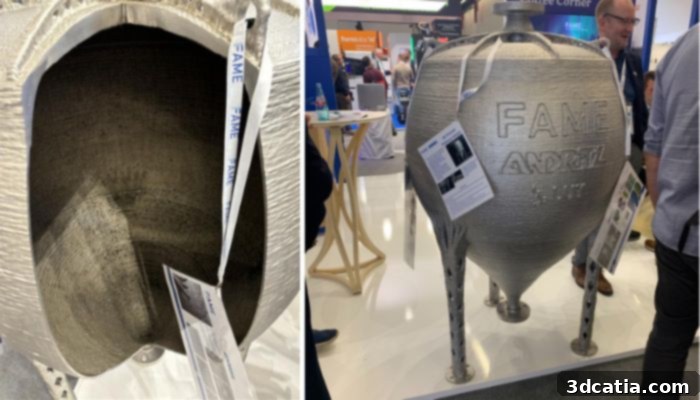
The part showing the inside (left) and outside (right)
Eplus3D and LEAP 71: Unveiling the World’s Largest Metal-Printed Rocket Thruster
When contemplating metal additive manufacturing parts, the aerospace sector invariably comes to mind due to its insatiable demand for high-performance, lightweight components. Formnext 2024 did not disappoint in this regard, showcasing numerous remarkable examples from the industry. Beyond the multi-material nozzle from InssTek, another aerospace application that captivated attendees was the collaborative effort between Eplus3D and LEAP 71: the world’s largest metal 3D printed rocket thruster. This monumental 200kN thruster, which stands over 1.3 meters tall, was an incredible feat, produced as a single, integrated piece. It represents a significant advancement from LEAP 71’s Noyron TKL-5 rocket engine, which successfully underwent hot-fire testing in June, with this new thruster reportedly boasting an astonishing 40 times more power. The thruster is designed to be powered by cryogenic liquid oxygen and kerosene, demanding exceptional material and structural integrity to withstand extreme temperatures and pressures. The chosen material for this colossal print was AlSi10Mg, a high-performance aluminum alloy known for its excellent strength-to-weight ratio, good castability, and high thermal conductivity – crucial properties for rocket engine components that experience immense thermal cycling and mechanical stress. The fabrication was performed on an Eplus3D EP-M650-1600 Metal Powder Bed Fusion printer, a system designed for large-scale, high-precision metal additive manufacturing. This printer’s large build envelope was essential for producing the thruster in a single piece, circumventing the complexities and potential failure points associated with joining multiple sub-components.
What truly distinguishes this rocket thruster is its remarkable level of integration. Traditionally, rocket thrusters are assembled from numerous discrete components, including the combustion chamber, nozzle, intricate cooling channels, manifolds, and various structural elements. The Eplus3D and LEAP 71 collaboration successfully consolidated all these diverse parts into a single, unified component through additive manufacturing. This holistic approach offers profound advantages. Firstly, it drastically simplifies the manufacturing process, reducing assembly time and associated labor costs. More critically, integrating these components into a monolithic structure eliminates the need for multiple welds and bolted connections, which are often points of weakness and potential failure in extreme environments. This enhances the overall reliability and structural integrity of the thruster, a paramount concern in space exploration. Secondly, and perhaps most significantly, this integration is expected to drastically reduce the time and complexity required for quality assurance. Instead of separately testing each individual component and then the assembled unit, the unified design allows for more streamlined testing protocols, leading to faster development cycles and quicker deployment. The ability to realize such complex, high-performance, and fully integrated components in a single print highlights the transformative potential of metal additive manufacturing for aerospace. It underscores a future where rocket engines are not only more powerful and efficient but also simpler to manufacture and more reliable, driving the next generation of space exploration and advanced propulsion systems. The sheer scale and functional integration achieved in this thruster make it one of the most exciting and impactful applications showcased at Formnext 2024.
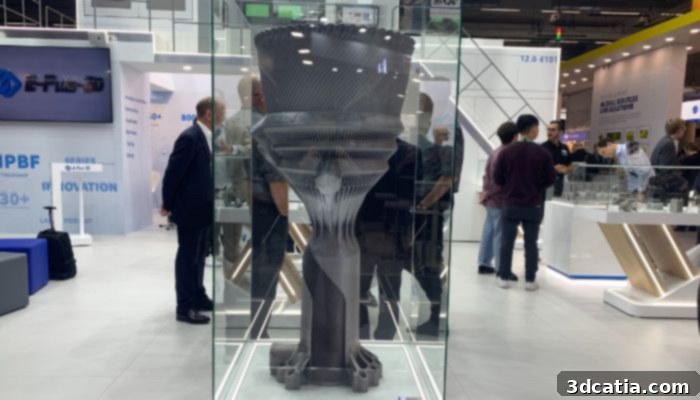
The rocket thruster on display at Formnext 2024, one of the most exciting applications we saw
ArcelorMittal and TheSteelPrinters: Innovating Coke Battery Nozzles with AM
For those less familiar with heavy industry, a coke oven battery is a crucial industrial installation comprising a series of ovens that process coal into coke – a high-carbon fuel essential for iron ore smelting and as a fuel source in various industrial furnaces and forges. These environments are extremely demanding, requiring components that can withstand high temperatures and harsh chemical conditions, often leading to significant wear and tear. At Formnext, a compelling application from ArcelorMittal, one of the world’s leading steel and mining companies, in collaboration with TheSteelPrinters, a specialized 3D metal printing service provider, showcased how additive manufacturing is revolutionizing even the most traditional heavy industries. They presented a specially developed five-outlet nozzle for coke batteries. The primary design objective was to consolidate five individual nozzles into a single, integrated component. This innovative consolidation directly addresses a critical pain point in industrial operations: reducing the frequency and complexity of maintenance. Fewer discrete parts mean fewer potential failure points and a simpler, faster replacement process, leading to significant operational efficiencies and reduced downtime for the coke battery. Beyond the consolidation, the nozzle was tailor-made for specific operational requirements, demonstrating the design flexibility of additive manufacturing. This bespoke approach also dramatically improved lead times, bringing down production from an average of four months for traditional manufacturing to a mere three weeks with 3D printing, a substantial advantage for industrial component supply chains.
The material used for this five-outlet nozzle is particularly noteworthy. It was manufactured using AdamIQ3167L, a material specifically developed by TheSteelPrinters. This advanced alloy has been meticulously optimized for Laser Powder Bed Fusion (LPBF), ensuring superior printability and mechanical properties when produced through additive manufacturing. AdamIQ3167L is now transitioning towards commercialization, indicating its readiness for broader industrial adoption. The resulting part weighs 8 kg and measures 73 x 300 x 228 mm, demonstrating that additive manufacturing is capable of producing robust, industrial-grade components of significant size and complexity. This application not only highlights the design freedom and lead time reductions offered by metal 3D printing but also underscores the crucial role of material science in unlocking new possibilities. By developing application-specific alloys optimized for additive manufacturing processes, companies can create parts that are superior in performance and durability to their conventionally manufactured counterparts. The ability to rapidly produce customized, high-performance components like this coke battery nozzle is set to transform maintenance strategies and operational efficiency across heavy industries, showcasing a profound impact on sectors critical to global infrastructure. Attendees had the opportunity to examine this innovative 5-nozzle component at ArcelorMittal’s booth in Hall 11.0, witnessing firsthand the tangible benefits of additive manufacturing in demanding industrial environments.
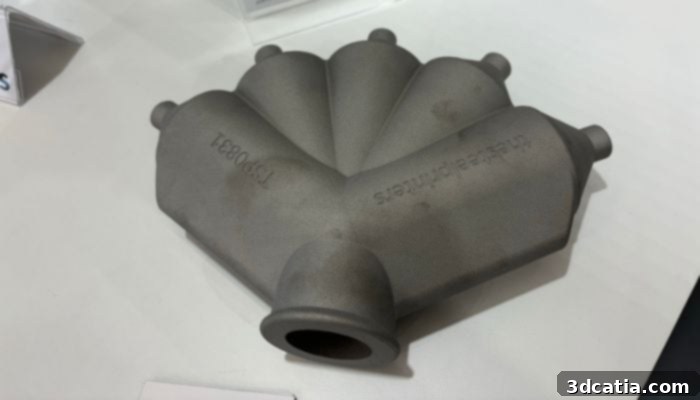
A closer look at the 5-nozzle component
Formnext 2024 truly delivered on its promise, providing a compelling showcase of the incredible advancements in metal additive manufacturing. From sophisticated multi-material rocket nozzles pushing the boundaries of aerospace propulsion to robust, large-scale industrial components and personalized high-performance gear, the applications highlighted this year underscore the profound and diverse impact of metal 3D printing across various sectors. Each example demonstrated not only the technical prowess of the companies involved but also the tangible benefits that additive manufacturing brings to the table: unparalleled design freedom, optimized material usage, significant reductions in lead times, and the ability to create parts with superior performance and reliability. The innovations we witnessed, whether in lightweight motorcycle frames, specialized dental prosthetics, or Olympic-winning sports equipment, paint a vivid picture of a future where metal AM is an indispensable tool for engineers and manufacturers alike. These applications are not just prototypes; they are testament to the industrial maturity and real-world applicability of metal 3D printing, driving efficiency, cost-effectiveness, and sustainable manufacturing practices. What are your thoughts on these remarkable metal applications from Formnext 2024? We’d love to hear your insights! Let us know in a comment below or connect with us on our LinkedIn,Facebook, andTwitter pages! Don’t forget to sign up for our free weeklyNewsletter here to receive the latest 3D printing news straight to your inbox! You can also find all our videos on ourYouTube channel for more in-depth coverage. The future of manufacturing is here, and it’s being shaped by metal additive manufacturing.
*All Photo Credits: 3Dnatives