
Weekly Additive Manufacturing News: CES 2024 Innovations, Strategic Acquisitions, and Industry Expansions
Welcome to our weekly 3DExpress format, where we distill the most impactful developments in the additive manufacturing market into concise, digestible updates. Each week, our readers gain essential insights into the latest business announcements, groundbreaking product launches, and strategic partnerships that are shaping the future of 3D printing. In this edition, we dive into Creality’s highly anticipated K1C 3D printer unveiled at CES 2024, Nexa3D’s significant completion of the Essentium acquisition, and the market debut of a uniquely 3D-printed bathroom sink from Kohler. We also explore Sidus Space’s new multi-material 3D printing division and a leadership change at AddUp. Get ready for a comprehensive overview of the innovations driving the industry forward. Happy reading and have an insightful week!
Creality Showcases New K1C 3D Printer at CES 2024
Creality, a leading name in consumer and prosumer 3D printing, captured significant attention at the beginning of the year with a strategic rebranding initiative. This move, accompanied by the powerful new slogan “Imagine it, make it,” reflects the company’s commitment to innovation and adaptability within the rapidly evolving 3D printing landscape. The rebranding signals Creality’s ambition to distinguish itself through advanced technology and user-centric solutions. At CES 2024, held from January 9 to 12 in the bustling innovation hub of Las Vegas, Creality seized the opportunity to present its extensive product portfolio and, more importantly, unveil its latest FDM printer: the K1C. This new machine builds upon the success of its K1 series predecessors while introducing crucial enhancements designed to meet a broader range of printing demands.
The K1C boasts a respectable build volume of 220x220x250mm, offering ample space for various projects. A standout feature, and the origin of the ‘C’ in its name, is its enhanced compatibility with carbon fiber composite filaments. This means the K1C is specifically engineered to handle materials like PLA-CF (Carbon Fiber reinforced PLA) and PETG-CF, opening doors to printing parts with increased strength, stiffness, and dimensional stability – properties highly sought after in functional prototyping and end-use applications. To facilitate the successful extrusion of these abrasive and demanding materials, Creality has significantly improved the K1C’s extrusion system, equipping it with a robust metal extruder for enhanced durability and reliability.
Beyond material versatility, the K1C integrates several intelligent functions aimed at improving the user experience and print success rates. It includes a built-in air filter, addressing concerns about emissions from certain filaments, and an AI camera. This AI camera acts as an intelligent guardian, providing real-time monitoring and error warnings during the printing process, helping users detect and rectify issues before they lead to print failures. Such features underscore Creality’s push towards smarter, more accessible, and more reliable 3D printing. For those eager to get their hands on this innovative machine, the K1C is already available for pre-order directly on the Creality website, signaling its readiness for market entry.
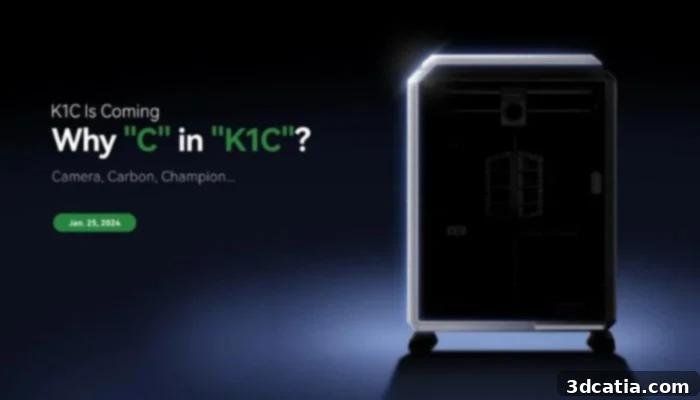
The new K1C 3D printer from Creality (photo credits: Creality)
Nexa3D Completes Essentium Acquisition, Broadening High-Speed Extrusion Portfolio
Following the preliminary announcement last November, US 3D printer manufacturer Nexa3D has officially confirmed the successful completion of its acquisition of Essentium, marking a significant expansion of its additive manufacturing capabilities and product offering. This strategic move culminates a remarkably successful 2023 for Nexa3D, a year characterized by aggressive growth through key acquisitions. Prior to Essentium, Nexa3D had already bolstered its portfolio with the integration of Addifab, known for its tooling solutions, and XYZprinting’s SLS business, which diversified its polymer powder bed fusion offerings.
The addition of Essentium brings high-speed extrusion (HSE) technology into Nexa3D’s comprehensive additive manufacturing portfolio. Essentium has established itself as a pioneer in this segment, renowned not only for its impressive range of high-performance materials but also for its advanced high-speed extrusion 3D printers, which often incorporate IDEX (Independent Dual Extrusion) systems. HSE technology is pivotal for industrial applications requiring fast production of large parts, while IDEX systems offer unparalleled flexibility for multi-material printing, support structures, or even printing two identical parts simultaneously, significantly boosting throughput and design complexity.
Blake Teipel, co-founder and CEO of Essentium, expressed profound enthusiasm for the merger: “We are excited to join forces with Nexa3D. Essentium and Nexa3D share a vision of empowering manufacturers to create what was once considered impossible. Our combination enables us to offer game-changing 3D printing solutions for our defense, health, and industrial customers.” This statement underscores the synergistic potential of the acquisition. By combining Essentium’s expertise in high-speed extrusion and advanced materials with Nexa3D’s established strengths in ultrafast photopolymer 3D printing and growing SLS capabilities, the consolidated entity is poised to deliver a broader, more integrated suite of industrial 3D printing solutions. This strategic consolidation allows Nexa3D to serve a wider array of demanding industrial applications, particularly in sectors where speed, material performance, and production scalability are paramount.
Photo Credits : Essentium/Nexa3D
Sidus Space Launches Dedicated Multi-Material 3D Printing Division
Additive manufacturing continues its relentless ascent within the space sector, consistently proving its value for lightweighting, complex geometries, and on-demand production. The latest testament to this trend comes from Sidus Space, a NASDAQ-listed company specializing in Space and Data-as-a-Service, headquartered in the heart of space exploration, Cape Canaveral, Florida. Sidus Space has announced the establishment of its first dedicated multi-material 3D printing division, a strategic expansion poised to revolutionize how the company designs and produces components for its space missions and client projects.
This pivotal decision follows a period of significant success for Sidus Space in leveraging advanced 3D printing technologies. The company previously achieved remarkable results using Markforged X7 industrial 3D printers and OnyxFR-A material to create crucial structural support components for its innovative LizzieSat™ satellite. The LizzieSat™ platform, anticipated to launch in March 2024, benefits immensely from additive manufacturing, which allows for the creation of intricate, optimized parts that are both strong and incredibly lightweight – essential attributes for spacecraft where every gram counts. The OnyxFR-A material, known for its flame-retardant properties and high strength, further ensures the reliability and safety of these critical satellite components in the harsh vacuum of space.
The newly inaugurated multi-material 3D printing division is set to specialize in advanced composite materials, pushing the boundaries of what’s possible in space hardware. Its expertise will encompass materials such as Nylon Onyx (a carbon fiber filled nylon), pure carbon fiber, fiberglass, and Kevlar. These materials offer superior strength-to-weight ratios, excellent thermal stability, and impact resistance, making them ideal for the rigorous demands of aerospace applications. This division will seamlessly complement Sidus Space’s existing digital warehouse, a sophisticated system where 3D designs of critical parts are stored. This integrated approach not only streamlines the design-to-production workflow but also offers unparalleled flexibility to clients, who can either choose to print parts themselves or have them produced and delivered directly by Sidus Space.
The establishment of this specialized division underscores the increasing shift within the space industry from traditional, often slower and more expensive, manufacturing methods to the agility and efficiency of additive manufacturing. By embracing multi-material 3D printing, Sidus Space is not only enhancing its internal capabilities for producing resilient, lightweight parts but also setting a precedent for more agile and cost-effective space hardware development. This move positions Sidus Space at the forefront of space technology, ready to innovate and deliver cutting-edge solutions for the rapidly expanding New Space economy.
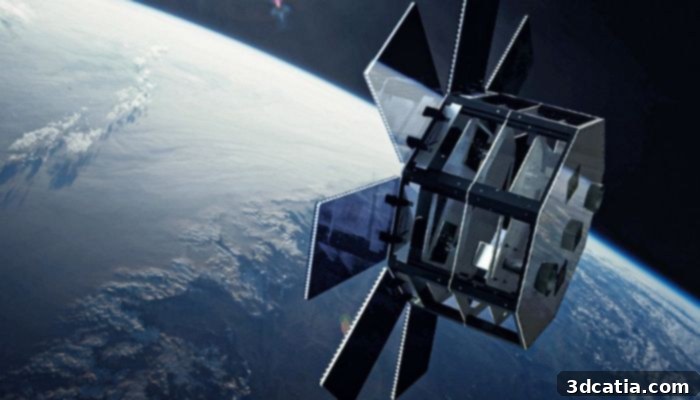
The LizzieSat™ satellite (photo credits: Sidus Space)
Kohler’s Rista: A 3D-Printed Porcelain Sink Enters the Market
Another captivating innovation making waves at CES 2024 came from Kohler, a globally recognized leader in premium kitchen and bathroom solutions. Demonstrating a bold step into advanced manufacturing, the company has successfully harnessed additive manufacturing to bring one of its latest high-end creations to market: a stunning 3D-printed bathroom sink. Named Rista, this distinctive piece is the result of an exciting collaboration with acclaimed designer Daniel Arsham, blending artistic vision with cutting-edge technology.
The Rista sink stands out not just for its aesthetic appeal but also for the innovative production method behind it. It was manufactured using a sophisticated 3D extrusion printing process, employing a vitrified porcelain material. This technique allows for the creation of intricate geometries and textures that would be exceptionally challenging, if not impossible, to achieve with traditional ceramic manufacturing methods. The ability to precisely control the deposition of porcelain enables unique designs, showcasing the material’s fluid beauty and the designer’s creative freedom.
With the Rista concept, Kohler masterfully bridges the gap between time-honored craftsmanship and state-of-the-art digital technology. This fusion enables them to offer customers not just a functional fixture, but a piece of art that embodies comfort, promotes self-care, and inspires a sense of renewal in their personal spaces. The intricate patterns and organic forms achievable through 3D printing elevate the humble bathroom sink into a sculptural element, transforming the everyday into an extraordinary experience.
Since its compelling presentation at CES 2024, the Rista 3D-printed sink has begun its journey into broader commercial markets. This launch signifies more than just a new product; it highlights the increasing adoption of additive manufacturing in the luxury consumer goods sector. It demonstrates how 3D printing can facilitate personalization, intricate detailing, and the rapid realization of innovative designs, setting new benchmarks for aesthetics and functionality in home furnishings. Kohler’s Rista serves as a powerful example of how additive manufacturing can revolutionize design and production, offering bespoke luxury to discerning customers.
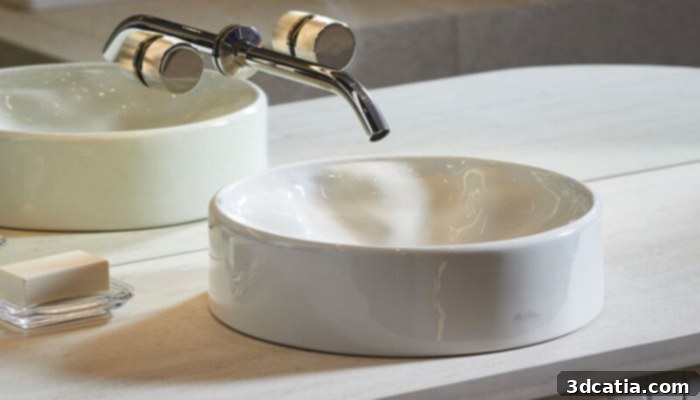
Photo Credits: Kohler
AddUp Announces Julien Marcilly as New CEO to Drive Industrial Metal AM Forward
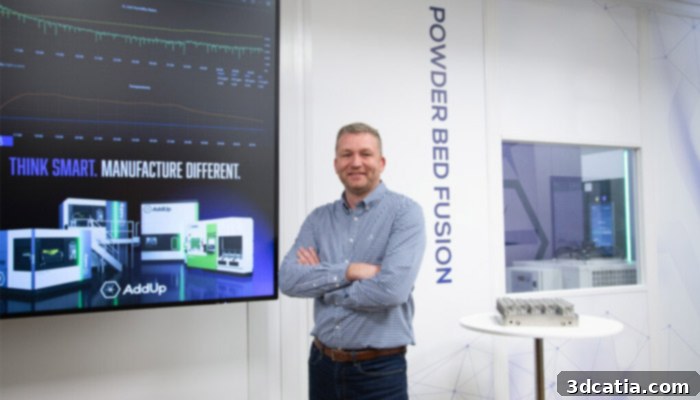
AddUp, a prominent manufacturer specializing in industrial metal 3D printers, plays a crucial role in enhancing the productivity of manufacturers across demanding sectors such as aerospace and automotive. These industries critically rely on robust, high-performance metal components, and AddUp’s solutions are engineered to meet these stringent requirements. The company has recently announced a significant change in its leadership, with Julien Marcilly stepping into the role of Managing Director, effective immediately. This leadership transition marks a new chapter for AddUp as it continues to expand its footprint in the competitive metal additive manufacturing market.
Julien Marcilly brings a wealth of experience to his new position, boasting over 15 years of distinguished service in various management roles within the Fives Group, one of AddUp’s parent companies. He first joined AddUp in 2019, initially serving as Deputy Managing Director, a role that provided him with deep insights into the company’s operations, strategic objectives, and technological capabilities. His progression to the top leadership role is a natural evolution, leveraging his profound understanding of industrial processes and business development.
In a statement reflecting his vision for the company, Marcilly articulated AddUp’s unique position in the industry: “AddUp is a bona fide additive manufacturing OEM built upon the pedigree of our parent companies, industry pioneers, Michelin and Fives. We understand the world of manufacturing because we were born from it. We understand industrial challenges because we have lived them. This is why we are industrializing additive manufacturing. We know how to use it, qualify it, and scale it, making it a reliable and repeatable solution for our customers.” This powerful statement encapsulates AddUp’s core philosophy. The company’s deep roots in industrial giants like Michelin (known for its material science and manufacturing scale) and Fives (a leader in industrial engineering) provide it with an unparalleled perspective on the real-world demands of manufacturing.
Marcilly’s emphasis on “industrializing additive manufacturing” highlights AddUp’s commitment to moving beyond prototyping to full-scale production, ensuring that metal 3D printing is not just innovative but also a dependable and scalable solution for high-volume, critical applications. His leadership is expected to further strengthen AddUp’s strategic initiatives in developing robust, high-performance metal 3D printing systems, expanding its material science expertise, and cementing its position as a trusted partner for industries seeking to integrate additive manufacturing into their core production processes. This change in leadership signals AddUp’s continued dedication to driving innovation and operational excellence in the industrial metal 3D printing space.
What are your thoughts on Creality’s new K1C 3D printer, or any of the other exciting developments in this week’s additive manufacturing news? We encourage you to share your insights and comments below, or connect with us on our LinkedIn, Facebook, and Twitter pages! Don’t miss out on the latest advancements – be sure to sign up for our free weekly newsletter here, delivering the most relevant 3D printing news straight to your inbox. You can also explore all our in-depth videos and content on our YouTube channel for further insights into the world of additive manufacturing.