

Revolutionizing Superconductors: Cornell’s 3D Printing Breakthrough Unlocks Record Performance for Advanced Technologies
In a monumental leap forward for material science and advanced manufacturing, researchers at Cornell University have unveiled a groundbreaking method for 3D printing superconductors that delivers unprecedented, record-setting performance. This innovative technique, detailed in a recent publication in ‘Nature Communications’, represents a significant simplification in fabrication processes. By utilizing a unique one-step printing approach, the team has successfully produced highly ordered, functional superconducting structures with properties previously unattainable. This achievement underscores the transformative potential of additive manufacturing in streamlining the production of complex materials that traditionally demand extensive and intricate processing, paving the way for advancements in critical technologies such as high-field MRI magnets, next-generation quantum devices, and efficient energy solutions.
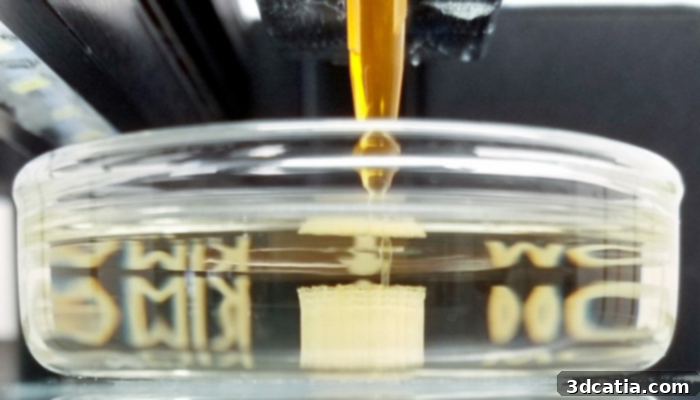
The core of this pioneering process lies in the development of a specialized copolymer-nanoparticle ink. What sets this ink apart is its remarkable ability to self-organize into precise nanoscale patterns as it is extruded during the 3D printing operation. This intrinsic ordering capability is crucial for achieving the desired material properties. Following the printing stage, the material undergoes a controlled heat treatment, transforming it into a porous crystalline superconductor. The resulting material exhibits superior properties that simply cannot be replicated using conventional fabrication methods, which often involve multiple complex preparation steps and limited geometric flexibility. The ability to directly print functional superconducting forms, bypassing many intermediate stages, is the defining feature that differentiates Cornell’s approach from all previous attempts in this field.
Conventional superconductor manufacturing often involves laborious techniques like thin-film deposition or solid-state reactions, which are limited in their ability to create intricate 3D geometries and often lead to less optimized microstructures. Cornell’s one-step 3D printing method drastically simplifies this by allowing for direct, precise control over the material’s architecture at the nanoscale during the printing process itself. This not only accelerates the development cycle but also enables engineers to explore more complex, application-specific designs. The self-assembly mechanism within the ink ensures a uniform, highly ordered structure, which is paramount for achieving high superconducting performance and stability. This level of precision and control is a testament to the power of integrating material science with advanced manufacturing techniques.
One of the most compelling outcomes of this research emerged from the 3D printing of niobium-nitride, a widely recognized superconducting compound. The 3D-printed version of this material demonstrated an astonishing upper critical magnetic field of up to 50 Tesla. To put this into perspective, this is not merely an improvement but the highest value ever recorded for this specific compound, setting a new benchmark in superconducting performance. Such immense magnetic field strength is an indispensable requirement for the functionality of high-field magnets, which are foundational components in the medical sector, particularly in advanced MRI machines, and across various scientific research applications like particle accelerators and fusion energy experiments. These exceptional results unequivocally confirm that the materials produced through this 3D printing method are not only significantly faster and simpler to fabricate but also capable of delivering unprecedented, record-breaking performance that surpasses established limits.
Professor Ulrich Wiesner, the distinguished leader of this seminal study, reflected on the journey, stating, “This has been a long time in the making. What this paper shows is that not only can we print these complex shapes, but the mesoscale confinement gives the materials properties that were simply not achievable before.” His comments highlight the critical role of controlling material structure at the mesoscale – an intermediate scale between atomic and macroscopic – in unlocking these extraordinary properties. The team’s pioneering efforts extend beyond just the printing technique; they also developed a comprehensive framework that meticulously links polymer chemistry to the resulting superconductor performance. This framework acts as an invaluable guide for future material designs, enabling researchers to systematically tailor superconductors for highly specific technological needs. According to Wiesner, this type of predictive mapping is an absolutely crucial step towards advanced material engineering and targeted innovation.
The implications of this research are vast and extend into numerous scientific and technological domains. The ability to achieve record-breaking performance in materials like niobium-nitride through a simplified 3D printing process means that previously cost-prohibitive or complex superconducting components could become more accessible and efficient. This could accelerate the development of more powerful and compact MRI machines, making critical medical diagnostics more widespread. In the realm of quantum computing, where superconducting qubits are often at the heart of computation, the ability to print complex, high-performance architectures with precise control could lead to significant breakthroughs in stability and scalability. Furthermore, the porous structures inherent to the 3D-printed materials offer exceptionally large surface areas, a characteristic that is highly valuable for various applications, especially in next-generation quantum devices where surface interactions can play a pivotal role in performance and coherence.
Looking ahead, the Cornell researchers are poised to expand their investigations by testing a wider array of superconducting compounds and exploring even more intricate and functional geometries. The versatility of their method suggests it could be extended to other transition metal compounds, such as titanium nitride, thereby broadening its potential applications significantly. Such an expansion could impact fields ranging from energy transmission and storage, by enabling more efficient power grids, to advanced electronics and sensors, where miniaturized, high-performance components are continuously sought after. The collaborative synergy between fundamental material science and cutting-edge additive manufacturing demonstrated by Cornell University illuminates how 3D printing is not just a fabrication tool but a powerful enabler for shaping the very future of superconducting technology and, by extension, numerous critical industries worldwide.
This monumental achievement from Cornell University marks a new era in the engineering of advanced materials. It exemplifies how rigorous scientific inquiry, combined with innovative manufacturing techniques, can overcome long-standing challenges and push the boundaries of what is technologically possible. The simplified, high-performance 3D printing of superconductors promises to accelerate research, lower production barriers, and unlock novel applications that will undoubtedly have a profound impact on medical imaging, quantum computing, sustainable energy, and various other high-tech sectors for decades to come. The future of advanced materials looks significantly brighter thanks to this pioneering work.
What are your thoughts on these new developments in 3D printing superconductors? Share your insights and join the discussion by leaving a comment below or connecting with us on our LinkedIn or Facebook pages! Don’t miss out on the latest advancements in additive manufacturing; sign up for our free weekly Newsletter to receive the freshest 3D printing news directly in your inbox. You can also explore all our in-depth video content on our YouTube channel.
*All Photo Credits: Cornell University