
3D Bioprinting Breakthrough: Carnegie Mellon’s LIVE Project Aims to Create Functional Liver Tissue
A groundbreaking research initiative at Carnegie Mellon University in Pittsburgh has secured $28.5 million in funding from ARPA-H to spearhead the LIVE (Liver Immunocompetent Volumetric Engineering) Project. This ambitious project endeavors to revolutionize the treatment of acute liver failure by manufacturing functional liver tissue using cutting-edge 3D bioprinting techniques.
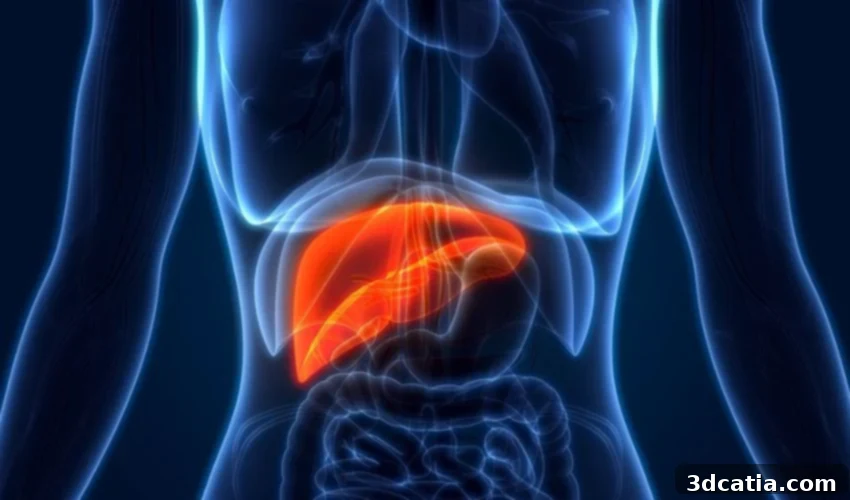
The liver, renowned for its remarkable resilience, possesses an extraordinary capacity for cellular regeneration in response to both acute and chronic injuries. This process, termed “liver regeneration,” is currently understood to occur through mechanisms such as liver cell activation and metabolic reprogramming. While these natural repair mechanisms are effective in some cases, they often fall short in addressing the complexities of severe liver damage. The LIVE Project directly confronts this critical public health challenge by seeking to create a temporary solution that supports and accelerates the body’s own regenerative processes.
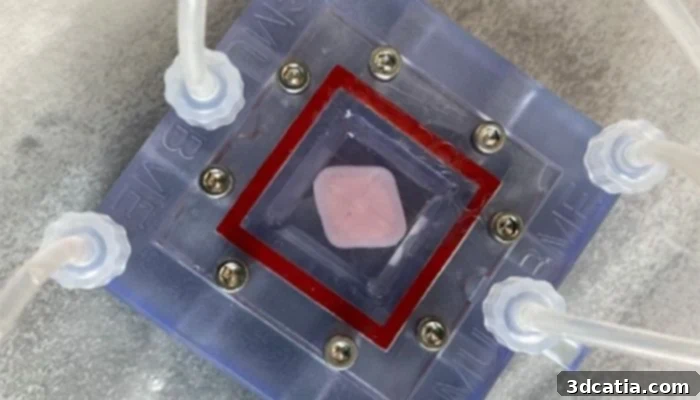
3D bioprinted liver tissue using FRESH technology (photo credit: Carnegie Mellon University).
The LIVE Project’s primary objective is not to immediately create a fully functional, permanent organ. Instead, the focus is on developing a temporary liver tissue construct that can provide crucial support to the failing organ, allowing it sufficient time to regenerate and recover. Under the guidance of Dr. Adam Feinberg, the research team will leverage two innovative technologies pioneered at Carnegie Mellon University.
The first key technology is FRESH (Freeform Reversible Embedding of Suspended Hydrogels) bioprinting. This advanced technique enables the precise extrusion of soft bioinks, such as collagen, into a thermoreversible support hydrogel. The hydrogel acts as a temporary scaffolding, preventing the delicate bioprinted structures from collapsing under their own weight. This allows for the creation of intricate and highly detailed vascular architectures using structural proteins and living human cells. FRESH bioprinting is crucial for replicating the complex three-dimensional structure of the liver, which is essential for its proper function.
The second technology integral to the LIVE Project is 3D Ice Platforms. This complementary approach utilizes controlled freezing processes to generate scaffolds with precisely defined internal porosity. This controlled porosity is paramount for facilitating cell survival and ensuring adequate nutrient flow throughout the bioprinted tissue. The 3D Ice Platforms technology allows for the creation of a microenvironment that closely mimics the natural architecture of the liver, promoting optimal cell function and tissue integration.
By combining FRESH bioprinting and 3D Ice Platforms, the research team aims to create liver tissue composed entirely of human cells and structural proteins. This approach eliminates the need for synthetic components, which are often associated with adverse immune reactions and inflammation within the recipient’s body. The use of purely biological materials is a key factor in enhancing the biocompatibility and long-term viability of the bioprinted liver tissue.
One of the most significant challenges in organ transplantation, regardless of whether the organ is bioprinted or harvested from a donor, is the potential for rejection by the recipient’s immune system. The LIVE Project tackles this challenge head-on by employing hypoimmune cells. These cells have been genetically engineered to act as a “universal donor,” meaning that the bioprinted tissue is compatible with virtually any patient without requiring the use of immunosuppressive drugs. Immunosuppressant medications, while necessary to prevent rejection in traditional organ transplantation, can have significant toxic side effects, particularly on kidney and liver function. The use of hypoimmune cells eliminates this need, offering a safer and more sustainable solution for patients with acute liver failure.
“The goal is to create a piece of liver tissue that you can use as an alternative to transplant, specifically for acute liver failure,” explains Dr. Feinberg. “The liver we are creating would last for about two to four weeks. It would give patients time for their own liver to regenerate, and then, they would not need a liver transplant, freeing up those livers for other patients.” This temporary liver support could bridge the gap for patients whose livers are capable of regeneration but require a period of assisted recovery.
The ambitious scope of the LIVE Project necessitates a collaborative, multidisciplinary team, comprising experts from diverse institutions including the University of Washington, the Mayo Clinic, and FluidForm Bio, Inc. The project timeline is equally ambitious: the team aims to have adult-scale bioengineered livers ready for preclinical testing within the next five years. This rapid progress is a testament to the dedication and expertise of the researchers involved.
While the initial focus of the LIVE Project is on addressing acute liver failure, the underlying biofabrication capabilities are highly scalable and adaptable. According to a press release issued by Carnegie Mellon University, the successful development of a functional and properly vascularized bioprinted liver could pave the way for the creation of other vital organs, such as hearts, pancreases, and kidneys. This could potentially revolutionize the field of organ transplantation, significantly reducing the lengthy and often heartbreaking waiting lists for patients in need.
The implications of the LIVE Project extend far beyond the immediate treatment of liver failure. The development of robust and reliable bioprinting technologies for creating functional human tissues and organs represents a major step forward in regenerative medicine. It offers the potential to not only address organ shortages but also to develop personalized therapies tailored to the specific needs of individual patients. This breakthrough could revolutionize the treatment of a wide range of diseases and injuries, offering new hope for patients with previously untreatable conditions.
What are your thoughts on this groundbreaking research? Share your opinions in the comments below or connect with us on our LinkedIn or Facebook pages! Don’t forget to subscribe to our free weekly Newsletter to stay up-to-date on the latest advancements in 3D printing and related fields. You can also find all our videos on our YouTube channel. For more in-depth coverage of medical and dental 3D printing news, visit our dedicated page HERE.
*Cover Image Credit: News.VA