
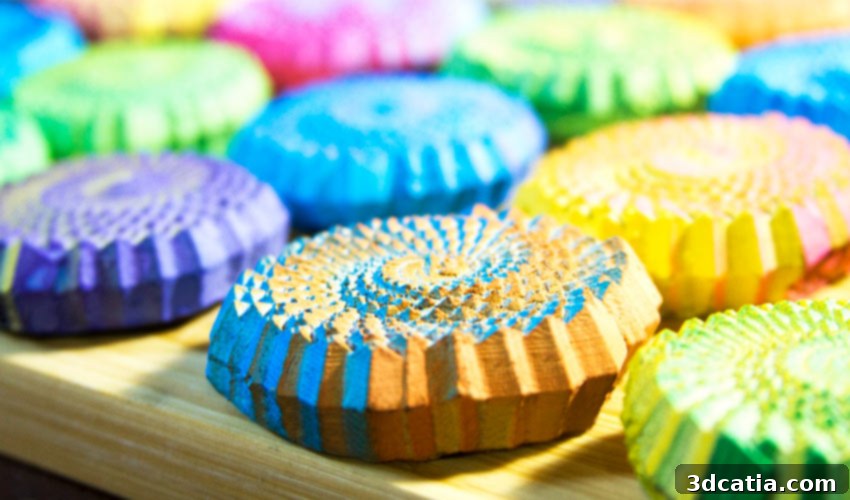
Budmen Industries and the Art of 3D Printed Culinary Innovation: Unveiling Neon Nom Noms
Budmen Industries has long been celebrated in the design world for its captivating and customizable 3D printed lamps, each a unique testament to creative ingenuity. Their reputation for merging cutting-edge technology with artistic vision precedes them. However, the innovative minds at Budmen have recently embarked on an exciting new venture, shifting their focus from luminous designs to delectable creations: the mesmerizing Neon Nom Noms. These visually stunning and intricately crafted 3D printed treats have captured our imagination and taste buds. To delve deeper into this delicious intersection of gastronomy and technology, we recently had the pleasure of sitting down with Stephanie Keefe, the visionary co-founder of Budmen Industries, to explore the origins and future of these computational confections.
3DN: Introduce yourself and what Budmen Industries do in the 3D printing industry!
“Hello! I’m Stephanie Keefe, and alongside Isaac Budmen, I co-own Budmen Industries. We operate as an industrial design workshop, a hub where we actively push the boundaries of creativity through the application of the very latest technological advancements. Our core philosophy is what we term ‘Industrial Imagination’—it’s our unique methodology for imbuing typically industrial processes with a sense of artistic purpose and imaginative application. We believe that technology should serve as a canvas for boundless creativity, not merely as a tool for efficiency.
My personal journey into this realm is quite eclectic. I began my career as a pastry chef in Chicago, dedicating years to mastering traditional culinary techniques, perfecting everything from classic French patisserie to intricate sugar work. This foundation in precision and artistry was incredibly valuable, but I soon felt an urge to explore new frontiers. The advent of 3D printers presented a fascinating challenge, a way to transcend the limitations of manual creation. I started experimenting, initially just out of curiosity, seeing how these machines could replicate and enhance the intricate designs I envisioned. Now, in my culinary work here in Philadelphia, 3D printing technology is absolutely integral. It allows us to achieve incredibly intricate designs, maintain unparalleled precision, and create complex details that would be utterly impossible to replicate by hand alone. This fusion of my traditional culinary expertise with advanced 3D printing truly defines our approach at Budmen Industries, especially in projects like our Neon Nom Noms, where industrial precision meets artisanal confectionary art.”
3DN: Tell us more about your latest project, Neon Nom Noms! How did you come up with the idea?
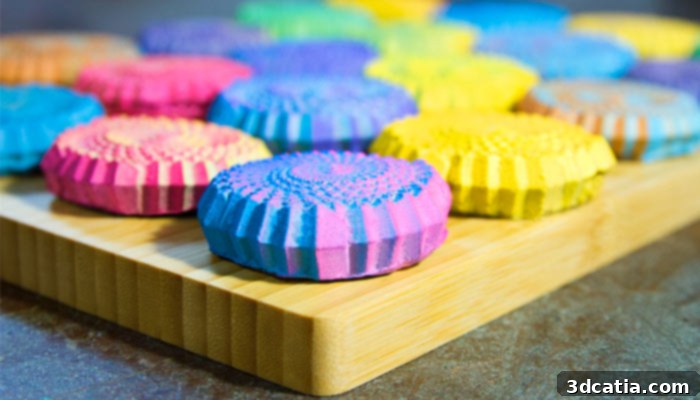
“Neon Nom Noms — a phrase we like to playfully describe as ‘the phenomenon you can nom on’ — represent the culmination of my ongoing experiments at the crossroads of advanced cooking techniques and cutting-edge technology. The entire concept was born from a desire to create a truly multisensory experience, something that not only tastes incredible but also captivates visually and challenges conventional notions of confectionary art. We wanted to craft treats that look almost too good to eat, embodying a futuristic aesthetic while delivering a delightful, nostalgic taste.
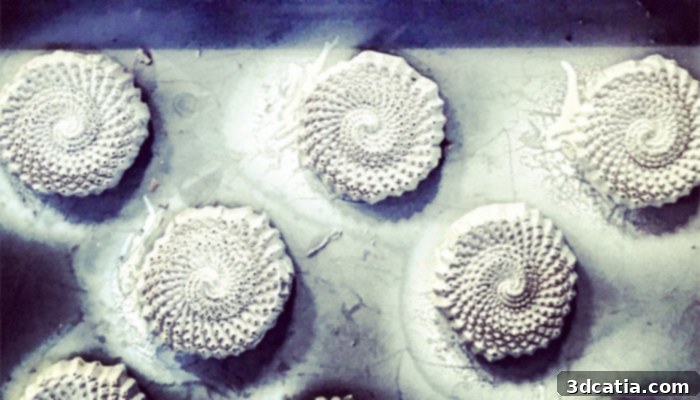
These intricate and truly mouthwatering ‘computational confections’ begin their life cycle as digital designs, meticulously sculpted into plastic 3D models using our bespoke printing systems. This initial phase allows us to achieve geometries and fine details that would be utterly beyond the scope of traditional molds or hand-sculpting. Once these precise 3D models are perfected, they serve as the masters for creating our custom silicone molds. Each mold is then cast by hand, a process that ensures the integrity of the design and allows for slight, artisanal variations that make each Nom Nom uniquely special.
The heart of the Neon Nom Noms lies in their rich and balanced flavor profile. We carefully fill these handmade silicone molds with a harmonious blend of premium ingredients: rich, dark chocolate providing a deep, satisfying base; fluffy marshmallows adding a soft, sweet chew; crispy pretzels introducing a delightful crunch and salty counterpoint; and smooth nougat bringing another layer of sweetness and subtle chewiness. This thoughtful combination creates a perfect synergy of sweet and salty, crunchy and soft, designed to tantalize the palate with every bite.
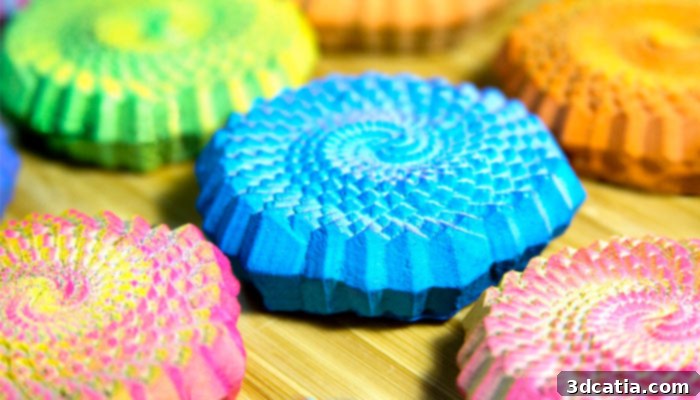
To complete these extraordinary ‘techno treats’ and give them their signature dazzling appearance, each confection undergoes a final, artistic touch. They are meticulously airbrushed by hand, layering several vibrant colors to achieve a spectacular, one-of-a-kind neon gradient. This airbrushing technique is not just about aesthetics; it transforms each Neon Nom Nom into a miniature edible artwork, reflecting light and color in a way that’s both playful and sophisticated. It’s this meticulous attention to detail, from digital design to hand-finished artistry, that truly brings the Neon Nom Noms to life as a phenomenon you can truly ‘nom on’.”
3DN: Can you tell us about the production process of these ‘techno treats’? (Material used, machines used, colors…)
“The production of our Neon Nom Noms is a multi-layered process, blending inspiration, digital design, custom fabrication, and meticulous hand-finishing. It really exemplifies our ‘Industrial Imagination’ at work. Many of my designs, including these particular computational confections, are profoundly influenced by the time I spent living in the Caribbean. The vibrant marine life, the fluid forms of coral, and especially the elegant, logarithmic spirals of seashells have always fascinated me. For the Neon Nom Noms, the specific inspiration came directly from observing these natural spiral shapes – their inherent mathematical beauty and structural integrity. Translating that organic complexity into an edible form is where technology truly shines.
The journey begins in the digital realm. To create these intricate designs, I utilize a sophisticated suite of CAD (Computer-Aided Design) software programs. The process isn’t linear; it often involves moving the digital model from one program to another, each specialized for different aspects of refinement – be it sculpting organic curves, ensuring structural stability, or preparing the file for optimal 3D printing. This iterative design phase is crucial for perfecting the form, ensuring every curve and angle is precisely as intended, and ready to be physically realized.
What truly sets Budmen Industries apart in this process is our commitment to self-sufficiency and innovation: we invent the tools ourselves! We don’t just use off-the-shelf 3D printers; we design and build them tailored to our specific needs. The initial plastic models for the Neon Nom Noms were printed using one of our custom-engineered Budmen Industries’ 3D printers. These machines were specifically designed and refined for our ‘Techno Test Kitchen’ – an experimental space dedicated to exploring the boundaries of food technology. These specialized printers allow us to achieve a level of precision and detail in the master models that conventional printers might struggle with, particularly when creating the complex undercuts and fine features necessary for our silicone molds. The plastic used for these master models is typically a durable, non-toxic filament like PLA (Polylactic Acid), chosen for its ability to hold intricate detail and its ease of printing, though these plastic models are never consumed directly.
Once the 3D printed master models are complete, they are used to create the silicone molds. This is a critical step where artisanal craftsmanship takes over. Each silicone mold is carefully cast by hand from the 3D printed master. Silicone is chosen for its food-safe properties, its flexibility, which allows for easy demolding of the intricate shapes, and its durability. The handmade nature of these molds ensures consistent quality and allows for detailed inspection at every stage.
The next stage involves filling these silicone molds with our curated blend of ingredients. We carefully layer rich dark chocolate for its robust flavor and structural integrity, soft marshmallows for a delightful chewiness, crunchy pretzels to introduce a textural contrast and salty kick, and smooth nougat for an added layer of sweetness and a velvety mouthfeel. The exact sequence and proportion of these ingredients are crucial to achieving the ‘perfect blend of sweet and salty’ that defines the Nom Noms’ flavor profile. It’s a precise culinary dance, ensuring each treat delivers the intended sensory experience.
Finally, the ‘techno treats’ receive their vibrant, signature aesthetic. This involves a meticulous hand-airbrushing process. Using food-grade edible colors, skilled artists carefully apply multiple layers to create the distinctive neon gradient effect. The choice of colors is deliberate, aiming for a palette that is both eye-catching and harmonious, enhancing the futuristic and artistic appeal. This manual step is where the industrial precision of 3D printing meets the delicate touch of human artistry, resulting in a product that is both technologically advanced and beautifully handcrafted. The combination of custom tools, precise digital design, and expert manual finishing ensures that each Neon Nom Nom is not just a treat, but a small piece of edible art.”
3DN: What is the added value of using 3D technologies in the food industry?
“The future for 3D printing in the kitchen is incredibly bright, bordering on revolutionary. The added value of integrating 3D technologies into the food industry is multifaceted, extending far beyond mere novelty. At its core, 3D printing unlocks endless possibilities for creating futuristic food items characterized by unparalleled precision and incredibly complex forms that are simply unattainable through traditional culinary methods.
Firstly, there’s the dimension of **unprecedented design complexity and precision**. Imagine creating food with internal geometries, intricate patterns, or micro-details that would require hours of painstaking handwork, if even possible. 3D printing makes this feasible, opening up new avenues for visual appeal and structural integrity in food. This level of detail can enhance textures, improve mouthfeel, and even influence how flavors are perceived, offering entirely new sensory dining experiences.
Secondly, **personalization and customization** are monumental. With 3D printers, we can move towards tailored nutrition, where meals are designed to meet individual dietary requirements, allergies, or even desired micronutrient profiles. Beyond health, it allows for incredible aesthetic personalization—imagine a dessert with a custom message or a corporate logo intricately woven into its structure, or individual portions precisely designed to minimize waste.
Thirdly, 3D printing is a powerful catalyst for **innovation and culinary artistry**. It empowers chefs and food designers to push the boundaries of what’s edible and how it’s presented. It’s about merging food with art and technology, creating dining experiences that are not just about taste, but about wonder and engagement. It transforms the kitchen into a ‘Techno Test Kitchen’ – a laboratory for continuous experimentation and groundbreaking discoveries in food science and art.
Furthermore, in certain applications, 3D printing can offer **efficiency and consistency**. While our Neon Nom Noms involve significant hand-finishing, the initial creation of precise master models ensures consistency across batches. In a larger industrial context, it could lead to reduced food waste through precise portion control and optimized ingredient usage, as well as the ability to produce highly consistent products at scale once a design is perfected.
Looking ahead, 3D food printing could play a role in **sustainability and novel ingredient utilization**. It could facilitate the use of alternative protein sources or less conventional ingredients, transforming them into appealing and palatable forms. It also has potential applications in areas like space travel or disaster relief, where customized, nutrient-dense food needs to be produced on-demand.
In essence, 3D printing is not just a tool for making ‘fun’ shapes; it’s a transformative technology that promises to redefine how we design, produce, and consume food, opening up a world where gastronomic creativity is limited only by imagination. For more detailed insights into this project and other innovations, please visit https://www.budmen.com/projects/neon-nom-noms/.
Budmen Industries, through its Neon Nom Noms, is vividly demonstrating how 3D printing technology can seamlessly integrate with culinary artistry, pushing the boundaries of what’s possible in the world of gourmet confections. Stephanie Keefe’s unique blend of traditional pastry expertise and pioneering technological adoption has yielded truly remarkable and inspiring results. These “techno treats” are more than just sweets; they are a testament to the power of “Industrial Imagination” and a tantalizing glimpse into the future of food design.
What are your thoughts on Budmen’s stunning 3D printed treats? Are you excited about the future of 3D printing in the food industry? We’d love to hear your opinions! Please share your insights and comments below, or engage with us on our Facebook and Twitter pages! Don’t miss out on the latest advancements and breaking news in the additive manufacturing world – sign up for our free weekly Newsletter and get all the essential updates straight to your inbox!