
Unveiling Tomorrow’s Additive Manufacturing: Top Innovations from Formnext 2023
As the dust settles on another electrifying Formnext event, the world of additive manufacturing continues to buzz with excitement over the groundbreaking advancements showcased. Formnext 2023, a beacon for innovation in 3D printing, has once again proven to be an indispensable platform for unveiling technologies that promise to reshape industries. While the physical event has concluded, its impact lingers, offering a clear vision of the future of manufacturing. Here at 3Dnatives, our team was on the ground last week, diligently exploring every corner of the exhibition halls to bring you the most compelling stories and revolutionary products. We’ve already highlighted some of the most impressive 3D printers that caught our eye, and now we delve deeper into the core innovations that truly define the cutting edge. Join us as we explore a range of advancements, from novel printheads and complementary technologies to revolutionary material processes, all poised to redefine what’s possible in additive manufacturing.
Reshaping Metal Fabrication: Digital Casting and Advanced Powders
The evolution of metal additive manufacturing remains a central theme at Formnext, with companies constantly pushing the boundaries of material processing and part production. This year, we observed significant strides in both digital casting techniques and the sophisticated production of metal powders, crucial elements for high-performance applications across various sectors.
Foundry Lab: Revolutionizing Metal Casting with Digital Precision
Our journey into the heart of innovation led us first to Foundry Lab, where we discovered a truly transformative approach to metal casting. Traditional casting methods, while time-tested, often involve lengthy lead times, high tooling costs, and limited design flexibility, particularly for complex geometries or small production runs. Foundry Lab is directly addressing these challenges with its pioneering digital casting process, which significantly streamlines the production of metal parts. The process begins with advanced ceramic binder jetting technology, which is utilized to rapidly create highly detailed and precise molds. This digital approach to mold creation eliminates the need for expensive and time-consuming physical patterns, accelerating the initial stages of production considerably. Once the ceramic mold is ready, users can insert their chosen metal and heat it to the required temperature, facilitating a controlled casting process. The result? Perfectly die-cast parts that boast exceptional quality, often achieving finishes and tolerances previously thought impossible outside of traditional, high-volume foundries. The most striking benefit of Foundry Lab’s solution is the dramatic reduction in both cost and time compared to conventional casting methods. This innovation holds immense potential for industries requiring rapid prototyping, custom part production, and efficient small-to-medium batch manufacturing, offering unparalleled agility and economic viability in metal component fabrication.
3D Lab’s ATO Lab: Precision Metal Powder Production for Advanced Manufacturing
The quality and characteristics of metal powders are paramount to the success of metal additive manufacturing. Inconsistent powder can lead to defects, compromise part integrity, and limit the overall performance of 3D-printed components. Recognizing this critical need, 3D Lab introduced its ATO Lab solution, an innovation designed to deliver superior metal powders with unprecedented control. The ATO Lab system masterfully transforms molten metal into perfectly produced powder. What sets this technology apart is its sophisticated use of ultrasonic frequencies, which allows for precise adjustment of both the size and shape of the metal particles. This level of granular control is revolutionary, enabling manufacturers to tailor powder characteristics to specific application requirements, material properties, and printer specifications. Whether a particular additive manufacturing process demands fine, spherical powders for high resolution or larger, more irregular particles for specific flow characteristics, ATO Lab can deliver. The ability to customize powder attributes leads to enhanced material performance, improved print quality, reduced waste, and opens new avenues for developing proprietary metal alloys. This innovation is not just about making powder; it’s about engineering the fundamental building blocks of future metal 3D printing, ensuring optimal results for high-stakes applications in aerospace, medical, and automotive industries.
The Heart of the Printer: Breakthroughs in Printhead Technology
The printhead is often considered the ‘engine’ of a 3D printer, dictating not only the speed and precision of the printing process but also the range of materials that can be successfully processed. At Formnext 2023, significant strides were made in this crucial component, with several companies introducing printhead technologies that are set to unlock new capabilities and expand the frontiers of additive manufacturing. These innovations promise to accelerate printing, broaden material compatibility, and make advanced technologies more accessible than ever before.
Plasmics: The Game-Changing Induction Printhead
One of the most captivating printhead innovations we encountered was from Plasmics, which presented its truly unique induction printhead. In the realm of FDM (Fused Deposition Modeling) or FFF (Fused Filament Fabrication) 3D printing, printhead temperature control is a critical factor, especially when working with high-performance polymers that require elevated processing temperatures. Traditional resistive heating elements can be slow to heat and may struggle to maintain consistent temperatures at very high levels. Plasmics has ingeniously leveraged induction heating technology, a method known for its efficiency and rapid response, to create a printhead that stands alone in its capabilities. This groundbreaking induction printhead can achieve astonishing temperatures of up to 500°C, making it compatible with a much wider array of engineering-grade and high-performance thermoplastics such as PEEK, ULTEM, and carbon fiber composites. What’s even more impressive is its incredible heating speed: it can reach 250°C in a mere 4 seconds. This rapid heating not only significantly reduces start-up times but also allows for more dynamic temperature control during printing, improving material flow and layer adhesion. For industrial users, this means faster production cycles, expanded material options for demanding applications in aerospace and medical fields, and ultimately, more robust and reliable printed parts. Plasmics’ induction printhead is a true testament to how focused innovation on a single component can dramatically elevate the entire 3D printing ecosystem.
Added Scientific: Democratizing Material Jetting with the JetForge Kit
Material jetting, a highly precise additive manufacturing technology, is renowned for its ability to create parts with fine details, smooth surfaces, and often, multi-material capabilities. However, its adoption has traditionally been limited by the high cost and complexity of the specialized equipment required. Added Scientific is striving to change this paradigm with its innovative JetForge kit, a solution designed to bring the power of material jetting to a much broader audience. The JetForge kit is ingeniously conceived as an add-on that can be seamlessly attached to an existing FDM 3D printer. This modular approach allows users to transform their conventional FDM machines into sophisticated material jetting systems, opening up a world of possibilities for prototyping, intricate detailing, and even functional part creation. By retrofitting an FDM printer with JetForge, individuals, small businesses, and educational institutions can now explore the benefits of material jet 3D printing at a fraction of the cost of dedicated industrial machines. This democratizes access to advanced manufacturing techniques, fostering innovation in design, material exploration, and rapid iteration. Whether it’s for creating highly detailed models, combining different material properties within a single print, or simply experimenting with a more advanced printing paradigm, the JetForge kit makes high-quality material jetting accessible right from your workshop or lab.
Liqtra: Expanding Horizons with Multi-Material Printheads
The pursuit of multi-material 3D printing is a significant trend in additive manufacturing, driven by the desire to create parts with varying properties, colors, or functions in a single build. This capability is essential for producing complex assemblies, functional prototypes, and integrated components without the need for post-assembly. However, effectively managing multiple materials through a single printhead, or even multiple printheads, presents considerable engineering challenges. Liqtra is tackling this challenge head-on with its impressive new printhead, which boasts compatibility with an astonishing seven different materials simultaneously. This level of multi-material capability is a game-changer, moving beyond simple multi-color prints to enable truly multi-functional parts. Imagine a single 3D-printed object that combines rigid structural elements with flexible hinges, conductive traces, and transparent windows – all produced in one go. Liqtra’s printhead facilitates this by precisely controlling the extrusion and deposition of each material, allowing for intricate material combinations and gradients. This innovation dramatically enhances design freedom, reduces the need for complex assembly processes, and expands the range of applications for 3D printing in fields such as robotics, consumer electronics, and medical devices. The ability to integrate diverse material properties within a single print streamlines production, improves part performance, and truly pushes the boundaries of additive manufacturing towards truly integrated and intelligent product creation.
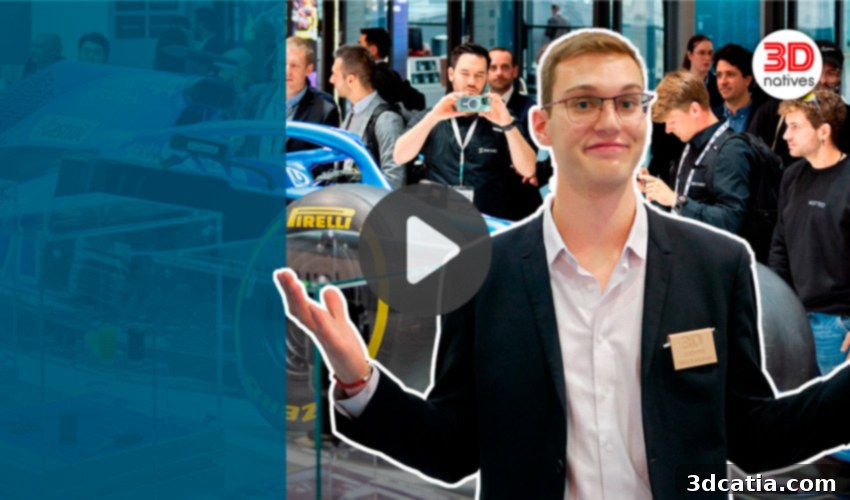
You can check out all these incredible innovations, along with a special bonus surprise revealed at the end, in our comprehensive video report above!
The Future Unfolds: A Glimpse into Additive Manufacturing’s Next Era
Formnext 2023 was not just an exhibition; it was a powerful statement about the relentless pace of innovation in additive manufacturing. The innovations highlighted here—from digital metal casting and precise powder production to revolutionary printhead designs—collectively paint a picture of an industry maturing rapidly. We are moving towards solutions that are not only more efficient and cost-effective but also more versatile and accessible. These advancements enable manufacturers to tackle previously insurmountable challenges, unlock new design possibilities, and bring complex, high-performance parts to market faster than ever before. The emphasis on speed, material breadth, and component integration signifies a clear trend towards industrialization and broader adoption of 3D printing across diverse sectors. Formnext continues to serve as the ultimate proving ground for these transformative technologies, offering a crucial meeting point where visionaries and engineers converge to shape the future of how we design, produce, and innovate.
What are your thoughts on these incredible innovations from Formnext 2023? Which one excites you the most, or do you have another favorite that caught your attention? We’d love to hear from you! Share your insights and comments below, or join the conversation on our LinkedIn, Facebook, and Twitter pages. To stay completely up-to-date with all the latest developments in the fast-paced world of 3D printing, don’t forget to sign up for our free weekly Newsletter here, delivering essential news straight to your inbox. And for even more in-depth content and video reports, be sure to visit our YouTube channel!