
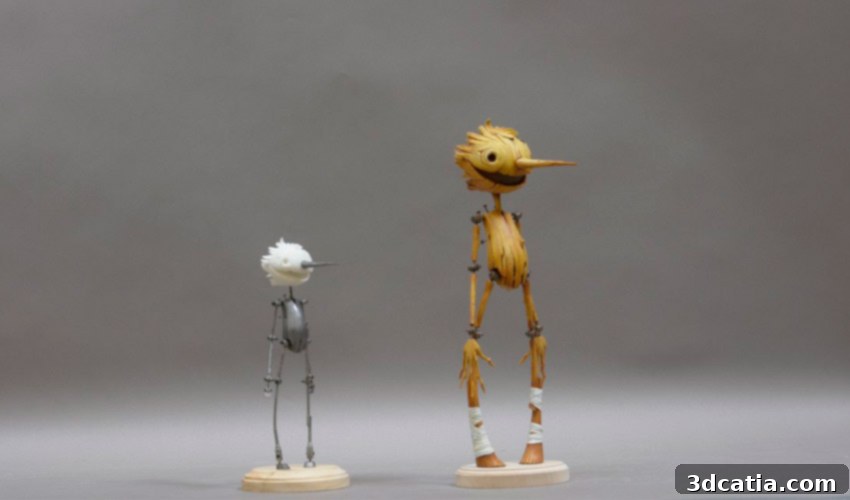
3D Printing in Film: Bringing Guillermo del Toro’s Pinocchio to Life and Revolutionizing Movie Production
Guillermo del Toro’s “Pinocchio,” released in December 2022, is a cinematic marvel that captivated audiences worldwide with its distinctive stop-motion animation. This visually stunning adventure not only garnered critical acclaim but also showcased a groundbreaking integration of modern technology with traditional artistry. A significant enabler behind its intricate character design was the innovative use of 3D printing technologies, particularly for the creation of Pinocchio himself. This fusion of age-old animation techniques with cutting-edge additive manufacturing pushed the boundaries of what is possible in filmmaking, demonstrating how 3D printing is rapidly becoming an indispensable tool in the creative industries.
The Pinocchio Puppet: A Masterpiece of Metal 3D Printing
The titular Pinocchio puppet, a central figure requiring immense detail and robust articulation, was brought to life through the expertise of Laser Prototypes Europe Ltd (LPE). Based in East Belfast, UK, LPE holds the distinction of being the UK and Ireland’s longest-running rapid prototyping service bureau. This stellar reputation and extensive experience in advanced manufacturing techniques likely played a crucial role in Mackinnon and Saunders, the animation studio, entrusting them with this ambitious project. The task involved using metal 3D printing, a sophisticated process that often employs techniques like Direct Metal Laser Sintering (DMLS) or Selective Laser Melting (SLM), to fabricate the puppet’s intricate internal mechanisms and structural components.
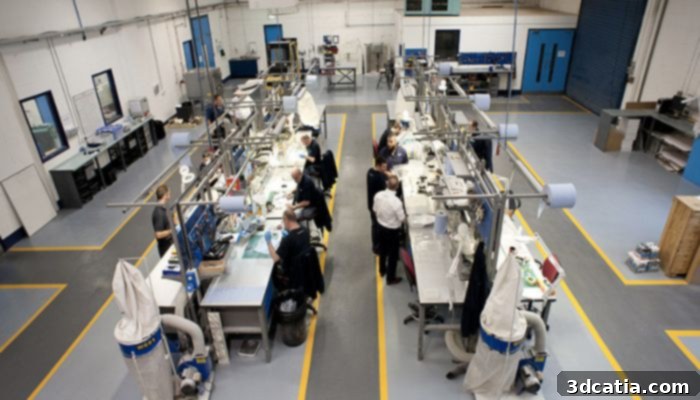
The team in the lab in 2015 (Photo credit: Laser Prototypes Europe)
Campbell Evans, director at LPE, shed light on the precision required for the finished product. He explained, “You can see it’s very fine featured. We have high-resolution metal printers that can actually produce these fine definition parts…We did the back plate, we did the front breast plate and we did all the legs and joints and so on which are all interconnected.” This statement underscores the critical role of high-resolution metal 3D printing in achieving the puppet’s intricate details and delicate aesthetics. Beyond just fine features, the functional aspect was equally paramount: all the printed parts needed to fit together flawlessly to allow for the smooth, expressive movements characteristic of stop-motion animation. LPE meticulously ensured that each component was printed to articulate perfectly, culminating in a high-quality, durable, and fully functional puppet.
The use of metal 3D printing for Pinocchio’s internal skeleton and crucial joints marks a significant milestone in stop-motion animation. It is widely regarded as the first instance of metal 3D printed puppets being utilized in this particular type of movie production. This innovative approach not only facilitated the creation of highly detailed and robust puppets but also opened new avenues for creative expression and technical execution in the demanding world of animation. The ability to produce complex, interconnected parts with such precision and strength using additive manufacturing truly sets a new benchmark for character fabrication in the film industry, showcasing the evolving synergy between digital design and physical realization.
Beyond Pinocchio: 3D Printing’s Versatility in Film Production
The application of 3D printing in film production is by no means new, and its influence extends far beyond Guillermo del Toro’s “Pinocchio.” The technology has been progressively integrated into various aspects of filmmaking, from character design to prop creation and costume fabrication, demonstrating its incredible versatility and capability to tackle diverse creative challenges. One of the earliest and most celebrated examples comes from Laika Studios, a pioneer in stop-motion animation.
Revolutionizing Stop-Motion with Laika Studios
Laika Studios famously utilized 3D printing for its acclaimed movie “Coraline.” Instead of painstakingly sculpting each facial expression by hand, the animators leveraged 3D printers to produce thousands of unique faces for their puppets. This allowed for an unprecedented range of emotions and subtle nuances in character performance, enhancing the visual storytelling significantly. The consistency and speed offered by additive manufacturing were crucial; it enabled the rapid production of a vast library of expressions, ensuring that each frame captured the precise emotion intended by the director. This eliminated the time-consuming and often inconsistent nature of traditional sculpting, proving that 3D printing could not only accelerate production but also elevate the artistic quality of stop-motion films.
Props and Practical Effects: The Robotic Owl in ‘It’s A Wonderful Binge’
Beyond puppets, additive manufacturing has proven invaluable in creating entire props that might otherwise be impossible or prohibitively expensive to produce using conventional methods. A prime example is the intricate robotic owl featured in the Hulu movie “It’s A Wonderful Binge.” Companies like Budmen Industries utilized 3D printing to fabricate complex mechanical parts and aesthetic details for the owl, allowing for rapid iteration and customization. This method provided filmmakers with the flexibility to design and refine props with elaborate geometries and functional components, all within tight production schedules. The ability to print highly detailed and custom-fit parts quickly makes 3D printing an ideal solution for creating specialized props that demand both visual accuracy and mechanical integrity.
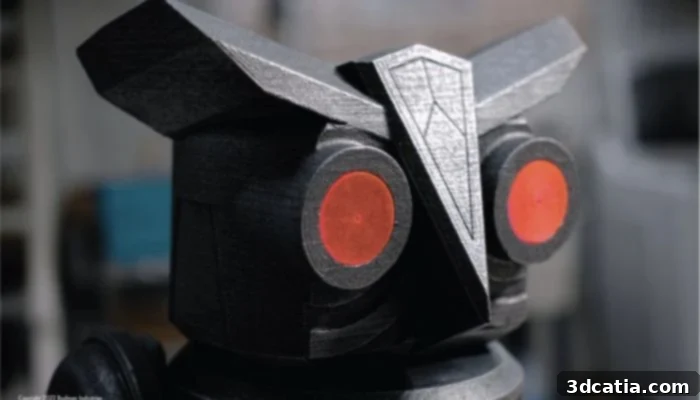
This robotic owl was made by Budmen for ‘It’s a Wonderful Binge’. (photo credit: Budmen Industries)
Costume Design: The Royal Attire of Black Panther
The realm of costume design has also seen significant innovation through 3D printing. The acclaimed “Black Panther” movie, known for its stunning visual aesthetics and culturally rich designs, featured several 3D printed costume elements. Austrian designer Julia Koerner was instrumental in designing a magnificent 3D printed crown and necklace for Queen Ramonda. Additive manufacturing allowed for the creation of intricate, organic patterns and textures that would be exceptionally challenging, if not impossible, to achieve with traditional tailoring or jewelry-making techniques. This not only provided unique aesthetic appeal but also ensured a perfect, custom fit for the actors. The technology’s capacity for complex geometries and precise detailing offers costume designers an unparalleled degree of creative freedom, transforming conceptual designs into tangible, wearable art.
The Unmatched Advantages of Additive Manufacturing for Filmmakers
In general, 3D printing is increasingly favored in the film industry for a multitude of compelling reasons that directly address the demanding nature of movie production. Its ability to create complex parts in exceptionally short timeframes is a game-changer, crucial for meeting the often-unforgiving deadlines inherent in filmmaking. Here are some of the key advantages that make 3D printing an indispensable tool for filmmakers:
Rapid Prototyping and Iteration
Filmmaking is an iterative process, involving constant adjustments and refinements. 3D printing allows designers and prop masters to quickly produce multiple iterations of a part, puppet, or prop. This rapid prototyping capability enables them to test ideas, assess functionality, and make design changes on the fly, significantly accelerating the pre-production and production phases. Instead of waiting weeks for traditionally manufactured prototypes, 3D printed versions can be ready in days or even hours, allowing for more creative experimentation and faster problem-solving.
Geometric Complexity and Artistic Freedom
One of the most remarkable benefits of 3D printing is its capacity to produce objects with highly complex geometries and intricate internal structures that are often inaccessible using conventional manufacturing methods. This unlocks unparalleled artistic freedom, allowing designers to create organic shapes, elaborate textures, and highly detailed components that bring fantastical worlds and characters vividly to life. From the fine features of Pinocchio’s face to the detailed patterns on Black Panther’s costume, 3D printing makes the impossible, possible.
Customization and Personalization
Every character, prop, and set piece in a film often requires a unique touch. 3D printing excels at producing custom, one-off parts tailored to specific requirements without incurring prohibitive tooling costs associated with mass production. This level of personalization is crucial for creating authentic and unique visual elements that define a film’s aesthetic and contribute to its storytelling.
Cost-Effectiveness for Specialized Production
While 3D printing might not always be cheaper than mass production for simple parts, it offers significant cost advantages for specialized, low-volume, and complex components typical in film. It eliminates the need for expensive molds and tooling, reduces material waste through additive processes, and minimizes labor costs associated with intricate handcrafting. For a bespoke puppet or a unique prop, 3D printing often presents the most economical and efficient solution.
Durability and Performance
Depending on the material used, 3D printed parts can be incredibly durable and perform exceptionally well under the rigorous conditions of a film set. Metal 3D printed components, like those used for Pinocchio, offer high strength and resistance to wear, ensuring that puppets can withstand numerous takes and handling. Similarly, advanced polymers can provide flexible yet resilient parts for costumes or props that need to endure movement and stress.
Consistency and Reproducibility
For animation, especially stop-motion, maintaining consistency across thousands of frames is paramount. 3D printing allows for the precise reproduction of identical parts or slight variations, ensuring that character elements, such as facial expressions or specific prop details, remain consistent throughout the production. This level of reproducibility is difficult to achieve with purely manual methods.
Conclusion: The Future of Film is Additive
The integration of 3D printing into Guillermo del Toro’s “Pinocchio” is a powerful testament to how additive manufacturing is not just a tool for industrial production but also a catalyst for artistic innovation in the entertainment industry. From the intricate metal framework of a stop-motion puppet to elaborate costumes and realistic props, 3D printing empowers filmmakers to realize their most ambitious visions with greater precision, speed, and creative freedom than ever before. This technology is revolutionizing how movies are made, pushing the boundaries of visual effects, character design, and practical production. As 3D printing continues to evolve, we can expect to see even more sophisticated applications, potentially including entire sets, interactive elements, and even wearable technologies that blur the lines between reality and imagination. The synergy between traditional artistry and cutting-edge technology promises an exciting future for cinematic storytelling.
What are your thoughts on the transformative impact of 3D printing in the film industry, particularly its use in movies like “Pinocchio”? We’d love to hear your perspective! Share your comments below or connect with us on our LinkedIn, Facebook, and Twitter pages. Don’t miss out on the latest advancements in additive manufacturing – sign up for our free weekly Newsletter here to get the freshest 3D printing news delivered straight to your inbox! You can also explore all our insightful videos on our YouTube channel.