
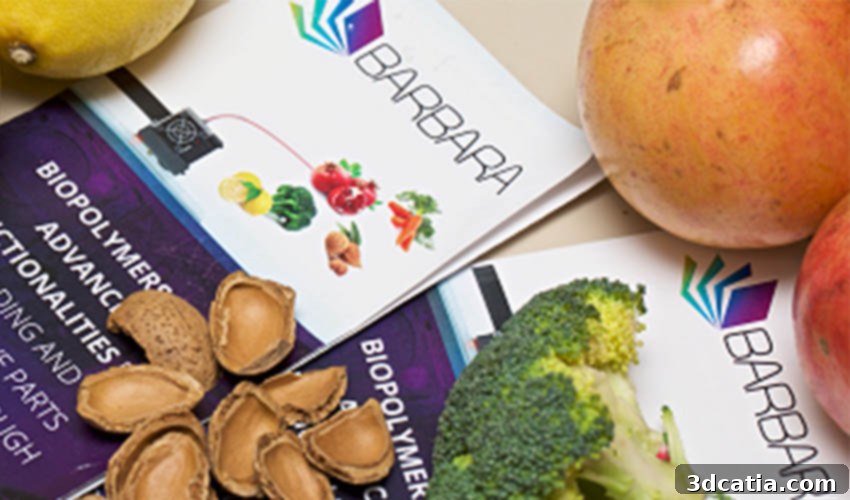
Revolutionizing 3D Printing: The BARBARA Project’s Sustainable Bio-Based Materials from Food Waste
In a significant stride towards sustainable manufacturing, the European Union’s Horizon 2020 research and innovation program championed the BARBARA project, an initiative dedicated to pioneering novel bio-based materials endowed with advanced functionalities. These innovative materials are specifically engineered for use in material extrusion processes, commonly recognized as Fused Filament Fabrication (FFF), enabling the creation of intricate and robust parts. Launched four years ago, this ambitious project successfully tapped into the burgeoning demand within the additive manufacturing sector for materials that offer both enhanced properties and improved ecological footprints. Indeed, additive manufacturing, particularly the segment focused on advanced materials, has consistently shown remarkable growth, a trend well-documented by authoritative publications like the Wohlers Report. At its core, the BARBARA project embodies a commitment to the circular economy, transforming what was once waste into valuable resources by giving food waste and agricultural by-products a vital second life within the 3D printing ecosystem.
The methodology employed by the BARBARA project is a testament to innovative material science and sustainable practices. Researchers meticulously utilized various forms of food waste and agricultural by-products as raw materials to purify and extract valuable compounds. These included natural pigments, captivating fragrances, powerful reinforcing agents, and effective biocide compounds. Once isolated and refined, these extracted elements were intelligently incorporated into engineered bioplastics. These advanced bioplastics were themselves derived from the processing industries of corn, creating a truly integrated and sustainable value chain. The resulting engineered bioplastics are not merely eco-friendly alternatives; they are high-performance materials designed to meet the rigorous demands of highly critical sectors, such as the automotive and construction industries, where they are used for functional prototyping. A key advantage of these prototypes is their remarkable customizability. This allows developers to precisely tailor a range of properties, including crucial aspects like mechanical and thermal strength, the aesthetic appeal of surface finish, desired color appearance, controlled fragrance release, and even antimicrobial capacities. After an intensive four-year research and development cycle, the BARBARA project successfully achieved its ambitious objectives, culminating in the successful research and production of these high-performance, food-waste-derived bio-based materials. These pioneering materials have since been effectively utilized to manufacture functional prototypes, specifically tailored for application in the demanding automotive and construction sectors, marking a significant milestone in sustainable industrial innovation.
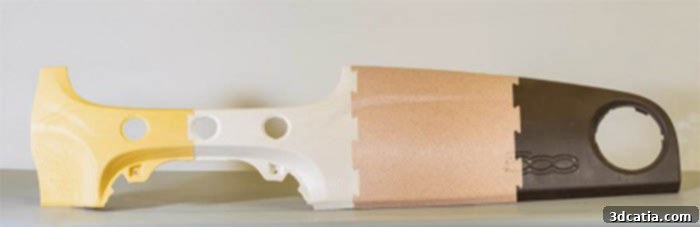
During the course of the project, a total of eight new bio-based materials were successfully developed, demonstrating significant potential for industrial applications | Image via BARBARA project
The practical applications and demonstrative prototypes developed within the BARBARA project underscore the transformative potential of these new materials. The project team proudly showcased functional prototypes designed for critical uses in both the automotive and construction industries, proving the viability and superior performance of their bio-based innovations. In the automotive sector, for instance, collaborations with Centro Ricerche Fiat led to the 3D printing of demonstrator prototypes of essential components like door handles and dashboard fascia. These components were not only structurally sound but also incorporated specific aesthetic and functional properties, including unique colors, custom fragrances, advanced surface effects, and integrated antimicrobial capacities. Such features highlight the versatility of the BARBARA materials, allowing for complex multi-functional designs directly from sustainable sources. The ability to integrate antimicrobial properties is particularly significant in high-touch areas, enhancing hygiene and safety within vehicle interiors. The precise control over surface effects and colors also opens up new possibilities for interior design and customization, reducing the need for post-processing and additional painting. These prototypes exemplify how BARBARA materials can meet and exceed the intricate requirements of modern vehicle manufacturing while promoting eco-friendly practices.
Beyond the automotive industry, the construction sector also greatly benefited from the BARBARA project’s advancements. Here, the team developed robust moulds for resin transfer moulding and innovative truss joint prototypes. These components are essential for modern construction practices and are known for their demanding thermal and mechanical specifications. Traditional materials often struggle to meet these rigorous requirements sustainably, but BARBARA’s bio-based solutions proved capable. Working closely with ACCIONA Infrastructures, a leader in sustainable infrastructure, the project ensured that these prototypes not only met but excelled in performance under harsh construction conditions. The developed materials exhibit high mechanical strength, capable of withstanding significant loads, and excellent thermal stability, crucial for durability in varying environmental temperatures. The success in these applications paves the way for a new generation of sustainable construction materials, potentially reducing the carbon footprint of infrastructure projects and fostering greater material circularity in the building industry. The shift towards bio-based materials for such critical components represents a significant step forward in making construction more environmentally responsible without compromising on structural integrity or performance.
While the overarching goal of developing novel bio-based engineering bioplastic materials for functional prototypes with advanced properties seemed incredibly ambitious at its inception, the BARBARA project, over its dedicated four-year duration, successfully validated this vision. The conclusive achievement of this objective signifies a monumental leap in the field of sustainable materials and additive manufacturing. This impactful project received substantial funding and strategic support from the Bio Based Industries Joint Undertaking, operating under the umbrella of the European Union’s prestigious Horizon 2020 research and innovation program. The success of BARBARA was a collective effort, powered by the expertise and collaboration of a diverse consortium comprising 11 esteemed partners from various European countries. These partners included leading entities such as ACCIONA, Tecn Packaging, Universidad de Alicante, Nurel, and Celabor, among others. The wide range of expertise brought by these partners – spanning material science, engineering, industrial application, and environmental research – was crucial in navigating the complexities of the project and delivering on its ambitious promises. Their collaborative spirit and shared commitment to innovation were instrumental in transforming food waste into high-performance materials, demonstrating the power of European cooperation in addressing global sustainability challenges. This project not only delivered on its material development goals but also fostered a robust network of researchers and industry leaders dedicated to advancing the circular economy. For those interested in delving deeper into the project’s comprehensive findings, technical reports, and milestones, further information and detailed insights can be found by exploring the official project documentation. The journey from conception to successful completion for BARBARA serves as a beacon for future bio-economy initiatives, illustrating that with focused research, strategic partnerships, and adequate funding, even the most ambitious sustainability goals are within reach. The legacy of BARBARA will undoubtedly inspire continued innovation in the quest for a more circular and environmentally responsible industrial landscape. You can find more information HERE.
The BARBARA project stands as a compelling example of how interdisciplinary research and international collaboration can lead to groundbreaking advancements in sustainable technology. By effectively transforming food waste and agricultural by-products into high-performance bio-based materials for 3D printing, it offers a tangible solution to critical environmental challenges while simultaneously fostering innovation in manufacturing. The successful development and validation of these materials for demanding sectors like automotive and construction not only demonstrate their technical viability but also highlight a clear path toward a more circular and resource-efficient economy. The impact of BARBARA extends beyond the laboratory, offering practical applications that could significantly reduce industrial waste, lower carbon footprints, and create new economic opportunities within the bio-economy. This project serves as a powerful testament to the potential of bio-based solutions to drive industrial transformation and meet the growing global demand for sustainable products and processes. What are your thoughts on the groundbreaking BARBARA project and its contributions to sustainable 3D printing? We encourage you to share your insights and comments below, or engage with our community on our Facebook and Twitter pages! Don’t miss out on the latest advancements and news in the world of 3D printing; sign up for our free weekly Newsletter to receive all the essential updates straight to your inbox.