
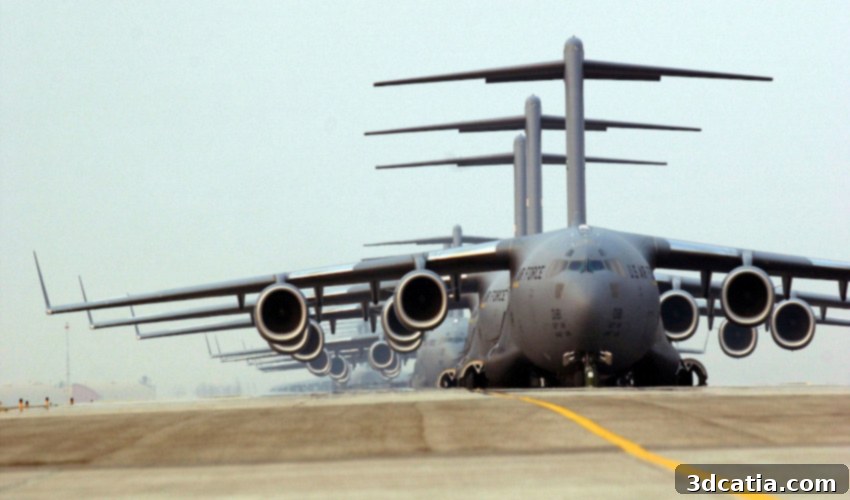
Revolutionizing Aerospace: US Air Force and FSU Pioneer High-Performance 3D Printed Ceramic Sensors
The United States Air Force continues to be at the forefront of adopting cutting-edge additive manufacturing (AM) technologies, strategically integrating them into its advanced operational frameworks. This commitment is evident through various initiatives, including past collaborations with industry leaders like GE Additive to accelerate the implementation of metal 3D printing across its divisions. However, the Air Force’s pursuit of innovation extends beyond structural components, focusing intensely on the development of next-generation sensing capabilities. This drive led them to seek out groundbreaking materials and methodologies for fabricating 3D printed sensors, aiming to surpass the performance limitations of traditional sensor technologies, particularly in extreme operational environments.
To address this critical need, the US Air Force initiated a pivotal partnership with Florida State University (FSU), embarking on a specialized research program dedicated to material science innovation. This collaborative effort proved remarkably successful, culminating in the pioneering development of advanced 3D printed reinforced ceramic sensors. These novel sensors promise enhanced properties, including superior durability and functionality under conditions previously deemed impossible for conventional materials, marking a significant leap forward for aerospace and defense applications.
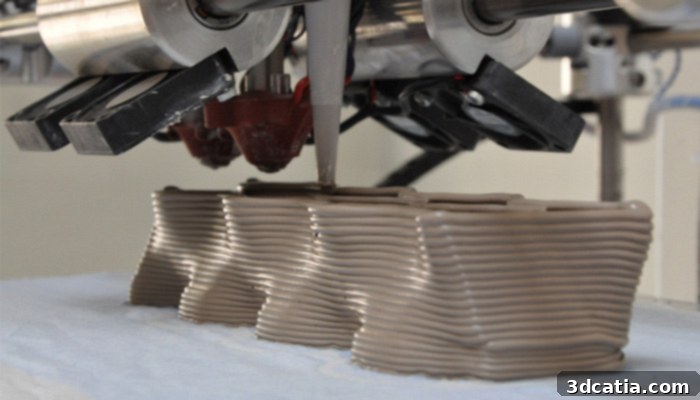
Exploring conventional 3D printing techniques with ceramics for advanced applications.
The Genesis of Innovation: A Collaborative Research Journey
The ambitious research initiative commenced in 2016, with its primary objective centered on discovering and developing novel material solutions specifically tailored for high-temperature sensors and advanced diagnostic systems. This multi-year program brought together exceptional talent from both military research and academia. The project was co-led by Dr. Amanda Schrand, a distinguished researcher from the Air Force Research Laboratory’s (AFRL) Munitions Directorate, and Dr. Cheryl Xu, who at the time was an Associate Professor at Florida State University and has since relocated to North Carolina State University.
Dr. Xu highlighted the transformative nature of their findings, stating, “This represents a great enhancement to the powder material traditionally used in 3D printing. The liquid polymer lends itself to many different, more advanced uses. 3D printing of liquid polymer precursors allows for the creation of complex shapes and intricate honeycomb cellular architectures, which are crucial for performance in challenging environments.” This insight underscores a fundamental shift from conventional powder-based additive manufacturing approaches to liquid-based methods, opening up new frontiers for material science and engineering in sensor fabrication.
Unpacking Polymer-Derived Ceramics (PDCs): The Material Advantage
A cornerstone of this groundbreaking research involved the innovative utilization of liquid preceramic polymers. These are a unique and specialized class of polymers specifically engineered to undergo a chemical transformation into robust ceramic materials through a process known as pyrolysis. Often referred to as polymer-derived ceramics (PDCs), these materials offer distinct advantages over traditionally manufactured ceramics, particularly in their ability to be processed into complex geometries via additive manufacturing before being converted into their final, highly durable ceramic form.
The conversion from a liquid polymer precursor to a dense ceramic occurs after a carefully controlled, high-temperature thermal treatment. During pyrolysis, the polymer undergoes a molecular rearrangement, losing volatile components and forming a strong, stable ceramic network. This method allows for the fabrication of complex components that would be extremely difficult, if not impossible, to produce using conventional ceramic manufacturing techniques. The inherent flexibility of the polymer precursor phase, combined with the precision of 3D printing, enables the creation of intricate internal structures, such as lightweight honeycomb architectures, which are vital for enhancing sensor performance and reducing overall weight in critical aerospace applications.
Additive Manufacturing for Extreme Environments
The ability of these resulting super-strong ceramics to withstand and operate effectively in extreme conditions is what truly sets them apart. These innovative materials are capable of surviving immensely high temperatures, far exceeding the limits of most conventional metals and alloys, as well as resisting the incredible stresses associated with hypersonic velocities. This resilience makes them ideal candidates for a wide array of demanding applications, particularly within the defense and aerospace sectors where materials are constantly pushed to their absolute limits.
For instance, the enhanced properties of these reinforced ceramic sensors make them indispensable in critical areas such as thermal protection systems. These systems are foundational for the safety and functionality of advanced space vehicles, safeguarding them during atmospheric re-entry where temperatures can soar to thousands of degrees Celsius. Similarly, for next-generation hypersonic aircraft and missiles, these sensors are crucial for monitoring structural integrity and environmental parameters in real-time, enabling unprecedented levels of performance and operational safety. Beyond large-scale systems, the technology is also highly relevant for micro-electro-mechanical systems (MEMS), which are often deployed in microscopic devices requiring high precision and durability in harsh environments, and for lightweight mechanical meta-structures utilized extensively in modern aviation to reduce weight and improve fuel efficiency without compromising strength.
Protecting and Commercializing Breakthroughs: Patents and Licensing
Recognizing the immense potential and strategic importance of this novel technology, both the US Air Force and Florida State University took proactive steps to protect their intellectual property. Consequently, two crucial patents related to the 3D printed reinforced ceramic sensors and their manufacturing processes were jointly filed and are currently pending approval. This protection ensures that the innovation is safeguarded and provides a structured framework for its future development and commercialization.
In a strategic move to facilitate the transition of this cutting-edge research from the laboratory to practical application, the parties established a Joint Ownership Exclusive License agreement. Under this arrangement, the Air Force has licensed its commercial rights to Florida State University. In return for this licensing, FSU agrees to provide a percentage of any royalties generated from the commercialization of the technology back to the Air Force. Furthermore, this agreement grants Florida State University the authority to execute exclusive license agreements with interested third parties, thereby creating a pathway for broader industry adoption and development. This mechanism is crucial for ensuring that the technological advancements reach the market efficiently and contribute to both national security and economic growth.

Key researchers Dr. Cheryl Xu, Associate Professor at FSU (now at North Carolina State University), and Dr. Amanda Schrand from AFRL, at the forefront of ceramic 3D printing innovation.
Nahsai, LLC: Bridging Innovation to Market with Speed
Building on the framework of the joint license, the innovative technology was subsequently licensed to Todd Huber, the CEO of Nahsai, LLC. Nahsai is distinguished as a Service-Disabled Veteran-Owned small business (SDVOSB), a classification that not only supports veteran entrepreneurs but also brings a unique understanding of defense-related challenges to the commercialization process. This licensing agreement empowers Nahsai, LLC to leverage the advanced research and bring these groundbreaking ceramic sensor solutions to market.
Through this partnership, Nahsai, LLC is now uniquely positioned to offer a diverse array of advanced material solutions, with a significant emphasis on rapid delivery and expedited development cycles. This focus on “pace” is particularly critical in environments where both commercial and defense customers frequently face immense pressure to meet stringent schedule expectations and aggressive timelines. One of the inherent and most significant benefits of additive manufacturing, especially when applied to such sophisticated materials, is its ability to not only unlock the full intrinsic value and performance potential of the materials themselves but also to dramatically shorten lead times and accelerate the production process. This means that highly customized, high-performance sensors can be designed, fabricated, and deployed in a comparatively short period, providing a substantial advantage to critical programs and projects.
The Future of Aerospace and Defense with Advanced Additive Manufacturing
The development of these 3D printed reinforced ceramic sensors by the US Air Force and Florida State University represents more than just a material science breakthrough; it signifies a fundamental shift in how critical components for extreme environments can be designed, produced, and deployed. This innovation underscores the immense potential of additive manufacturing to transform industries, particularly those with stringent demands for performance, durability, and customization.
The strategic partnership between military research and academia, followed by a purposeful commercialization path through a veteran-owned small business, exemplifies a highly effective model for fostering technological advancement and ensuring its impact across multiple sectors. As these advanced ceramic sensors become more widely adopted, they are poised to enhance the capabilities of aerospace vehicles, improve the reliability of defense systems, and open new possibilities for exploration and innovation in the most challenging environments known to humanity. This successful program paves the way for future research into other high-performance materials and complex geometries, continuously pushing the boundaries of what is possible with additive manufacturing.
What are your thoughts on the groundbreaking Air Force ceramics 3D printing of sensors? Do you foresee these advancements revolutionizing aerospace technology? Share your insights and opinions in a comment below or join the conversation on our Facebook and Twitter pages! Don’t forget to sign up for our free weekly Newsletter to receive all the latest news on additive manufacturing progress, cutting-edge research, and profiles of leading entrepreneurs in 3D printing, delivered straight to your inbox!