
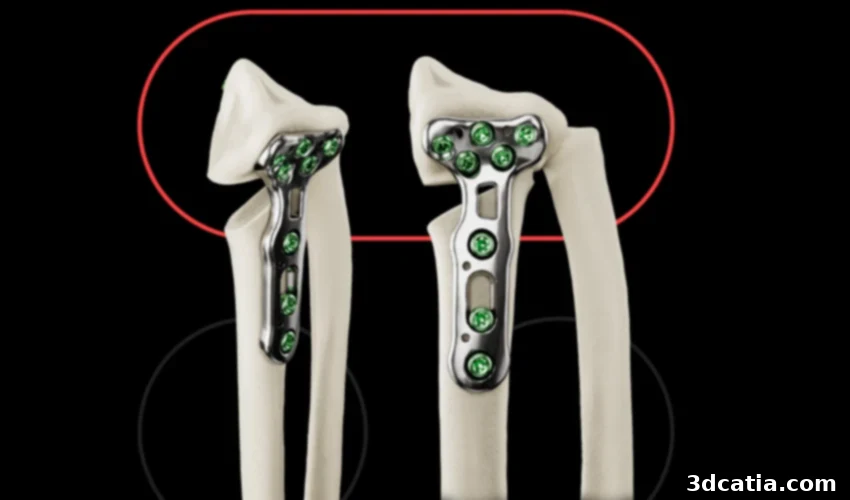
Revolutionizing Healthcare: Tailor Surgery’s Vision for 3D Printing in Personalized Medicine
The integration of 3D printing, also known as additive manufacturing, into the medical sector is experiencing an unprecedented expansion, fundamentally transforming how healthcare professionals approach diagnostics, treatment, and surgical planning. This innovative technology now empowers medical practitioners to fabricate highly personalized medical devices, meticulously tailored to the unique anatomy and specific needs of individual patients. This includes a wide array of critical components such as custom prosthetics that offer improved comfort and functionality, bespoke orthotics designed for optimal support, and complex implants that integrate seamlessly with the patient’s body. Beyond device creation, additive manufacturing serves as an invaluable tool in preparing for intricate surgical procedures, enabling the precise creation of highly detailed anatomical models and custom surgical guides. These tools allow surgeons to rehearse operations, anticipate challenges, and enhance precision, ultimately leading to safer and more effective interventions. Globally, the profound significance of 3D technology in healthcare is increasingly acknowledged, with a growing number of hospitals, universities, cutting-edge research laboratories, and specialized health centers actively adopting and integrating this advanced manufacturing approach into their daily practices. To gain deeper insights into the practical applications and future potential of 3D printing in medicine, we had the privilege of speaking with Tailor Surgery, a pioneering medical facility at the forefront of this technological revolution.
3DN: Could you please introduce yourself and share your connection with 3D printing?
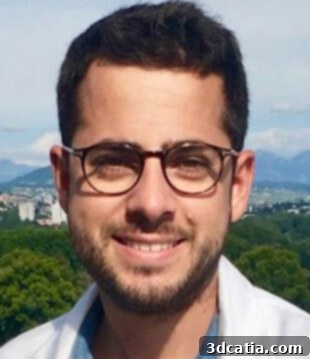
Dr. Ferran Fillat
My name is Dr. Ferran Fillat Gomà, and I am a specialist in orthopedic surgery and traumatology. My journey into the world of 3D printing began during my PhD studies, where I focused my thesis on the profound utility of this technology within my surgical field. Specifically, my research delved into its significant impact on improving the diagnosis and treatment planning for complex conditions like proximal humerus fractures. Through this rigorous academic exploration, I quickly recognized the vast and diverse potential that 3D printing held for advancing traumatology. This realization inspired me to take the initiative and establish the digital surgical planning laboratory, now widely recognized as 3DPTLab, located at the prestigious Research Institute of Parc Taulí Hospital. Concurrently with my PhD work, I actively initiated numerous research endeavors, all centered on exploring the clinical applications and benefits of 3D printing. Today, our hospital’s dedicated 3D lab is a hub of innovation, actively engaged in over 22 research projects. These projects are meticulously designed to generate robust scientific evidence, thereby facilitating the broader implementation of this transformative technology across various medical specialties, extending well beyond the confines of traumatology into areas such as maxillofacial surgery, oncology, and neurosurgery. Our goal is to systematically prove the value and efficacy of 3D printing in a wide range of clinical scenarios, ensuring its responsible and impactful adoption.
3DN: How did the idea of founding Tailor Surgery originate?
The genesis of Tailor Surgery was not a mere business venture, but rather a direct response to a deeply felt clinical requirement within orthopedic surgery. We identified a critical gap: despite significant advancements in medical technology, the prevailing practice in orthopedic surgery and traumatology largely involved fitting the patient to standard, off-the-shelf implants. This approach, while widely adopted, often falls short of delivering truly optimal outcomes due to inherent anatomical variations among individuals. We recognized the immense potential of 3D printing to fundamentally alter this paradigm, offering a pathway to truly personalized treatments. The significant advantage of 3D printing lies precisely in its unparalleled ability to create customized implants and surgical guides, meticulously designed for each unique patient. This customization extends beyond mere fit; it encompasses precise anatomical reconstruction, improved biomechanical function, and enhanced long-term integration. By leveraging advanced digital surgery techniques in the pre-operative phase, this technology allows us to anticipate and meticulously plan for potential challenges and complications well in advance of the actual surgery. This proactive approach significantly minimizes intraoperative surprises, reduces surgical time, and enhances the overall safety and accuracy of the procedure. Consequently, we can dramatically enhance the patient’s diagnosis, refine the treatment strategy, and ultimately provide a safer, more accurate, and remarkably efficient surgical approach that is truly tailored to their individual needs, moving away from the one-size-fits-all model.
3DN: What should be considered when using technology in the medical field?
When integrating any new technology, especially 3D printing, into the highly sensitive and regulated medical field, the paramount consideration is ensuring that it consistently delivers demonstrable added value to the existing process. Whether applied for enhanced diagnostics, precise surgical planning, or innovative treatments, the 3D technology must unequivocally prove its superior capabilities and tangible benefits when compared to current, established methods. This goes beyond mere novelty; it demands a clear improvement in patient outcomes, efficiency, or safety. While there is an ever-growing array of 3D printing applications being explored, only those that have rigorously proven their clinical value, safety, and efficacy are ultimately put into routine practice. Therefore, before widespread adoption, it is absolutely crucial to establish the technology’s worth through meticulous demonstration and robust scientific validation. This includes conducting comprehensive clinical trials, gathering empirical data, and subjecting the findings to peer review. Furthermore, any new medical technology must be supported by rigorous scientific evidence that meticulously substantiates its safety profile, its clinical efficacy in achieving desired therapeutic goals, and its cost-effectiveness in the long run. These foundational elements are non-negotiable prerequisites for responsible implementation, ensuring that patient well-being remains at the forefront of technological advancement and that resources are allocated to truly impactful innovations.

3DN: What materials and printing processes do you work with?
In the highly specialized medical sector, material selection is dictated by stringent requirements and comprehensive certifications specific to medical use. This necessity leads to the utilization of a diverse range of materials, each chosen based on its particular applicability and compliance with rigorous safety and performance standards. We broadly categorize materials into two main areas. The first area encompasses materials explicitly certified for medical use, which must meet exacting biocompatibility and sterilization requirements, alongside other critical medical certifications. These materials are often destined for direct patient contact, such as implants, or for creating surgical tools and guides that come into proximity with the patient. Crucially, the manufacturing processes for these materials must also be certified, ensuring consistency, purity, and traceability. Commonly used materials in this category include medical-grade resins, often used for detailed anatomical models or temporary surgical guides; specialized silicones for soft tissue applications; polyamides (nylons) known for their strength and flexibility; and medical-grade titanium, which is extensively used for long-term implants due to its excellent biocompatibility and mechanical strength. The second area involves the experimental environment, where prototypes and models that do not come into direct contact with patients undergo validation and testing. In this context, a much broader variety of materials can be employed for experimental testing, depending on the specific technical requirements of the research project. For instance, less expensive, standard polymers might be used for early-stage conceptual models, while more advanced composites could be explored for their mechanical properties in a simulated environment. The choice of printing process, such as FDM, SLA, or SLS, is also determined by the material properties and the desired resolution and strength of the final product, ensuring that both material and process are optimized for the specific medical application.
3DN: How do you see the future of additive manufacturing in medicine?
The future of additive manufacturing in the medical field is not merely promising; it is rapidly becoming an indispensable cornerstone of modern healthcare. We are already observing its increasing prevalence across a wide spectrum of products and applications, from patient-specific anatomical models for pre-surgical planning to custom prosthetics and even bioprinted tissues. This upward trend is not only robust but is projected to accelerate significantly within the next five to ten years. This acceleration will be fueled by the burgeoning volume of research being published by countless academic and industry groups, continually unveiling novel applications and validating their clinical effectiveness. We anticipate breakthroughs in areas like regenerative medicine, where 3D printing could facilitate the creation of functional organs and complex tissues for transplantation, effectively addressing the critical shortage of donors. Furthermore, the technology will continue to drive advancements in drug delivery systems, allowing for personalized dosages and release profiles. Challenges such as regulatory pathways, cost-effectiveness on a larger scale, and the integration into existing clinical workflows are being systematically addressed. The benefits and transformative applications that this technology brings to the medical sector are truly endless, limited only by our collective innovation and commitment to patient-centric care. It represents a paradigm shift towards truly personalized, precise, and proactive medicine that will redefine patient care for generations to come.
3DN: Any final words for our readers?
I would especially like to encourage researchers, clinicians, and innovators in this field: the applications and possibilities of 3D printing in medicine are truly endless. Focus your efforts on those innovations that will genuinely and tangibly benefit the patient, prioritizing solutions that improve quality of life, enhance treatment outcomes, and address unmet medical needs. The path to transforming healthcare through technology is often challenging, filled with setbacks and rigorous validation processes. Don’t get discouraged on the road to success; perseverance and a patient-first mindset are crucial. Every breakthrough, no matter how small, contributes to a larger revolution in personalized medicine. For more in-depth information about our work and the solutions we offer at Tailor Surgery, please click HERE.
What do you think of Tailor Surgery’s pioneering work in 3D printing? Let us know your thoughts and insights in a comment below or join the conversation on our LinkedIn, Facebook, and Twitter pages! Don’t forget to sign up for our free weekly Newsletter here to receive the latest 3D printing news straight to your inbox! You can also find all our compelling videos and interviews on our YouTube channel, offering a visual journey into the world of additive manufacturing.
*All photo credits: Tailor Surgery