
HILOS: Revolutionizing Footwear with Sustainable 3D Printing and On-Demand Manufacturing
The world of footwear is undergoing a significant transformation, driven by innovative technologies like 3D printing. If you’ve been following advancements in additive manufacturing, you’ve likely noticed that a growing number of companies are leveraging this technology to produce parts of, or even entire, shoes. Industry giants such as Adidas, Reebok, and New Balance have already integrated 3D printing into their design and production processes, showcasing its potential for enhanced performance and custom aesthetics. However, the innovation extends beyond these major players.
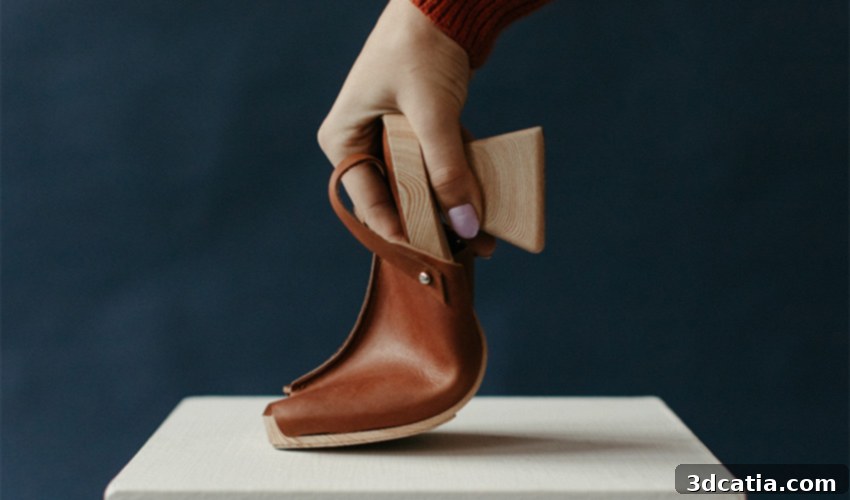
Emerging as a frontrunner in this exciting space is HILOS, a pioneering Portland-based startup founded in 2019. HILOS distinguishes itself by meticulously combining cutting-edge 3D printing techniques with traditional leatherworking skills, creating footwear that is both innovative and exceptionally crafted. This unique approach has garnered them significant recognition, including being a finalist for the prestigious “Forward AM Innovation Award.” The young company is particularly lauded for its collection of 100% recyclable heeled shoes, highlighting a strong commitment to sustainability. To delve deeper into their revolutionary manufacturing process and understand the profound advantages that 3D printing brings to the footwear industry, 3Dnatives had the privilege of speaking with Elias Stahl, co-founder, and CEO of HILOS.
3DN: Can you introduce yourself and your company, HILOS?
I’m Elias Stahl, co-founder and CEO of HILOS. At our core, we envision ourselves as developing a completely new operating system for consumer products, fundamentally changing how goods are brought to market and consumed. Our mission is to liberate brands from the constraints of outdated, linear supply chains that often lead to immense waste and inefficiency. By embracing our innovative platform, brands can move towards creating truly circular products, manufactured entirely on-demand. We’ve chosen to begin our journey of transformation within the footwear sector, an industry ripe for disruption due to its historically wasteful practices and long production cycles. HILOS represents a paradigm shift, enabling a future where products are made precisely when and where they are needed, with a clear path for their end-of-life recirculation.

Photo Credit: HILOS
3DN: Why did HILOS specifically turn to 3D printing as its core technology?
Our overarching mission at HILOS is to fundamentally alter the global manufacturing landscape, shifting from a model of mass overproduction to one where we produce only what is needed, precisely when and where it is required. This commitment extends to ensuring products can be easily taken back and recycled once their useful life is over, fostering a truly circular economy. Realizing this vision of on-demand manufacturing necessitates production capabilities that are tool-free and highly adaptable. Among the various advanced manufacturing techniques available today, 3D printing stands out as one of the most sophisticated and versatile. Its unparalleled design freedom allows for intricate geometries and customized structures that traditional methods simply cannot achieve. Furthermore, the breadth of materials compatible with 3D printing, especially newly developed polymers, is crucial. These innovative materials are not only robust and high-performing but also enable complete recycling, directly supporting our goal of creating a sustainable, closed-loop product lifecycle. 3D printing is not just a tool for us; it’s an enabler of our entire philosophical approach to manufacturing.
3DN: What are the primary advantages of additive manufacturing, specifically for the footwear industry?
The advantages of additive manufacturing in footwear are remarkably diverse and nuanced, extending far beyond superficial applications. While the immediate impact on a specialized product like a 3D-printed hoof or mule might seem more dramatic, the benefits for everyday items like sneakers are equally profound, albeit often more subtle. The foremost advantage lies in its ability to integrate entirely new performance materials into what has historically been a product category associated with discomfort. 3D printing allows us to create structures and utilize materials that deliver unparalleled comfort and durability, setting a new standard in the market. This isn’t just about using better materials; it’s about crafting intricate lattice structures and customized cushioning zones that respond uniquely to the wearer’s foot, enhancing both support and longevity.
Beyond comfort and durability, design freedom and significantly accelerated speed to market are absolutely critical factors for HILOS. Traditional footwear development cycles are notoriously long, often averaging 12 to 15 months from initial concept to retail availability. This lengthy process stifles innovation and makes it challenging for brands to respond quickly to evolving consumer trends. With 3D printing, HILOS can launch entirely new product lines in a mere two weeks. This dramatic reduction in development time empowers us to rapidly iterate, test, and bring innovative designs to consumers, keeping us at the forefront of footwear fashion and functionality. Furthermore, by manufacturing on-demand, we can overcome the limitations of mass production. This means offering an extensive array of sizes and styles, meticulously tailored to the unique contours of each foot, allowing for true personalization for every customer. This level of customization was previously unattainable, opening up a new era of bespoke footwear.
3DN: What specific 3D printing process and materials do you utilize most often at HILOS?
At HILOS, our primary additive manufacturing process is Selective Laser Sintering (SLS). We’ve chosen SLS due to its exceptional ability to produce highly complex geometries with excellent mechanical properties, surface finish, and material versatility without the need for support structures. This process is ideally suited for creating the intricate and functional components of our footwear, ensuring both aesthetic precision and structural integrity. When it comes to materials, our go-to choice is Thermoplastic Polyurethane, commonly known as TPU. TPU is an outstanding material for footwear applications primarily because of its unique combination of strength, flexibility, and elasticity. It can withstand significant stress and strain, offers excellent abrasion resistance, and provides the necessary spring and cushioning for comfortable and durable shoes. Its natural suitability for footwear, coupled with its advanced performance characteristics and inherent recyclability, makes it an indispensable component of HILOS’s commitment to sustainable and high-performance products. This blend of cutting-edge technology and advanced materials allows us to achieve our goals of design freedom, performance, and environmental responsibility.
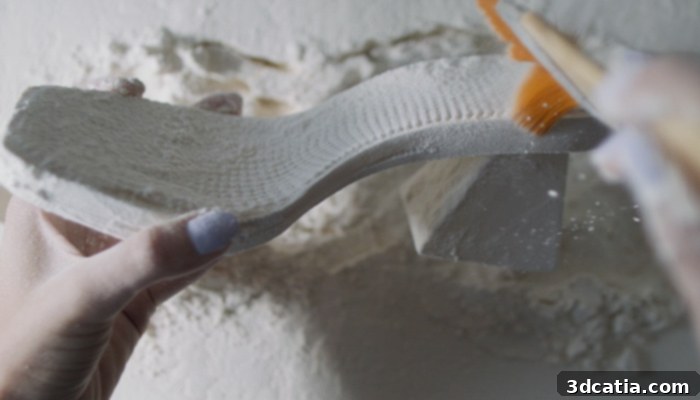
Photo Credit: HILOS
3DN: What fundamentally differentiates HILOS printed shoes from conventionally manufactured shoes?
The differences between HILOS printed shoes and traditionally manufactured footwear are profound and span several critical categories: design, comfort, durability, and sustainability. In every single one of these aspects, our products are engineered to outperform conventional offerings. From a design perspective, 3D printing liberates us from the constraints of molds and traditional tooling, allowing for previously impossible geometries, intricate internal structures, and highly customized aesthetics. This leads to footwear that is not only visually unique but also biomechanically optimized. In terms of comfort, our ability to precisely control material distribution and create dynamic lattice structures results in cushioning and support that adapt uniquely to the wearer’s foot, delivering an unparalleled wearing experience.
Durability is another hallmark of HILOS footwear. We have developed our own rigorous testing regimens to ensure our shoes can withstand the demands of daily wear. For instance, our latest heeled clog has undergone over 200 miles of intensive testing, emerging with barely a scratch – a testament to the resilience of our 3D-printed components and robust assembly. Perhaps most importantly, sustainability is woven into the very fabric of our manufacturing philosophy. Every single shoe we produce is genuinely made-to-order, eliminating the waste associated with overproduction and inventory. We don’t make shoes for a warehouse shelf; we make them for *you*, the individual customer, with the commitment to take them back at the end of their life cycle for full recycling and reuse. This on-demand, circular model stands in stark contrast to the linear ‘take-make-dispose’ approach prevalent in traditional footwear manufacturing.
3DN: What are the future projects and aspirations for HILOS?
The future for HILOS is incredibly exciting, filled with strategic collaborations and continued product innovation. We are thrilled to be launching our very first brand collaboration this Fall with HELM, a partnership that will demonstrate the versatility and appeal of our digitally crafted footwear platform to a broader audience. Following this, we have several other significant collaborations lined up for the upcoming Spring season, each designed to push the boundaries of what’s possible in sustainable footwear. Beyond these partnerships, HILOS will continue to release new product lines every season, serving as tangible demonstrations of the immense possibilities inherent in digitally crafted footwear. These new collections will not only showcase our ongoing advancements in design and technology but also inspire other brands to explore this transformative manufacturing paradigm. Ultimately, a core part of our mission is to empower and assist other forward-thinking brands in launching their own on-demand, circular product lines, effectively extending the reach and impact of our innovative operating system across the consumer product landscape. We aim to be a catalyst for a more sustainable and responsive future in manufacturing.
3DN: Do you have a final message or word for our readers about the future of manufacturing?
I truly believe we are standing on the cusp of a profound turning point, one that is set to completely reshape how and where we manufacture products. This isn’t just about technological advancement; it’s a monumental shift towards a more responsible and efficient global economy. This transformation, however, is not something that will happen on its own; it’s a movement that absolutely requires everyone’s active participation – we cannot afford to be passive observers. The current model of continuous overproduction in overseas factories, destined for vast warehouse distribution centers and ultimately landfills, is simply unsustainable and must change. I firmly believe that collaboration will be the absolute key to the success of this movement. No single entity, no matter how innovative, can achieve this monumental shift alone.
At HILOS, we readily acknowledge that we wouldn’t have achieved so much, so quickly, without standing on the shoulders of giants – the support and partnership of other visionary companies and individuals who share our commitment to a better future. This collaborative spirit fosters innovation, accelerates progress, and enables us to overcome complex challenges together. We urge brands, consumers, and innovators alike to join us in embracing this new era of responsible manufacturing. To learn more about our mission, our products, and how we are building the future of footwear, we invite you to explore our website HERE. Be part of the change that reshapes our world for the better.
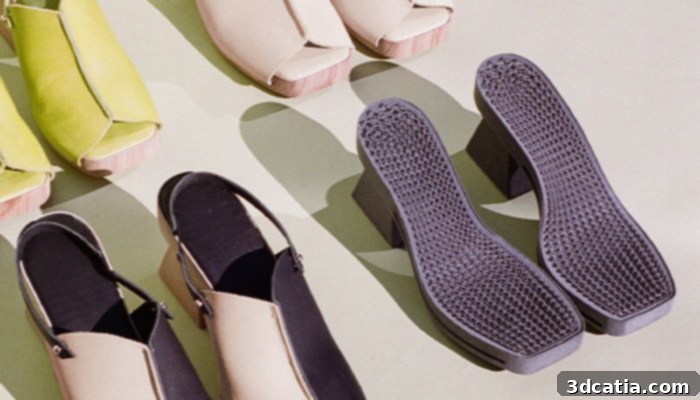
Photo Credit: HILOS
What are your thoughts on HILOS’s innovative 3D printed shoes and their vision for sustainable footwear? We’d love to hear your perspective! Let us know in a comment below or join the conversation on our Facebook and Twitter pages. Don’t forget to sign up for our free weekly newsletter, ensuring you receive all the latest news, breakthroughs, and insights in the dynamic world of 3D printing delivered directly to your inbox!