
Revolutionizing Battlefield Tactics: The Impact of 3D Printed Bombs in Ukraine
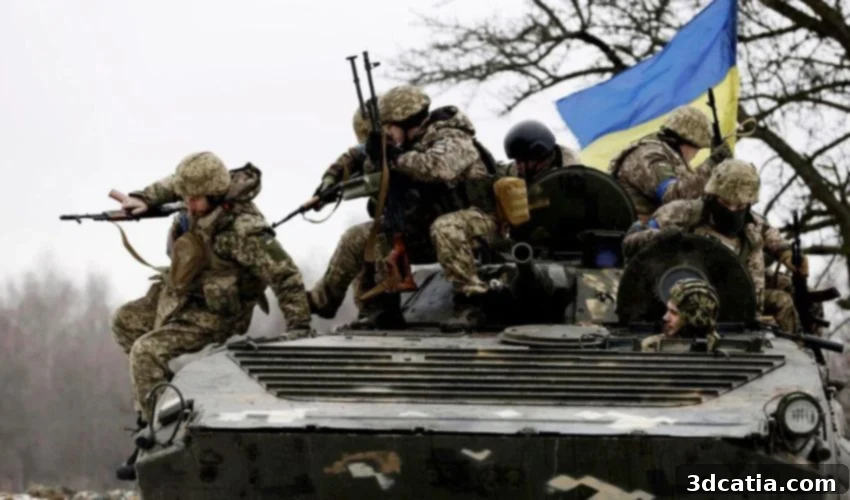
The protracted conflict in Ukraine continues to intensify with no foreseeable end, marking a tragic chapter in modern European history. While the roots of the struggle can be traced back to Russia’s annexation of Crimea in 2014, the full-scale invasion commenced in February 2022, plunging the nation into widespread devastation. Despite the extraordinary bravery and resilience demonstrated by Ukrainian forces, the human cost continues to mount, with casualties rising and vital munitions dwindling. The urgency of the situation was underscored in July when the United States announced its decision to supply cluster munitions to bolster Ukraine’s counter-offensive. Amidst these conventional and controversial arms provisions, a less conventional, yet remarkably impactful, weapon has emerged, as reported by The Economist: 3D printed bombs, offering a novel approach to battlefield challenges.
Ukraine has long been a testament to the transformative potential of 3D printing, especially in the face of adversity. Since the onset of the conflict, additive manufacturing has been extensively leveraged for a multitude of critical applications, playing a pivotal role in supporting the war effort and mitigating the severe supply chain disruptions caused by the hostilities. From essential medical aids such as 3D printed tourniquets that save lives on the front lines, to custom-fitted prosthetics for war amputees, protective equipment for soldiers, and even advanced surveillance drones, the technology has proven indispensable. Beyond military and medical uses, 3D printing has even facilitated the rapid construction of civilian infrastructure, such as schools, highlighting its versatility. This established culture of innovation and rapid prototyping laid the groundwork for the latest development: 3D printed bombs, born from an urgent need for flexible, locally-produced weapon supplies where traditional arsenals are limited but raw explosive materials are more accessible. This ingenious solution is largely driven by communities of dedicated amateur weapon makers, extending beyond Ukraine’s borders to include invaluable contributions from neighboring countries like Poland and Latvia.
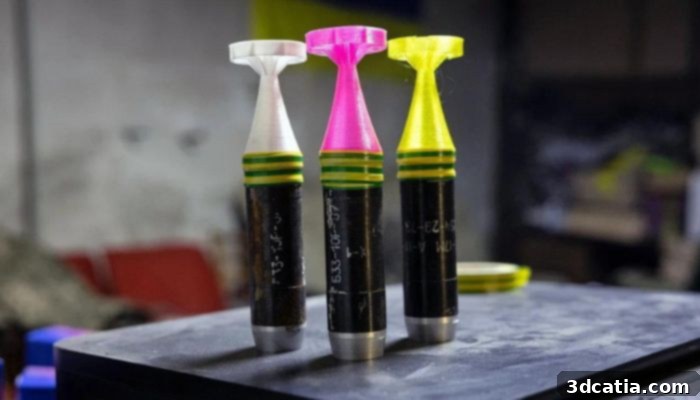
The 3D printed bombs being used in Ukraine (photo credits: Getty Images)
The Genesis and Impact of 3D Printed Bombs in Ukraine
The emergence of 3D printed bombs represents a significant tactical shift, demonstrating both ingenuity and adaptability in a high-stakes conflict. Reports from The Economist reveal that these innovative munitions offer substantial advantages over conventional grenades. Weighing approximately 800 grams compared to the 300-gram standard grenade, they pack a considerably more potent punch, increasing their effectiveness on the battlefield. Beyond their enhanced destructive capability, these bombs are remarkably cost-efficient to produce, with some groups reporting manufacturing costs of less than $3.85 per unit. This economic advantage is crucial for a nation facing immense financial strain from prolonged warfare.
Affectionately dubbed “candy bombs,” these improvised explosives often feature whimsical names that belie their serious purpose, such as “Zaychyk” (Ukrainian for “Rabbit”). This playful nomenclature might stem from their often simple, plastic-based construction or the ease with which they can be produced in large quantities. The production scale is impressive; one dedicated group within Ukraine claims the ability to 3D print approximately 1,000 plastic shells for these explosives every single week. These shells are subsequently filled with readily available C4 explosive and reinforced with pieces of steel shrapnel to maximize their impact. The demand for these cost-effective, locally-produced weapons is soaring, with the military contact for this particular group requesting an astounding 1,500 3D printed bombs daily, signaling their growing strategic importance in the ongoing conflict.
A Global Network of Support: The Maker Community’s Role
The production of these 3D printed munitions is not confined solely to Ukraine’s borders; it is a collaborative effort drawing on a broader network of passionate makers and volunteers from across Europe. Groups in neighboring countries, driven by solidarity and a desire to contribute to the Ukrainian defense, have become integral to this supply chain. One such prominent collective is the “Druk Army” (meaning “Print Army”), which has played a pivotal role by producing an astonishing more than 30,000 “candy bombs” within a mere four-month period. Their efforts highlight the decentralized yet highly effective nature of this grassroots manufacturing. Similarly, another anonymous group operating from Latvia has reportedly shipped an impressive 65,000 bombshells, demonstrating the significant cross-border support for Ukraine’s innovative defense strategies. This international cooperation underscores the global commitment to assisting Ukraine in its fight for sovereignty.
The logistical challenges of transporting these unconventional munitions across international borders have also led to remarkable acts of ingenuity and a degree of unofficial cooperation. The Economist has reported that Ukrainian customs officials, recognizing the critical need and humanitarian urgency, are often turning a blind eye to these shipments. In a testament to human resourcefulness in times of crisis, these vital components are frequently classified under seemingly innocuous categories, such as children’s toys or candle-holders, allowing them to pass through checkpoints without undue scrutiny. This informal system reflects the exceptional circumstances of the conflict and the collective determination to support the war effort through innovative means, blurring the lines between standard protocols and urgent necessity.
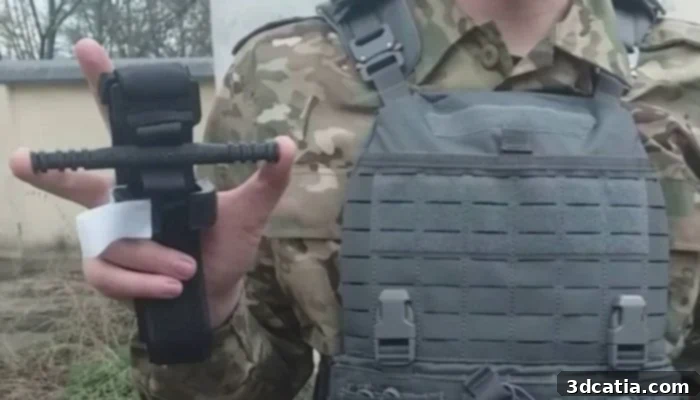
3D printing has been used for a number of different applications to help with the war effort, including these 3D printed tourniquets (photo credits: 3D Printing for Ukraine)
The Evolution of Production: Towards Standardization and Professionalization
As the use of 3D printed bombs becomes increasingly widespread and crucial to the Ukrainian war effort, the next logical step is to evolve from a disparate, decentralized production model to a more standardized and professionalized approach. This transition echoes the rapid organizational efforts seen within the global maker community during the COVID-19 pandemic, where initially diverse groups rallied to produce personal protective equipment (PPE) before streamlining their operations. Currently, the landscape of 3D printed bombs is highly varied, with an estimated 200 different models and sizes being produced by various groups. While this diversity initially fostered rapid innovation and allowed for flexible responses to immediate needs, it also presents challenges in terms of interoperability, quality control, and logistical efficiency.
The goal for the future is to overcome these supply chain complexities, particularly those arising from components sourced from numerous independent workshops, and to significantly reduce the sheer number of “candy bomb” types. By standardizing designs, materials, and production processes, the industry aims to achieve greater consistency, reliability, and scalability. This professionalization is expected to enhance both the effectiveness of the munitions and the efficiency of their distribution to the front lines. Such a development would be a powerful testament to the overarching utility and adaptability of 3D printing technology, particularly in scenarios demanding rapid innovation and flexible manufacturing solutions under immense pressure, proving its invaluable role far beyond conventional industrial applications.
The integration of 3D printing into Ukraine’s defense strategy exemplifies a paradigm shift in wartime manufacturing, showcasing how decentralized innovation can complement and, in some cases, substitute traditional industrial capabilities. This grassroots movement not only provides crucial material support but also fosters a spirit of self-reliance and collective action against a formidable adversary. The story of 3D printed bombs is thus more than just about weaponry; it’s about communities, innovation, and the relentless pursuit of solutions in the face of overwhelming odds.
What are your thoughts on the groundbreaking use of 3D printed bombs in Ukraine and the broader implications for modern warfare? We invite you to share your insights in a comment below or engage with us on ourLinkedIn,Facebook, andTwitter pages! To stay informed about the very latest in additive manufacturing, don’t forget to sign up for our free weeklyNewsletter here, delivering cutting-edge 3D printing news straight to your inbox! You can also explore all our fascinating videos on our dedicatedYouTube channel.
*Cover Photo Credits: Kyodo via AP Images