
Accelerating Aerospace Innovation: Additive Industries Expands MetalFAB1 Footprint for Industrial 3D Printing
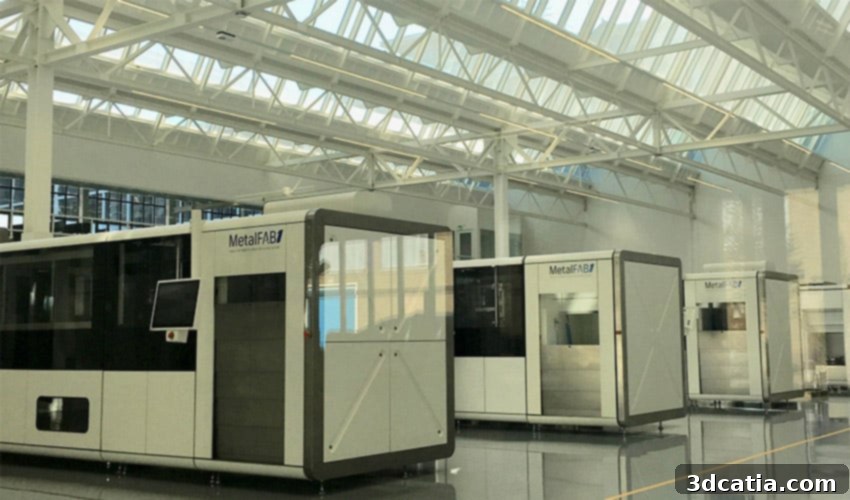
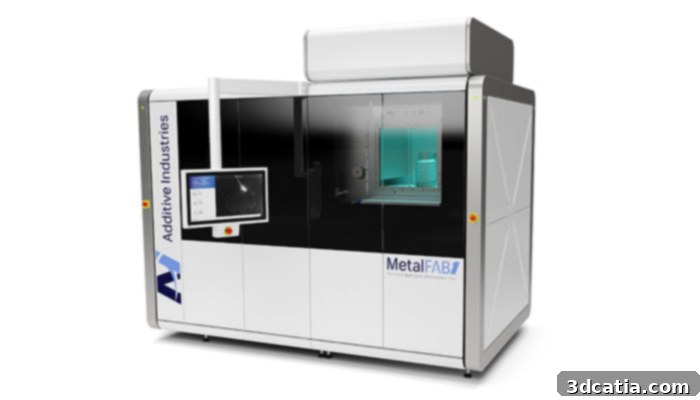
The landscape of industrial manufacturing is undergoing a significant transformation, with additive manufacturing at the forefront of this revolution. Leading this charge is Additive Industries, a Netherlands-based innovator dedicated to accelerating the production of metal parts through its advanced, modular, end-to-end laser powder bed fusion system, the MetalFAB1. This sophisticated system, designed for demanding industrial markets, integrates seamlessly with the company’s powerful information platform, the Additive World Platform, to deliver unparalleled efficiency and control. In a recent development underscoring its growing market dominance and the increasing adoption of industrial metal 3D printing, Additive Industries announced a substantial sale of six additional MetalFAB1 systems to a key aerospace client located in California. While the name of this aerospace giant remains undisclosed, the deal signals a major leap forward for high-volume, high-value manufacturing in the sector.
A Testament to Performance: Expanding Capacity for a Leading Aerospace Innovator
This recent acquisition dramatically expands the capabilities of the unnamed aerospace company, which already operates four MetalFAB1 systems. With the new machines slated for delivery by the end of the year, their total fleet will reach ten MetalFAB1 units. This significant investment is a clear indicator of the proven performance and reliability of Additive Industries’ technology. The existing four MetalFAB1 systems have already demonstrated impressive productivity, enabling the client to consolidate approximately 700 kilograms of powder during the month of June alone. This level of material processing highlights the MetalFAB1’s capacity for substantial, continuous production, moving far beyond prototyping into true industrial-scale manufacturing.
The MetalFAB1 system is celebrated for its exceptional flexibility, a crucial feature for the diverse and evolving needs of the aerospace industry. Its modular design allows configurations ranging from two to an impressive eleven modules, adaptable to specific production requirements and scaling strategies. This adaptability ensures that manufacturers can optimize their operations for various part sizes, materials, and production volumes without over-investing in unused capacity or being limited by fixed setups. The ability to integrate different modules, such as those for pre-processing, printing, and post-processing, within a single, enclosed system minimizes manual intervention, reduces potential contamination, and streamlines the entire workflow, thereby boosting efficiency and product quality.
Pushing Boundaries: Large-Scale, Complex Part Production for Aerospace
One of the most compelling aspects of this collaboration is the aerospace company’s ability to cost-effectively produce exceptionally large and complex components using Additive Industries’ metal additive manufacturing system. These parts can measure over 420 mm in diameter by 400 mm in height and weigh up to 180 kilograms. Such dimensions represent a significant challenge for conventional manufacturing processes and even for many existing metal 3D printing solutions. The MetalFAB1’s robust architecture and advanced laser technology make it uniquely suited to handle these demanding specifications, delivering precision and material integrity even in large formats.
Shane Collins, General Manager for Additive Industries North America, Inc., emphasized the groundbreaking nature of these projects. “This part is likely the largest, most complex powder bed fusion part ever produced in series production,” he stated. Collins further praised the collaborative effort, adding, “We are proud of our multi-disciplinary team that worked with this customer to make this production a reality as well as the capabilities of our MetalFAB1 systems to print for days back to back.” This highlights not only the machine’s capability for continuous, high-volume operation but also the importance of expert support in realizing complex additive manufacturing projects.
Strategic Growth and Market Impact in North America
The order for these six new MetalFAB1 systems will significantly bolster Additive Industries’ installed base in North America, bringing the total to 17 systems since the first machine was installed in late 2017. This rapid expansion underscores the growing demand for industrial-grade metal additive manufacturing solutions in the region. Each MetalFAB1 system is equipped with four powerful 500-watt lasers, providing immense processing capabilities. As Shane Collins noted, “Considering each system has four, 500 [W] lasers, the powder consolidation capabilities would equal roughly 68 single laser systems.” This comparison emphasizes the sheer power and efficiency packed into each MetalFAB1 unit, allowing for faster build times and higher throughput compared to traditional single-laser machines.
The aerospace industry stands as one of the earliest and most enthusiastic adopters of 3D printing technology. Its embrace of additive manufacturing has been pivotal in driving advancements across the entire sector. Today, aerospace remains one of the most mature industries for 3D printing, having moved far beyond simple prototyping to incorporate additive manufacturing for tooling applications and the production of critical end-use parts. Metal additive manufacturing, in particular, delivers immense value to this industry by enabling the creation of lightweight, structurally optimized components that improve fuel efficiency, reduce material waste, and enhance overall aircraft performance. As more aerospace companies unveil their applications and demonstrate the tangible benefits they reap from 3D printing, it is expected that even more players will enter this transformative space.
Vision for the Future: Accelerating Adoption with Tangible Results
Daan Kersten, CEO of Additive Industries, articulated the strategic drivers behind the company’s success. “The fast growth in North America is partly due to our focus on the aerospace sector and the aeronautics adoption curve for production additive manufacturing,” he explained. Kersten anticipates an even greater acceleration in this growth, especially as customers publicly share their innovative applications. He believes that “more companies are able to visualize the large, complex parts that can be manufactured on the MetalFAB1 system in titanium, aluminium, steel and nickel based alloys.” This transparency will be key to demystifying the technology and showcasing its full potential to a wider audience.
The ability to work with a diverse range of high-performance metal alloys is critical for aerospace applications. Titanium alloys are highly valued for their exceptional strength-to-weight ratio and corrosion resistance, making them ideal for structural components. Aluminum alloys offer lightweight solutions with good thermal properties, while various steel alloys provide robust and durable options for specific parts. Nickel-based superalloys are indispensable for high-temperature applications, such as engine components, due to their excellent heat resistance and mechanical strength. The MetalFAB1’s compatibility with these advanced materials, combined with its precision and scalability, ensures that aerospace manufacturers can meet stringent performance requirements while exploring new design possibilities.
The Broader Impact of Metal Additive Manufacturing on Aerospace
The continued expansion of MetalFAB1 systems in the aerospace sector highlights several key advantages that metal additive manufacturing brings to the industry. Beyond rapid prototyping, AM enables profound improvements in design, production, and supply chain management. For instance, it allows for part consolidation, where multiple components that would traditionally be assembled are printed as a single, complex unit. This reduces part count, minimizes assembly time, lowers potential points of failure, and often results in lighter, stronger structures. Furthermore, the design freedom offered by AM facilitates the creation of highly optimized geometries, such as lattice structures, which significantly reduce weight without compromising structural integrity – a critical factor for fuel efficiency and payload capacity in aircraft.
Moreover, metal 3D printing helps to simplify complex global supply chains. Manufacturers can produce parts on-demand, closer to the point of use, reducing lead times, inventory costs, and the risks associated with traditional, geographically dispersed supply networks. This agility is particularly valuable in an industry where component availability and speed of repair are paramount. As the technology matures and becomes even more integrated into standard manufacturing practices, we can expect to see further innovations in material science, increased automation, and broader adoption across various sub-sectors of aerospace, from commercial aviation to defense and space exploration. Additive Industries, with its robust MetalFAB1 system and strategic focus, is clearly positioned to be a driving force in this exciting evolution.
What are your thoughts on Additive Industries’ advancements and the increasing role of metal additive manufacturing in the aerospace sector? Share your insights and comments below, or connect with us on our Facebook and Twitter pages! Don’t forget to sign up for our free weekly Newsletter to get all the latest news in 3D printing delivered straight to your inbox.