
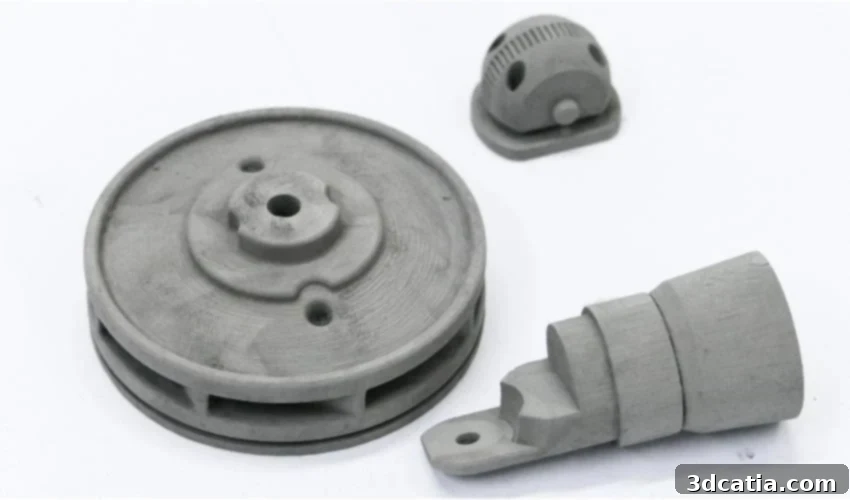
Addimetal’s K2-2: Unlocking the Future of Accessible & High-Performance Metal Binder Jetting
The landscape of metal additive manufacturing has witnessed unprecedented growth and innovation over the past few years. This burgeoning market encompasses a diverse array of processes and materials, among which binder jetting stands out as an increasingly popular and versatile technology. Gaining significant traction across a wide spectrum of industries, metal binder jetting offers unique advantages for mass production of complex metal parts. In this dynamic segment, the Toulouse-based start-up Addimetal is making a significant impact. With its pioneering 3D printer, aptly named K2-2, Addimetal is committed to transforming industrial metal additive manufacturing. Their core mission is to deliver a high-performance, yet remarkably accessible and user-friendly machine, embodying a true “plug & play” philosophy. Addimetal’s vision extends to providing a manufacturing process that is not only repeatable and reliable but also broadly available to a diverse range of users, from research institutions to demanding industrial environments. We had the distinct pleasure of speaking with co-founder and CEO Mohamad Koubar, who shared deeper insights into the ambitious goals and innovative spirit driving this forward-thinking start-up.
3DN: Could you introduce yourself and explain your journey into additive manufacturing?
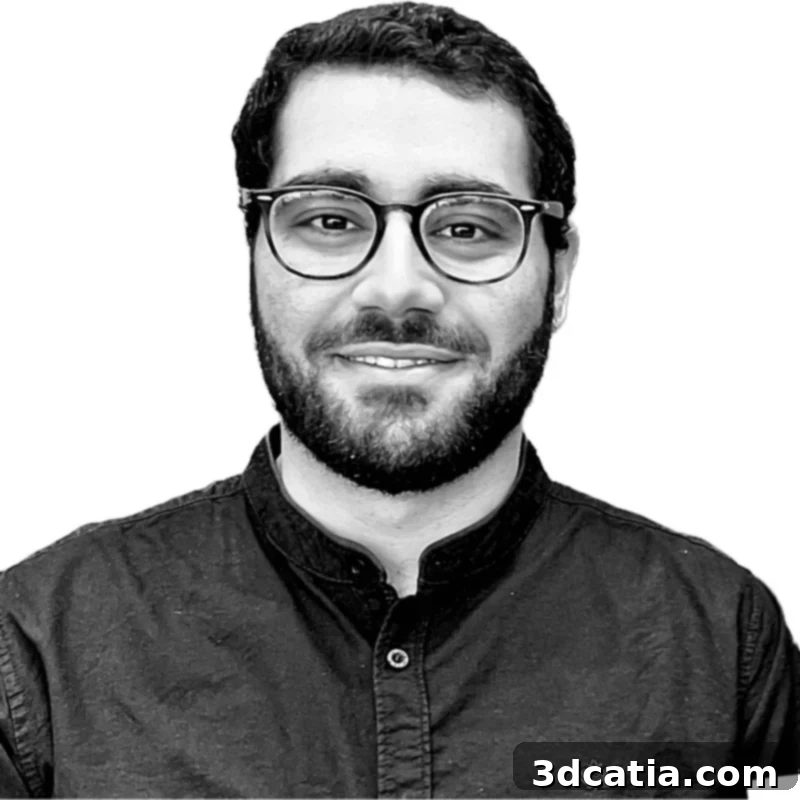
Mohamad Koubar, CEO of Addimetal
Hello, my name is Mohamad Koubar. I am a mechanical engineer by training, having graduated from Supmicrotech ENSMM, a prestigious engineering school. My professional journey began in the fast-paced automotive and aerospace industries, sectors renowned for their rigorous demands and cutting-edge technologies. These early experiences provided a strong foundation in precision engineering and manufacturing principles. Following this, I transitioned into a specialized role within a design office, focusing specifically on the design of Fused Deposition Modeling (FDM) additive manufacturing machines. I dedicated five years to this field, immersing myself in the intricacies of 3D printer development.
It was during this period that my passion for additive manufacturing truly ignited. I recognized the immense potential that this technology held, not just for prototyping but for fundamental changes in production. However, I also experienced a growing frustration with the inherent limitations of FDM, primarily its restricted use to polymers and its predominant application in prototyping rather than end-part production. This frustration became a powerful catalyst. It spurred a desire within me to push the boundaries of what was possible, to venture beyond plastics and explore the vast, untapped potential offered by metallic materials in additive manufacturing. This ambition, this drive to bridge the gap between concept and high-performance metal components, directly led to the conceptualization and eventual birth of Addimetal.
3DN: How did the innovative idea for Addimetal come about, leading to its establishment?
Addimetal is the culmination of a deeply held vision combined with a series of critical observations about the evolving industrial landscape. On one hand, I have always possessed a strong entrepreneurial spirit, driven by the desire to create and innovate. On the other, I became increasingly convinced that metal additive manufacturing had the potential to far surpass its then-current applications, evolving from a niche technology to a mainstream industrial solution. When I first embarked on this ambitious project, a key strategic decision was made: not to prematurely commit to any single additive manufacturing technology. This open-minded approach allowed us to thoroughly evaluate the market and technological possibilities.
My objective was crystal clear from the outset: to engineer a robust and versatile machine specifically tailored for industrial applications, capable of meeting the most stringent manufacturing requirements. Through comprehensive research and analysis, metal binder jetting quickly emerged as the most compelling and obvious choice for achieving this goal. While this technology undoubtedly presents considerable technical challenges, particularly concerning material compatibility, binder development, and the subsequent sintering process, it was precisely these complexities that made it so intriguing and exciting. The promise of high-volume, cost-effective production of intricate metal parts was simply too significant to overlook.
Fast forward four years, and with the successful development and launch of the K2-2, we have unequivocally tackled an immense challenge. We set out to design a high-performance, competitively priced industrial 3D printer, while always keeping in mind that there are still crucial steps to be taken to render this sophisticated technology truly “plug & play” for every user. This journey embodies a spirit of relentless innovation and problem-solving, perfectly captured by Mark Twain’s insightful observation: “They did not know it was impossible so they did it.” This quote resonates deeply with the Addimetal philosophy, emphasizing our commitment to overcoming perceived limitations and pioneering new capabilities in advanced manufacturing.
3DN: What are the distinctive features of your K2-2 machine, and what makes it particularly innovative in the market?
The Addimetal K2-2 stands as a testament to our commitment to innovation, setting itself apart from conventional metal 3D printers in several pivotal ways. Its unique design and operational philosophy address key pain points in the additive manufacturing industry, offering a superior solution for both research and industrial production.
- Unprecedented Technological Openness: A cornerstone of the K2-2’s innovation is its remarkable openness. Unlike many proprietary systems prevalent in the market, our machine is designed to be completely open-source, both in terms of the metal powders it can process and the binders it utilizes. This unparalleled flexibility is absolutely crucial for advancing the field of binder jetting. It empowers users, particularly those engaged in demanding R&D projects or cutting-edge industrial applications, to experiment with novel materials, develop custom binders, and push the very boundaries of what is currently achievable with additive manufacturing. This openness fosters innovation, accelerates material development, and allows for specialized applications that closed systems simply cannot support, such as the creation of components with unique metallurgical properties or for niche industrial requirements.
- Exceptional Industrial Performance: While engineered with the versatility required for advanced research and development, the K2-2 simultaneously excels in rigorous industrial environments. It masterfully combines critical performance metrics: high printing speed to enhance throughput, unparalleled precision for intricate geometries and tight tolerances, and an optimized work volume that maximizes efficiency for batch production. These attributes collectively meet and exceed the stringent expectations of the most demanding sectors, including aerospace, automotive, medical, and tooling, where consistency, quality, and rapid production are paramount. The K2-2 isn’t just a prototype machine; it’s a workhorse designed for scalable, reliable production of metal parts.
- Superior Ergonomics and Practicality: User experience was a central consideration throughout the K2-2’s design process. We meticulously engineered the machine for optimal ease of use, ensuring that every interaction is intuitive and efficient. A seemingly small but remarkably practical design choice is its ability to easily pass through standard industrial doors – a feature that significantly simplifies installation and relocation within existing manufacturing facilities. Furthermore, essential operational tasks such as the removal of job boxes and the meticulous cleaning of the printing surface have been thoughtfully streamlined, reducing downtime and operator effort. The accompanying software suite is equally impressive, offering a suite of advanced tools. One standout feature is the granular management of settings, allowing for customization by individual part or groups of parts within a single build. This level of control significantly enhances process intuition and optimizes results for diverse components.
- In essence, the K2-2 transcends the definition of a mere machine. It is a highly versatile, robust, and high-performance technology platform, meticulously engineered to address not only the current demands of the industry but also to anticipate and seamlessly integrate with future needs and technological advancements in metal additive manufacturing. It truly represents a holistic solution for modern industrial production.
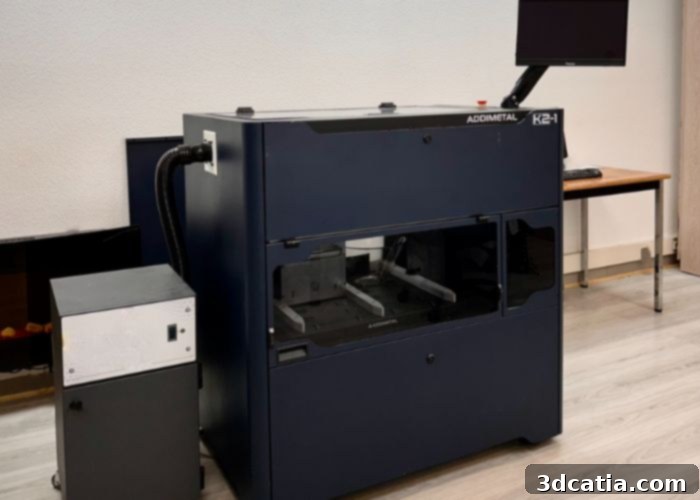
The K2-2 3D printer in action, highlighting its robust design and industrial capabilities.
3DN: What are the inherent challenges within binder jetting that Addimetal specifically aims to resolve with its technology?
Metal binder jetting, while incredibly promising, is still a relatively nascent technology compared to other additive manufacturing processes. As such, it presents a unique set of challenges that need to be systematically addressed to unlock its full potential for industrial adoption. At Addimetal, we have strategically focused our engineering and development efforts on three critical priority areas to elevate binder jetting to a new level of maturity and reliability.
- Ensuring Repeatability: In any manufacturing process, especially one destined for industrial production, ensuring consistent part quality is paramount. Repeatability refers to the ability to consistently produce identical parts with the same characteristics, regardless of the batch size, production run, or ambient conditions. Achieving high repeatability in binder jetting is complex, involving precise control over powder deposition, binder application, and post-processing steps. Our efforts with the K2-2 are geared towards guaranteeing consistent metallurgical properties, dimensional accuracy, and surface finish from one part to the next, and from one production cycle to another. This consistency is vital for industries that require certified and traceable components, ensuring that every part meets stringent quality standards.
- Enhancing Reliability: Beyond just repeatability, the overall reliability of the manufacturing process is crucial for minimizing downtime, reducing waste, and ensuring predictable outcomes. Reliability in binder jetting means reducing the occurrences of process hazards, anomalies, or unexpected variations that can compromise part quality or lead to production failures. Addimetal aims to deliver a smooth, controlled, and predictable user experience by developing robust hardware and intelligent software solutions that proactively monitor and manage the printing environment. This minimizes human intervention errors and system malfunctions, fostering user confidence and enabling seamless integration into existing production workflows. Our goal is to make the binder jetting process as dependable as traditional manufacturing methods.
- Simplifying Ease of Use, Particularly for Sintering: While the binder jetting process itself involves printing, the subsequent sintering stage is arguably the most critical and often the most challenging part of the entire workflow. Sintering is where the “green part” (powder bound by polymer) is transformed into a dense, metallic component through heat treatment, which can lead to part shrinkage, warping, or defects if not precisely controlled. Addimetal recognizes these complexities and is dedicated to developing intuitive tools and features that simplify part preparation and comprehensive monitoring specifically for the sintering phase. This includes advanced software algorithms that predict shrinkage, provide optimal furnace profiles, and offer real-time feedback, ultimately reducing the learning curve for users and significantly increasing the success rate of producing high-quality metal parts.
With the K2-2, we have laid a very solid and innovative foundation to address these core challenges. Our overarching aim now is to fundamentally transform metal binder jetting from an emerging technology into a mature, mainstream production technology, achieving a level of industrial readiness and user accessibility comparable to other established additive manufacturing processes. This involves not just refining the machines, but also developing comprehensive ecosystems that support the entire manufacturing workflow, from design to finished part.
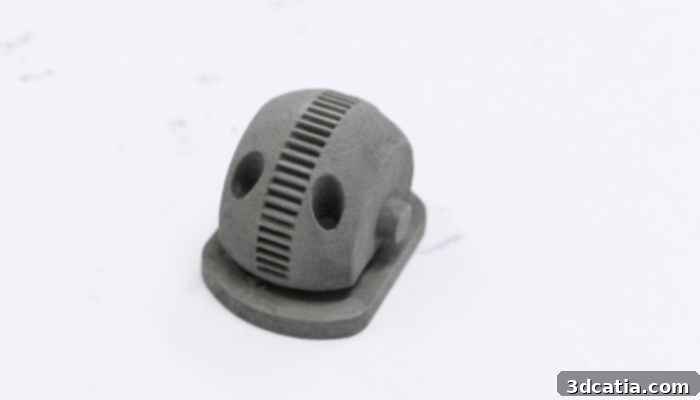
An example of a complex metal part precisely manufactured using Addimetal’s binder jetting technology.
3DN: Can you elaborate on Orion, your sophisticated software solution, and its role in the Addimetal ecosystem?
Orion is far more than just a piece of software; it represents the technological core and intelligent brain of our K2-2 machine. Its development reflects a profound strategic choice we made: to integrate the design and control of nearly all K2-2 components in-house, with the sole exception of the printhead itself. This vertically integrated approach is a deliberate and significant advantage, as it enables us to offer a perfectly harmonized and comprehensively optimized solution. By having full control over both hardware and software, we eliminate compatibility issues, ensure seamless communication between systems, and can rapidly innovate and adapt to emerging needs. Orion therefore embodies this synergy, combining several powerful functionalities into one cohesive platform:
- Advanced Slicing with Fine Parameter Customization: Orion features state-of-the-art slicing capabilities, allowing users to convert 3D models into printable layers with exceptional precision. What truly sets it apart is its ability to offer fine parameter customization, not just at a global build level, but granularly down to individual parts or even specific regions within a part. This means an operator can, for instance, define different binder saturation levels, layer thicknesses, or even curing parameters for distinct components within the same build tray. This level of control is invaluable for optimizing mechanical properties, minimizing distortion, and achieving specific functional requirements for diverse parts simultaneously, greatly enhancing efficiency and flexibility in complex production scenarios.
- Ergonomic and Intuitive Interface: We designed Orion with a strong focus on user experience. Its ergonomic interface is meticulously crafted to simplify handling and dramatically reduce the learning curve, ensuring that both experienced additive manufacturing professionals and newcomers can harness the full potential of binder jetting with ease. The visual layout is clear, workflows are logical, and critical information is readily accessible, allowing users to maintain control and make informed decisions throughout the printing process. This intuitive design minimizes errors and maximizes operational efficiency.
- Comprehensive Production Monitoring and Reporting: For industrial applications, especially those in regulated sectors like aerospace or medical, robust production monitoring and detailed reporting are not just beneficial – they are absolutely essential. Orion provides extensive capabilities for real-time monitoring of key process parameters, ensuring that operations stay within defined tolerances. Post-production, it generates comprehensive reports that include critical data points, process logs, and quality metrics. This traceability is fundamental for quality assurance, compliance with industry standards, process optimization, and future auditing requirements. It transforms raw data into actionable insights, helping users understand and continuously improve their metal 3D printing workflows.
In essence, Orion functions as a powerful, integrated tool that expertly guides the user through every stage of the manufacturing journey, from initial part preparation and print execution to meticulous post-production analysis. Despite its advanced capabilities, it remains remarkably easy to use, embodying Addimetal’s commitment to delivering accessible yet high-performance industrial additive manufacturing solutions.
3DN: What are the ambitious future projects and strategic directions for Addimetal moving forward?
Addimetal is on an accelerated trajectory, and our future is brimming with exciting developments designed to cement our leadership in the metal binder jetting space. In the short term, our immediate and primary focus remains on the continuous perfection of the K2-2 and its integrated Orion software suite. This involves ongoing software updates, hardware refinements, and performance optimizations based on user feedback and internal research. We are dedicated to ensuring the K2-2 remains at the forefront of technological capability and user satisfaction.
Concurrently, a key strategic area for us is the diligent qualification of new materials. Expanding the range of compatible metal powders and binders is crucial for broadening the applications of binder jetting across various industries. This includes exploring novel alloys with enhanced mechanical properties, high-temperature resistance, or specific functional characteristics, catering to highly specialized industrial demands. We envision the K2-2 being able to process a wider array of materials, from stainless steels and tool steels to more exotic alloys, opening up new possibilities for advanced manufacturing and enabling our customers to tackle even more complex and demanding projects.
Beyond these immediate goals, we have several significant projects currently in the pipeline. These include the formation of strategic partnerships that will expand our reach, enhance our technological capabilities, and strengthen our position in the global additive manufacturing market. While it’s still too early to reveal specifics about these collaborations, I can confidently guarantee that Addimetal is diligently preparing ground-breaking innovations. Our aim is to unveil advancements that we fully expect will make a significant impact and generate considerable excitement at the next Formnext, the world’s leading trade fair for additive manufacturing. We are constantly pushing the boundaries of what is possible, and these future projects are a testament to our relentless pursuit of excellence and our vision for the next generation of metal 3D printing.
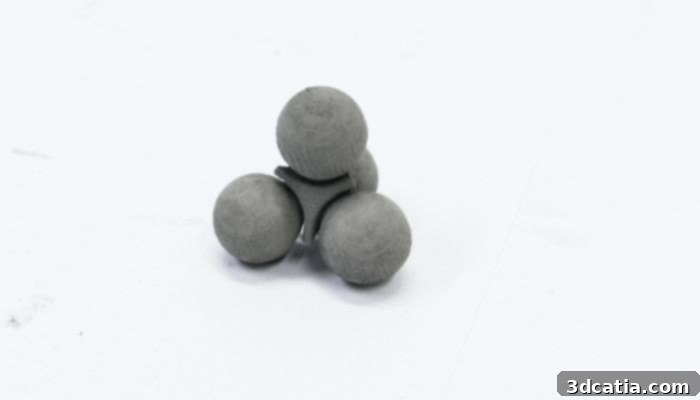
A detailed view of another metal part produced with Addimetal’s advanced 3D printing technology.
3DN: Do you have any final words or messages for our readers and potential partners?
Absolutely. Metal additive manufacturing is unequivocally a strategic sector, driving innovation and competitiveness across industries worldwide. As France’s leading manufacturer of metal binder jetting machines, Addimetal is deeply committed to playing a pivotal and active role in fostering this industrial sovereignty, both nationally and internationally. We believe that robust, domestic manufacturing capabilities are crucial for economic strength and technological independence.
If you are an industry leader, a researcher, or an innovator with ambitious projects in metal additive manufacturing, particularly those that demand precision, speed, and material versatility, we strongly encourage you to reach out to us. ADDIMETAL is a young, agile, open-minded, and dynamic company, fully prepared and eager to take on any challenge alongside our partners. We thrive on collaboration and are dedicated to helping our clients transform their complex ideas into tangible, high-performance metal components. We genuinely look forward to hearing from you and exploring how our K2-2 technology and expertise can contribute to your success!
What are your thoughts on the innovative start-up Addimetal and its K2-2 metal 3D printer? We invite you to share your feedback and insights in a comment below or connect with us on our social media channels: LinkedIn, Facebook, and Twitter! Don’t miss out on the latest advancements and news in the world of 3D printing; remember to sign up for our free weekly Newsletter here, delivering direct updates straight to your inbox. You can also explore all our informative and engaging videos on our YouTube channel.
*All Photo Credits: Addimetal