
Revolutionizing Battlefield Readiness: The U.S. Army’s SPARTA Drone and the Power of 3D Printing
In modern military operations, unmanned aerial systems (UAS), commonly known as drones, have transitioned from niche tools to indispensable assets. Their capabilities span from critical frontline reconnaissance and surveillance to precise target acquisition and tactical support, making them as vital to ground operations as any traditional weapon in a soldier’s arsenal. However, the traditional defense procurement model, characterized by lengthy design-to-deployment cycles and complex supply chains, struggles to keep pace with the dynamic and rapidly evolving nature of modern conflict. These inefficiencies often lead to significant delays in fielding new technologies and acquiring replacement parts, leaving units potentially grounded and vulnerable when a drone is damaged or lost in the field. The conventional supply chain, designed for stability and large-scale manufacturing, simply wasn’t built for the urgent, unpredictable demands of the battlefield, necessitating a radical shift in how military hardware is developed and deployed.
This critical challenge is precisely what the U.S. Army Research Laboratory (ARL), operating under the Combat Capabilities Development Command (DEVCOM), aimed to address with the creation of SPARTA. SPARTA, an acronym for Soldier Portable Autonomous Reconnaissance Transitioning Aircraft, represents a groundbreaking 3D-printed unmanned aerial system. It was conceived and engineered from the ground up with a singular focus: maximizing field adaptability and rapid deployability. By leveraging the transformative capabilities of additive manufacturing, SPARTA offers a nimble, cost-effective, and resilient solution designed to meet the immediate needs of soldiers on the front lines, circumventing the bottlenecks inherent in traditional defense acquisition processes.
Soldier-Centric Innovation: Development Driven by Frontline Input
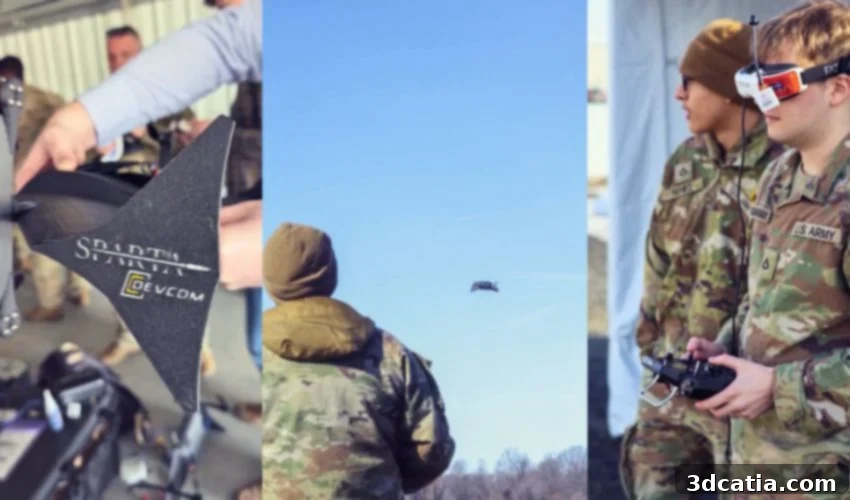
Unlike many defense projects that originate from abstract, top-down requirements documents, the SPARTA drone’s development path was distinctly soldier-driven. Its genesis directly stemmed from the insights and firsthand experiences of the troops who would ultimately operate it in combat zones. In spring 2025, soldiers engaged directly with ARL engineers, articulating a clear and pressing need for a lightweight, modular drone that they could not only easily assemble and repair but also adapt to specific mission parameters, regardless of their location. This direct feedback loop significantly accelerated the design and prototyping process. Building upon existing research and previous drone designs, the ARL team rapidly iterated, and remarkably, by August of the same year, operational prototypes were already in the hands of soldiers for experimentation.
“When Soldiers visited ARL last spring, they expressed the need for a lightweight, modular drone that could be easily assembled, repaired and adapted in the field. Building on previous designs, we developed SPARTA based on their input. By August, we started delivering prototypes for experimentation,” explained Dr. John Hrynuk, a mechanical engineer at ARL, highlighting the speed and responsiveness of this collaborative approach.
The tangible outcome of this soldier-centric development philosophy is a drone weighing approximately two pounds and costing just over $1,000 to produce. This remarkably low price point is not merely an economic advantage; it is a fundamental design principle. SPARTA is intentionally designed to be expendable to a degree, ensuring that the loss of a single unit does not cripple an entire operation or impose a significant financial burden. This affordability fundamentally changes how soldiers can utilize and train with UAS, fostering greater tactical flexibility and reducing the psychological barrier associated with deploying expensive, conventional drones.
“When Soldiers are asked to learn to fly expensive, commercially available drones, they worry about crashing them and then fly less often. With SPARTA, we kept the total cost at just over $1,000 and found that the easily replaceable 3D-printed airframe absorbs most of the damage from a crash. The electronics can be reused once the next airframe print is complete,” Hrynuk further elaborated. This reusability of critical electronic components, combined with the rapid production of new airframes via 3D printing, provides an unprecedented level of resilience and operational continuity on the battlefield.
Innovative Design Built for Extended Endurance and Mission Versatility
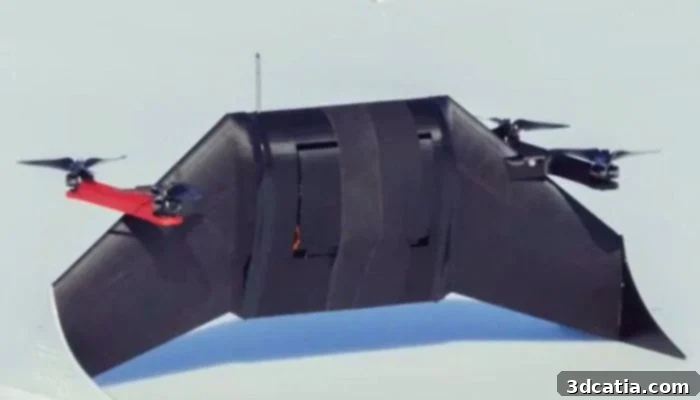
SPARTA’s engineering brilliance extends beyond its cost-effectiveness and reparability, notably in its sophisticated hybrid design. This innovative configuration marries the vertical takeoff and landing (VTOL) capabilities traditionally associated with helicopters with the energy-efficient, forward-winged flight of an airplane. This strategic combination delivers a significant improvement in endurance when compared to conventional quad-rotor drones, which typically lack wings entirely and rely solely on rotor thrust for both lift and propulsion, thereby consuming more power. With its hybrid architecture, SPARTA is engineered to cover greater distances and remain airborne for longer durations, effectively pushing its operational range beyond 30 kilometers and extending its flight time to an impressive 60 minutes, all while maintaining a tactical flight altitude below 500 feet. This enhanced endurance provides critical advantages for reconnaissance, surveillance, and target acquisition missions, allowing for more extensive area coverage and prolonged observation.
Furthermore, the drone’s modular electronics bay underscores its commitment to mission adaptability. This feature allows soldiers to quickly and easily swap out various components in a matter of minutes, facilitating the configuration of different camera systems, sensors, or communication modules to precisely meet the dynamic requirements of any given mission. Whether the need is for high-resolution optical imagery, thermal sensing, or advanced electronic warfare capabilities, SPARTA’s modularity ensures that troops can tailor their UAS to specific tactical challenges without requiring multiple specialized drone platforms. This flexibility is a game-changer for frontline units, enhancing their responsiveness and overall operational effectiveness.
Proven in the Field: Real-World Testing and Continuous Iteration
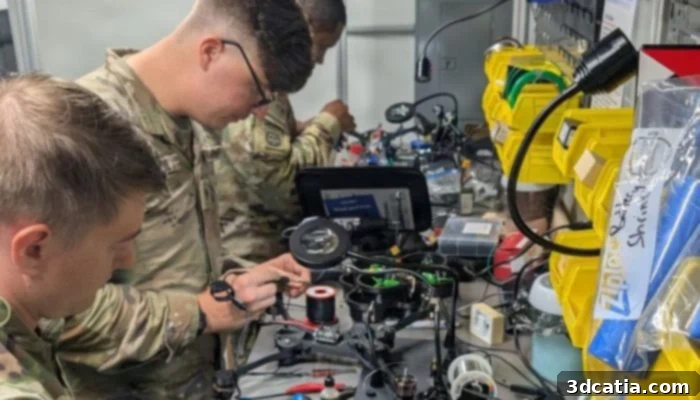
SPARTA’s true mettle was tested during its battlefield debut in the fall of 2025. Soldiers from the elite 1st Infantry Division integrated the innovative drone into the demanding Danger Gauntlet event at Fort Riley, Kansas. This comprehensive and grueling field exercise immerses soldiers in multi-day combat scenarios, complex tactical operations, and live-fire drills, pushing their skills and equipment to their limits. A crucial component of this exercise, operating alongside SPARTA, was BISON (Buildable Innovation Shop for Operational Needs). BISON is a cutting-edge mobile makerspace, fully equipped with state-of-the-art 3D printers and a comprehensive suite of tools specifically designed for rapid drone development, repair, and customization directly at the point of need. The invaluable feedback garnered during these intense exercises was channeled directly back into the design process. The ARL team swiftly revised SPARTA based on soldier input, making the drone more intuitive, user-friendly, and precisely aligned with how troops genuinely need and want to employ such technology in dynamic field environments. This iterative development model, driven by direct user experience, is central to SPARTA’s success.
“The BISON system allows Soldiers to manufacture, assemble and repair their own drones at the point of need. Whether it’s SPARTA or another design, Soldiers can use BISON to create mission-specific solutions on demand. This capability significantly enhances operational flexibility and effectiveness,” emphasized Dr. Arwen DeCostanza, ARL program manager for Catalyst Pathfinder and Accelerating Force. This combination of a rapidly deployable, adaptable drone and an on-site manufacturing capability creates an agile ecosystem for immediate innovation and sustainment.
Strategic Growth and a New Procurement Paradigm
The SPARTA program continues to expand its influence and reach within the U.S. Army. At the inaugural U.S. Army Best Drone Warfighter Competition held in Huntsville, Alabama, SPARTA was prominently showcased to senior commanders and operational units, garnering significant attention and demonstrating its potential to transform military capabilities. Winners of the competition were not only recognized for their drone operation skills but also received a SPARTA prototype along with a coveted one-year research and development agreement. This agreement directly engages soldiers in the ongoing process of refining SPARTA’s design, ensuring that future iterations are continually informed by the insights of its end-users. Following its impressive performance and positive feedback, ARL has since supplied the drone to the 11th Airborne Division, thereby broadening its deployment and continuing to gather crucial soldier feedback for further refinements and enhancements to future versions of the system. This collaborative approach fosters a sense of ownership and directly integrates user experience into the product lifecycle.
“We want to develop a Soldier-centric design and feedback cycle. We hope that we can eventually change how the Army procures drones to deliver new technology faster,” stated Dr. Hrynuk, articulating the broader strategic vision behind SPARTA. This vision extends beyond a single drone system; it aims to fundamentally alter the military’s traditional acquisition model.
For the U.S. Army, SPARTA is more than just a new piece of equipment; it serves as a critical test case for an entirely new procurement paradigm. This model is built explicitly around the needs and feedback of the people who actually use the technology on the front lines, prioritizing speed and adaptability over cumbersome, protracted acquisition cycles. By embracing agile development, 3D printing, and a direct soldier-to-engineer feedback loop, the Army is exploring a future where technological innovation moves at the speed of the battlefield, rather than being constrained by the bureaucratic pace of traditional defense procurement. This shift promises not only faster deployment of critical assets but also systems that are inherently more effective, resilient, and responsive to the ever-changing demands of modern warfare, ensuring a tangible tactical advantage for soldiers.
Could additive manufacturing fundamentally change the way militaries design, build, and deploy drones and other critical equipment? The SPARTA project certainly suggests a resounding yes. Let us know your thoughts in a comment below or connect with us on our LinkedIn or Facebook pages! Plus, don’t forget to sign up for our free weekly Newsletter to get the latest 3D printing news straight to your inbox. You can also find all our videos on our YouTube channel for more insights into the world of additive manufacturing.
*All Photo Credits : U.S. Army DEVCOM Army Research Laboratory