
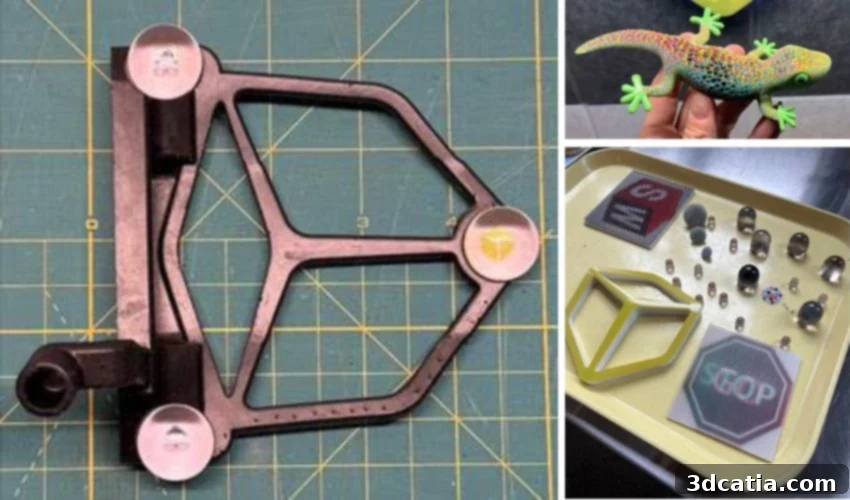
Unlocking Dynamic Visuals: The Power of 3D Printed Lenticular Effects
Imagine a world where 3D printed objects transform their appearance based solely on your viewing angle. This captivating optical illusion, known as the lenticular effect, mimics a holographic experience, allowing observers to perceive distinct, shifting images simply by altering their perspective. While this visual trick has been prevalent in 2D formats for decades – think xenographs, children’s books with animated characters, and classic pull-tab illustrations – advancements in CAD and additive manufacturing have propelled the lenticular effect into the realm of tangible 3D objects. Today, 3D printing empowers designers and engineers to harness this dynamic visual experience, opening doors to innovative and engaging creations.
Understanding the Mechanics Behind the Illusion
The foundation of a 3D printed lenticular effect lies in meticulously interlaced images concealed beneath a specially designed top layer. This geometry necessitates printing with a precise angle of curvature, acting as a visual filter. From one angle, a specific segment of the interlaced image becomes visible. As your position shifts, this initial image is filtered out, revealing an entirely different visual. This interplay of angles and interlaced imagery creates the illusion of movement and transformation.
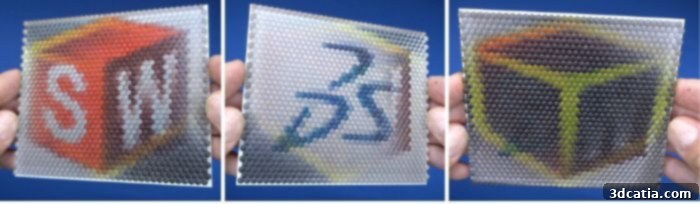
Three distinct views of a single printed part showcasing the SOLIDWORKS, Dassault Systèmes, and GoEngineer logos.
Achieving a successful lenticular effect demands advanced CAD modeling skills. Because the printed output is directly tied to the digital model, you must meticulously parse and dissect individual elements of the image. While standard CAD systems like SOLIDWORKS are powerful tools, they may not always provide the necessary features for interlacing such complex images. Advanced applications within the 3DEXPERIENCE platform, such as xGenerative Design, offer the software capabilities required to accurately calculate and generate the intricate geometry.
Selecting the Right Materials and Printing Technologies for Lenticular 3D Printing
Choosing the appropriate 3D printing technology is crucial for achieving a compelling lenticular effect. PolyJet printing stands out as a particularly suitable option. Using a Stratasys J750 printer, for example, coupled with VeroClear material, proves highly effective in creating the precise, transparent top layer where the optical illusion unfolds. The ability to control material properties and layer thickness with precision is key to a clear and effective visual shift.
However, the lenticular effect isn’t limited to high-end PolyJet machines. Jared Trotter, an engineer at GoEngineer, presented on the lenticular effect at 3DEXPERIENCE World in 2026. He emphasized that achieving this effect through 3D printing isn’t solely dependent on PolyJet technology: “The entire thing does not have to be done with that specific medium, that specific type of printing. The important thing is creating the geometry in the right way and using the right material.” The core geometry and interlaced images can be produced using desktop FDM printing. By meticulously creating the physical geometry and pairing it with a suitable transparent top-layer material, you can successfully achieve the lenticular effect without relying on an expensive industrial setup.
The choice of material for the top layer is paramount. It needs to be transparent enough to allow the interlaced images beneath to be seen clearly, yet also possess the right optical properties to refract light and create the desired visual shift. Experimentation with different transparent filaments and resins is often necessary to achieve the optimal result for a given design.
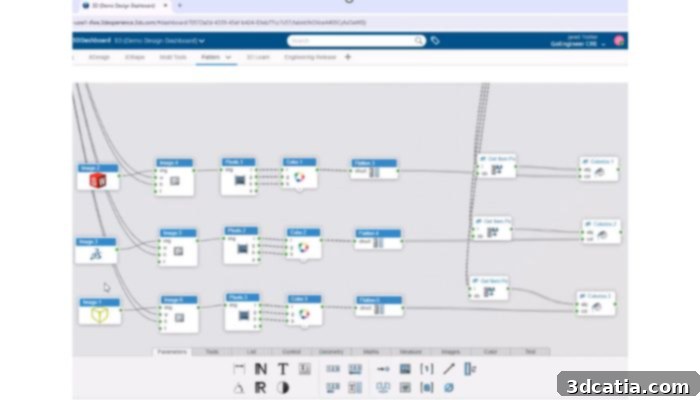
A glimpse into the nodes created using visual scripting within the 3DEXPERIENCE platform to interlace three distinct images, highlighting the complexity of the design process.
Exploring Real-World Applications and Beyond
Why should you consider integrating the lenticular effect into your 3D printed designs? Currently, the primary applications lie in art, decor, marketing, and advertising. The dynamic and interactive nature of the lenticular effect makes it a potent tool for engaging consumers and capturing their attention. Designers have already employed this technique to craft unique physical objects, such as 3D printed bow ties that present completely different appearances from opposing sides. These formalwear accessories can even be strategically designed to incorporate company logos subtly, serving as an innovative and memorable advertising strategy. The potential extends to creating 3D printed garments that alter their appearance based on the viewer’s perspective, paving the way for customizable and eye-catching fashion.
Beyond the realm of aesthetics and marketing, the principles behind the lenticular effect are finding applications in other fields. While the lenticular effect itself hasn’t achieved widespread adoption in medicine, the translucent materials necessary to create it share significant overlap with medical modeling. Doctors currently utilize similar translucent 3D printing materials to fabricate anatomical models, such as internal organs, enabling simultaneous visualization of underlying structures and overlying tissue. This provides invaluable tools for surgical planning, patient education, and medical research.
Consider the potential for creating educational tools that visually demonstrate complex biological processes. A 3D printed heart, for instance, could shift to reveal the internal chambers and valves, providing a dynamic and engaging learning experience for students. This interactive approach to education can significantly enhance understanding and retention of information.
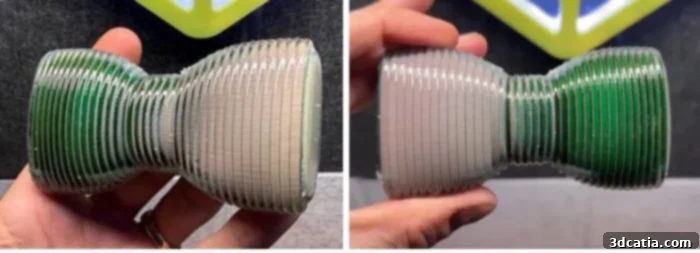
A bowtie designed to display two distinct colors depending on the viewing angle, showcasing the creative possibilities of lenticular 3D printing.
The Future of Lenticular 3D Printing: Innovation and Accessibility
The convergence of sophisticated CAD software and increasingly accessible additive manufacturing has democratized the production of lenticular effects. Industry leaders, such as the team at GoEngineer, have been actively showcasing this technology for several years, indicating a consistent and growing interest in its educational and commercial applications. This increased awareness and accessibility are fueling further innovation and experimentation within the field.
As 3D printing technology continues to evolve, we can expect to see even more refined and sophisticated lenticular effects. Advances in multi-material printing will allow for greater control over the optical properties of the top layer, enabling the creation of more vibrant and dynamic visual shifts. Furthermore, improvements in software algorithms will streamline the design process, making it easier for designers and engineers to create complex interlaced images.
Mastering the art of the 3D printed lenticular effect is a compelling way to inject dynamism and interactivity into your next project. Whether you’re a designer seeking to create eye-catching art pieces, a marketer looking for innovative advertising strategies, or an educator aiming to enhance learning experiences, the lenticular effect offers a unique and powerful tool for capturing attention and conveying information.
Consider the potential for personalized gifts that change their appearance based on the recipient’s viewing angle. A photo frame that displays different images depending on who’s looking at it, or a custom-designed figurine that transforms to reveal a hidden message, could be incredibly meaningful and memorable gifts. The possibilities are truly limitless.
Ultimately, the 3D printed lenticular effect represents a fascinating intersection of art, technology, and design. By understanding the underlying principles and mastering the necessary techniques, you can unlock a world of creative possibilities and bring your ideas to life in a truly dynamic and engaging way.
What are your thoughts on the lenticular effect? Share your comments below or connect with us on LinkedIn or Facebook! Don’t forget to subscribe to our free weekly Newsletter for the latest 3D printing news delivered directly to your inbox.
*Cover Photo: A golf putter head showcasing a complete image only when the golfer is properly aligned with the club (left), a multi-colored gecko whose speckled appearance shifts depending on the viewer (top), and a collection of parts printed on the Stratasys J750 (bottom). Photo Credits: Jared Trotter and Darin Grosser, GoEngineer.