
3D Printed Soft Robots: Revolutionizing Robotics with Flexible Designs
Additive manufacturing, commonly known as 3D printing, is rapidly transforming various industries, and robotics is no exception. Its ability to create flexible, customized, and highly efficient devices is making it an increasingly vital tool for roboticists and engineers. The continuous development of new materials that are compatible with a broader spectrum of 3D printing processes further expands the possibilities, enabling the creation of flexible and even biocompatible robots.
At Harvard University, a team of innovative researchers is at the forefront of this revolution, focusing on 3D printing soft robots capable of changing shape, bending, and deforming when inflated with air. This groundbreaking approach opens up a world of potential applications for robots in fields ranging from healthcare to manufacturing. Let’s delve into the fascinating details of how this innovative technology works.
The Core Concept: Multi-Material Rotary 3D Printing
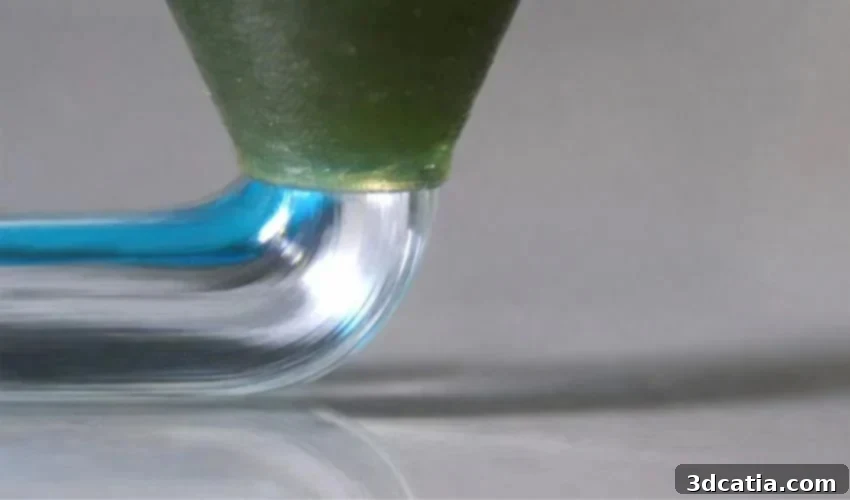
The fundamental concept behind this innovative approach is remarkably simple yet incredibly effective. The research team has developed a cutting-edge multi-material rotary 3D printing process that allows them to deposit multiple materials through a single nozzle along a precisely defined path. This nozzle rotates as it extrudes the gel-like material, offering several key advantages. The rotational motion not only facilitates rapid material switching, enabling the creation of complex structures with varying material properties, but also makes it possible to fabricate both simple and highly intricate shapes with unparalleled precision.
Creating Soft Robots: A Step-by-Step Process
The creation of these flexible robots involves a meticulous and carefully orchestrated process. The first step involves designing an internal channel made of poloxamer, a biocompatible polymer widely used in various applications, including hair gels. This material serves as a temporary support structure that is later removed to create the hollow channels necessary for the robot’s pneumatic actuation.
By precisely adjusting the 3D printer nozzle, its rotation speed, and the material flow rate, the researchers can achieve unprecedented control over the shape, size, and orientation of each channel. This level of control is critical for tailoring the robot’s movement and functionality to specific tasks. For instance, varying the channel size and orientation can affect the bending direction and range of motion of the robot’s limbs.
Once the internal channel structure is printed, it is then coated with a polyurethane membrane. Polyurethane is chosen for its flexibility, durability, and ability to withstand repeated bending and deformation. After the polyurethane solidifies, the researchers carefully remove the inner poloxamer core, leaving behind a hollow shell with precisely engineered channels.
The resulting hollow shell forms the foundation of the soft robotic device. When pressurized with air, the channels within the shell expand and contract, causing the robot to bend into different shapes. This principle allows the robot to perform a wide range of actions, including contracting, gripping objects, and even expanding its overall size. The ability to control the robot’s movements with such precision makes it suitable for various applications, such as delicate manipulation in surgical procedures or adaptable gripping in manufacturing environments.
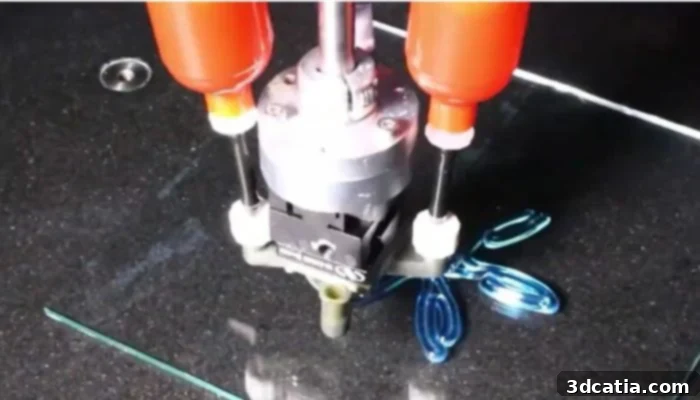
The rotary printing platform
Insights from the Lead Researcher
Jackson Wilt, a Harvard graduate student and the lead researcher on the project, sheds light on the core principles and goals of their work:
We use two materials from a single outlet, which can be rotated to program the direction the robot bends when inflated. Our goals are aligned with creating soft, bio-inspired robots for various applications.
Wilt’s statement highlights the elegance and efficiency of their multi-material printing method. By using a single outlet and controlling its rotation, they can precisely dictate the robot’s bending behavior. Furthermore, the emphasis on “bio-inspired robots” suggests that their designs draw inspiration from natural systems, aiming to create robots that mimic the adaptability and dexterity of living organisms.
Advantages of the 3D Printing Approach
This innovative multi-material printing method offers significant advantages over traditional robot manufacturing techniques. It eliminates the need for creating molds, which can be time-consuming and expensive. Instead of pouring a flexible material into a mold, patterning pneumatic channels onto the mold surface, and encapsulating them in an additional layer, the process produces a structure that is ready to use and program directly from the 3D printer.
The direct printing approach significantly reduces the manufacturing time and cost, making it easier to create customized robots tailored to specific needs. As a result, the robot can be deployed quickly and adapted to various applications with minimal effort. This agility is particularly valuable in fields where rapid prototyping and customization are essential, such as research and development or specialized manufacturing processes.
Potential Applications and Future Directions
The potential applications of these 3D printed soft robots are vast and span across numerous industries. In healthcare, they could be used for minimally invasive surgery, drug delivery, or even as assistive devices for patients with limited mobility. Their flexibility and adaptability make them ideal for navigating complex anatomical structures and performing delicate tasks with precision.
In manufacturing, soft robots could be used for handling delicate objects, assembling intricate components, or inspecting hard-to-reach areas. Their ability to conform to different shapes and sizes makes them versatile tools for automating various manufacturing processes.
Beyond these immediate applications, researchers are also exploring the potential of using biocompatible materials to create soft robots that can be implanted into the human body for therapeutic purposes. These bio-integrated robots could be used to deliver drugs directly to targeted tissues, stimulate tissue regeneration, or even serve as artificial muscles to restore lost function.
The future of 3D printed soft robots is bright, with ongoing research focused on developing new materials, improving printing techniques, and exploring novel applications. As the technology matures, we can expect to see these flexible and adaptable robots playing an increasingly important role in various aspects of our lives.
For more detailed information about this groundbreaking research, you can visit the Harvard John A. Paulson School of Engineering and Applied Sciences website: HERE.
Join the Conversation
What are your thoughts on the use of 3D printing in robotics? Share your ideas and perspectives in the comments below. You can also join the ongoing discussion on our social media channels:
- YouTube
Stay informed about the latest advancements in 3D printing by subscribing to our weekly Newsletter.
Photo credits: Harvard John A. Paulson School of Engineering and Applied Sciences