

Next-Gen Rocket Engines: Tanbium Alloy and Additive Manufacturing Drive European Space Innovation
The burgeoning global space industry is constantly pushing the boundaries of engineering, demanding ever more robust, efficient, and sustainable solutions for propulsion. At the forefront of this innovation is UK-based rocket manufacturer Skyrora, leading a transformative European Space Agency (ESA) project that promises to redefine how rocket engines are built. In a strategic alliance with pioneering materials company Metalysis and advanced simulation specialists Thermo-Calc Solutions, Skyrora is currently developing and 3D printing a revolutionary high-temperature alloy named Tanbium. This advanced material is specifically engineered to endure the incredibly harsh environments within rocket engines, aiming not only to enhance operational performance but also to significantly reduce production costs and mitigate Europe’s reliance on imported metals and other crucial materials. This ambitious collaborative initiative marks a pivotal moment, steering aerospace manufacturing towards a more self-sufficient, economically viable, and environmentally responsible future.
Tanbium’s development falls under the auspices of the ESA’s General Support Technology Programme, a testament to its strategic importance in advancing European space capabilities. The alloy is meticulously engineered to outstrip the performance benchmarks set by traditional aerospace alloys, such as C103 and IN718, which have been workhorses in the industry for decades. While these established alloys have served well, the increasing demands for higher thrust-to-weight ratios, greater thermal stability, and prolonged operational lifetimes necessitate materials with superior characteristics. By harnessing the precision and flexibility of additive manufacturing (3D printing), Tanbium offers a compelling suite of advantages: impressive weight reductions of up to 30 percent, significantly increased resistance to extreme temperatures, and critically, the potential for extended engine burn times. Beyond performance, the additive manufacturing process itself delivers substantial economic and environmental benefits, boasting up to 95 percent less material waste and an estimated 40 percent reduction in manufacturing costs, making it an economically attractive and resource-efficient solution for future rocket propulsion systems.
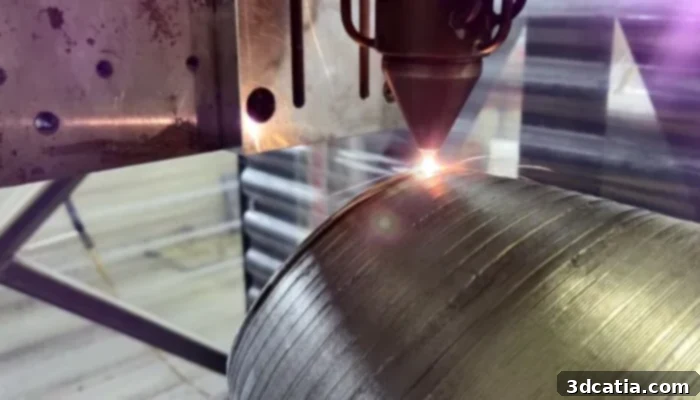
Tanbium represents a new class of high-temperature alloys developed for rocket engines, offering greater heat resistance and strength through advanced 3D printing techniques.
Skyrora is tasked with leading the practical implementation of this innovative project, leveraging its state-of-the-art Skyprint systems. A cornerstone of this capability is one of Europe’s largest Directed Energy Deposition (DED) 3D printers. DED is an advanced additive manufacturing technique that builds metal components layer by layer using a focused energy source, typically a high-power laser or electron beam, to melt powdered metal as it is deposited onto a substrate. This method is particularly advantageous for producing large, intricate metal components with superior material density and integrity, making it ideal for the complex geometries found in rocket engines, such as advanced cooling channels or lightweight structural designs. Skyrora’s Director of Business Development, Derek Harris, underscored the profound strategic implications of this endeavor, emphasizing how the project reinforces Skyrora’s steadfast commitment to fostering European self-reliance in critical aerospace technologies. Harris articulated the project’s integrated strategy, noting, “Tanbium will enable full domestic sourcing with the powder produced by Metalysis, components printed and tested by Skyrora, and performance optimized through Thermo-Calc simulation.” This end-to-end European supply chain mitigates geopolitical risks and ensures sovereign control over vital space capabilities.
The collaborative technical team unequivocally asserts that Tanbium signifies a monumental leap forward in the field of propulsion materials. Ida Berglund, Managing Director at Thermo-Calc Solutions, elaborated on the alloy’s transformative potential, stating that it “delivers performance and manufacturability gains that were previously out of reach.” These significant enhancements stem directly from Tanbium’s sophisticated metallurgical design, which promises not only extended burn life for rocket engines but also substantial cost reductions throughout the product lifecycle. Thermo-Calc Solutions plays a critical role in this success through its advanced computational materials engineering. By utilizing sophisticated simulation tools, they can precisely predict material behavior under extreme conditions, optimize alloy composition for specific applications, and fine-tune manufacturing parameters. This data-driven approach accelerates the development cycle, minimizes the need for costly physical prototypes, and ensures that Tanbium components achieve optimal resilience, efficiency, and longevity, pushing the boundaries of what’s possible in aerospace design.
A cornerstone of Tanbium’s innovative profile is its commitment to sustainability, particularly evident in the production of its alloy powders by Metalysis. Unlike conventional metallurgical processes, which often involve energy-intensive melting, refining, and alloying steps that contribute significantly to carbon emissions, Metalysis employs a proprietary solid-state process. This advanced method drastically reduces the energy footprint and minimizes waste during the initial stages of material production. By avoiding high-temperature liquid metal processing, Metalysis not only enhances the environmental credentials of Tanbium but also ensures a purer, more consistent powder feedstock, which is crucial for the integrity and performance of 3D-printed components. This eco-conscious approach aligns seamlessly with global efforts to make industrial processes, including space exploration, more sustainable and less environmentally impactful.
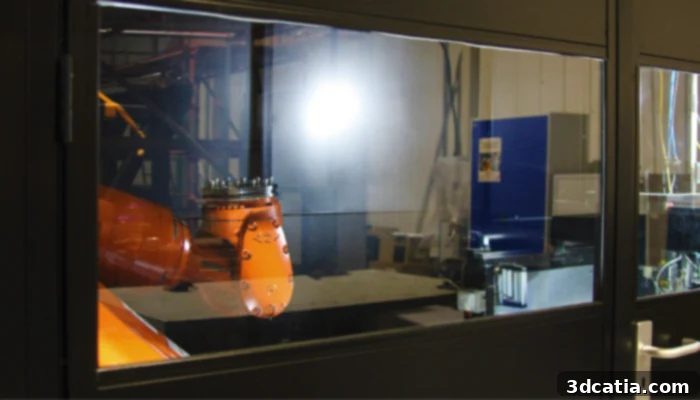
Skyrora’s Skyprint system uses Directed Energy Deposition (DED) technology to produce complex metal components for next-generation propulsion systems with minimal material waste.
The ESA-backed initiative supporting Tanbium development extends beyond material innovation; it actively champions broader sustainability objectives by promoting low-carbon alloy production and fostering robust, localized supply chains within Europe. The environmental benefits derived from Metalysis’ proprietary solid-state process are substantial, standing in stark contrast to the high emissions typically generated by traditional metallurgical methods. For the European Space Agency, this collaborative project is instrumental in addressing a long-standing and critical challenge: the imperative to develop ultra-high-temperature materials essential for the next generation of rocket motors and other demanding space applications. The ability to manufacture components capable of enduring extreme thermal, mechanical, and chemical stresses is paramount for advancing Europe’s capabilities in space exploration, satellite deployment, and beyond, ensuring mission success and crew safety for future endeavors.
If successful, the Tanbium project is poised to revolutionize the landscape of European space engineering, potentially ushering in a new era of highly efficient, lightweight, and incredibly robust rocket engines. These next-generation propulsion systems, produced entirely within Europe, would significantly enhance the continent’s strategic autonomy and leadership in space technology. The implications are far-reaching, influencing not only engine performance but also fundamentally reshaping the entire paradigm of space hardware design and manufacturing. Skyrora, in concert with its esteemed partners Metalysis and Thermo-Calc Solutions, has masterfully integrated cutting-edge advanced 3D printing technologies with pioneering materials science. This powerful synergy is delivering tangible improvements in engine performance and reliability while simultaneously transforming how critical space components are conceived, developed, and brought to fruition. This holistic, innovative approach ensures that Europe remains at the cutting edge of space exploration, providing solutions that are both technologically superior and strategically independent.
The long-term vision for Tanbium extends to becoming a foundational material for upcoming European space missions, facilitating more ambitious and economically viable undertakings. Its distinctive properties, resulting from meticulous research, advanced simulation, and innovative manufacturing techniques, position it as a cornerstone for sustainable and high-performance aerospace engineering. By reducing dependency on external material suppliers and simultaneously minimizing environmental impact, this project embodies a progressive and responsible approach to space exploration that prioritizes both technological advancement and ethical resource management. The collaborative model, bringing together the specialized expertise of Skyrora in manufacturing, Metalysis in material development, and Thermo-Calc Solutions in performance optimization, sets a new benchmark for European innovation. It powerfully demonstrates what can be achieved when leading industries unite for a shared, pioneering goal in the challenging yet immensely rewarding realm of space exploration and technological advancement.
What are your thoughts on the groundbreaking Tanbium project and its implications for future rocket propulsion? Let us know in a comment below or on our LinkedIn or Facebook pages! Plus, don’t forget to sign up for our free weekly Newsletter to get the latest 3D printing news straight to your inbox. You can also find all our videos on our YouTube channel. For more 3D printing news in the aerospace and defense sectors, check out our dedicated page HERE.
*All Photo Credits: Skyrora