
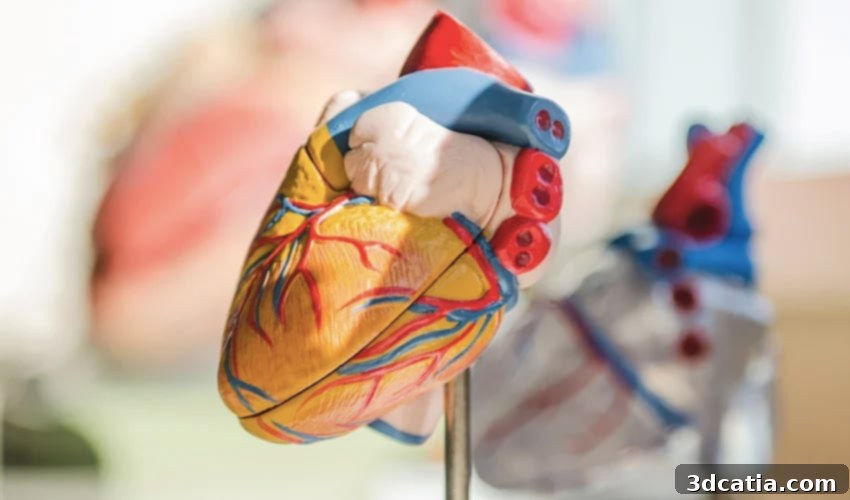
Revolutionizing Heart Repair: The Cardiopatch Project and 3D Bioprinting for Cardiac Regeneration
The future of cardiac care is being redefined through groundbreaking collaborations in Europe. Several leading organizations across Spain, France, and Portugal have united under the ambitious **Cardiopatch project**, a pivotal initiative within the healthcare sector. Their overarching mission is to significantly advance **cardiac regenerative medicine** by harnessing the transformative power of **additive manufacturing** technologies. Specifically, these innovative **3D printing solutions** are being developed to facilitate a deeper understanding and ultimately, more effective treatment of **myocardial infarction**, commonly known as a heart attack. This life-threatening condition occurs when a coronary artery becomes blocked, typically by a plaque that breaks off and obstructs blood flow, consequently depriving the heart muscle of vital oxygen and nutrients.
At the heart of the Cardiopatch project’s success lies its heavy reliance on advanced **3D bioprinting**. The European partners have already achieved a significant milestone: the successful creation of a prototype patch engineered to repair damaged heart tissue. This innovative patch represents a leap forward in non-invasive regenerative therapies. To ensure the viability and clinical applicability of this revolutionary treatment, the consortium has meticulously designed and validated various **3D bioprinting methods**. These methods are crucial not only for the precise fabrication of the patch but also for aiding in its delicate transportation, optimal cultivation of its cellular components, and ultimately, its minimally invasive implantation into patients. This multi-faceted approach underscores the project’s commitment to delivering a comprehensive and effective regenerative solution.
The urgency and importance of the Cardiopatch project are underscored by sobering statistics. Cardiovascular disease remains a leading cause of mortality across Europe, accounting for over 4 million deaths annually. Among these, **myocardial infarction** stands out as one of the primary culprits. Despite significant medical advancements, current treatment options for heart attack patients, which include drug therapy, the implantation of medical devices, or cardiac resynchronization procedures, often fall short of providing a complete cure. The fundamental challenge lies in the inherent lack of sufficient regenerative capabilities within the human heart. Unlike some other organs, the heart struggles to repair itself effectively after damage. While existing treatments can manage symptoms and improve quality of life, only a heart transplantation currently offers a truly curative therapy for severe heart damage. This is where **additive manufacturing** and **3D bioprinting** emerge as game-changers, opening up exciting new avenues for medicine to develop highly personalized and better-performing devices and tissues through unprecedented customization.
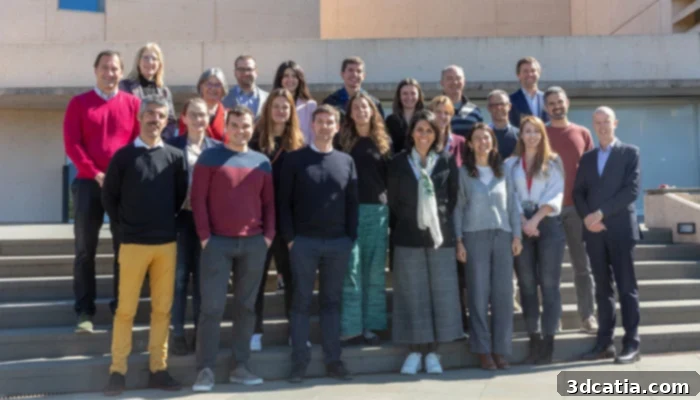
The Cardiopatch team (photo credits: Cardiopatch)
Innovating Heart Repair with 3D Printed Medical Patches and Stem Cell Therapy
For the scientific and medical communities, the development of truly non-invasive and effective treatments for cardiovascular and circulatory system diseases represents one of the most significant and enduring challenges. Traditional surgical procedures, while often necessary, carry inherent risks and do not always guarantee a reduced risk of death or future readmission for patients suffering from conditions like myocardial infarction. It is in direct response to these critical unmet needs that the Cardiopatch consortium has engineered an innovative cellular regenerative medicine-based therapy, made possible by cutting-edge **3D printing technology**. This revolutionary therapy centers around the use of a specialized **stem cell patch** designed to precisely repair heart tissue that has been damaged by myocardial infarction, all without the necessity of invasive open-heart surgery. This non-surgical approach holds immense promise for improving patient outcomes and quality of life.
The tangible results of three years of intensive research were proudly unveiled in Pamplona on April 18th, marking a significant milestone for the project. Dr. Felipe Prósper, who serves as the coordinator of the Cardiopatch project and is also the distinguished director of the cell therapy area at the Clínica Universidad de Navarra, shared compelling insights into their progress. He stated, “Our patch has demonstrated significant therapeutic potential in the initial in vivo trials.” This early success is a crucial indicator of the therapy’s viability. Furthermore, Dr. Prósper elaborated on the holistic approach of the project, adding, “In addition, we have meticulously designed a specialized 3D device specifically for its optimal culture and safe transport, alongside a groundbreaking tool that facilitates its minimally invasive implantation directly into the patient.” These complementary innovations underscore the project’s dedication not only to creating the patch but also to ensuring its practical and safe application in a clinical setting.
Beyond the patch itself, the collaborative entities involved in the Cardiopatch project have dedicated extensive efforts to developing advanced processes aimed at enhancing the overall therapeutic potential and efficacy of the patch’s stem cells. A notable success in this endeavor has been the groundbreaking creation of a novel **collagen membrane** specifically engineered to incorporate and deliver **cardioprotective factors**. This sophisticated membrane serves as a scaffold, providing both structural support and a controlled release mechanism for beneficial molecules that protect the heart muscle from further damage and promote healing. Furthermore, the consortium has rigorously developed and comprehensively evaluated a diverse array of technologies and sophisticated protocols specifically tailored for the robust production of these therapeutics within the intricate field of **cardiac regenerative medicine**. Dr. Felipe Prósper reiterated the significance of these achievements, stating, “The results are unequivocally positive and clearly demonstrate the immense potential of regenerative medicine to uncover truly effective treatments for this challenging type of heart disease. It is absolutely essential to continue investing in and vigorously promoting research in these vital areas to ultimately find a definitive and lasting solution.”
The therapeutic potential of the stem cell patch hinges on several critical factors, including the viability and efficacy of the cells it contains. To address this, the project has ingeniously designed and rigorously tested a specialized **3D bioreactor**. This advanced bioreactor serves a dual purpose: it provides an optimal environment for the sustained cultivation of the stem cell patch, ensuring the cells remain healthy and functional, and it also enables their safe and secure transportation to the point of care. This innovation is crucial for maintaining the integrity and therapeutic power of the cells until they are ready for implantation. Furthermore, the team has engineered a remarkably innovative **rollable device** specifically designed for the minimally invasive delivery of the patch. This device allows the patch to be delivered into the heart through a small incision or catheter, significantly reducing the trauma and recovery time associated with traditional open-heart surgery. Through a series of comprehensive **preclinical trials conducted on rodents**, the Cardiopatch therapy has unequivocally demonstrated its effectiveness, yielding highly promising outcomes in terms of tissue regeneration and functional improvement. While these initial results are extremely encouraging, further extensive testing will be meticulously conducted in the upcoming months to definitively confirm the therapy’s long-term efficacy and safety.
Europe’s Collaborative Drive: Advancing Regenerative Medicine Through Additive Manufacturing
Europe possesses an unparalleled wealth of resources, encompassing both cutting-edge medical research capabilities and advanced expertise in **additive manufacturing**. This unique combination positions the continent at the forefront of innovation in fields like **regenerative medicine**. However, unlocking the full potential of these strengths necessitates the establishment of more robust and integrated structures that actively encourage cross-sector collaboration and joint efforts between the medical and manufacturing domains. The Cardiopatch project stands as a prime example of such synergistic endeavors, directly addressing this critical need for enhanced collaboration. The project benefits from substantial funding provided by the European Union’s prestigious Interreg Sudoe Program and the European Regional Development Fund (ERDF), underscoring Europe’s strategic commitment to fostering innovative research and development that addresses major health challenges.
The Cardiopatch project adopts a comprehensive **four-pronged approach** to maximize its impact and ensure broad societal benefit. This strategic framework focuses simultaneously on **research**, the **economy**, **public authorities**, and **society**. Within the realm of research, the project is driving forward the frontiers of cardiac regenerative medicine through innovative 3D bioprinting techniques and stem cell therapies. Economically, it aims to foster new industrial capabilities and create high-value jobs within the biomedical sector, promoting European competitiveness. Engagement with public authorities is crucial for navigating regulatory pathways, ensuring ethical considerations are met, and facilitating the eventual clinical translation of their discoveries. Finally, by addressing societal needs, Cardiopatch seeks to improve public health outcomes and quality of life for millions of Europeans affected by cardiovascular diseases. This integrated approach ensures that the project’s innovations are not only scientifically sound but also economically viable, ethically responsible, and socially impactful. For those eager to delve deeper into the specifics of this groundbreaking initiative, comprehensive information is readily available on the official Cardiopatch project website, accessible HERE.
What are your thoughts on this pioneering Cardiopatch project and its potential to revolutionize the treatment of heart conditions? We invite you to share your insights and comments below, or engage with us on our social media platforms! Find us on Linkedin, Facebook, and Twitter. Don’t miss out on the latest advancements in 3D printing and medical technology – be sure to sign up for our free weekly Newsletter here to get the freshest news delivered straight to your inbox! You can also explore all our informative videos and exclusive content on our dedicated YouTube channel.