
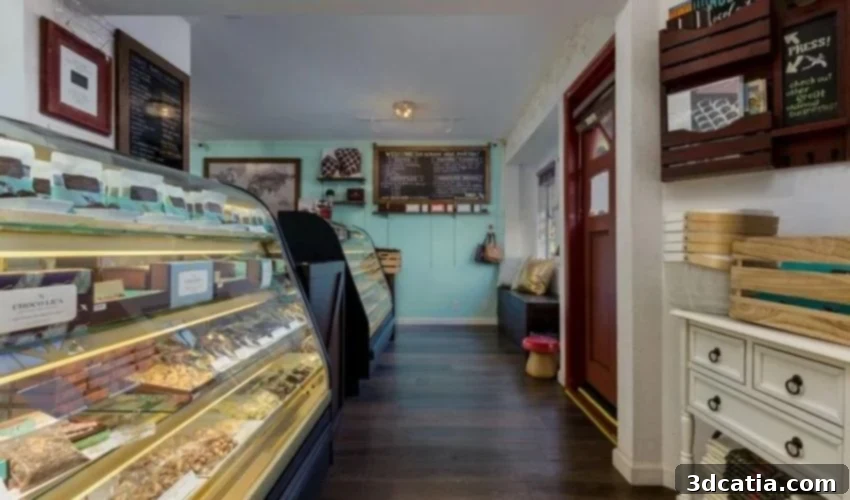
Sweetening Success: University of Hawaii Students Revolutionize Chocolate Production with 3D Printed Molds for Local Business
In an inspiring display of practical engineering and community collaboration, a dedicated group of students from the Department of Mechanical Engineering at the University of Hawaii at Mānoa recently joined forces with a beloved local chocolate shop. This innovative partnership, between the university’s aspiring engineers and Choco le’a in Manoa, aimed to leverage the cutting-edge capabilities of additive manufacturing to design and produce bespoke chocolate molds, offering a fresh perspective on traditional confectionary production methods.
The food industry has been increasingly recognizing the vast potential of 3D printing, a technology that offers an abundance of benefits ranging from unparalleled customization to expedited prototyping and production cycles. While many pioneering projects in this sector tend to focus on the direct production of food items themselves, the application of additive manufacturing for creating essential tools that support food production is equally, if not more, versatile and advantageous. This particular insight sparked the idea for the University of Hawaii students during an advanced mechanical engineering course. Recognizing an opportunity to apply their academic knowledge to a real-world local business challenge, they envisioned a project centered on the manufacturing of 3D printed molds. These custom-designed molds would soon be utilized by Choco le’a to craft new and unique chocolate bar designs, enhancing the shop’s product offerings and creative capabilities.
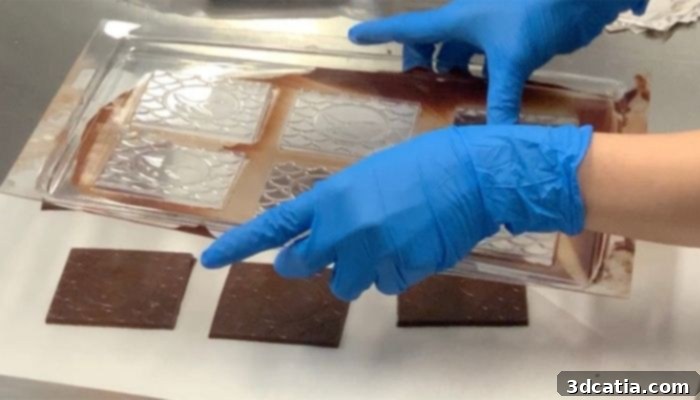
The 3D printed mold (photo credits: University of Hawaii)
A Collaborative Journey: Engineering Meets Confectionery
Under the expert guidance and supervision of Assistant Professor Tyler Ray, the enthusiastic group of engineering students initiated their project by establishing contact with Erin Kanno Uehara, the esteemed owner of Choco le’a. Notably, Uehara is an alumna of the University of Hawaii herself, fostering an immediate sense of connection and shared community spirit. She graciously invited the students for a comprehensive tour of her chocolate shop, providing invaluable insights into the intricate processes of chocolate production. During this immersive experience, Uehara openly discussed the operational challenges her business had historically faced, particularly highlighting the difficulties and high costs associated with sourcing appropriate and unique chocolate molds.
This initial exchange proved crucial, as it allowed both parties to collaboratively brainstorm and delineate the project’s scope, identifying the most effective strategies and necessary steps to ensure its success. The students gained a deep understanding of the practical requirements for chocolate molds, including factors like design intricacy, durability, ease of use, and crucially, food safety. Their theoretical knowledge of 3D printing technology was now directly informed by real-world manufacturing needs.
Designing and Producing Food-Safe Molds
For the actual production of these innovative molds, the students meticulously selected food-safe materials, a paramount consideration when dealing with anything that will come into contact with edible products. The choices of materials typically involve plastics like PETG or specialized silicones that are certified non-toxic, heat-resistant, and easy to sanitize. Utilizing state-of-the-art high-tech 3D printers and advanced fabrication equipment available within the UH Mānoa Department of Mechanical Engineering’s sophisticated laboratory, the students embarked on the design and printing phase. This involved using CAD (Computer-Aided Design) software to translate Choco le’a’s desired chocolate bar aesthetics into precise digital models, which were then sent to the 3D printers. The additive manufacturing process allowed for the creation of intricate designs that would be prohibitively expensive or even impossible with traditional mold-making techniques.
Delivering Exceptional Results and Fostering Community Bonds
The culmination of the students’ diligent work was the presentation of the finished 3D printed molds to Erin Kanno Uehara and her team at Choco le’a. The results were met with overwhelming enthusiasm and satisfaction. Uehara’s words eloquently captured the essence of this unique collaboration: “At Choco leʻa, we use chocolates as a way to connect with others, and it was an honor to be able to do it right here in our own community. A conversation with a chocolate friend led to an opportunity where together we could really ‘Bring peace to our world, one chocolate at a time.’ On behalf of my entire team, we are so grateful to have shared this collaborative experience to grow together. I hope more businesses and schools will partner up because we can all learn a lot from each other! We thank Mahalo Professor Ray and the mechanical engineering students for your exceptional contribution!” Her heartfelt testimonial underscores not just the success of the technical project, but also the profound impact of local partnerships in strengthening community ties and fostering mutual growth.
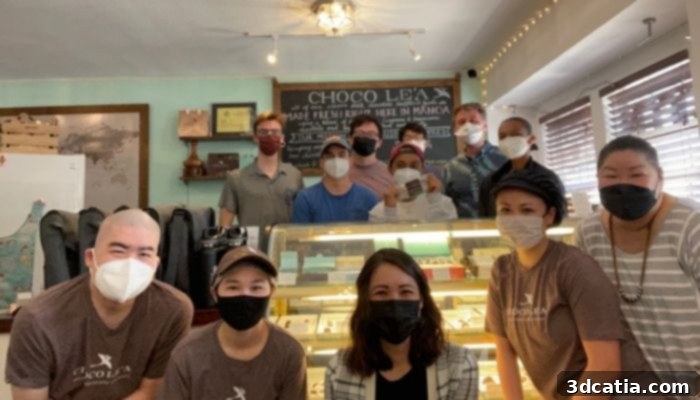
The team behind the project (photo credits: University of Hawaii)
Beyond Innovation: Empowering Local Communities Through 3D Printing
This pioneering project offers far more than just a low-cost and sustainable alternative to traditional mold production methods; it serves as a powerful testament to how localized manufacturing, particularly through 3D printing, can empower smaller communities to become more self-reliant. For geographically isolated regions like Hawaii, an archipelago situated far in the Pacific Ocean, the ability to produce essential items locally is critically important. Historically, businesses like Choco le’a have often been compelled to order specialized tools and molds from distant mainland suppliers or even overseas. This traditional reliance inevitably leads to significant logistical challenges, including extended lead times, exorbitant shipping costs, and a larger carbon footprint due to transportation.
By developing 3D printed chocolate molds directly within the community, the students demonstrated a viable model for mitigating these issues. Local production not only drastically reduces delivery times and expenses but also stimulates the local economy by fostering in-house innovation and skill development. It transforms a dependency into an opportunity for self-sufficiency and community resilience.
A Student’s Perspective: Skills for Community Benefit
The personal impact on the students involved was equally significant. Kendall Lorenzo, a senior mechanical engineering major and one of the key contributors to the project, eloquently articulated his experience: “Honestly, it feels really good; it feels amazing. Never would I have thought that I would be using my skills to benefit the community. But that’s the heartwarming part of this entire project. I’m hoping that I can use the skills that we learn at UH to benefit more businesses, more companies, and help them solve the problems that they have.” Lorenzo’s reflection highlights a crucial aspect of such university-community collaborations: they provide students with invaluable hands-on experience, allowing them to apply complex engineering principles to tangible societal needs. This not only reinforces their academic learning but also instills a profound sense of purpose and social responsibility.
This project exemplifies how academic institutions can serve as powerful engines for local development, fostering innovation that directly addresses the unique challenges faced by their communities. It’s a blueprint for how technical expertise can be harnessed to create practical, cost-effective, and sustainable solutions, proving that the future of manufacturing can be both advanced and intimately local. To discover more about the delectable creations of Choco le’a and their commitment to quality, we encourage you to visit their official website, accessible HERE.
Join the Conversation on 3D Printing Innovation
What are your thoughts on the groundbreaking use of 3D printed chocolate molds and the broader implications for local manufacturing and community empowerment? We invite you to share your insights and comments below, or engage with us on our social media platforms. Connect with our community and stay updated on the latest trends and innovations in additive manufacturing by following us on LinkedIn, Facebook, and Twitter. For a curated dose of the most important 3D printing news delivered directly to your inbox, don’t forget to sign up for our free weekly Newsletter here. Additionally, explore a wealth of visual content, interviews, and project showcases on our YouTube channel.
*Cover Photo Credits: Choco le’a