
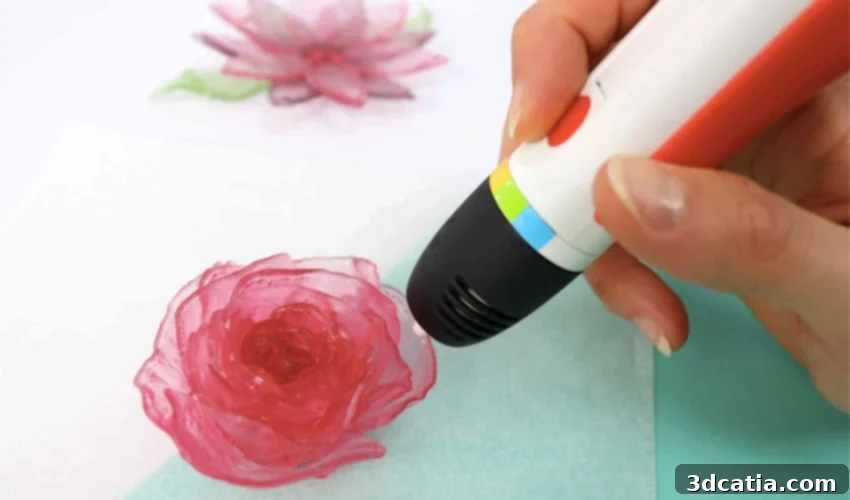
Unleash Your Inner Confectioner: A Deep Dive into the Polaroid Candy Play 3D Pen for Edible Creations
In the rapidly evolving landscape of additive manufacturing, 3D pens have carved out a significant niche, captivating enthusiasts and innovators alike. Their escalating popularity stems from a compelling combination of user-friendliness, diverse functionality, and remarkable material compatibility. Operating on principles similar to the Fused Deposition Modeling (FDM) process – the bedrock of many desktop 3D printers – these handheld devices offer an engaging and accessible entry point into the world of three-dimensional creation. While they may not always deliver the same level of precision as their larger, automated counterparts, 3D pens excel in offering unparalleled creative freedom at a remarkably affordable price point. Users are empowered to bring a vast array of imaginative concepts to life, limited only by their own ingenuity. Pioneering this exciting market, Polaroid has introduced its groundbreaking “Candy Play” 3D pen, a revolutionary device that transcends traditional plastic-based printing by enabling users to craft delicious, personalized candies from specially designed edible filaments. This innovation not only broadens the horizons of 3D printing but also brings a delightful new dimension to culinary creativity.
The Evolution of Creativity: 3D Pens Redefined
The journey of 3D printing pens began as a playful offshoot of industrial additive manufacturing, quickly evolving into sophisticated tools for artists, designers, educators, and hobbyists. Their appeal lies in bridging the gap between digital design and tangible creation, offering a direct, tactile experience that desktop printers often lack. Unlike the automated processes of traditional 3D printers, pens provide a hands-on approach, allowing for spontaneous design and immediate feedback. This direct interaction fosters a deeper understanding of spatial relationships and material properties. The versatility of 3D pens has seen them adopted in various fields, from rapid prototyping and sculptural art to educational initiatives that promote STEM learning. The introduction of edible filaments, as seen with Polaroid’s Candy Play, represents a significant leap forward, transforming the creative potential from purely aesthetic or functional objects to consumables, adding an entirely new sensory dimension to the 3D printing experience.
Introducing the Polaroid Candy Play 3D Pen: A Sweet Innovation
The Polaroid Candy Play 3D Pen stands out as a unique entry in the evolving market of 3D creative tools. It redefines what a 3D pen can be, moving beyond plastic crafts to edible art. This innovative device is engineered to provide an enjoyable and intuitive experience for anyone looking to experiment with food creation, regardless of their prior experience with 3D technology. By focusing on edible output, Polaroid opens up a world of possibilities for custom treats, personalized gifts, and interactive dessert decorations. The Candy Play isn’t just a gadget; it’s an invitation to explore a new form of culinary artistry.
Ergonomics and User-Centric Design
At the heart of the Polaroid Candy Play’s appeal is its meticulously crafted design, prioritizing user comfort and accessibility. According to the manufacturer, the pen boasts an elegant and ergonomic form factor, ensuring a comfortable fit for any hand shape, from small children to adults. This thoughtful design consideration is crucial for extended creative sessions, minimizing hand fatigue and maximizing enjoyment. For instance, the contours of the Candy Play and the strategic placement of its control buttons have been engineered to make handling not just pleasant but also remarkably natural and intuitive. This attention to detail extends to its functionality, as the Candy Play 3D pen is designed for universal use, accommodating both right-handed and left-handed individuals without compromise. This inclusive approach ensures that everyone can enjoy the creative process equally, fostering a broader user base and making edible 3D printing truly accessible. The comfortable grip and easy-to-reach controls empower users to focus on their artistic vision rather than wrestling with an unwieldy tool, making the process of candy creation smooth and enjoyable.
The Sweet Innovation: Edible Filaments
What truly sets Polaroid’s Candy Play 3D pen apart is its innovative use of edible filaments, diverging sharply from the conventional thermoplastics found in most 3D pens. This groundbreaking shift transforms the device from a mere crafting tool into a culinary instrument. The very idea of extruding delicious, custom-designed shapes directly into edible treats is a game-changer for home entertainment and personalized gifts. Polaroid has meticulously developed these filaments to ensure they are not only delightful in taste but also safe for consumption. A common concern among consumers regarding edible products is their sugar content, especially for children. Polaroid addresses this directly and commendably, specifying that while their edible filaments are available in a delightful array of distinct flavors, every single one is explicitly sugar-free. This commitment to health-conscious enjoyment ensures that users can indulge their creative sweet tooth without concern for excessive sugar intake. The range of flavors further enhances the creative experience, allowing for personalized taste profiles in addition to custom shapes. This innovation opens up new possibilities for dietary-restricted individuals to enjoy personalized treats, making the Candy Play pen a thoughtful and inclusive option for families and creative minds alike.
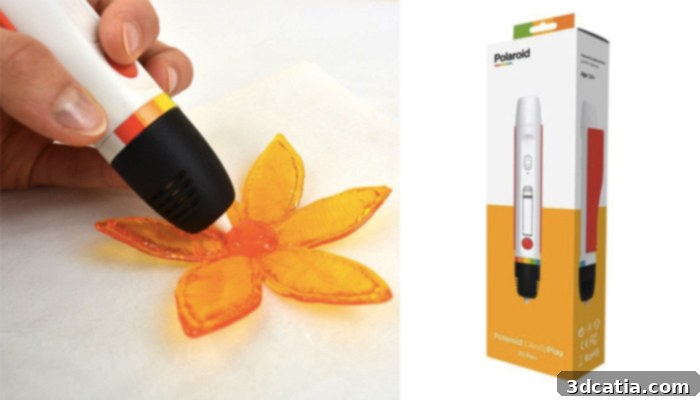
Candy Play allows you to create your own candy. (Photo Credits: Polaroid)
Mastering Candy Creation with Candy Play
Simple Steps for Sweet Success
With the Candy Play 3D Pen, Polaroid democratizes the art of candy making, making it accessible to virtually everyone. You don’t need to be a seasoned expert in food 3D printing or even have prior experience with 3D pens to begin your culinary adventure. The design philosophy behind Candy Play emphasizes simplicity and ease of use, ensuring a welcoming experience for novices. Polaroid provides clear, straightforward instructions that guide users through each step, from loading the edible filament to extruding the perfect shape. By simply following the company’s outlined procedures, users can effortlessly achieve optimal results, allowing them to surprise and delight friends and family with homemade, custom-designed treats. This low barrier to entry encourages experimentation and fosters a sense of accomplishment, making the process of creating edible art both rewarding and enjoyable. The intuitive nature of the pen means that users can quickly grasp the basics, freeing them to concentrate on the fun and imaginative aspects of candy creation rather than getting bogged down by complex technicalities. The learning curve is gentle, designed to encourage continuous engagement and creative exploration.
For those moments when inspiration might wane, or for users looking for a starting point, Polaroid has thoughtfully curated a collection of reproducible models readily available on its official website. These templates serve as an excellent resource, allowing users to practice their technique and build confidence before venturing into freehand design. Delivered with a starter pack of six distinct and delicious flavors, each user is afforded the delightful choice of selecting their favorite filament to craft their candies. This variety not only caters to different taste preferences but also encourages creative combinations, allowing for even more personalized treats. Once equipped with their chosen flavor and a burst of imagination, all that remains is for users to unleash their creativity and embark on the exciting journey of making truly original and delectable candies that are as unique as they are tasty.
Technical Specifications and Safety First
Beyond its creative capabilities, the Polaroid Candy Play 3D Pen is also designed with practicality and safety in mind. Regarding its technical features, the device is equipped with a versatile USB-C port, a modern and widely adopted standard. This ensures that the Candy Play is compatible with the vast majority of popular laptop chargers and other USB-C power sources, offering unparalleled convenience for charging and usage. Users no longer need to carry specialized chargers, simplifying their setup and making the pen ideal for on-the-go creativity. This broad compatibility underscores Polaroid’s commitment to user-friendly design and seamless integration into modern lifestyles. The ease of power management means less downtime and more time for creative candy making.
Furthermore, to guarantee the highest level of safety during operation, particularly when used by children or in shared environments, the Candy Play 3D pen incorporates an intelligent automatic shut-off function. This critical safety feature activates after eight minutes of continuous inactivity or use, preventing accidental overheating and conserving energy. This thoughtful addition provides peace of mind for parents and educators, ensuring that the pen is a safe tool for creative exploration. Combined with the intrinsic design freedom offered by 3D pens, where the possibilities for shape and form are virtually endless, the Candy Play pen empowers users to truly experiment. Once users have developed a foundational understanding of the 3D printing technique through the guided models and templates provided, they are encouraged to transcend these initial boundaries and freely conceptualize and create their own bespoke designs. For comprehensive details and to explore the full potential of this innovative device, additional information can be found directly on Polaroid’s official website HERE.
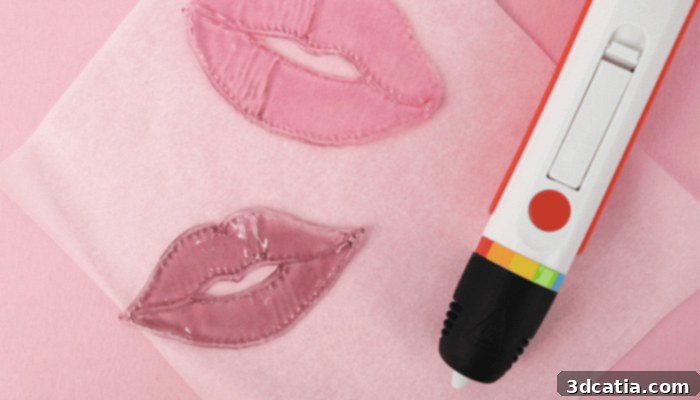
You can start creating candy from established templates (photo credits: Polaroid)
The Endless Possibilities of Edible 3D Printing
The Polaroid Candy Play 3D Pen isn’t just a gadget; it’s a gateway to boundless creativity, especially when it comes to personalized edible treats. Imagine crafting unique, bespoke candies for birthday parties, holiday celebrations, or special events, perfectly matched to a theme or a person’s favorite flavor and design. Educators can utilize this tool to make learning about geometry, engineering, and food science more engaging and delicious. It offers a tangible and interactive way for children to express their creativity, turning abstract ideas into consumable realities. Beyond simple shapes, users can experiment with intricate patterns, custom lettering, and multi-layered designs, transforming ordinary moments into extraordinary edible experiences. The ability to personalize treats down to the finest detail makes the Candy Play an ideal companion for anyone who loves to entertain, surprise, or simply indulge in a moment of sweet, self-made joy.
This innovative pen fosters not just individual creativity but also offers opportunities for shared experiences. Families can gather to design and create candies together, fostering collaboration and fun in the kitchen. It’s a wonderful way to introduce children to basic design principles and the satisfaction of making something from scratch. The excitement of seeing a unique candy come to life through one’s own hands, and then being able to eat it, is a truly special and memorable experience. The Polaroid Candy Play is more than just a tool; it’s a catalyst for imagination, connection, and delectable delight.
What are your thoughts on the groundbreaking Candy Play 3D Pen? Does the idea of 3D printing your own personalized, sugar-free candies pique your interest? We eagerly await your insights! Share your opinions and creative ideas in a comment below or join the conversation on our Facebook, Twitter, and LinkedIn pages! For the very latest advancements and news in the world of 3D printing, remember to sign up for our free weekly Newsletter here, delivering cutting-edge information directly to your inbox!
*Thumbnail Photo Credits: Polaroid