
Unlocking Extreme Performance: Silicon Nitride and Advanced Ceramic 3D Printing for Demanding Applications
The relentless pursuit of “higher, further, faster” defines not only modern societal progress but also the cutting edge of science, industrial innovation, advanced applications, and technology. Across critical sectors such as automotive, aerospace, and medical, the fundamental objective remains consistent: to push existing boundaries, expand technological capabilities, and significantly enhance overall efficiency. However, achieving these ambitious goals necessitates the deployment of high-performance materials capable of meeting the stringent requirements of extreme environments. Historically, superior performance has been almost exclusively associated with metals. Yet, when confronted with the most arduous and challenging conditions, even the most advanced metals frequently encounter their inherent limitations, underscoring the critical need for alternative material solutions.
It is precisely in these demanding scenarios that ceramics emerge as a highly suitable and often superior alternative, thanks to their exceptionally powerful and unique properties. High-performance ceramics possess outstanding characteristics that make them ideal for deployment in harsh conditions. When combined with the revolutionary capabilities of additive manufacturing, these materials unlock an unprecedented range of possible applications in environments ranging from the intricate complexity of the human body to the rigors of industrial processes and the vacuum of outer space. Among these advanced ceramics, **silicon nitride** stands out as a particularly remarkable material. This article will delve deeper into the applications of silicon nitride to vividly illustrate the immense potential that ceramic materials hold for future technological advancements.
To truly appreciate the value of ceramics in high-performance applications, it’s essential to first understand the foundational reasons for their adoption: their unparalleled material properties. Ceramics are inherently characterized by extreme hardness, rendering them exceptionally resistant to abrasion and wear, which is crucial in dynamic or high-friction environments. Beyond their mechanical resilience, they exhibit significant heat resistance, capable of withstanding extraordinarily high temperatures without compromising structural integrity. Furthermore, ceramics offer superior mechanical and dimensional stability, ensuring that components maintain their precise shape and function even when subjected to intense thermal or mechanical stresses. These distinctive characteristics collectively establish ceramics as highly efficient materials, demonstrating their indispensable advantages precisely where other conventional materials falter or fail outright.
In an era marked by rapid technological advancement, particularly fueled by intensive research, there is an ever-increasing demand for innovative materials that offer a broad spectrum of applications and exceptional durability. This burgeoning need has led to a significant surge in interest from engineers across various fields, who are increasingly turning their attention towards ceramics. However, effectively processing high-performance ceramics and fully harnessing their remarkable properties requires sophisticated manufacturing techniques. This is where additive manufacturing, commonly known as 3D printing, becomes a game-changer. It seamlessly combines the innovative material properties of ceramics with an unprecedented level of design freedom, enabling the creation of parts that not only endure but excel under the most extreme and challenging conditions imaginable. This synergy between advanced materials and cutting-edge manufacturing opens up new horizons for component design and performance.
It’s crucial to recognize that not all 3D printing processes are suitable for high-performance ceramics due to their unique material characteristics. In this specialized and demanding field of ceramic 3D printing, Lithoz has firmly established itself as a pioneering leader. The company’s innovative LCM (Lithography-based Ceramic Manufacturing) process offers a particularly promising and robust solution for the additive manufacturing of high-performance ceramics, setting new benchmarks in quality and capability.
The LCM technology excels in producing geometrically complex ceramic parts with exceptional full density and remarkable precision. These advanced end-use parts not only demonstrate superior strength compared to many traditional metal components but also boast a significantly extended service life, contributing to enhanced durability and reduced maintenance. An equally important advantage of LCM technology is its scalability, enabling efficient progression from prototyping to mass production. Lithoz has successfully mastered this challenging aspect of industrial-scale production, ensuring that its groundbreaking ceramic solutions are viable for widespread adoption across various industries. This capability to deliver high-quality, complex ceramic parts at scale underscores Lithoz’s commitment to advancing ceramic additive manufacturing.
Pushing the boundaries of what is technologically possible and continually advancing manufacturing capabilities remains a core principle at Lithoz. As stated eloquently on their website, “Since our founding, Lithoz has been characterized by one central promise – to always deliver the best possible quality for ceramic 3D printing and to continually push the limits of ceramics development as an active partner to our customers. Behind this promise are our values, which have become the DNA of Lithoz throughout our history.” This statement encapsulates Lithoz’s unwavering dedication to innovation, customer collaboration, and the sustained pursuit of excellence in ceramic additive manufacturing.
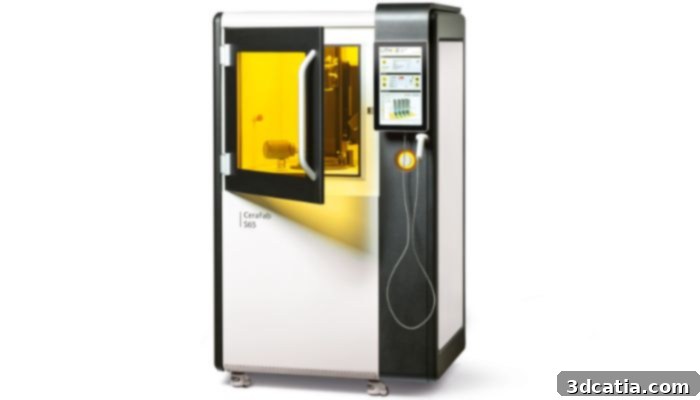
Beyond its proprietary LCM technology and advanced printing systems, Lithoz has carved out a distinguished reputation for its extensive and diverse portfolio of high-performance ceramic materials. This broad range of innovative materials is meticulously developed to meet the specific and often stringent requirements of various industries, thereby actively promoting and accelerating the adoption of ceramics across a multitude of sectors. To further enhance its material development and application expertise, Lithoz actively collaborates with numerous partners and leading research institutes, fostering a synergistic environment for continuous innovation and progress in ceramic additive manufacturing.
Lithoz’s expertise in ceramic 3D printing supports every aspect of the development of high-performance ceramics and offers cross-industry solutions for the development of new products and production processes. – Professor Alexander Michaelis, Fraunhofer Institute for Ceramic Technologies and Systems IKTS.
When considering industries that operate under exceptionally extreme conditions, one particular material within the Lithoz range consistently stands out: silicon nitride. Marketed by Lithoz under the brand name LithaNit 782, silicon nitride is a high-performance ceramic renowned for its extraordinary properties. LithaNit 782 is formulated as a specialized slurry with a beta-SiAION ceramic base, and its core characteristics include unparalleled durability, exceptional resistance to very high temperatures, and superior chemical inertness. This makes it an ideal choice for the most challenging applications.
This remarkably strong and tough material exhibits outstanding thermal resistance, allowing it to perform reliably even at incredibly high temperatures. Furthermore, it offers robust resistance to both acid and alkali corrosion, significantly extending its operational lifespan in chemically aggressive environments. These combined attributes make LithaNit 782 an extremely attractive material for a vast array of applications where such critical properties are non-negotiable. Specific industrial uses already include high-performance insulators, durable springs, and efficient impellers. To fully comprehend the expansive range of its utility, it is particularly illuminating to examine two applications situated at opposite ends of the technological spectrum: the rigorous demands of space travel and the delicate, intricate requirements of the human body.
The Material for Extremes: How Silicon Nitride Is Used in Aerospace and Medicine
Silicon nitride presents itself as an exceptionally interesting material for both aeronautics and space travel, although its superior material advantages find their most critical and compelling use in the latter. Aerospace is an incredibly dynamic and demanding field, constantly seeking ever more powerful, efficient, and innovative technologies. While metals have historically served as the conventional material choice, their capacity to withstand the truly extreme conditions prevalent in space – such as vast temperature fluctuations, vacuum, and radiation – is often limited, leading to accelerated wear and reduced longevity. Ceramics, by contrast, are inherently better equipped to endure these extreme thermal conditions. Their exceptional resistance to repeated temperature shocks makes them far more sustainable in the long term, contributing significantly to a reduction in harmful space debris and improving mission reliability.
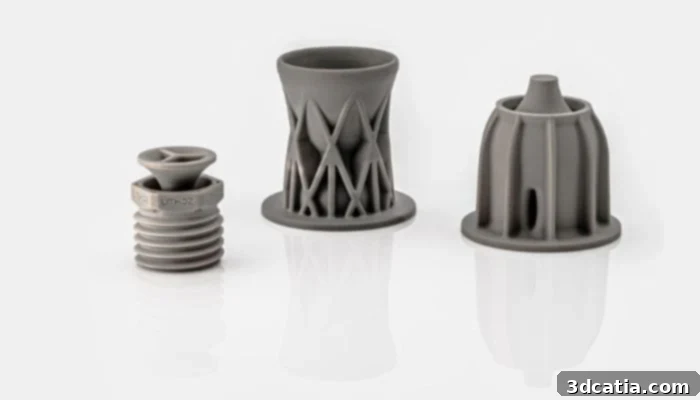
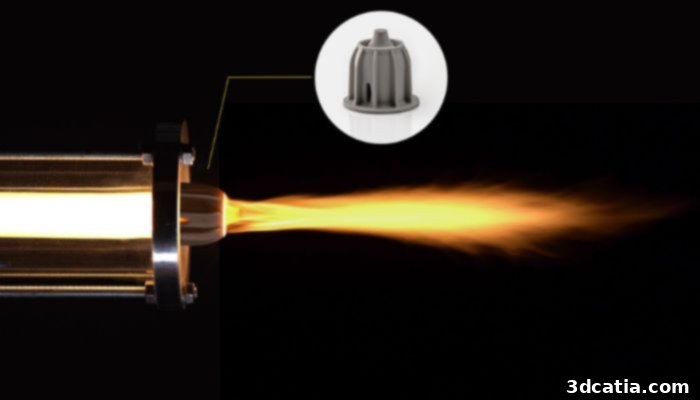
Beyond these highly desirable material properties, 3D-printed parts crafted from silicon nitride offer unprecedented design flexibility. This allows engineers to create components with optimized geometries that guarantee the absolute optimal function and performance in highly complex systems. A compelling example of this innovation is an aerospike nozzle, intricately printed from silicon nitride using LCM technology. This advanced nozzle features a distinctive spike-shaped body meticulously designed to precisely direct the gas flow. This innovative design enables passive pressure adjustment to the ambient atmospheric conditions, resulting in ideal exhaust gas expansion and significantly improved propulsion efficiency. The intricate design of the 3D-printed component not only facilitates these smooth pressure adjustments but also ensures optimum cooling within the part itself, preventing overheating and material degradation. By synergistically combining the outstanding properties of silicon nitride with the advanced capabilities of LCM technology, it becomes possible to produce highly complex parts that meet the extraordinarily high demands of aerospace applications in terms of structural complexity, unparalleled performance, and impressive operational efficiency.
Another critical property of silicon nitride, which holds immense significance particularly in medical applications, is its exceptional biocompatibility. While strong, tough, and heat-resistant materials are indeed vital in medicine for various tools and prosthetics, biocompatibility—the ability of a material to interact favorably with biological systems without causing adverse effects—is an absolutely indispensable characteristic. Silicon nitride, in fact, distinguishes itself further with its unique antibacterial and osseointegrative properties. The antibacterial nature helps significantly reduce the risk of infection, a paramount concern in implantable devices. Its osseointegrative capabilities actively support and promote bone growth, allowing for a direct and strong structural connection with surrounding bone tissue. These combined features open up numerous transformative fields of application in medicine, with particular emphasis on orthopedics and neurosurgery.
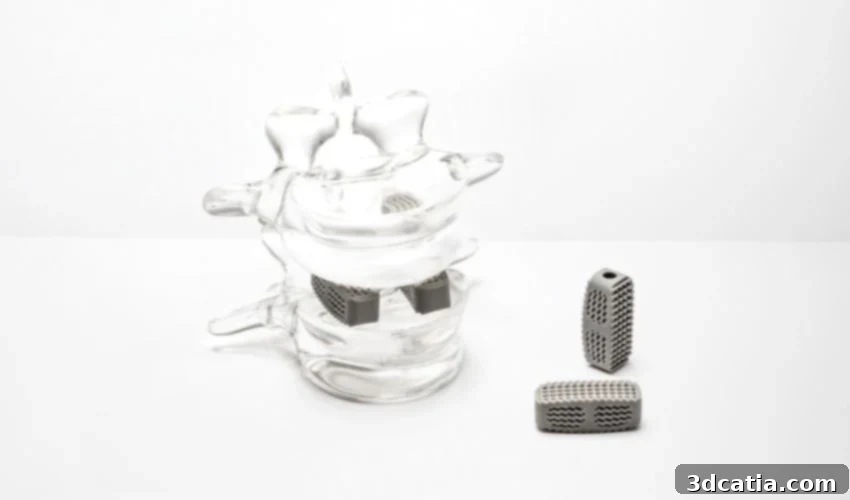
The high-performance ceramic LithaNit 782 has already been successfully utilized for the production of durable permanent implants, designed for long-term integration within the human body, as well as for specialized surgical tools that benefit from the material’s hardness and sterilizability. A prominent example of the medical application of silicon nitride includes spinal cages. These devices are critical in treating conditions like herniated discs and are extensively used in surgical spinal fusion procedures, providing stable support and promoting bone growth across vertebral segments. The ability to precisely control the porosity and intricate geometry of these implants through additive manufacturing further enhances their biological integration and mechanical performance, making silicon nitride an ideal material for these life-changing medical interventions.
As these diverse application examples unequivocally demonstrate, high-performance ceramics represent a class of materials that can not only comfortably compete with, but often significantly outperform, traditional metals and advanced polymers across a wide spectrum of demanding cases. The future will undoubtedly witness a substantial increase in the adoption of 3D-printed production parts made from sophisticated ceramics like silicon nitride, particularly in fields characterized by extreme operational environments and stringent performance requirements. For those interested in exploring further, Lithoz provides a comprehensive array of specific examples detailing the multifaceted uses of LithaNit 782 HERE.
What are your thoughts on LithaNit 782 and the future of ceramic 3D printing? We invite you to share your insights in a comment below or join the conversation on our LinkedIn, Facebook, and Twitter pages! Don’t forget to sign up for our free weekly newsletter here, delivering the latest 3D printing news straight to your inbox! You can also find all our engaging videos and content on our YouTube channel.
* All Photo Credits: Lithoz GmbH