
Revolutionizing Construction: An Interview with Mighty Buildings on the Future of 3D Printed Homes and ADUs
The additive manufacturing sector continues to demonstrate its transformative potential across numerous industries, with the construction industry standing out as a prime beneficiary. Forward-thinking companies are increasingly recognizing the unparalleled advantages offered by 3D printing, leading to a surge in its integration into their core operations. We’ve witnessed remarkable advancements, from the rapid development of 3D printed houses to entire residential buildings erected in a fraction of traditional construction times. But what truly drives this widespread adoption of additive manufacturing technologies in construction? The fundamental objective for many construction firms is to achieve unprecedented levels of automation in material extrusion processes. This automation aims to deliver not just faster build times, but also highly reliable, durable, and cost-effective housing solutions. Among the pioneering companies leading this charge is Mighty Buildings, an innovative American startup dedicated to producing high-quality Accessory Dwelling Units (ADUs) using cutting-edge 3D printing technology. To delve deeper into their revolutionary approach and understand their vision for the future of construction, we had the distinct pleasure of speaking with their leadership team, gaining invaluable insights into their perspective on additive manufacturing’s role in shaping our built environment.
3DN: Can you introduce yourself and tell us about your relationship with 3D printing?
I am Slava Solonoitsyn, the co-founder and CEO of Mighty Buildings. My connection to 3D printing is not just strong; it is the very foundation of my current professional endeavor. I am actively building a business that harnesses the immense promise of additive manufacturing to fundamentally redefine the construction sector. Our goal is to leverage 3D printing to address critical challenges in housing, making construction more efficient, sustainable, and accessible for everyone.

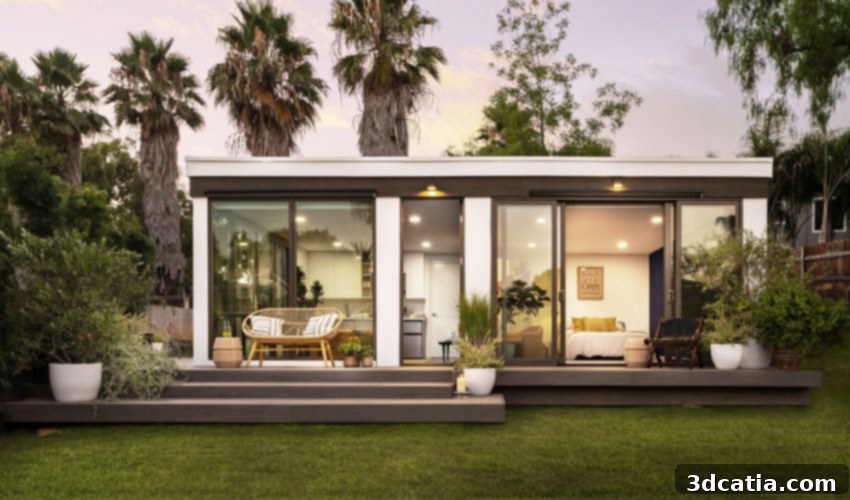
A model of ADU (All image credits: Mighty Buildings)
3DN: What is Mighty Buildings and how did the idea of founding it come about?
Mighty Buildings is an Oakland-based company at the forefront of exploring and implementing next-generation technologies within the construction industry. Our core mission revolves around developing and continually refining advanced design and construction processes that heavily rely on large-scale 3D printing and sophisticated robotic automation. This allows us to construct buildings with unparalleled precision and efficiency. Currently, our primary focus is on manufacturing Accessory Dwelling Units (ADUs) – these are self-contained, independent structures designed for various purposes, including living, working, or recreational use, primarily for customers across the United States. However, our long-term strategic vision extends far beyond local markets. We aim to systematize and optimize our entire production process to create a scalable model that can be deployed globally, facilitating localized, efficient construction solutions worldwide. The genesis of Mighty Buildings emerged from a shared observation among my three co-founders and myself: a significant market inefficiency within the US housing construction landscape. With backgrounds spanning venture capital, technology innovation, and sustainability advocacy, we recognized that while many other industries had experienced massive disruption and technological evolution, housing construction remained largely tethered to decades-old techniques and processes. These traditional methods were frequently labor-intensive, generated excessive material waste, suffered from energy inefficiencies, and were generally slow to adapt. A pivotal opportunity to address these issues arose in 2017 when California enacted new state regulations specifically designed to encourage and streamline the construction of ADUs. This regulatory shift provided the perfect impetus for our venture. We gained acceptance into the prestigious Y Combinator accelerator program, which allowed us to rapidly assemble a talented team, develop our proprietary technologies, and initiate our journey of growth and innovation.
3DN: Can you explain the 3D printing technology you use, what advantages it offers?
At Mighty Buildings, our manufacturing approach synergistically combines state-of-the-art existing technologies with our groundbreaking proprietary material. We utilize advanced, large-scale gantry systems and sophisticated robotic arms, which are meticulously engineered to execute precise and efficient material deposition. The cornerstone of our production, however, is our unique composite material, which we call Light Stone Material (LSM). LSM serves as our primary production medium, and its innovative composition allows it to effectively replace the dozens of individual materials typically required to construct the walls, floors, ceilings, and roofs of a conventional home. This consolidation significantly simplifies the supply chain and manufacturing process. LSM shares certain characteristics with materials like DuPont’s Corian, known for its durability and aesthetic versatility, but it fundamentally differs from plasticized concrete, a material commonly favored by many other companies in the 3D printing construction sector. The distinct advantages of LSM are multifaceted: it facilitates a far greater degree of automation in our manufacturing workflow, enhances thermal efficiency within the finished structures, and drastically accelerates overall build times. The unique properties of LSM contribute to superior insulation and structural integrity. All of our ADUs are meticulously produced within our expansive 79,000 square foot (7,339 square meter) facility located in Oakland, California, where our integrated systems ensure high-quality, consistent output.
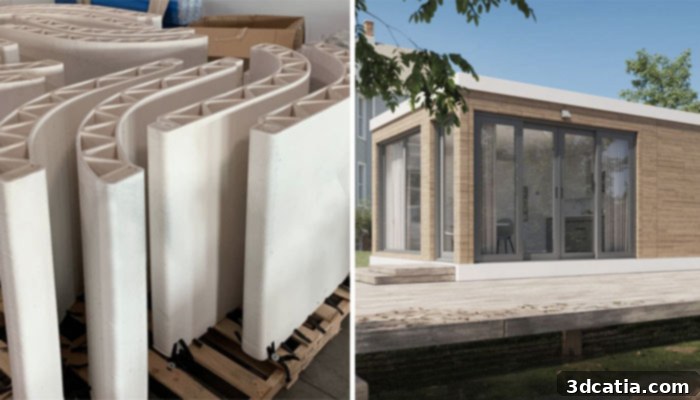
The company uses large-scale additive manufacturing methods.
3DN: At what level is your manufacturing method sustainable?
Our technology embodies sustainability through several critical pathways, significantly reducing the environmental footprint of construction. Firstly, the high degree of automation inherent in our manufacturing process translates directly into a dramatic reduction in construction waste – specifically, we achieve up to 90% less material waste compared to traditional building methods. This is largely due to the precision of 3D printing, which minimizes off-cuts and errors. Furthermore, any excess or discarded material from our printing process is carefully collected and can be reused, establishing a more circular and resource-efficient production cycle. Our finished units are engineered to comply fully with California Title 24 Energy Efficiency requirements and meet stringent Passive House Standards, benchmarks for ultra-low energy buildings. The structural design, primarily composed of a single, continuously printed structure, inherently minimizes thermal bridging and other common points of thermal inefficiency that plague conventionally built homes. Our proprietary Light Stone Material (LSM) boasts an exceptionally high thermal resistance, meaning our buildings are incredibly effective at maintaining a desired indoor temperature with minimal energy consumption for heating or cooling. This superior insulation translates into lower utility bills for homeowners and reduced greenhouse gas emissions. Beyond the structural components, the finished units are thoughtfully equipped with high-efficiency fixtures and appliances, modern tankless water heaters for on-demand energy savings, and durable, energy-saving LED lighting throughout. Together, these elements underscore our commitment to creating truly sustainable and environmentally responsible living spaces.
3DN: Can you share with us some of the projects you have worked on with clients?
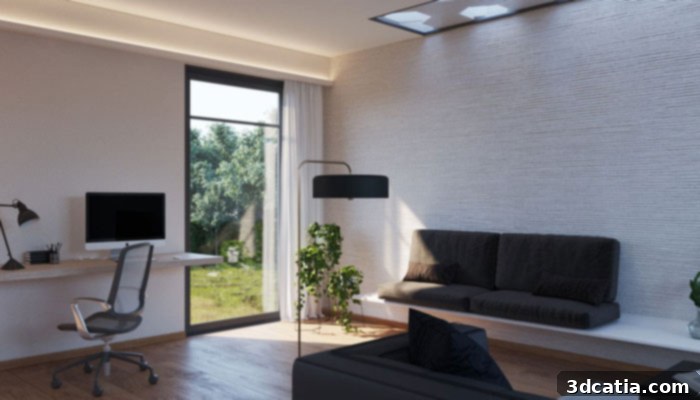
We have successfully installed two Accessory Dwelling Units (ADUs) in California, which are now fully functional and serving their owners’ needs. Additionally, we have several more units currently in various stages of delivery and installation across the state. These ADUs represent a versatile solution for homeowners, providing small, self-contained living spaces typically situated in people’s backyards. The applications for these units are incredibly diverse and adaptable to individual requirements. They can serve as comfortable guest houses for short-term or extended family visits, offering privacy and convenience. Many owners utilize them as dedicated working spaces, such as home offices or studios, providing a quiet and professional environment separate from the main residence. They are also ideal for recreational spaces, like hobby rooms, gyms, or creative studios. Moreover, ADUs are becoming increasingly popular for multi-generational living arrangements, allowing elderly parents or adult children to live independently close to family. They can also represent a significant opportunity for homeowners to generate rental income, contributing to housing availability and affordability. We are immensely proud of these projects and encourage anyone interested in seeing the tangible results of our innovative construction methods to check out our completed projects directly on our blog HERE. Our portfolio showcases the aesthetic appeal, functional design, and structural integrity that our 3D printing technology brings to modern home construction.
3DN: How do you see the future of additive manufacturing in the construction sector?
We hold an exceptionally optimistic, or “bullish,” view on the future trajectory of additive manufacturing within the construction sector. We firmly anticipate that 3D printing will evolve into a major, if not dominant, factor in global construction practices in the years to come – indeed, our entire business strategy is predicated on this transformation. While our immediate business focus remains on the production and deployment of ADUs, our strategic plan for the medium-term involves forging robust partnerships with a diverse ecosystem of designers, architects, developers, and builders worldwide. The ultimate goal is to expand localized versions of our “Mighty Factory” production system globally. In essence, we are making a significant bet on the overall success and widespread adoption of this additive manufacturing process, and more specifically, on our innovative “Platform-as-a-Service” model. This platform is designed to be highly versatile and design-agnostic, meaning it can adapt to create a vast array of building components and structures. From small, intricate modules to volumetric structural elements, our system will be capable of manufacturing whatever is required, precisely tailored to local needs and architectural visions. This approach promises to democratize advanced construction, offering speed, cost-efficiency, and design flexibility that traditional methods simply cannot match. We envision a future where sustainable, high-quality housing can be rapidly deployed anywhere on the planet, significantly addressing global housing shortages and contributing to more resilient communities.
3DN: Any last words for our readers?
Absolutely – we would genuinely love to connect with you! Mighty Buildings believes that solving the pressing challenges facing our planet requires broad collaboration and diverse perspectives. Whether you are a technologist passionate about innovation, a seasoned builder, an architect dreaming of new design possibilities, a dedicated sustainability advocate, a housing expert seeking scalable solutions, a philosopher contemplating the future of human habitation, or simply a potential ADU buyer exploring modern living options, please do not hesitate to reach out to us. Drop us a line and start a conversation. The global community will need an unprecedented level of collaboration and ingenuity as we collectively address the critical demands of our time: ensuring adequate shelter for all, protecting and nurturing our environment, embedding sustainability into every aspect of development, and thoughtfully evolving our built environment to meet the needs of future generations. We are eager to engage with anyone who shares this vision and wants to contribute to a more sustainable and equitable future.
What are your thoughts on Mighty Buildings’ innovative approach to construction? We invite you to share your insights in a comment down below or join the discussion on our Facebook and Twitter pages! Don’t forget to sign up for our free weekly Newsletter, ensuring you receive all the latest news, trends, and breakthroughs in 3D printing delivered directly to your inbox!