
Strategic Acquisitions Fuel 3D Printing Market Expansion: Stratasys and 3D Systems Lead the Charge
The global landscape of additive manufacturing is constantly evolving, marked by innovation, strategic partnerships, and significant corporate maneuvers. In a clear testament to the enduring growth and accelerating maturation of the 3D printing market, two of its most prominent players, Stratasys and 3D Systems, have recently announced pivotal acquisitions. These moves are not merely isolated business decisions; they signify a broader industry trend towards vertical integration, technological advancement, and a relentless pursuit of enhanced capabilities to serve an ever-demanding industrial sector.
Stratasys initiated this wave of announcements by confirming a definitive agreement to acquire the additive manufacturing materials business of Covestro. Covestro, a renowned global supplier, is recognized for its premium polymers and extensive expertise in material science. This strategic acquisition is poised to significantly bolster Stratasys’ existing materials portfolio, particularly expanding its offerings across key 3D printing technologies such as stereolithography (SLA), Digital Light Processing (DLP), and powder-based systems. The aim is to provide customers with a broader range of high-performance materials crucial for diverse applications, from prototyping to end-use parts.
Hot on the heels of Stratasys’ announcement, 3D Systems revealed its own substantial acquisition: dp polar GmbH. This German company is celebrated for its groundbreaking platform that promises to revolutionize high-volume additive manufacturing. The dp polar technology is distinguished by its ability to facilitate continuous, high-speed 3D printing of components, addressing a critical need for industrial scalability in additive processes. Together, these two major acquisitions underscore the dynamic nature of the 3D printing industry, highlighting a period of robust expansion and strategic repositioning by its leaders.
Despite summer typically being a period associated with a deceleration of business activities as many take well-deserved breaks to combat the heat, the 3D printing market has emphatically defied this seasonal trend. Instead, it has demonstrated remarkable resilience and continued vitality. This latest flurry of corporate news, particularly from Stratasys, reaffirms its robust market position, especially noteworthy after recent concerns over a potential takeover surfaced just a few weeks prior. For 3D Systems, these actions signal a re-energized acquisition strategy. After a comparatively quieter preceding year, characterized more by divestitures than strategic purchases, the company is unequivocally demonstrating its commitment to growth. This follows its successful re-entry into the Fused Deposition Modeling (FDM) 3D printing market through its earlier acquisitions of Titan Robotics and Kumovis, showcasing a sustained drive to expand its technological footprint and market reach.

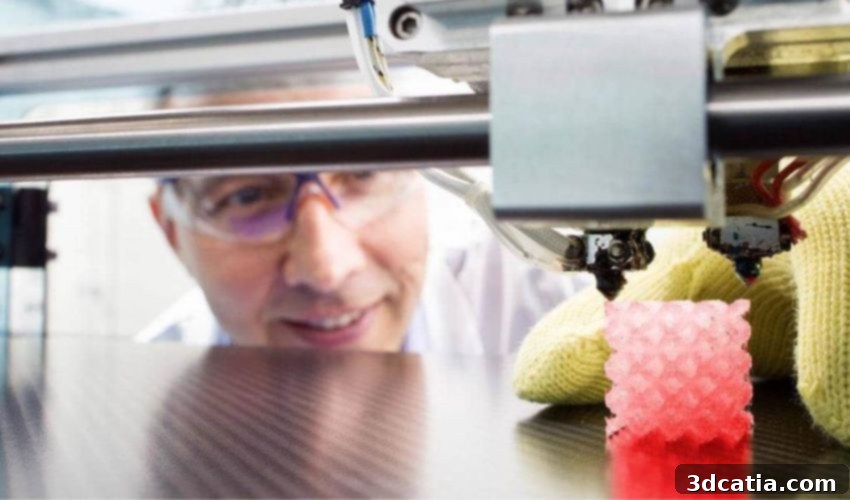
dp polar is known for high-volume, industrial 3D printing (photo credits: dp polar GmbH)
Stratasys Strengthens Material Ecosystem with Covestro’s AM Business Acquisition
The connection between Stratasys and Covestro is not a new development. For several years, Covestro’s advanced 3D printing materials have been an integral part of Stratasys’ robust 3rd party ecosystem. This ecosystem comprises materials from external suppliers that are rigorously tested and proven compatible with Stratasys’ diverse range of additive manufacturing machines. Covestro, as a leading developer of high-performance polymers, has long been a significant innovator in the additive manufacturing (AM) sector, consistently delivering cutting-edge material solutions. Their dedication to research and development, particularly in areas like sustainability and the circular economy, has earned them a strong reputation for forward-thinking material science.
Through this pivotal acquisition, users of Stratasys’ advanced 3D printing systems are poised for substantial benefits. Specifically, customers utilizing the Origin P3™ DLP printers, Neo® stereolithography systems, and H350™ powder-based printers will gain unparalleled access to an expanded and diversified materials portfolio. This enhanced access will empower them to explore new applications, improve part performance, and drive innovation across various industries. The integration of Covestro’s materials will allow Stratasys to offer more comprehensive solutions for demanding applications requiring specific mechanical properties, chemical resistances, or aesthetic qualities.
According to the official press release, the acquisition encompasses a significant range of assets crucial for continued material innovation. Stratasys will integrate Covestro’s dedicated Research & Development facilities and ongoing activities, along with its experienced global development and sales teams spanning key regions including Europe, the U.S., and China. Critically, the deal includes a portfolio of approximately 60 established additive manufacturing materials, ensuring immediate expansion of Stratasys’ offerings. Furthermore, a highly extensive intellectual property (IP) portfolio, featuring hundreds of granted patents and pending applications, will transfer to Stratasys. This comprehensive IP acquisition is particularly valuable, as material R&D represents one of the most dynamic and competitive frontiers in additive manufacturing. This strategic move will not only allow Stratasys to broaden its current material offerings for customers but also to directly leverage the extensive research and development work that Covestro has meticulously conducted in 3D printing materials to date. This synergy is expected to accelerate Stratasys’ own material innovation pipeline, bringing new solutions to market faster.
From a financial perspective, the acquisition is anticipated to be immediately accretive, meaning it is expected to enhance the earnings per share of Stratasys, the acquiring company. The purchase price for Covestro’s additive manufacturing business stands at approximately €43 million, supplemented by additional inventory and less certain liabilities. The agreement also includes a potential earnout clause, allowing for an additional payment of up to €37 million based on future performance metrics. This structured financial arrangement reflects confidence in the long-term value and strategic importance of Covestro’s material expertise.
Commenting on this landmark decision, Dr. Yoav Zeif, CEO of Stratasys, emphasized the critical role of materials in advancing the industry: “Innovative materials are the fuel of additive manufacturing and translate directly into the ability to create new use cases for 3D printing, particularly in the production of end-use parts like dental aligners and automotive components.” He further elaborated, “The acquisition of Covestro’s highly regarded Additive Manufacturing business positions us to further grow adoption of our newest technologies. We will now have the ability to accelerate cutting-edge developments in 3D printing materials, and advance our strategy of providing the best and most complete polymer 3D printing portfolio in the industry.” Dr. Zeif’s statement highlights Stratasys’ vision of offering a comprehensive suite of polymer 3D printing solutions, where advanced materials are key to unlocking broader industrial applications and driving the adoption of additive manufacturing beyond prototyping into mainstream production.
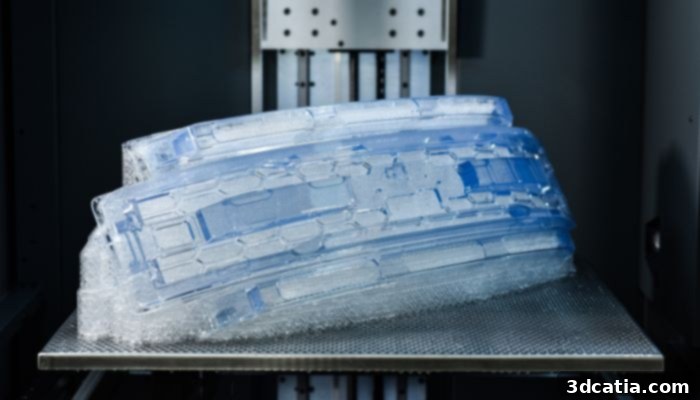
An automotive grill shown on a Stratasys Neo800 stereolithography system, it was 3D-printed with clear Covestro’s Somos WaterShed CX 11122 material (photo credits: Business Wire)
3D Systems Targets Mass Production with dp polar Acquisition, Revolutionizing High-Volume AM
In parallel to Stratasys’ materials-focused expansion, 3D Systems has announced a monumental step towards accelerating high-volume additive manufacturing through its acquisition of dp polar GmbH. This move signals 3D Systems’ aggressive strategy to expand its industrial production capabilities. dp polar, a German innovator, is recognized for designing and manufacturing what 3D Systems hails as the industry’s “first additive manufacturing system designed for true high-speed mass production of customized components.” This bold claim is rooted in dp polar’s unique and patented technology, which addresses some of the most persistent bottlenecks in scaling 3D printing for industrial throughput.
The cornerstone of dp polar’s innovation is its continuous printing system, featuring a segmented, rotating print platform. This platform is precisely controlled by a patented polar coordinate system, which ingeniously keeps a print head stationary above the continuously rotating build plate. This design dramatically increases throughput by eliminating non-productive movements and enabling parallel processing, a significant departure from traditional layer-by-layer additive manufacturing processes that often involve considerable idle time between layers or parts. 3D Systems intends to strategically leverage this groundbreaking system by integrating it with its own extensive portfolio of advanced polymer materials and Oqton’s cutting-edge software technology. This synergy is expected to unlock unprecedented levels of high-speed mass production for additive manufacturing across a spectrum of critical industries, including automotive, medical devices, aerospace, and consumer goods, where demand for customized, high-performance components at scale is rapidly growing.
Dr. Jeffrey Graves, president and CEO of 3D Systems, articulated the strategic rationale behind this acquisition, stating, “This acquisition is the next step in executing on our investment strategy to provide our customers with an industry-leading additive manufacturing solutions portfolio to address their critical applications challenges.” Dr. Graves further emphasized the transformative potential of dp polar’s technology: “dp polar has designed a very unique system that provides true high-volume production. The ability to print a broad range of materials, alongside the printer’s modular design that enables multiple processes in one high-speed platform not only increases productivity by orders of magnitude but also reduces the total cost of ownership.” This highlights the multifaceted benefits of the acquisition, including expanded material versatility, enhanced productivity, and significant reductions in operational costs, all vital for driving industrial adoption. The transaction is projected to reach its closure in the fourth quarter of 2022, marking a significant milestone for 3D Systems and the broader additive manufacturing industry. Further detailed information about these two landmark acquisitions can be found in the official press releases from Stratasys HERE and from 3D Systems HERE.
The Broader Implications for the Additive Manufacturing Industry
These recent acquisitions by Stratasys and 3D Systems are more than just corporate headlines; they are potent indicators of the ongoing evolution and increasing maturity of the additive manufacturing market. The strategic focus on materials by Stratasys and on high-volume production capabilities by 3D Systems reflects a clear industry shift from rapid prototyping to serious, scalable end-use part manufacturing. As companies increasingly integrate 3D printing into their supply chains for production-grade applications, the demand for robust, reliable materials and high-throughput machines becomes paramount. These investments aim to fill those critical gaps, enabling broader industrial adoption and unlocking new use cases across diverse sectors. The emphasis on sustainability, as seen with Covestro’s contributions, also points to a growing awareness and commitment within the industry to environmental responsibility, driven by both corporate values and market demand for greener manufacturing processes. The synergy of hardware, software (like Oqton), and advanced materials is creating a comprehensive ecosystem capable of tackling complex manufacturing challenges, propelling 3D printing into its next phase of industrial revolution.
Share Your Thoughts and Stay Connected with 3D Printing News
What are your thoughts on Stratasys and 3D Systems’ recent strategic acquisitions? How do you foresee these moves impacting the future of additive manufacturing, particularly in terms of material innovation and mass production capabilities? We encourage you to share your insights and opinions in a comment below or join the conversation on our social media platforms: connect with us on LinkedIn, Facebook, and Twitter pages! Don’t miss out on the latest advancements and news in the dynamic world of 3D printing. Be sure to sign up for our complimentary weekly Newsletter here to receive direct updates straight to your inbox. Additionally, you can explore all our comprehensive video content and interviews by visiting our dedicated YouTube channel, where we continually feature the most exciting developments and expert perspectives in additive manufacturing.