
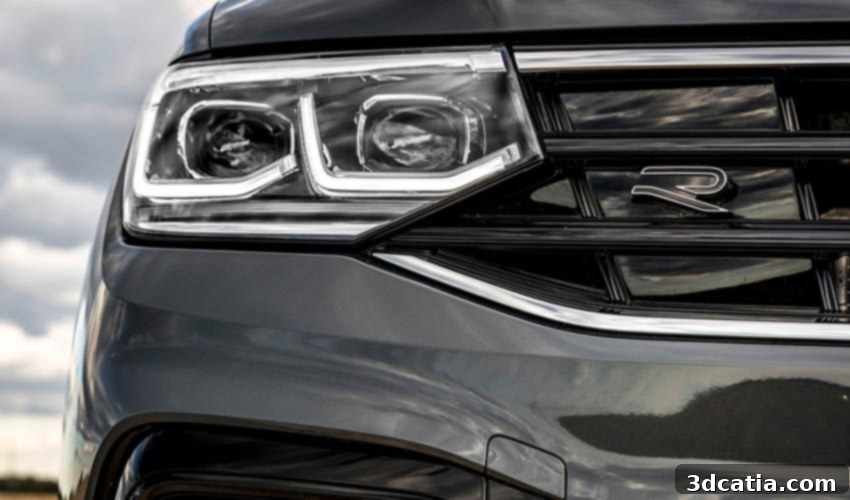
Volkswagen Accelerates Automotive Innovation with Stratasys PolyJet 3D Printing for Next-Generation Prototyping
In a significant move to enhance its prototyping capabilities and further optimize vehicle design, the renowned German automotive manufacturer Volkswagen has made a strategic investment in two advanced Stratasys 3D printers. This commitment underscores Volkswagen’s long-standing dedication to integrating additive manufacturing into its production pipeline, a journey that spans over 25 years. Throughout this period, the company has consistently leveraged 3D printing technologies to push the boundaries of innovation, particularly in the design and development phases of its vehicles. This latest investment serves as a compelling testament to the transformative potential of 3D printing in the automotive industry, offering tangible benefits such as substantial reductions in development costs, accelerated product cycles, and the ability to produce lightweight, complex parts with unprecedented precision.
As a true pioneer in the additive manufacturing sector, Stratasys boasts a robust global presence and an unparalleled depth of expertise across a diverse range of 3D printing technologies. Their industrial-grade machines have been successfully adopted in numerous demanding sectors, including aerospace and automotive, where they are instrumental in the development of high-performance components. Volkswagen’s recent acquisition includes two of Stratasys’s state-of-the-art J850™ 3D printers, which have been integrated into its Pre-Series Center. These sophisticated PolyJet machines are specifically tasked with generating ultra-realistic prototypes for both the interior and exterior elements of Volkswagen’s future vehicles. In an industry where continuous innovation is paramount, this technology provides an invaluable tool, enabling the design team to conduct rigorous testing and meticulous refinement of part designs, ensuring optimal performance and aesthetics before full-scale production.
Advanced Prototyping for Unmatched Realism
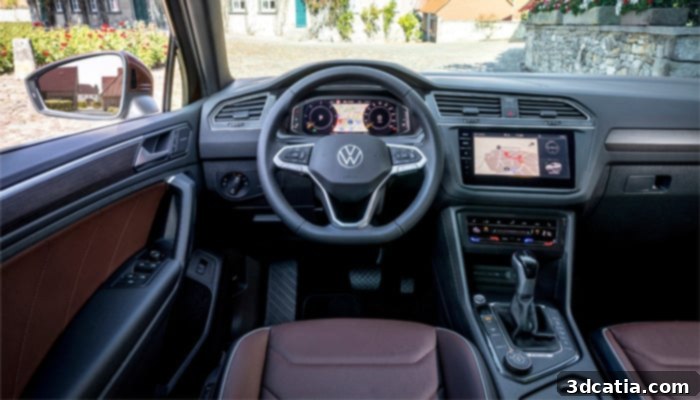
Volkswagen will use Stratasys machines to develop ultra-realistic prototypes for the interior and exterior of its vehicles | Photo Credits: Volkswagen AG
At the core of Stratasys’ J850 solutions is the powerful PolyJet technology, also widely recognized as Material Jetting. This innovative additive manufacturing method offers an extraordinary capability: the simultaneous creation of parts that can seamlessly combine up to seven distinct materials and a full spectrum of colors within a single print job. This unique feature allows designers to achieve an unprecedented level of realism and functional accuracy in their prototypes. Andreas Langfeld, Stratasys President EMEA, highlights the strategic advantage this technology offers: “The J850 represents our most advanced system to date, empowering companies to elevate their design capabilities to an entirely new level and secure a significant competitive edge. We eagerly anticipate the diverse and innovative applications that the Volkswagen team will unlock with this groundbreaking technology.” The ability to iterate rapidly and visualize complex designs in such high fidelity is a game-changer for the automotive industry, where aesthetics, ergonomics, and functionality must perfectly converge.
Transforming the Automotive Design Workflow
With the integration of the Stratasys J850 printers, Volkswagen has achieved remarkable breakthroughs in its design and prototyping workflow. For instance, the engineering and design teams can now effortlessly print 3D models that faithfully reproduce a vast array of textures and surfaces, ranging from the intricate grain of leather and the warmth of wood to the crisp transparency of glass. This extraordinary capability to replicate authentic vehicle characteristics directly within 3D models grants designers unparalleled freedom to experiment, test, and refine new concepts with exceptional speed and cost-efficiency. Previously, relying on conventional manufacturing methods such as injection molding for prototype creation would have entailed waiting weeks, if not months, for iterations. The J850 dramatically compresses this timeline, allowing for numerous design cycles in a fraction of the time, thereby fostering greater creativity and innovation. Peter Bartels, head of Volkswagen’s pre-series center, underscores the strategic value of this enhancement: “The recent addition of the J850 3D printers significantly augments our existing capabilities, strengthening our 3D printing operations across the board and enabling us to further optimize our entire design process. This investment empowers us to bring more sophisticated and refined vehicle designs to market faster than ever before.”
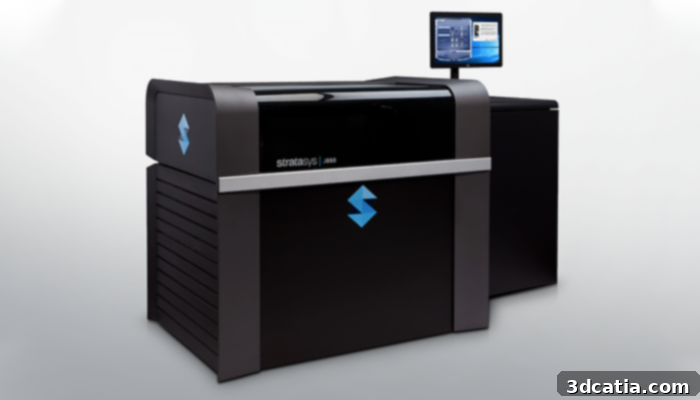
With Stratasys’ J850 3D printers, Volkswagen is able to print highly realistic prototypes.
Precision, Efficiency, and Future Outlook
This pivotal investment by Volkswagen has profoundly impacted its design capabilities. The team is now able to produce highly complex, multi-material prototypes that astonishingly mirror final production parts with up to 99% precision. This level of accuracy is critical for evaluating fit, form, and function, allowing designers and engineers to identify and resolve potential issues long before committing to expensive tooling for mass production. The accelerated feedback loop, facilitated by rapid, realistic prototyping, significantly streamlines the development process, reduces costly rework, and ultimately shortens the time-to-market for new vehicle models. This strategic integration of Stratasys PolyJet technology reinforces Volkswagen’s position at the forefront of automotive innovation, demonstrating a clear vision for how additive manufacturing can revolutionize traditional design and engineering workflows. The benefits extend beyond mere speed; they encompass improved design quality, enhanced collaboration among design teams, and the flexibility to explore daring new concepts without prohibitive costs. This collaboration with Stratasys is a testament to Volkswagen’s commitment to leveraging cutting-edge technology to maintain its competitive edge in a rapidly evolving global automotive landscape, paving the way for more innovative, personalized, and efficient vehicles of the future. You can find more comprehensive information about this groundbreaking collaboration HERE.
What are your thoughts on Volkswagen’s strategic investment in additive manufacturing to drive innovation within its design process? Share your insights and perspectives in a comment below or join the conversation on our Facebook and Twitter pages! Don’t forget to subscribe to our free weekly Newsletter, ensuring you receive all the latest news and developments in the world of 3D printing directly in your inbox!