
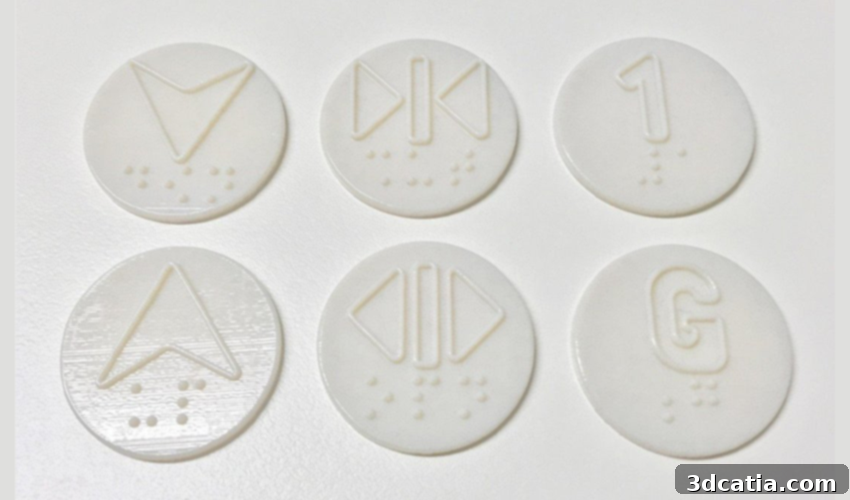
Revolutionary 3D Printed Antiviral Resin Material by PolyU Fights COVID-19 and Bacteria for Enhanced Public Safety
In a significant stride towards creating safer public environments, a dedicated team of scientists at Hong Kong Polytechnic University (PolyU) has successfully developed a pioneering 3D printable antiviral material. This groundbreaking innovation, the culmination of over a year of intensive research and development, promises to be a formidable weapon against persistent health threats. Researchers assert that this novel material possesses the capability to effectively combat various strains of Covid-19, irrespective of their variant, as well as a broad spectrum of other harmful bacteria. While this project undoubtedly marks a compelling advancement, it is important to acknowledge that the concept of antiviral materials in additive manufacturing is not entirely new. For instance, in February of the preceding year, the AMFM (Additive Manufacturing Functional Materials) research group also unveiled their own 3D printable antiviral material. However, PolyU’s creation distinguishes itself notably; unlike previous iterations, which often relied on metallic compositions for their antimicrobial properties, PolyU’s material ingeniously incorporates a resin base, opening up new avenues for versatility and application in the realm of 3D printing.
The ambitious research initiative was skillfully spearheaded by Associate Professor Lo Kwan-Yu, an esteemed researcher from PolyU’s Institute of Textiles and Clothing. Under his expert guidance, the team meticulously engineered and tested the material, yielding impressive results that underscore its potential efficacy. Professor Lo Kwan-Yu proudly shared the quantitative outcomes of their rigorous laboratory evaluations, stating, “According to laboratory tests, 70 percent of coronavirus can be eliminated within a remarkably short period of two minutes, demonstrating rapid action. Furthermore, over 90 percent of the virus can be effectively killed after just 10 minutes of contact. Crucially, our findings indicate that all viruses and bacteria present on a treated surface can be basically terminated within a mere 20 minutes.” This rapid and comprehensive pathogen eradication capability positions the material as a crucial tool for immediate and ongoing disinfection. To validate its performance in real-world scenarios, the scientists embarked on an extensive experimental phase. They strategically manufactured common high-touch surfaces, including protective guards for toilet door handles and Braille elevator buttons, integrating the new antiviral material into these components. These specially fabricated parts were then deployed in various public places throughout Hong Kong. After an entire year of continuous use and exposure in these high-traffic environments, subsequent analysis revealed no detectable traces of the coronavirus or other harmful bacteria on any of the tested parts. This irrefutable evidence serves as a powerful testament to the Hong Kong researchers’ success in developing an antiviral material that is not only highly effective but also demonstrates exceptional long-term potency and durability in preventing pathogen transmission.
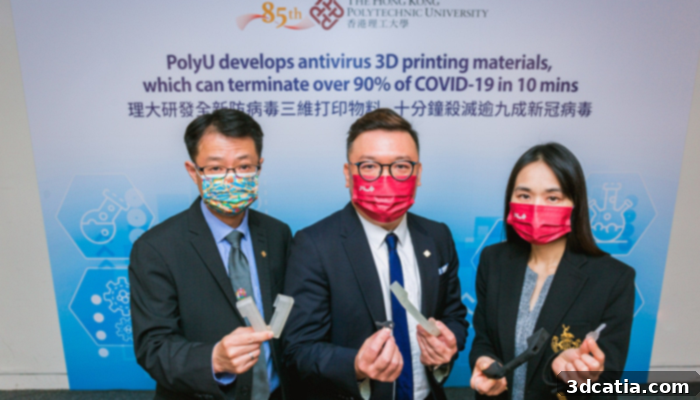
Lo Kwan-Yu (middle) and other team members showing parts designed from the antiviral material (photo credits: PolyU)
Innovative Design: Embedding Antiviral Agents for Superior Durability and Performance
A Material Tailored for Widespread Use in Public Institutions
The conceptualization and creation of PolyU’s groundbreaking antiviral material involved a sophisticated approach to integrating protective elements directly into the core structure. To design this highly effective material, the researchers meticulously incorporated potent antiviral agents into a resin matrix, which is renowned as one of the most versatile and popular materials in the realm of 3D printing. This method represents a significant departure from conventional antiviral or antibacterial coatings. In many existing solutions, active agents are typically applied as a superficial layer on the surface of a material. This surface-coating approach, while effective initially, often suffers from reduced performance over time due to wear, abrasion, and the corrosive effects of frequent cleaning agents. PolyU’s innovation addresses this fundamental limitation by embedding the antiviral agents deep within the material itself. This ensures that the protective properties are intrinsically part of the material’s composition, rendering them highly resistant to degradation from environmental factors, physical contact, and routine sanitization processes. As a result, the antiviral performance remains robust and consistent throughout the material’s lifespan, offering continuous and reliable protection.
Furthermore, the integration of this advanced material with additive manufacturing technology – commonly known as 3D printing – unlocks unparalleled production capabilities. The project members emphatically explain that, through the inherent flexibility and precision of additive manufacturing, they were able to produce parts of highly complex and varied shapes. This adaptability allows for the creation of customized components specifically designed to meet diverse functional and aesthetic needs across numerous applications. The ability to prototype rapidly and scale production efficiently means that PolyU’s material is not just a laboratory success but a practical solution for large-scale deployment. Recognizing its immense potential for widespread impact on public health, PolyU’s antiviral material is primarily intended for extensive use in public facilities. These are environments characterized by high foot traffic and frequent human contact, where the risk of pathogen transmission is considerably elevated. In the immediate future, within the coming months, the dedicated team of scientists plans to embark on a large-scale manufacturing initiative. Their initial focus will be on producing a significant volume of door handle covers for installation in over 100 buildings situated across Hong Kong. This ambitious rollout is merely the beginning of their vision, as the team harbors broader aspirations to eventually equip a wider array of critical public infrastructure. This includes integrating their antiviral solutions into educational institutions like schools, enhancing hygiene standards in public transportation networks (such as buses, trains, and subways), and fortifying healthcare facilities where infection control is paramount, thereby establishing a new benchmark for public safety and hygiene.
Beyond its remarkable efficacy and adaptability, the researchers’ innovation is also poised to make a significant impact due to its compelling economic advantages. Currently patent-pending, a status that safeguards its intellectual property and paves the way for commercialization, the material is notable for its remarkably low production cost. To illustrate this affordability, consider the cost of manufacturing a single elevator button from this advanced antiviral material: it would be approximately $2.5. This low unit cost is a critical factor, as it dramatically lowers the barrier to widespread adoption, particularly for public sector entities and institutions operating within tight budgetary constraints. In a global landscape where many countries continue to grapple with the profound and lingering effects of Covid-19, and the constant threat of new variants and other infectious diseases persists, PolyU’s antiviral material could swiftly transition from a novel invention to an indispensable tool. Its inherent properties – encompassing rapid and long-term pathogen termination, coupled with the unparalleled design flexibility offered by 3D printing, and its cost-effectiveness – collectively position it as a truly transformative solution for public health. This innovation holds the promise of not only enhancing hygiene but also restoring public confidence in shared spaces. For those eager to delve deeper into the technical specifics and broader implications of this groundbreaking development, more comprehensive information is readily available HERE.
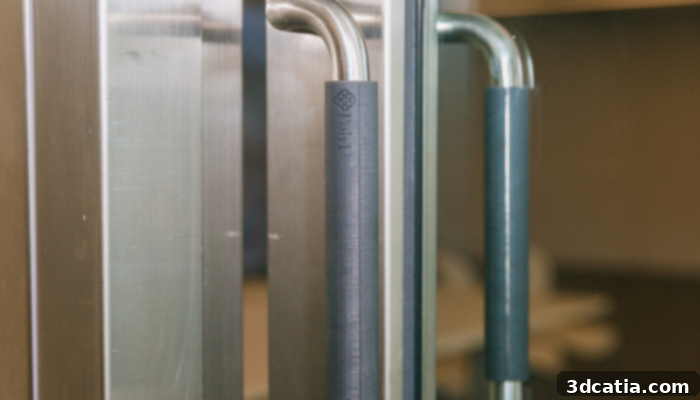
A door handle made from the antiviral materia (photo credits: PolyU)
What are your thoughts on this innovative antiviral material developed by the Hong Kong Polytechnic University? Do you envision its widespread adoption as a critical step in enhancing public health and safety across various sectors? We encourage you to share your perspectives and insights in a comment below or engage with us on our Linkedin, Facebook, and Twitter pages! To stay informed about the latest advancements and breaking news in the exciting world of 3D printing, don’t forget to sign up for our free weekly Newsletter here, delivering the most relevant updates straight to your inbox! You can also find all our comprehensive videos and demonstrations on our YouTube channel, offering visual insights into the future of additive manufacturing.
*Cover Photo Credits: The Hong Kong Polytechnic University