
Revolutionizing Sustainable 3D Printing: Scientists Transform Spoiled Milk into Eco-Friendly Filaments
In a groundbreaking development that promises to reshape the landscape of sustainable manufacturing, two visionary professors at the University of Wisconsin-Platteville have unveiled a revolutionary technique. This innovation seamlessly merges the realms of agriculture with advanced additive manufacturing, presenting a novel solution to a long-standing environmental and economic challenge. Their pioneering work involves transforming what was once considered agricultural waste—spoiled milk—into an eco-friendly, high-performance material for 3D printing. This method, recently granted a patent, leverages the inherent properties of milk proteins, specifically casein and whey, to engineer new sustainable filaments. The implications are vast, offering a dual benefit: a significant reduction in plastic waste and the opening of lucrative new revenue streams for American dairy farmers.
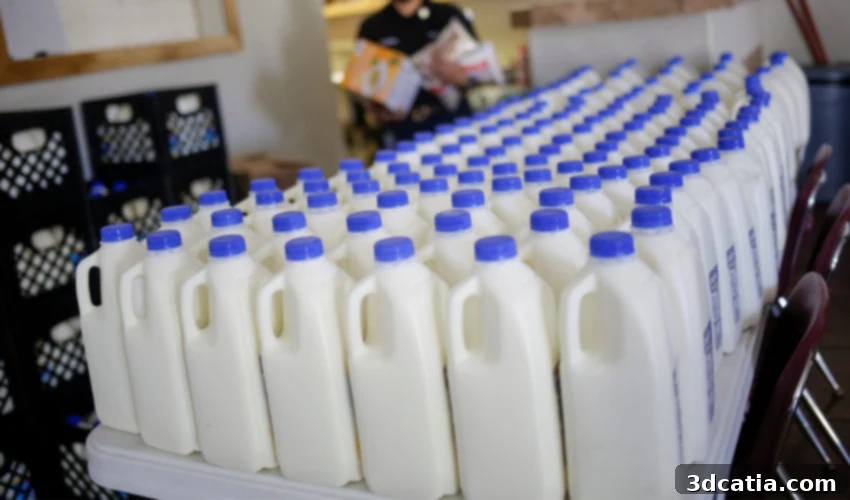
This ambitious project didn’t emerge in a vacuum; it was born out of necessity and ingenuity during a period of unprecedented crisis for the dairy industry. The onset of the COVID-19 pandemic triggered severe supply chain disruptions, leading to a massive surplus of milk. Faced with limited storage and processing capacities, farmers across the nation were forced to dump millions of gallons of milk, resulting in substantial financial losses and emotional distress. However, where many saw only waste and despair, Dr. John Obielodan and Dr. Joseph Wu recognized an extraordinary opportunity. Their keen scientific insight led them to ponder how the rich protein content of this surplus milk could be repurposed.
From Dairy Dilemma to 3D Printing Breakthrough: The Genesis of Innovation
The initial focus of Dr. Obielodan and Dr. Wu’s research was on efficiently extracting the valuable proteins from spoiled milk. This was followed by a meticulous process of incorporating these proteins with various polymer blends commonly utilized in 3D printing. The journey was not without its challenges, requiring years of dedicated experimentation, rigorous testing, and iterative refinement. Through perseverance, the team successfully developed a unique biocomposite material. This innovative material not only demonstrated remarkable strength and flexibility but also proved suitable for a wide array of high-performance additive manufacturing applications. The success of their research marks a pivotal moment, transforming a liability into a valuable asset and offering a sustainable pathway forward for both the dairy and manufacturing sectors.
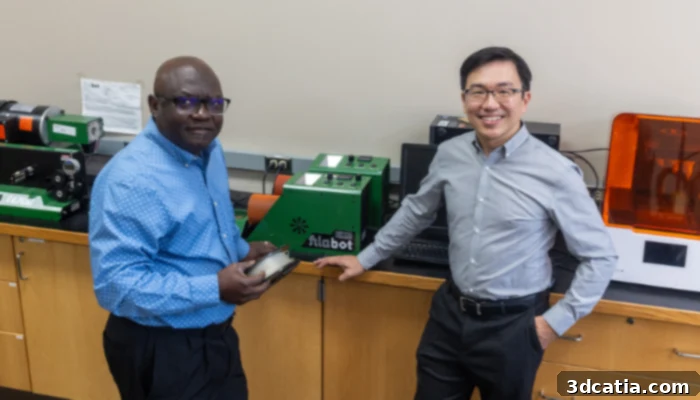
Dr. John Obielodan (left) and Dr. Joseph Wu (right) stand in their lab after announcing the new patented material. (Photo Credit: University of Wisconsin-Platteville)
The Science of Sustainability: Optimizing Milk-Based Biocomposites
The core of the research involved a comprehensive testing phase to determine which milk proteins exhibited the most optimal performance when combined with existing 3D printing polymers. This intricate process required a deep understanding of material science and chemical engineering principles. The project benefited immensely from interdisciplinary collaboration, with students from the university’s chemistry and mechanical engineering departments playing crucial roles. These students were instrumental in purifying the extracted proteins and meticulously adjusting various formulations. Their efforts were key to optimizing both the inherent strength and the printability of the new material, ensuring it met the demanding standards required for industrial and consumer applications.
The culmination of this dedicated effort is a unique polymer that excels in performance while also boasting a crucial environmental advantage: it is fully biodegradable. This characteristic positions the milk-based filament as a highly attractive alternative to the petroleum-based plastics that currently dominate the manufacturing industry. The ecological benefits are profound, as the degradation of milk-based plastics will significantly reduce the persistent environmental pollution associated with conventional plastics, fostering a more sustainable lifecycle for manufactured goods.
Wisconsin’s Dairy Legacy Fuels Green Technology Advancement
This innovation is deeply rooted in Wisconsin’s rich and prominent role within the American dairy industry. The state is not merely a major producer; it is a global leader in dairy farming. The Wisconsin state government proudly reported that the state produced nearly 32.4 billion pounds of milk in 2024 alone, marking an increase of over 0.7% from the previous year. This vast scale of production underscores both the economic importance of dairy to Wisconsin and the potential magnitude of agricultural waste if not properly managed. By ingeniously repurposing surplus milk proteins, this project exemplifies a transformative approach, converting what would otherwise be agricultural waste into a valuable manufacturing asset.
This research represents a powerful model for circular economy thinking, a paradigm where materials are continually reused and repurposed to minimize environmental impact and maximize resource efficiency. The work directly addresses the challenge of food waste, offering a tangible solution that aligns perfectly with broader sustainability goals. Furthermore, this innovative research aligns heavily with Wisconsin’s strategic objective of supporting its vital local farmers while simultaneously advancing green technology and fostering environmental stewardship. Crucially, funding from the government-sponsored Dairy Innovation Hub program provided the essential financial backing, proving instrumental in helping the researchers translate their pioneering ideas from abstract concepts in the lab to a patented, real-world material with significant commercial and environmental potential.
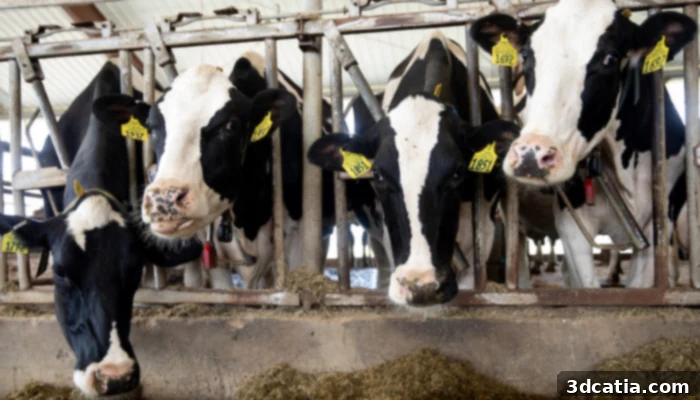
According to the USDA National Agricultural Statistics Service, over 56.7 billion pounds of milk are produced in the United States. (Photo Credit: University of Wisconsin-Platteville)
Beyond Filaments: Paving the Way for a New Era of Sustainable Plastics
Looking towards the future, the potential applications of this remarkable technology extend far beyond the immediate realm of 3D printing filaments. Early research and theoretical projections suggest that this innovative approach could be leveraged to produce a wide array of other sustainable plastic products. Imagine a future where everything from robust automotive components to everyday consumer goods, packaging materials, and even certain medical devices, could be manufactured using eco-friendly, biodegradable plastics derived from milk proteins. This prospect signifies a radical shift away from our current reliance on finite, environmentally damaging fossil fuel-based plastics. By successfully merging the advanced principles of additive manufacturing with the traditionally separate domain of the dairy industry, this project powerfully demonstrates how unexpected interdisciplinary connections can often lead to the most impactful and transformative innovations, opening up entirely new markets for sustainable materials.
This type of pioneering research also serves as a poignant reminder that the future of cutting-edge 3D printing materials may not exclusively originate from high-tech research labs in metropolitan centers. Instead, revolutionary breakthroughs can emerge from more traditional, often overlooked sectors such as farms and local industries scattered across the United States. It highlights the vast untapped potential in agricultural byproducts and waste streams. In Wisconsin, a state synonymous with dairy production, a humble glass of milk could very well be just as likely to end up as a stylish phone case, a durable machine part, or critical packaging material, as it is to be poured over breakfast cereal. This vision paints a compelling picture of a circular economy, where every resource, even those traditionally discarded, finds a new purpose, contributing to a greener, more sustainable industrial landscape.
The Promise of a Greener Future: Economic and Environmental Impact
The implications of this breakthrough are multifaceted, promising significant economic and environmental benefits. For dairy farmers, it introduces an innovative solution to mitigate the financial losses associated with milk surplus and spoilage, transforming a cost center into a potential new revenue stream. Environmentally, the development of biodegradable milk-based plastics offers a powerful weapon against plastic pollution, moving us closer to a world where products do not linger in landfills for centuries. This initiative champions the principles of a circular economy, emphasizing resource efficiency and waste reduction. Moreover, it encourages further investment in green technology and sustainable manufacturing practices, potentially creating new jobs and fostering a more resilient, environmentally conscious industrial ecosystem. The University of Wisconsin-Platteville’s achievement stands as a testament to human ingenuity, demonstrating that with creative thinking and dedicated research, waste can be reinvented as a valuable resource, paving the way for a truly sustainable future in manufacturing.
What are your thoughts on this recent development? Would you ever try a 3D printed product made from milk? Let us know in a comment below or on our LinkedIn or Facebook pages! Plus, don’t forget to sign up for our free weekly Newsletter to get the latest 3D printing news straight to your inbox. You can also find all our videos on our YouTube channel.
*Cover Photo Credit: Reuters