
Pioneering a Multiplanetary Future: Relativity Space and Impulse Space Forge First Commercial Mars Mission with 3D Printing
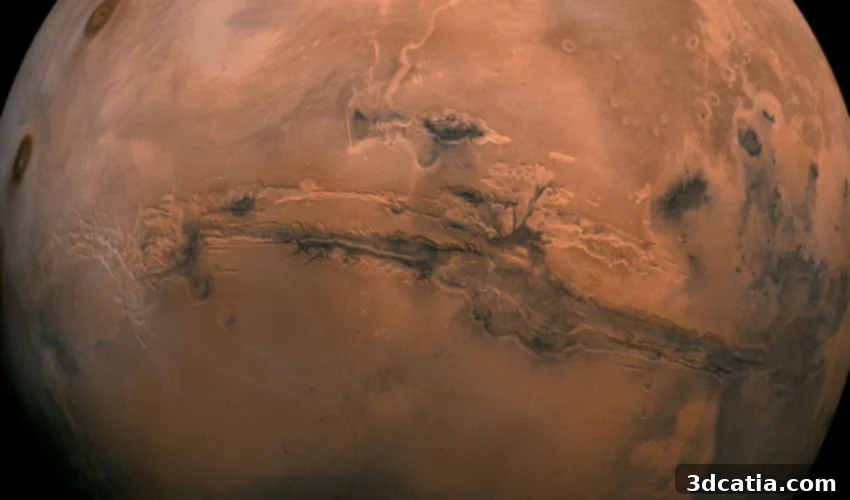
If you’ve been following the latest advancements in space exploration, you’ll know that additive manufacturing, commonly known as 3D printing, is playing an increasingly vital role in the aerospace sector, particularly in space travel. This transformative technology has already found applications in critical missions to both Mars and the Moon, revolutionizing how spacecraft and components are designed and produced. Now, a groundbreaking announcement adds another monumental achievement to this list: Impulse Space and Relativity Space have partnered to launch the first-ever commercial mission to Mars. This ambitious endeavor will see Relativity’s groundbreaking 3D-printed launch vehicle, Terran R, delivering Impulse’s advanced Mars Cruise Vehicle and Mars Lander to the Red Planet. Both companies express a shared vision that this collaboration will significantly accelerate humanity’s journey toward a sustainable multiplanetary existence, pushing the boundaries of what is commercially achievable in deep space.
The Trailblazers: Relativity Space and the Fully 3D Printed Rocket
Relativity Space stands at the forefront of companies leveraging additive manufacturing for the advancement of space travel. Their innovative approach centers on the belief that 3D printing can unlock unprecedented efficiencies and capabilities in rocket production. The company is most renowned for its ambitious creation, the Terran R, which is poised to become the world’s first entirely 3D-printed rocket. This monumental achievement in engineering promises to redefine manufacturing paradigms in the aerospace industry. While the Terran R’s inaugural launch from Cape Canaveral, Florida, is anticipated in 2024, its younger, partially 3D-printed sibling, Terran 1, is already undergoing rigorous testing at the Cape Canaveral Space Force Station. Relativity Space’s core philosophy revolves around utilizing 3D printing to create more innovative, highly optimized, and cost-effective rockets. This strategic adoption of additive manufacturing is expected to drastically reduce production timelines and expenses, ultimately paving the way for significantly lower-cost space travel and making missions like a commercial venture to Mars more feasible than ever before.
The Terran 1 (left) and Terran R (right) side by side (photo credits: Relativity Space)
A Strategic Alliance: Impulse Space and Relativity’s Groundbreaking Mars Mission
The partnership between Impulse Space and Relativity Space represents a logical and powerful synergy between two commercial providers committed to making space travel more accessible and affordable. Under the terms of this historic agreement, Relativity Space will be responsible for launching Impulse Space’s Mars Cruise Vehicle and Mars Lander aboard the Terran R from Cape Canaveral, Florida, with missions scheduled to commence as early as 2024 and continuing through 2029. This long-term collaboration underscores a mutual commitment to long-term space exploration and development. By combining their unique expertise – Relativity’s advanced launch capabilities with Impulse’s in-space transportation systems – the two companies aim to collaboratively overcome the complex challenges inherent in safely landing on Mars. Beyond the initial landing, the mission is designed to enable crucial research and development activities on the Martian surface, laying essential groundwork for humanity’s envisioned multiplanetary future. This endeavor marks the first-ever commercial flight to Mars, a truly monumental leap forward for the entire space industry. While it’s important to acknowledge that commercial launches to the Moon are already being successfully conducted by companies such as SpaceX, this mission to Mars signifies an unprecedented expansion of commercial capabilities into deep space, opening new frontiers for private enterprise and scientific discovery.
The Critical Role of 3D Printing in Achieving a Multiplanetary Future
The aspiration for a multiplanetary existence has captivated humanity since the dawn of spaceflight in the 1960s. From philosophical ponderings about extraterrestrial life to the practicalities of humans inhabiting other planets, the idea of space colonization has consistently fueled our collective imagination. Today, this grand vision is rapidly moving from science fiction to tangible reality, thanks in no small part to the revolutionary capabilities of 3D printing. In this specific mission, Relativity’s innovative 3D-printed rockets are not merely vehicles; they are catalysts, actively paving the way for Impulse Space to conduct comprehensive exploration and potential future settlement on Mars. The ability to rapidly iterate, optimize, and produce complex components through additive manufacturing is fundamentally reshaping the economics and engineering feasibility of such ambitious space endeavors.
Enabling Complex Designs and Optimized Performance for Martian Missions
While traditional manufacturing methods might seem robust and reliable, additive manufacturing offers a distinct set of advantages crucial for the unique demands of deep space travel, particularly missions to Mars. Crafting a rocket capable of safely reaching and landing on Mars requires designs that are far more intricate than those for Earth orbit. These designs often necessitate specialized components, such as an aeroshell, vital for the atmospheric entry and necessary glide stage before touchdown. Such geometrically complex parts are exceedingly difficult and costly to produce using conventional techniques like machining or casting, which often involve extensive tooling and multiple assembly steps. 3D printing, however, thrives on complexity. It allows for the creation of highly optimized structures with internal lattices, organic shapes, and integrated functionalities that would be impossible to achieve otherwise. This capability directly translates into lighter, stronger, and more efficient components, which are paramount for space launches where every gram of weight has a significant cost implication. By consolidating multiple parts into a single 3D-printed unit, the technology also drastically reduces potential failure points and simplifies the overall assembly process, enhancing reliability for critical missions.
Cost Efficiency and Accelerated Development: The Economic Edge of Additive Manufacturing
Beyond design complexity, additive manufacturing brings substantial benefits in terms of cost and speed, two critical factors in the competitive landscape of commercial space travel. Traditional rocket manufacturing is often a time-consuming and expensive process, with long lead times for specialized parts and significant material waste. 3D printing, conversely, is an inherently more efficient process. It operates on an “add-on” principle, depositing material layer by layer only where needed, leading to significantly reduced material waste compared to subtractive methods. This efficiency, combined with the ability to rapidly prototype and iterate designs, dramatically cuts down development cycles. Engineers can move from design concept to physical component in a fraction of the time, allowing for faster testing, modifications, and ultimately, quicker mission readiness. The reduced labor costs associated with highly automated 3D printing processes further contribute to lower overall production expenses. These economic and temporal advantages are not just incremental; they are transformational, making ambitious projects like commercial Mars missions economically viable and sustainable in the long run. By democratizing access to space through lower costs, 3D printing is enabling a new era of exploration driven by commercial innovation.
A Vision for Humanity: CEO Tim Ellis on Mars Colonization
Tim Ellis, Cofounder and CEO of Relativity Space, eloquently captured the profound implications of this partnership: “We believe building a multiplanetary future on Mars is only possible if we inspire dozens to hundreds of companies to work toward a singular goal. This is a monumental challenge, but one that successfully achieved will expand the possibilities for human experience in our lifetime across two planets. With the delivery capabilities of Terran R coupled with Impulse’s in-space transportation, we are bringing humanity one step closer to making Mars a reality. This is a historic, impactful partnership with Tom and the entire Impulse team through the collaboration of two low-cost commercial providers that will establish and expand our presence on Mars.” Ellis’s statement goes beyond a mere business announcement; it articulates a grand vision for humanity’s future, emphasizing collaboration as the cornerstone of achieving multiplanetary existence. His call to inspire “dozens to hundreds of companies” highlights the belief that such a colossal undertaking cannot be the sole domain of a few large entities but requires a diverse ecosystem of innovators. The partnership between Relativity and Impulse, both characterized as “low-cost commercial providers,” exemplifies this new paradigm, demonstrating how agility and efficiency can drive monumental progress. By leveraging the advanced capabilities of the Terran R and Impulse’s specialized in-space transportation, this mission is set to etch a new chapter in space exploration, dramatically expanding the scope of human experience and solidifying our presence beyond Earth.
For more comprehensive details on this pioneering mission, we encourage you to review Impulse Space’s official press release, available HERE.
Join the Conversation: Your Thoughts on Commercial Mars Missions
What are your thoughts on Relativity Space and Impulse Space’s exciting announcement regarding the first commercial mission to Mars? Do you believe 3D printing is truly playing a critical, indispensable role in shaping the future of space travel and our aspirations for a multiplanetary future? We’d love to hear your perspective! Share your insights and opinions in a comment below or join the discussion on our social media platforms: find us on LinkedIn, Facebook, and Twitter! Don’t miss out on the latest advancements and news from the world of additive manufacturing – sign up for our free weekly Newsletter here to get the freshest 3D printing news delivered straight to your inbox. You can also explore all our insightful videos and interviews on our dedicated YouTube channel.