
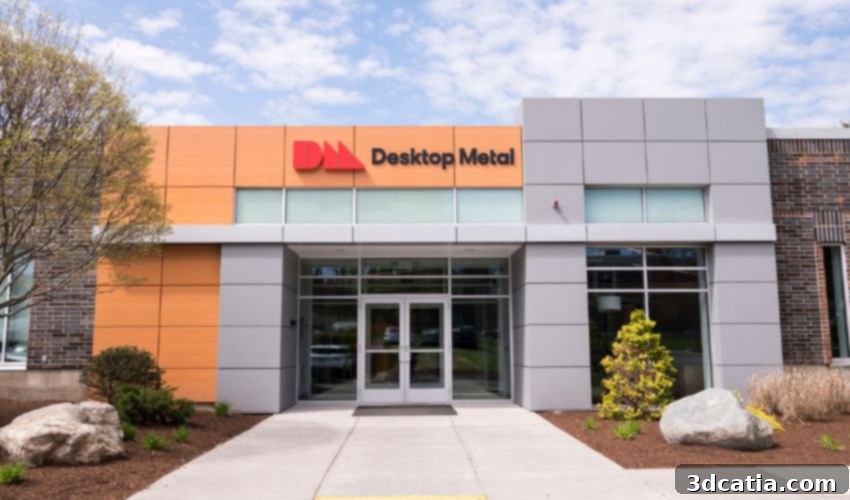
Desktop Metal’s Strategic Restructuring: Navigating Growth, Acquisitions, and the Path to Profitability in Additive Manufacturing
Desktop Metal, a prominent player in the rapidly evolving additive manufacturing sector, has announced a significant corporate restructuring aimed at optimizing its operational efficiency and accelerating its path to profitability. Central to this initiative is a planned reduction of its global workforce by approximately 12%, alongside a series of other aggressive cost optimization measures. This strategic pivot comes in the wake of an ambitious period of rapid expansion, largely fueled by a series of high-profile acquisitions completed in the previous year. The company asserts that these decisive actions, part of its new strategic integration and cost optimization initiative, are projected to yield substantial financial benefits. Management anticipates achieving approximately $40 million in annualized run-rate non-GAAP cost savings, with an even more ambitious target of at least $100 million in aggregate cost savings over the next 24 months. This move signals a critical shift in focus, moving from aggressive expansion through acquisition to a concerted effort towards streamlined operations and sustainable financial performance within the competitive 3D printing industry.
Since going public in 2020 via a special purpose acquisition company (SPAC) merger, Desktop Metal embarked on an accelerated growth trajectory, primarily driven by a series of strategic acquisitions designed to broaden its technological portfolio and market reach. The past year, in particular, witnessed the company significantly expand its footprint by integrating several key players across various segments of the additive manufacturing landscape. These acquisitions included pioneering startups as well as established industry leaders, notably EnvisionTEC (now rebranded as ETEC), renowned for its digital light processing (DLP) technology, and ExOne, a dominant force in binder jetting 3D printing solutions for metal and sand applications. These were not minor transactions; they represented substantial financial investments critical to strengthening Desktop Metal’s position. For instance, the acquisition of EnvisionTEC in January for a reported $300 million brought expertise in photopolymer 3D printing, while the $575 million acquisition of ExOne in August solidified Desktop Metal’s capabilities in industrial-scale metal and sand binder jetting. Despite reporting an impressive 286% revenue growth from the first quarter of 2021, the rapid integration of these diverse entities brought with it significant operational overhead, integration complexities, and investment requirements, ultimately leading to a series of substantial net losses. These included a notable net loss of $240.3 million for the Full Year 2021 and an additional reported net loss of $69.9 million in the first quarter of this year, clearly indicating an urgent need for financial recalibration and operational optimization.
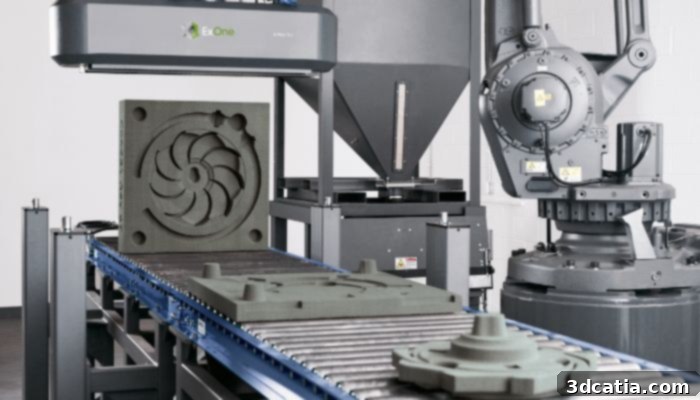
The S-Max Flex sand 3D printer was the first to be released by ExOne after its acquisition by Desktop Metal (photo credits: ExOne)
The accumulation of these financial losses, coupled with the imperative to deliver enhanced shareholder value and achieve sustainable profitability, has directly prompted the company to undertake these comprehensive cost optimization measures, prominently featuring a reduction of their global workforce. Ric Fulop, Desktop Metal’s visionary Founder and CEO, provided crucial insight into the strategic rationale behind these difficult yet necessary decisions. He commented, “In 2021, we demonstrated significant growth, expanding our portfolio of products into new markets and innovative materials. While the acquisitions we completed in 2021 contributed to this growth and to our total market opportunity as we focused initially on harvesting product and go-to-market synergies, they also increased our cost base and global facilities footprint. Today’s announcement of our strategic integration and cost optimization initiative is the result of a comprehensive portfolio and business operations review conducted across all functions at Desktop Metal.” This statement unequivocally highlights the dual challenge of managing rapid, acquisition-led expansion while simultaneously optimizing operational structures for long-term financial health and market competitiveness. The extensive review aimed to meticulously identify inefficiencies, redundancies, and areas ripe for consolidation, ensuring that the company’s ambitious growth trajectory could be sustained more cost-effectively and profitably moving forward.
Unpacking Desktop Metal’s Strategic Cost Optimization Initiative
Desktop Metal has meticulously outlined a series of strategic measures as part of its integration and cost initiative, which it hopes will collectively generate approximately $40 million in annualized run-rate non-GAAP cost savings this year, including a projected $20 million specifically within the second half of 2022. The most immediate and publicly impactful measure is the aforementioned global workforce reduction. The Burlington-based company claims that these layoffs are essential for driving critical cost synergies and achieving significant productivity gains resulting from the complex integration of the various businesses acquired throughout 2021. This move is specifically designed to eliminate overlapping functions, streamline redundant roles, and foster a more agile and efficient operational structure across the newly expanded organization. Desktop Metal estimates that it will incur one-time termination benefits and associated costs amounting to approximately $14.0 million, with the majority expected to be finalized by the end of 2023. While employees in the United States have already received notification of these changes, the company is diligently reviewing international workforce adjustments to ensure full compliance with diverse local labor laws and regulatory requirements, underscoring a commitment to managing this challenging transition responsibly and ethically.
Beyond the difficult decision of workforce reductions, Desktop Metal’s strategic integration initiative extends to other pivotal areas designed to enhance its operational model. The company’s official outlines additional measures centered on a comprehensive “consolidation of facilities, and tighter focus on products and development programs that prioritize near-term revenue and margin expansion across high-growth applications, streamlining the business to yield a more efficient and effective operating model.” This multi-faceted approach signifies a strategic shift towards a more agile, focused, and financially disciplined operational paradigm. It emphasizes ensuring that capital and human resources are strategically allocated to the most promising avenues for immediate financial return and long-term market dominance. This implies a rigorous re-evaluation of its vast product portfolio, emphasizing those solutions that are closer to market readiness, demonstrate clear demand, and possess the highest potential for profitability within the rapidly evolving and increasingly competitive additive manufacturing landscape.
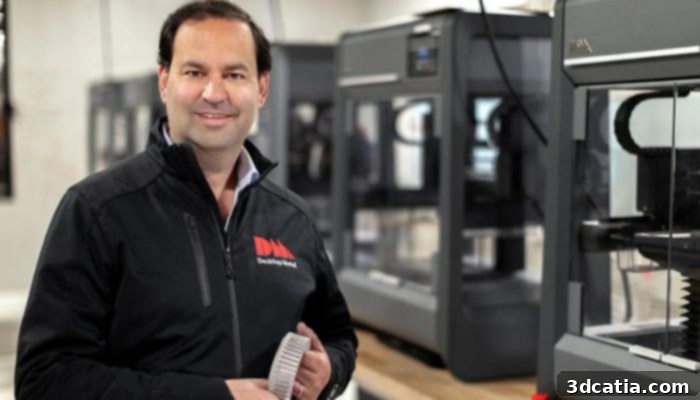
News of the layoffs came directly from CEO and Founder of Desktop Metal, Ric Fulop (photo credits: Desktop Metal)
A cornerstone of this strategic overhaul is a robust drive to consolidate Desktop Metal’s extensive “global facilities footprint” and establish a significantly simplified operational structure. This involves a comprehensive alignment of the operational structures of Desktop Metal and its diverse portfolio of brands under a single, unified corporate umbrella. This consolidation is not merely about optimizing physical locations; it extends to the full integration of core business functions. Key departments such as engineering, manufacturing, marketing, finance, legal, human resources, and customer service will be fully centralized and managed directly under Desktop Metal. The company anticipates that this integrated approach will lead to considerable efficiencies by eliminating redundancies, fostering cross-functional collaboration, and cultivating a more cohesive corporate culture across all entities. Crucially, Desktop Metal asserts that this unified structure will directly benefit the customers of its various acquired brands – including Desktop Health, ETEC, ExOne, Adaptive3D, Aerosint, Aidro, Desktop Labs, Figur, and Forust – by ensuring improved responsiveness, greater consistency, and an overall higher quality of support from a singular, streamlined entity. This holistic integration aims to leverage collective strengths, eliminate operational silos, and ultimately enhance the overall customer experience.
Concluding his remarks on this comprehensive strategic initiative, Ric Fulop reiterated the company’s long-standing commitment to financial prudence and sustained, profitable growth. He stated, “As outlined on prior financial results calls, we have been focused on identifying opportunities to optimize our expense structure while maintaining our growth opportunities. We believe this initiative, which builds on steps we began to take in the second half of 2021 to integrate our teams, positions Desktop Metal to meet our near- and long-term financial commitments and supports our path to profitability.” This emphasizes that the current measures are not merely reactive but rather a culmination of ongoing strategic planning and integration efforts that commenced much earlier. The overarching goal is to fortify Desktop Metal’s financial foundation, ensuring it can not only meet its current obligations but also sustain future innovation, market leadership, and ultimately achieve a strong, profitable future in the competitive additive manufacturing landscape. The company projects that the entire strategic integration and cost optimization initiative will be substantially completed by the end of 2023. Further detailed information regarding these significant corporate changes and their financial implications can be found in Desktop Metal’s official press release HERE.
What do you think of Desktop Metal’s strategic cost optimization measures, including the significant workforce reductions? Share your thoughts and insights in a comment below or engage with us on our LinkedIn, Facebook, and Twitter pages! Don’t miss out on the latest 3D printing news and developments – sign up for our free weekly Newsletter here, delivered straight to your inbox! You can also find all our compelling videos and industry analyses on our YouTube channel.
*Cover Photo Credits: Desktop Metal