
Revolutionizing Footwear: ASICS & Dassault Systèmes Pioneer 3D Printed Customization for Athletes
Amidst the excitement of the Olympic Games, where athletes push the boundaries of human performance, leading sportswear innovator ASICS has unveiled a groundbreaking partnership with French software manufacturing giant Dassault Systèmes. This strategic alliance marks a pivotal moment in the evolution of athletic footwear technology and customization, leveraging cutting-edge 3D printing to deliver unprecedented personalization and drive more sustainable production methods. As the world witnesses athletes striving for gold, ASICS and Dassault Systèmes are simultaneously setting new industry standards, showcasing a holistic approach that prioritizes individual athlete needs while championing eco-conscious manufacturing.
The Power of Partnership: Virtual Twins and Personalized Performance
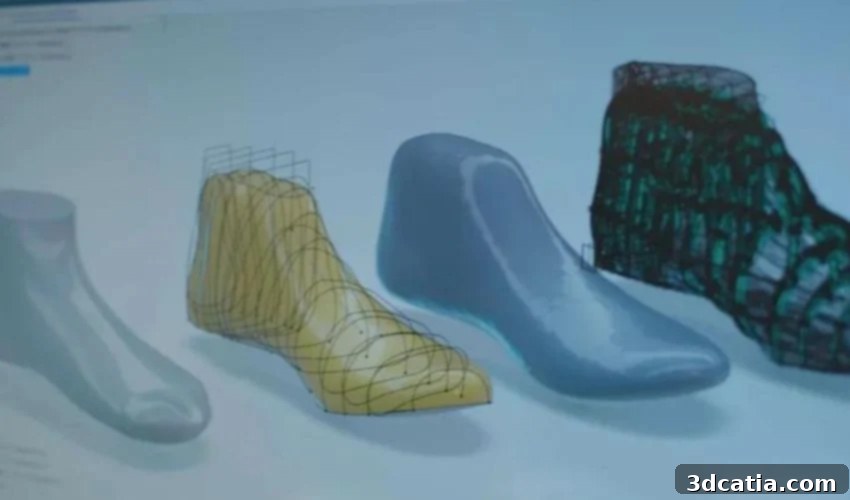
The heart of this transformative collaboration beats within the newly established ASICS Personalization Studio in Paris. This state-of-the-art facility serves as a crucible for innovation, where ASICS’ profound understanding of biomechanics, athletic performance, and footwear design converges with Dassault Systèmes’ unparalleled expertise in modeling and simulation. At the core of this technological synergy are the powerful 3DEXPERIENCE platform and Dassault Systèmes’ revolutionary Virtual Twin technology. These sophisticated tools empower ASICS to transcend traditional design limitations, creating a precise digital replica—a virtual twin—of both the athlete’s foot and the custom sockliner. This immersive virtual environment allows for extensive testing, optimization, and refinement before any physical material is even utilized, ensuring unmatched precision and peak performance from the outset.
Pascal Daloz, CEO of Dassault Systèmes, eloquently articulated the shared vision driving this partnership: “We share ASICS’ commitment to innovations that improve health and well-being. Our partnership reflects this by demonstrating a holistic approach to manufacturing that prioritizes the consumer experience. It also shows how the virtual world is catalyzing the 21st century economy. Through their foundation in science, our virtual twins enable industry to not only improve the performance and the experience of products but to advance more sustainable business models.” His statement underscores the profound philosophical alignment between the two companies: a dedication to user-centric innovation, sustainability, and leveraging digital transformation to shape the future of manufacturing. The Virtual Twin technology, in particular, stands out as a game-changer, offering an unprecedented ability to simulate and predict real-world performance and user experience with remarkable accuracy, fundamentally altering the product development lifecycle and opening new avenues for product integrity and consumer satisfaction.
Precision Customization: From Foot Scan to 3D Printed Sockliner
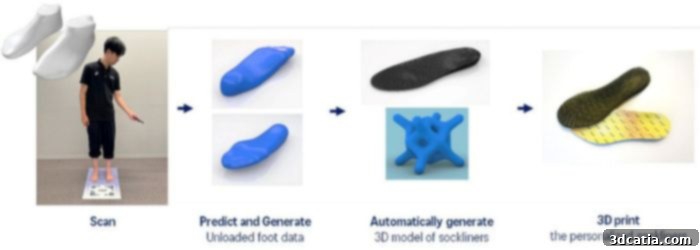
The 3D foot scan process (photo credits: ASICS and Dassault Systèmes)
The journey to a perfectly customized sockliner begins with a meticulous 3D foot scan. This advanced scanning process captures the unique anatomical contours and pressure points of an individual’s foot with incredible precision, generating a comprehensive digital data set. Unlike generic, mass-produced insoles, this data forms the immutable blueprint for a truly personalized fit, addressing the subtle nuances of each athlete’s biomechanics, arch type, and gait cycle. This detailed digital representation ensures that every curve and contour of the foot is accounted for, eliminating the guesswork from traditional fitting methods.
Once the precise foot shape data is acquired, it is fed into Dassault Systèmes’ sophisticated design and simulation software, managed within the integrated 3DEXPERIENCE platform. Here, expert engineers can precisely design a sockliner that conforms perfectly to the athlete’s foot, optimizing for support, cushioning, and breathability. The magic then transitions to additive manufacturing: the personalized sockliner is meticulously 3D printed layer by layer, typically utilizing a high-performance, flexible material engineered for athletic applications. A key innovation in this process is the creation of an intricate grid structure within the sockliner. This lattice-like internal design is not merely aesthetic; it is specifically engineered for optimal functionality, ensuring exceptional breathability by allowing constant air circulation to keep the foot cool and dry, and providing a unique combination of lightweight cushioning and targeted support.
Crucially, the degree of softness, firmness, and overall support can be individually adapted to the customer’s specific needs, preferences, and even their chosen sport or activity. As the two pioneering companies explained: “The exact level of softness can be varied for any part of the foot, which aids physical recovery by reducing strain, while also improving performance.” This granular control over material properties and structural design means that different zones of the sockliner can be engineered to offer varying levels of cushioning or firmness—for example, softer in areas prone to high pressure or impact, and firmer where more stability and energy return are required. For athletes, this translates into a multitude of benefits: significantly enhanced shock absorption, reduced impact on joints, improved energy transfer, and ultimately, a critical contribution to both accelerated physical recovery by minimizing strain and optimizing on-field or track performance. This unparalleled level of tailor-made support can be a decisive factor in preventing injuries, extending an athlete’s career, and unlocking their full potential.
Sustainability at the Core of Innovation: A Greener Step Forward
Beyond the immediate benefits of personalization and performance enhancement, this partnership champions a profound commitment to environmental sustainability. The adoption of 3D printing technology for these custom sockliners is a pivotal step towards drastically reducing the ecological footprint of footwear manufacturing. Traditional shoe production is notoriously resource-intensive, often generating significant waste through material off-cuts and complex global supply chains. However, the additive nature of 3D printing fundamentally alters this paradigm, offering a more responsible and efficient manufacturing pathway.
Pascal Daloz highlighted a truly staggering environmental improvement resulting from this approach: “The typical production of a sports shoe emits 3kg of CO2. 3D printing reduces CO2 emissions to 900 grams.” This substantial 70% reduction in carbon emissions per product is a powerful testament to the green potential of additive manufacturing. This remarkable efficiency is achieved through several key mechanisms. Firstly, 3D printing is an inherently “additive” process, meaning it builds up an object layer by layer, using only the precise amount of material absolutely necessary for the final product. This dramatically minimizes waste compared to traditional “subtractive” manufacturing methods, where components are often cut from larger sheets or blocks, inevitably resulting in significant off-cuts and scrap material that is discarded. The material losses that are an unavoidable byproduct of conventional cutting and stitching processes are virtually eliminated, leading to more efficient resource utilization and a reduction in raw material consumption.
Secondly, the capability to produce these customized components locally is a transformative game-changer for supply chains. Rather than relying on complex global manufacturing networks that involve shipping raw materials, components, and finished products across continents, ASICS can eventually establish regional Personalization Studios. This localized manufacturing strategy drastically reduces transportation distances, consequently lowering fuel consumption, logistics costs, and associated greenhouse gas emissions. This shift not only makes the production process greener but also offers greater supply chain resilience, faster delivery to the end consumer, and the potential to react more quickly to market demands. By seamlessly integrating sustainability into the core of their innovation, ASICS and Dassault Systèmes are not just creating better products; they are actively paving the way for a more responsible, environmentally conscious, and efficient future for the entire footwear industry.
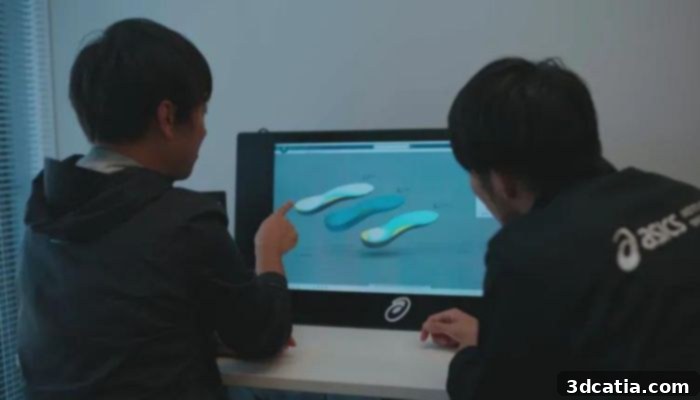
Photo Credits: ASICS
The Road Ahead: Scaling Innovation and Impact
The current focus on the ASICS Personalization Studio in Paris represents just the initial phase of this ambitious undertaking. ASICS has clearly articulated ambitious plans to scale this innovative approach, with production slated to be relocated to Japan starting in 2025. This strategic move signifies a broader intent: to significantly expand manufacturing capabilities not only for these highly specialized sockliners but also to produce custom insoles for a wider array of ASICS shoe models across its diverse product portfolio. This indicates a clear vision from ASICS to integrate personalized 3D printing across its entire range, making high-performance customization accessible to a much larger segment of its customer base, from elite professional athletes striving for Olympic glory to everyday fitness enthusiasts seeking superior comfort and injury prevention.
Before this large-scale rollout and relocation, ASICS is committed to conducting thorough operational tests and comprehensive trial runs. This meticulous approach ensures that the sophisticated technology, advanced materials, and precise production processes are fully optimized for unwavering quality, consistent performance, and maximum efficiency before wider implementation. The successful integration of such advanced manufacturing techniques into a global supply chain demands careful validation and rigorous testing, guaranteeing that the promises of enhanced performance, unparalleled comfort, and environmental sustainability are consistently met across all products. This forward-looking strategy positions ASICS at the absolute forefront of the footwear industry, ready to embrace the era of true mass customization and truly bespoke athletic gear.
The partnership with Dassault Systèmes is not merely about developing a single product; it’s about establishing a new paradigm for design, manufacturing, and consumer engagement that will undoubtedly influence the entire sports and apparel sector for years to come. By leading with innovation and sustainability, ASICS is demonstrating its dedication to leveraging cutting-edge technology to serve its customers better, enhance athletic potential, and contribute positively to the health of the planet. Find out more about the customized insoles HERE.
This collaboration represents a significant milestone in sportswear innovation, blending advanced digital design with additive manufacturing to create products that are not only superior in performance but also responsible in their environmental impact. The ability to precisely tailor footwear components to an individual’s unique physiological needs opens up unprecedented opportunities for athletes to optimize their training, compete at their best, and recover more effectively. As ASICS continues its trial runs and prepares for expanded production in Japan, the industry will be closely watching how this pioneering partnership reshapes the future of custom, sustainable athletic footwear.
What do you think of this transformative partnership between ASICS and Dassault Systèmes for 3D printed shoe components? Let us know your thoughts in a comment below or join the conversation on our LinkedIn, Facebook, and Twitter pages! Don’t forget to sign up for our free weekly newsletter here for the latest 3D printing news straight to your inbox! You can also find all our videos on our YouTube channel.
*Cover Photo Credits: ASICS and Dassault Systèmes