

L-PBF vs DED: A Comprehensive Comparison of Metal Additive Manufacturing Technologies
Metal, alongside plastic, stands as one of the most transformative materials in the realm of additive manufacturing. Its exceptional mechanical and thermal properties make it indispensable for the most demanding industries, powering high-performance applications across aerospace, medical, automotive, and defense sectors. This article delves into a detailed comparison of two prominent metal printing processes: Laser-Powder Bed Fusion (L-PBF) and Directed Energy Deposition (DED). We will meticulously examine the characteristics, most common applications, leading manufacturers, and critical differences and similarities that define each technology, providing a holistic view for anyone seeking to understand these advanced metal fabrication methods.
To set the stage, it’s important to understand that Powder Bed Fusion (PBF) is a broad category encompassing several additive manufacturing processes that utilize a bed of powdered material—be it plastic, ceramic, or metal. Our focus today is specifically on metal PBF. Within this category, energy sources can vary, with systems employing either a laser or an electron beam. A notable example of an electron beam variant is Electron Beam Melting (EBM), a technology pioneered by manufacturer Arcam in 2002. However, for a more direct and focused comparison with DED, we will primarily concentrate on PBF processes that utilize a laser as the primary heat source. This laser-based PBF process is known by several names, reflecting the designations of various manufacturers and research institutions. For instance, DMLS (Direct Metal Laser Sintering), a term patented in 1994 by EOS, a recognized leader in metal 3D printing, is one such designation. The acronym DMLS originates from the German “Direkt Metall Laser Schmelzen,” which translates to Direct Metal Laser Melting. Another widely used term is SLM (Selective Laser Melting), introduced by the Fraunhofer Institute in 1995. These terms, while slightly different in their historical context and specific process nuances, generally refer to the same core technology of selective laser melting within a powder bed.
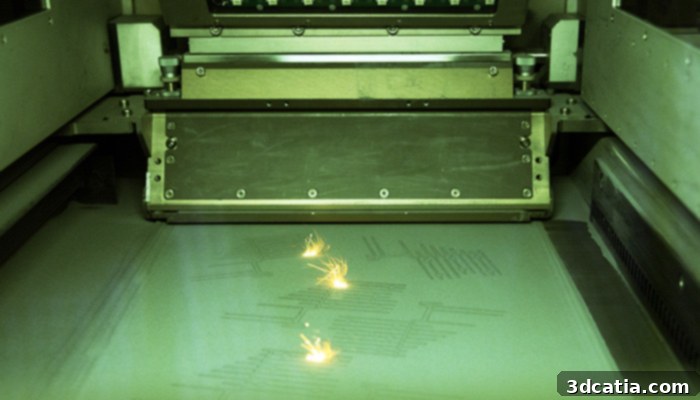
The PBF process relies on a precisely controlled laser to fuse metal powder layer by layer.
In stark contrast, Directed Energy Deposition (DED) represents a more contemporary approach within metal additive manufacturing, especially when compared to the foundational powder bed technologies. While the underlying principles have been recognized for a longer period, its true effectiveness and industrial adoption have significantly accelerated only within the last decade. The DED process is characterized by the direct deposition of material, typically in powder or wire form, which is simultaneously melted by a focused energy source as it is applied onto a substrate or an existing part. This method is particularly renowned for its exceptional capabilities in repairing, adding features to, or coating large metal objects. DED technology exhibits remarkable versatility, accommodating various energy sources such as lasers, plasma arcs, or electron beams. For example, Wire Arc Additive Manufacturing (WAAM), which uses an electric arc as the energy source and wire as the feedstock, falls squarely into the DED category. Given their fundamentally different approaches to material handling and deposition, directly comparing PBF and DED can be challenging, as they often excel in distinct application areas. Therefore, our objective is to elucidate their operational mechanisms, highlight their differentiating factors, and explore how these two powerful technologies can, in certain scenarios, be complementary rather than solely competitive.
How Do Metal L-PBF and DED Technologies Function?
Despite their distinct operational philosophies, both L-PBF and DED share some fundamental initial steps common to nearly all 3D printing processes. Each journey begins with the meticulous creation of a 3D digital model of the desired object, typically accomplished using sophisticated Computer-Aided Design (CAD) software. Following this, specialized “slicer” software digitally dissects the 3D model into thousands of ultra-thin layers, generating the precise instructions that the 3D printer will follow layer by layer to construct the physical object.
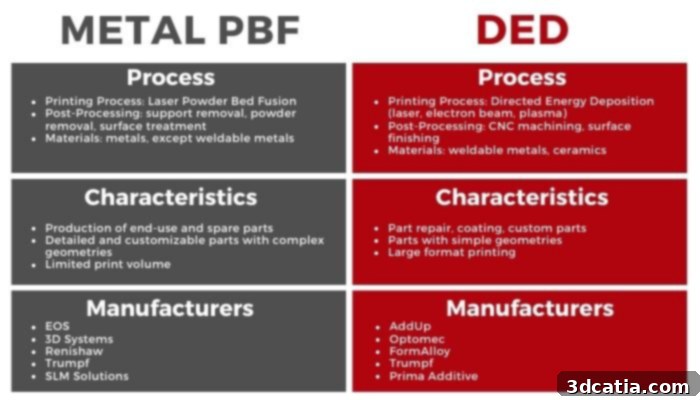
Let’s first detail the PBF process, focusing on laser-based systems (L-PBF). The build chamber is first purged with an inert gas, such as argon or nitrogen, to create an oxygen-free environment. This is crucial for preventing oxidation of reactive metals and achieving optimal material properties. The chamber is then heated to a specific, elevated temperature, which varies depending on the metal alloy being processed (for EBM, this preparation involves creating a vacuum). A precisely controlled roller or blade then spreads a very thin, uniform layer of metal powder across the build plate, which itself is often pre-heated to temperatures around 300-400°C to minimize thermal stresses. A high-powered laser then selectively traces the cross-section of the part for that particular layer, melting and fusing the metal particles together. Once a layer is complete, the build plate precisely descends by one layer thickness, and a fresh layer of powder is spread over the solidified section and the surrounding loose powder. This meticulous process of powder spreading, laser melting, and platform descent is iterated hundreds or thousands of times until the entire three-dimensional part is fully constructed. Once printing is complete, the part must be allowed to cool gradually within the inert atmosphere to prevent warping and internal stresses. Finally, the finished part is removed from the build chamber, and the surrounding loose metal powder, which can often be recycled, is carefully removed. Crucially, almost all PBF parts require support structures, especially for overhanging features and to anchor the part securely to the build plate during printing, preventing distortion and ensuring the final geometry and mechanical properties are achieved. These supports are subsequently removed in post-processing steps.
The DED process, in contrast, can be conceptualized as a hybrid approach that integrates elements of traditional extrusion and powder bed fusion principles, but with a unique direct deposition mechanism. This technology manufactures parts by feeding material, either as fine metal powder or as wire, directly into a focused energy stream—typically a laser, electron beam, or plasma arc. The print head, often mounted on a multi-axis robotic arm, precisely controls the flow of material and the energy source. As the material exits the nozzle, it enters the melt pool created by the energy source, instantly melting and fusing onto a base substrate or an existing component that is being repaired or enhanced. The robotic arm then precisely moves the print head, depositing molten metal bead by bead, layer by layer, in accordance with the pre-designed CAD model. This iterative process allows for the creation of complex geometries or the targeted addition of material onto large surfaces. DED 3D printers are typically industrial-grade machines, demanding specific environmental conditions depending on the energy source chosen. For laser-based DED systems, a completely inert chamber filled with gases like argon is often required, particularly when processing reactive metals like titanium. Achieving the desired ultra-low oxygen levels in these large chambers can be time and gas-intensive. For electron beam DED, the process must occur in a high vacuum environment to prevent the electron beam from interacting with or being scattered by air molecules, which would compromise accuracy and energy transfer. Plasma-based DED, on the other hand, usually operates in an inert argon gas environment, offering a balance between process control and complexity. Regardless of the energy source, real-time monitoring, often at rates exceeding 600 times per second, is critical for ensuring the quality and integrity of the deposited material.
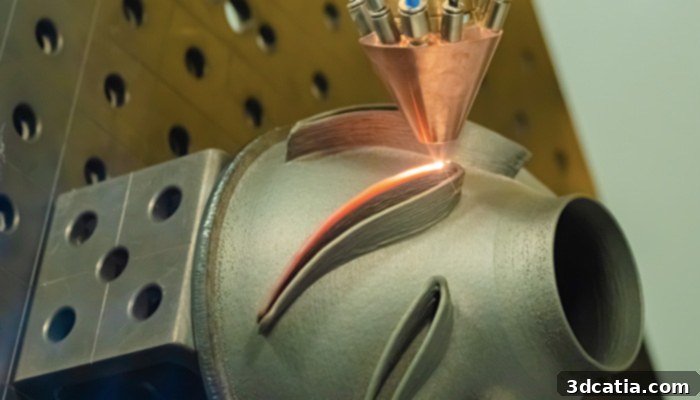
The DED process precisely melts material as it is deposited onto a surface.
Advantages and Limitations of L-PBF and DED
Both metal additive manufacturing technologies offer distinct advantages and face unique limitations, making them suitable for different applications. L-PBF is widely celebrated for its capability to produce final parts with exceptionally high geometric complexity and fine detail, often ready for direct end-use. This contrasts with DED, which, while capable of full part fabrication, is more frequently employed for repairing, coating, or adding custom features to existing large metal components.
One of the paramount advantages of L-PBF is its unparalleled ability to create intricate geometries and internal lattice structures that are impossible with conventional manufacturing methods. When coupled with advanced techniques like topological optimization, L-PBF enables the design and production of significantly lighter metal parts, while maintaining or even improving structural integrity. This weight reduction is a critical factor in industries such as aerospace and automotive, where every gram saved translates into increased fuel efficiency and performance. Furthermore, L-PBF systems achieve remarkable precision through their use of extremely thin layers, often down to 0.02 mm, and a focused laser that works point-by-point. This results in parts with superior surface finish and an exceptional level of detail, albeit at the cost of longer build times.
DED technology, on the other hand, excels where L-PBF typically faces limitations. It is ideally suited for fabricating or repairing large-scale metal parts, often those demanding robust mechanical properties. DED 3D printers commonly feature a nozzle integrated into a multi-axis robotic arm, providing substantial freedom of movement (four or five axes are common) and enabling very large printing volumes. In terms of production speed, DED processes are remarkably fast; material deposition rates can reach up to 5 kg/h, making it one of the quickest additive manufacturing methods for metal. According to Optomec, a leading U.S. 3D printer manufacturer, DED can be up to 10 times faster than PBF for certain applications. This speed, while a significant advantage for throughput, comes with a trade-off in part accuracy. The faster deposition rates typically necessitate thicker layers, ranging between 0.5 to 10 mm, which inherently results in a less refined surface finish and lower geometric resolution compared to L-PBF parts.
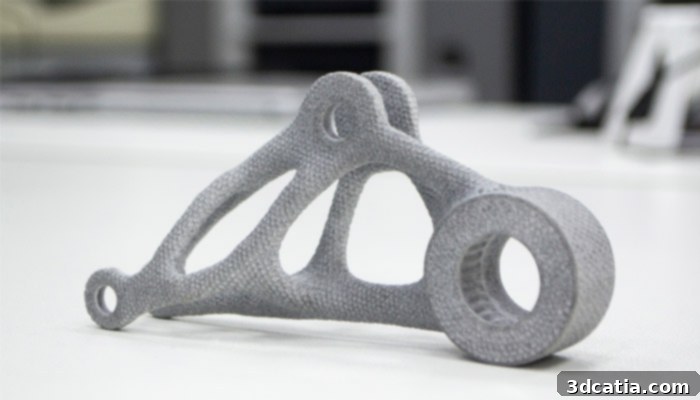
Topology optimization enables the creation of lighter, yet strong, metal parts in additive manufacturing.
Regarding part dimensions, DED unequivocally favors the production of massive components, capable of working on surfaces several meters in size. Powder bed fusion, by its very nature, is constrained by the dimensions of its build plate, with the largest PBF parts typically not exceeding one meter in any dimension. Both technologies, however, contribute positively to environmental sustainability. L-PBF allows for the reuse of unprocessed powder, and new powder can often be mixed with reclaimed material, minimizing waste. DED, while requiring machining for finishing, inherently uses less material during its primary deposition process compared to traditional subtractive manufacturing methods. Thus, both promote a reduction in material waste compared to conventional fabrication techniques.
From a practical and economic standpoint, L-PBF technology is generally not suited for mass production due to its relatively higher cost per part when compared to high-volume manufacturing processes like CNC machining or casting. It finds its niche in small-batch production requiring highly specific, customized, or geometrically complex components, such as patient-specific dental prostheses or bespoke aerospace brackets. The sheer volume of material required to fill the powder bed in L-PBF also contributes significantly to production costs, often surpassing the material costs associated with DED. As for the limitations of DED, its layer thickness and deposition method make it less suitable for producing parts with extremely intricate or fine internal geometries. DED is better employed for parts with simpler, more robust shapes where material volume and deposition rate are paramount. However, the large dimensions of DED components mean that the machines themselves, along with their operational footprint, represent a substantial investment. While the DED process can be less expensive per unit of deposited material than L-PBF, the initial machine acquisition costs are still very high. Finally, both technologies necessitate extensive post-processing steps, which significantly add to the overall cost and lead time, a topic we will explore in greater detail later in this article.
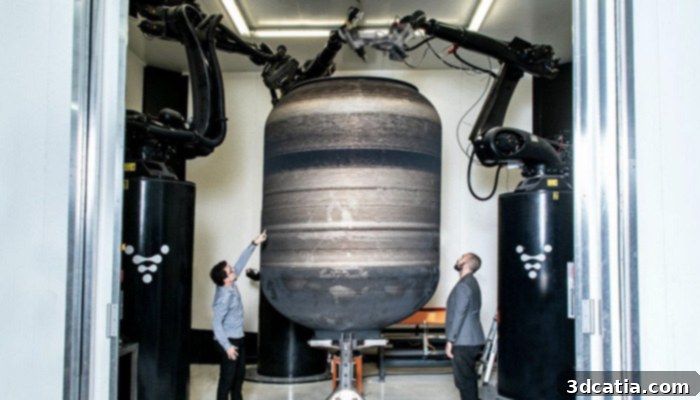
A 3D printed rocket fuel tank manufactured with Relativity Space’s DED technology (photo credits: Relativity Space)
Metal as a Primary Material in L-PBF and DED
The choice and availability of materials exert a profound influence on both L-PBF and DED technologies, often representing the most significant recurring cost for each process. For L-PBF, the entire build chamber must be filled with expensive metal powder to facilitate part fabrication, meaning that a substantial quantity of material is required even for small components. In DED, while the material is only deposited where needed, the production of larger parts naturally demands a greater overall volume of feedstock.
L-PBF generally offers a broad spectrum of compatible metal alloys, providing designers with considerable flexibility. However, certain materials remain challenging or incompatible with the process, such as high carbon steels, which are prone to cracking during rapid cooling, or some high-silicon aluminum alloys that can cause issues with laser absorption and melt pool stability. These limitations can be significant when specific, traditionally welded materials are mandated for an application. Despite these constraints, the L-PBF process successfully employs a wide array of high-performance metals and alloys including various grades of stainless steel, cobalt chrome (renowned for biocompatibility), aluminum (especially critical in the weight-sensitive aerospace and automotive industries), titanium (particularly favored in the medical sector for implants due to its strength and biocompatibility), Inconel (a superalloy valued for high-temperature applications), and copper (prized for its thermal and electrical conductivity). Even precious metals like gold, platinum, and silver can be processed, opening doors to intricate jewelry and luxury goods manufacturing. For DED technology, material options extend to both metals and ceramics; however, our discussion will primarily focus on metallic feedstocks. Ceramics, while technically feasible with DED, are far less common due to their inherent complexity in processing and their compatibility being largely limited to laser-based energy sources.
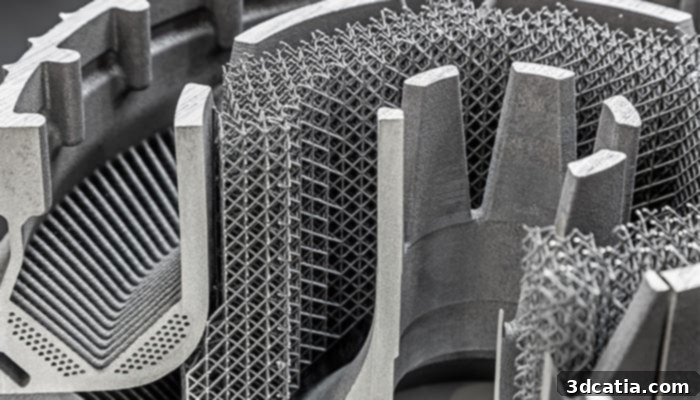
A vast array of metals are compatible with both PBF and DED processes, offering diverse application possibilities.
Many metals, available in either powder or wire form, can also be effectively utilized with DED technology. A key distinction from L-PBF is that DED generally accommodates all weldable materials. This includes critical alloys such as titanium and various titanium alloys (essential for high strength-to-weight ratio applications), Inconel (for extreme temperature and corrosive environments), tantalum, tungsten, niobium (for their refractory properties), stainless steel (for corrosion resistance), and aluminum. The versatility here stems from DED’s direct melting approach, which closely mimics welding processes. A crucial consideration for DED, however, is that the melting temperature of the chosen material must be significantly higher than the ambient chamber temperature. This necessitates precisely controlled and often varied thermal environments for each specific material, ensuring optimal melt pool dynamics and solidification behavior.
Applications for L-PBF and DED Technologies
Both L-PBF and DED technologies have carved out significant niches across a diverse range of demanding industrial sectors. The primary distinctions in their application stem from their fundamental differences in how material is deposited and processed by the energy source, as well as the specific purpose for which each process is best suited. Both are extensively used in high-stakes industries such as aerospace, automotive, medicine, and, in the case of L-PBF, even intricate jewelry manufacturing.
For DED technology, its most prominent applications revolve around the repair, refurbishment, and enhancement of large, high-value components. Within the aerospace sector, for instance, DED is invaluable for repairing worn or damaged turbine propellers, extending their operational lifespan, and restoring critical valves or various tooling. Its ability to add material precisely makes it ideal for restoring fatigued parts without needing to scrap and remanufacture entire assemblies. Furthermore, DED offers unique capabilities for multi-material printing and functionally graded materials, allowing the deposition of different powders or the joining of dissimilar metals. For example, DED can seamlessly weld materials like steel and cast aluminum, a challenging feat with conventional methods, opening possibilities for advanced battery enclosures in electric motors where thermal management is critical. Conversely, L-PBF technology, due to its powder bed nature, does not permit the joining of dissimilar powders within a single build, as they would inevitably mix and become unusable. Despite this, the aerospace industry still heavily leverages L-PBF for its advantages, particularly for the production of highly complex, custom-designed parts, internal lattice structures, or high-performance end-use components that benefit from weight reduction and intricate detailing.
The exceptional precision, fine feature resolution, and high-quality surface finish of L-PBF parts make them particularly well-suited for demanding end-use applications in the automotive industry. Examples include 3D printed components integrated into high-performance vehicles, such as optimized oil separators, structurally enhanced chassis elements, or intricate engine parts designed for improved airflow or thermal efficiency. As previously noted, L-PBF’s ability to process precious metals has also made it a transformative technology in the jewelry and luxury accessory sectors, enabling the creation of intricate designs that were once impossible. For the medical sector, L-PBF offers groundbreaking possibilities for highly detailed, patient-specific implants, such as custom cranial implants perfectly matched to individual patient anatomy, or precisely fitted dental crowns and bridges that boast superior fit and longevity.
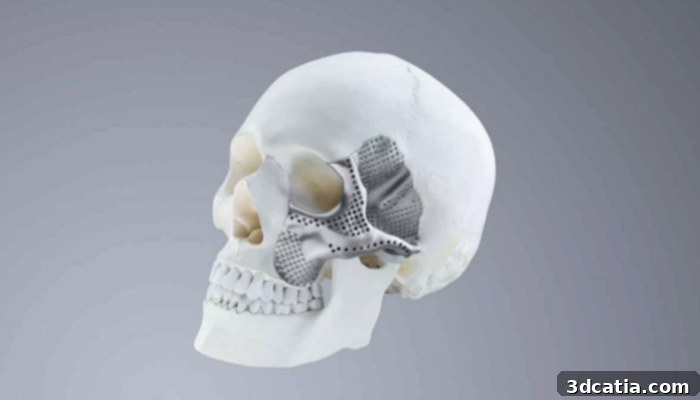
L-PBF technology allows for the precise production of customized medical implants (photo credits: Trumpf)
Mirroring L-PBF in some respects, the DED process also finds critical applications within the medical sector, particularly for producing larger orthopedic implants, robust surgical devices, and durable prostheses. Many metals compatible with DED, such as titanium and stainless steel, are inherently biocompatible, meaning they can be safely implanted into the human body without eliciting adverse immune responses or allergic reactions. Beyond medical uses, material deposition is extensively employed for the protective coating of various industrial components. By applying a durable metal layer, parts can be significantly enhanced in terms of hardness, wear resistance, and improved resistance to corrosion, rust, aggressive chemicals, or harsh weathering, thereby extending their operational lifespan in challenging environments.
Other sectors reaping the benefits of these advanced technologies include the oil and gas industry, where DED can be used to fabricate or repair large pressure vessels and critical infrastructure components. The maritime and defense industries also utilize both processes for producing robust, high-performance components. A particularly compelling aspect of L-PBF and DED is their potential for complementary use. For highly complex parts that demand both intricate internal features and rapid large-scale deposition, these technologies can be combined to create “hybrid” parts. Didier Boisselier, Application and Development Manager for Additive Manufacturing at Irepa Laser, provides an excellent example: Irepa Laser successfully produced a hybrid metal part for the defense sector. This component possessed a high degree of internal geometric complexity that necessitated the precision of L-PBF for the inner structures, while DED technology was strategically employed for the larger, simpler outer sections to significantly accelerate the overall manufacturing process. This innovative approach highlights how combining these technologies can yield optimal results, leveraging the strengths of each.
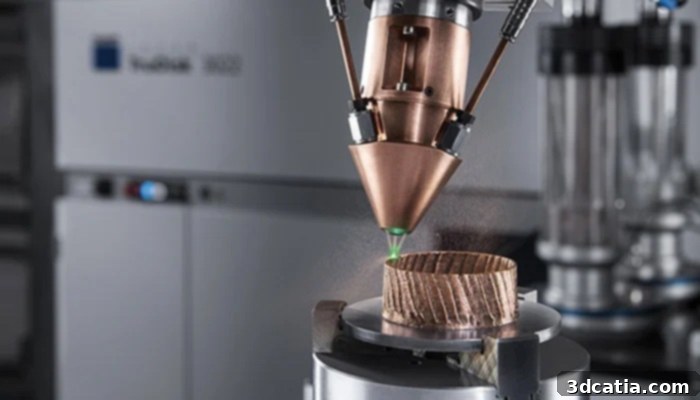
DED is frequently used for parts with simpler geometries or for adding material to existing components (photo credits: Trumpf)
The Different Stages of Post-Processing in Metal AM
While parts manufactured with L-PBF and DED technologies are capable of achieving exceptionally high performance, often utilizing superalloys that can withstand the most rigorous tests, it is equally true that attaining such quality necessitates extensive post-processing steps. These additional stages significantly contribute to the overall cost and lead time of metal additive manufacturing. Although both processes require post-processing, the specific methods and their intensities can differ based on the technology and the desired final properties.
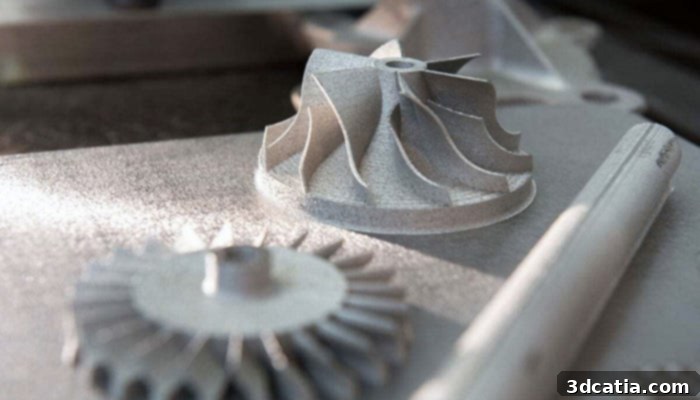
Surface finish, for instance, is a critical consideration. Parts produced via L-PBF often exhibit a granular or rough surface texture due to the nature of the powder bed and selective laser fusion. Consequently, these parts almost always require subsequent surface treatment to achieve the desired smoothness and aesthetic quality, especially for functional surfaces or those requiring specific aerodynamic or biological interfaces. With DED, the direct melting and deposition process, often involving thicker beads of molten metal, typically results in an imperfect and much rougher surface finish. Therefore, a CNC machining step is almost invariably necessary to achieve dimensional accuracy, geometric precision, and the required surface smoothness for DED-fabricated parts.
Furthermore, the rapid heating and cooling cycles inherent in both L-PBF and DED processes often lead to the accumulation of residual internal stresses within the printed metal parts. These stresses can compromise mechanical integrity, causing warping, cracking, or reduced fatigue life. To mitigate these issues and enhance the mechanical properties such as hardness, ductility (elongation), and fatigue strength, heat treatments are indispensable. For L-PBF parts, the initial post-processing steps involve carefully removing the excess, unfused powder from the build chamber, which can often be sieved and reused. Subsequently, the support structures, which are typically robustly attached, must be removed. This can be accomplished through various methods: manually, mechanically (e.g., grinding, cutting), or through specialized techniques like wire Electrical Discharge Machining (EDM) for intricate internal supports. Following support removal, surface finishing processes such as polishing, vibratory finishing, or additional CNC machining can be applied to improve aesthetics and functional performance.
For DED-produced parts, especially large ones, CNC milling is an absolutely essential and often extensive step in the finishing process. This subtractive machining is crucial for achieving the necessary dimensional accuracy, removing excess material, and creating the desired final surface quality. Due to the substantial size of many DED components, this milling process can be both time-consuming and require a significant investment in large-scale machining equipment. Beyond surface finishing, a common heat treatment employed for both technologies is Hot Isostatic Pressing (HIP). HIP involves subjecting the part to high temperatures and high inert gas pressures, which effectively eliminates any residual internal microporosity and fully densifies the material, significantly improving its mechanical properties. Annealing is another vital heat treatment option used to relieve internal stresses, improve ductility, and refine the microstructure of the metal by heating it to a specific temperature and then slowly cooling it. Other surface finishing methods for metal parts include dry electropolishing, various forms of sandblasting or bead blasting, and chemical polishing, each chosen based on the desired outcome and the metal alloy in question.
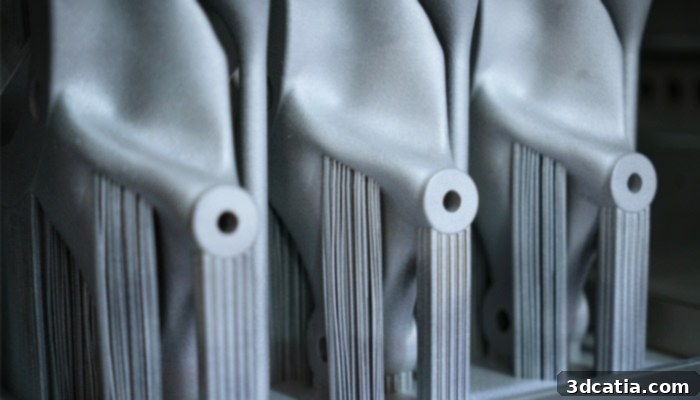
Supports are essential in many metal 3D printing processes and must be carefully removed during post-processing.
It is crucial to emphasize that there is no single, universally applicable post-processing protocol for either DED or L-PBF. The specific sequence and intensity of post-processing steps are highly dependent on numerous factors, including the size and geometry of the part, the specific metal alloy used (e.g., materials like titanium often demand even more specialized and expensive treatments), the intended application, and the stringent performance specifications required by the particular industry (e.g., aerospace versus consumer goods).
Major Manufacturers of L-PBF and DED Systems
The metal additive manufacturing landscape is populated by a diverse array of manufacturers, each contributing to the advancement and accessibility of L-PBF and DED technologies. For laser melting on a powder bed, several key players stand out. EOS, a German company, remains a dominant force and a major player in metal 3D printing, widely recognized as one of the principal manufacturers of DMLS 3D printers, offering a comprehensive portfolio for various industrial applications. Not to be overlooked is 3D Systems, an American pioneer in additive manufacturing, which expanded its footprint in the metal segment by acquiring the French brand Phenix Systems in 2013. Their process has been branded as DMP (Direct Metal Printing). Other prominent companies offering high-quality metal L-PBF printers include the British engineering firm Renishaw, known for its precision systems, and the German manufacturer SLM Solutions, a specialist in Selective Laser Melting machines that enable the production of complex, high-performance parts. This list, while highlighting key innovators, is by no means exhaustive, reflecting a dynamic and competitive market.
In the realm of laser-based DED machines, several manufacturers have established themselves as leaders. AddUp, a joint venture between Michelin and Fives, significantly bolstered its DED capabilities by acquiring BeAM in 2018, positioning itself as a leading provider of DED solutions. Interestingly, AddUp also offers L-PBF solutions, demonstrating versatility across different metal AM processes. The American company Optomec is another major player, renowned for its patented LENS (Laser Engineered Net Shaping) process, which was first brought to market in 1998. Today, Optomec offers no fewer than seven distinct DED solutions, catering to a wide range of industrial needs, from repair to full part fabrication. Other noteworthy manufacturers in the DED space include FormAlloy, known for its innovative multi-material capabilities; DMG Mori, a leading machine tool builder that offers hybrid DED-subtractive manufacturing solutions; InssTek, a South Korean company specializing in DED systems; Relativity Space, which leverages DED for large-scale rocket production; and Meltio, a Spanish firm that claims to offer some of the most cost-effective DED machines on the market, democratizing access to the technology. Furthermore, several established companies offer both L-PBF and DED solutions, providing customers with comprehensive metal additive manufacturing portfolios. Examples include the German industrial giant Trumpf, and the Italian company Prima Additive, with the latter offering advanced features such as double laser or green laser options specifically for highly reflective metals like copper, further expanding material compatibility. The diverse range of manufacturers underscores the ongoing innovation and growing maturity of both L-PBF and DED technologies.
A glimpse at some of the leading manufacturers in metal additive manufacturing (Photo Credits: AMFG)
Pricing Considerations for L-PBF and DED Systems
As previously touched upon, the investment required for both DED and L-PBF 3D printers is substantial, placing these technologies firmly in the industrial equipment category. While both are high-cost solutions, there are notable differences in their price points. Generally speaking, the Directed Energy Deposition process can be considered approximately five times more affordable than Powder Bed Fusion, though providing exact figures is challenging due to the proprietary nature of manufacturers’ pricing and the highly configurable options available. Most manufacturers do not publicly disclose the prices of their products online, and the final cost can fluctuate significantly based on various factors. These include the specific configuration of the 3D printer, whether the buyer opts for integrated post-processing solutions, the inclusion of specialized software, maintenance contracts, and the type of specific materials they intend to process.
Regardless of the specific technology, prospective buyers should anticipate a significant investment. It would be difficult to find any industrial metal additive manufacturing machine in this category for less than $80,000. Many 3D printers, particularly high-end L-PBF systems, can easily ascend towards the $1,000,000 mark or even exceed it. When considering powder bed laser fusion solutions, entry-level industrial systems typically start around $200,000. For instance, the 3D Systems’ DMP Flex 350, a popular L-PBF machine, is estimated to cost around $575,000, while their larger and more advanced DMP Factory 350 can reach prices up to $763,000. These figures illustrate the significant capital expenditure involved in adopting L-PBF technology.
For DED systems, while often presenting a lower entry point than high-end PBF, prices can also escalate dramatically when considering more advanced or complex solutions. A prime example is DMG MORI’s LASERTEC 6600 DED hybrid machine. This sophisticated system combines DED additive manufacturing capabilities with traditional subtractive CNC machining into a single, integrated solution. Its estimated cost is among the highest in the industry, ranging between $1.5 million and $3 million, reflecting its dual functionality and advanced automation. This highlights that while DED can be more accessible for certain applications, highly specialized or hybrid DED systems can represent an even greater investment than many PBF machines. Ultimately, the choice between these technologies, and the associated cost, will depend heavily on the specific application requirements, desired part characteristics, production volume, and the long-term strategic goals of the investing organization.
Understanding the significant investment required for metal 3D printing is crucial for businesses (Photo Credits: 3Dnatives)
Which technology would you choose for your next project between laser powder bed fusion and directed energy deposition? Share your thoughts in a comment below or connect with us on ourLinkedIn,Facebook, andTwitter pages! Don’t forget to sign up for our free weeklyNewsletter here to get the latest 3D printing news straight to your inbox! You can also find all our insightful videos on ourYouTube channel.