
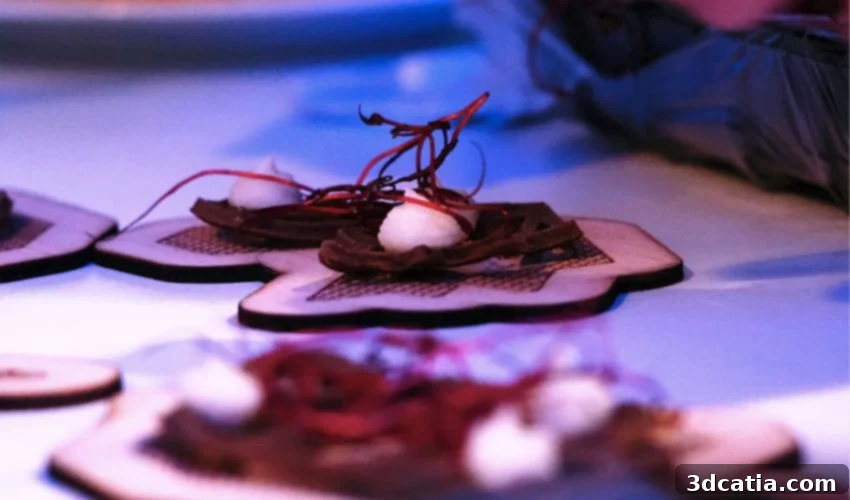
Unlocking Culinary Futures: Plat Institute’s Vision for Food 3D Printing and Sustainable Innovation
In the dynamic and ever-evolving culinary landscape, the integration of new technologies is no longer a novelty but a strategic necessity. This accelerating shift is primarily driven by an increasing demand for innovative methods that can deliver unparalleled gastronomic experiences, pushing the boundaries of taste, texture, and presentation. Beyond mere aesthetics, these advancements also address critical global challenges related to sustainability, resource efficiency, and personalized nutrition. Across the globe, various organizations are at the forefront of this revolution, and in Spain, the Plat Institute stands out as a pioneering force. Situated in the vibrant city of Barcelona, this institute is dedicated to exploring and developing groundbreaking approaches to food creation. Among their most exciting avenues of research is additive manufacturing, more commonly known as food 3D printing. We recently had the privilege of engaging with the visionary team at Plat Institute to delve deeper into their transformative work, specifically concerning the application of 3D printing in food and the significant strides they are making in this rapidly expanding field.
Plat Institute: A Catalyst for the Future of Food
Plat Institute defines itself as a unique platform where the powerful synergy of creativity, innovation, and cutting-edge knowledge converges with technological uniqueness. Their overarching mission is to boldly break into the future of food, confronting some of the most pressing challenges humanity faces, from food security and waste reduction to nutritional enhancement and sustainable production. The institute prides itself on fostering a multidisciplinary environment, bringing together experts from diverse backgrounds to tackle complex problems. Their specialization spans a range of emerging food disciplines, including but not limited to: food design, which re-imagines the form and function of food; food tech, which leverages technology to improve food systems; social food, focusing on community and ethical aspects; and critically, sustainability and circularity, aiming to create closed-loop food systems that minimize environmental impact. This holistic approach ensures that their innovations are not only technologically advanced but also ethically sound and environmentally responsible.
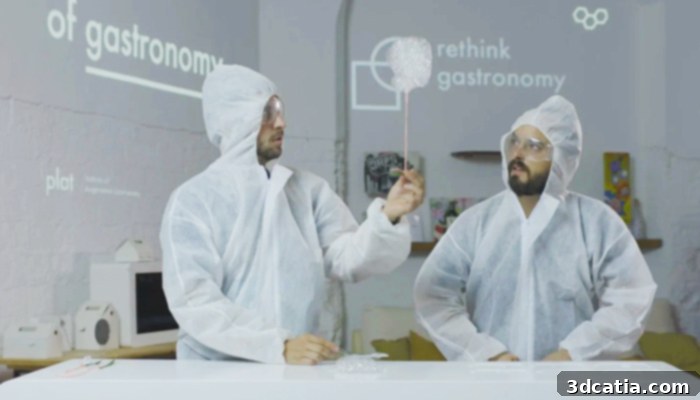
The Plat Institute team utilizes a wide range of innovative technologies to push the boundaries of food creation.
The institute’s operational framework is built upon two fundamental pillars, each playing a crucial role in advancing its ambitious agenda. The first is the Sci-Fi Food Lab, a hub of disruptive research and experimental development. Here, the Plat Institute team actively promotes radical innovation, venturing into uncharted territories of food science and technology. This lab is also instrumental in developing bespoke, ad-hoc projects for a diverse array of clients, including educational institutions seeking cutting-edge curriculum, governments looking for sustainable food policy solutions, and forward-thinking brands aiming to innovate their product lines. The work conducted within the Sci-Fi Food Lab pushes the boundaries of what’s conceivable in food, often exploring speculative design and future scenarios. Complementing this dynamic research arm is The Institute itself, which focuses on developing transformative learning experiences. By implementing innovative methodologies and fostering a dynamic educational environment, this pillar aims to inspire and cultivate the next generation of talent in the food sector. Through workshops, courses, and collaborative programs, it equips individuals with the skills and mindset needed to thrive in the evolving food industry. Both pillars are intricately linked, nourishing each other in a symbiotic relationship to create a perfect, fertile ecosystem where creativity and innovation in the food sector can truly flourish and yield impactful results for a sustainable future.
Leveraging 3D Printing for Culinary Innovation at Plat Institute
Plat Institute’s engagement with 3D printing technology spans several years, rooted in a rich history of academic and technological exploration. The journey began when one of the institute’s key figures, a professor at IAAC (Institute for Advanced Architecture of Catalonia), dedicated years to working with advanced technologies. This foundational experience naturally led to the establishment of a dedicated digital manufacturing laboratory specifically tailored for the food sector. At the time of its inception, such a specialized facility was truly unique and pioneering, demonstrating Plat Institute’s early foresight. While today we witness a proliferation of examples in the sector, Plat Institute remains a trailblazer, continuously pushing the boundaries of what’s possible in the realm of food customization and novel ingredient application.
The success and continuous evolution of their 3D printing initiatives are significantly bolstered by a powerful network of experts and collaborators. Visionaries such as Marcelo de Medeiros, Ivan Merino, Juan Umbert, and Adrià Corominas contribute their invaluable insights and technical prowess, enabling the institute to explore and discover novel applications for additive manufacturing in food. This collaborative ecosystem is crucial for identifying new frontiers and tackling complex material science challenges, from ingredient extrusion to structural integrity. Initially, their work involved popular and accessible desktop 3D printers like Ultimaker and Prusa. These machines served as excellent entry points for experimentation and basic prototyping, allowing the team to quickly iterate on designs and test material properties. However, as their research advanced, the team began composing and rigorously testing more sophisticated, customized systems to effectively print a wider array of novel and challenging materials, including pastes, gels, and even hybrid food structures. Despite these advancements and the exploration of cutting-edge machinery, the reliable Prusa printers continue to be the most frequently utilized tools within the Food Lab. They are lauded for their versatility, robustness, and ease of use in initial material and design validations, proving indispensable for day-to-day experimental work.
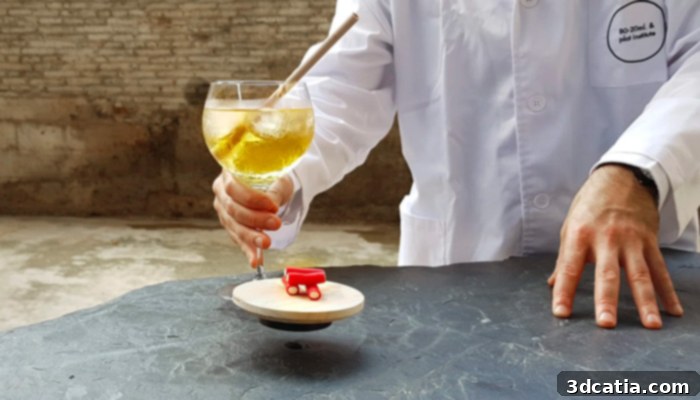
3D printing is an indispensable tool frequently utilized in the Food Lab for prototyping and material experimentation.
Revolutionary Materials and Pioneering Projects
At the heart of Plat Institute’s innovative approach lies a deep commitment to sustainable material development. Their research extends far beyond conventional food ingredients, venturing into the realm of organic waste valorization. Currently, they are intensely focused on experimenting with various types of organic waste to transform them into viable bio-composite filaments suitable for 3D printing. This not only addresses the critical issue of food waste but also opens up possibilities for creating entirely new, eco-friendly food and food-related products that challenge traditional notions of culinary ingredients. A particular area of interest involves understanding how to effectively utilize calcium waste, such as the shells from mussels, oysters, and scallops, which are abundant by-products of the seafood industry. These shells, typically discarded, possess unique structural properties that can be harnessed. Furthermore, they are exploring the fascinating prospect of repurposing used glass bottles by crushing them into fine sand, which can then be incorporated into printing materials in different proportions, adding texture and novel characteristics to printed objects. The creative potential unlocked by integrating these industrial and biological surpluses, combined with the versatility of ceramics, presents an expansive range of possibilities for both edible and non-edible applications, pushing the boundaries of sustainable material science and circular economy principles. The institute is deeply invested in understanding the nuanced properties, rheology, and processing requirements of these novel materials to unlock their full potential in additive manufacturing.
One of Plat Institute’s most anticipated and ambitious endeavors is a new craftsmanship project that epitomizes their circular design philosophy. This project is a direct result of combining the significant surplus generated within the HORECA (Hotel, Restaurant, Catering) sector with their advanced capabilities in circular design. The vision is to establish a colossal FARMLAB, spanning nearly 30,000 square meters in Catalonia. This innovative space will not merely be a research facility; it’s envisioned as an immersive, experiential hub where users—from culinary professionals to curious consumers and students—will have the unique opportunity to engage directly with and learn about these transformative technologies, including 3D food printing. The FARMLAB promises to be a living laboratory for sustainable food practices, showcasing how waste can be reimagined as valuable resources and how technology can empower new forms of culinary artistry and sustainable consumption. Visitors will be able to witness the entire circular process, from waste collection and material preparation to 3D printing and tasting the resulting innovative creations. The team at Plat Institute is buzzing with excitement, promising that “this 2023 is going to be epic!” as they prepare to unveil the details and progress of this groundbreaking initiative. This project underscores their dedication to translating cutting-edge research into tangible, impactful experiences that can inspire and educate a wider audience about the future of food.
The Transformative Future of Additive Manufacturing in the Food Industry
Plat Institute holds a firm belief that additive manufacturing tools are not just supplementary technologies but are absolutely key to both rapid prototyping and eventual production in the emerging new economy. The capabilities offered by additive printing are truly diverse and revolutionary, presenting numerous advantages over traditional manufacturing methods. One of the most significant benefits is the dramatic elimination of waste throughout the production process, a crucial aspect for any sustainable industry striving for zero waste. Beyond this, the versatility in materials is astonishing. Additive manufacturing accommodates a wide spectrum, including traditional thermoplastic materials, liquid resins that polymerize under UV light, and sophisticated powder bed fusion techniques capable of creating complex structures. It also encompasses light-sensitive liquid polymer fusion and binder jetting, which allows for the precise incorporation of ceramics, various polymers, and other unique materials directly into food structures, opening doors to novel textures and sensory experiences. These technologies collectively represent an incredible toolkit, fundamentally altering our approach to the creative process in food. They enable unprecedented levels of customization, allowing for personalized nutrition tailored to individual dietary needs or preferences, and facilitating intricate designs that were once impossible to achieve manually. Furthermore, 3D food printing has the potential to decentralize food production, reduce logistical complexities by producing food closer to the point of consumption, and even contribute significantly to food security by creating nutrient-dense foods from alternative, locally sourced materials. It’s not just about printing food; it’s about reshaping the entire food value chain, from ingredient sourcing and processing to consumption, making it more efficient, sustainable, and responsive to evolving global demands for healthy, customized, and eco-friendly culinary options.
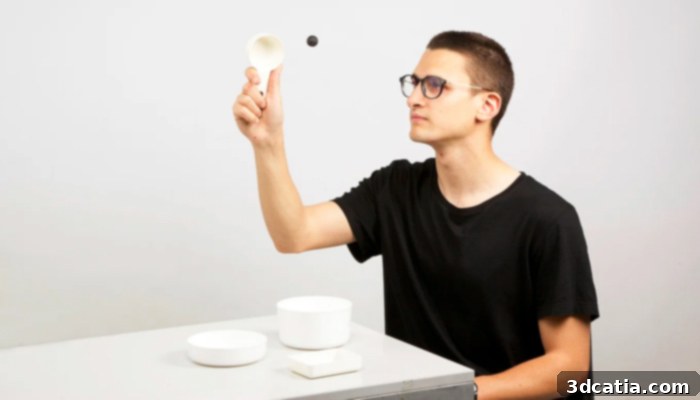
Inspiring the Next Generation of Food Innovators
The team at Plat Institute extends their sincere gratitude to our readers for taking the time to explore their innovative work. They view opportunities like this as invaluable platforms to share their passion and progress with a global audience. Their profound hope is that their dedication to pioneering research and their forward-thinking vision will serve as a powerful source of inspiration for the inventors, designers, and culinary artists of the future. By demonstrating the immense potential of technologies like food 3D printing and the principles of circular design, Plat Institute aims to ignite curiosity and encourage new generations to engage with the critical challenges and exciting opportunities within the food sector. For those eager to delve deeper into their fascinating projects, research initiatives, and educational programs, comprehensive information is readily available on their official website, which can be accessed here. Their work truly represents a beacon for how innovation can drive a more sustainable, creative, and fulfilling future for food, inviting everyone to partake in shaping this exciting new culinary era.
What are your thoughts on Plat Institute’s groundbreaking work and their vision for the future of food? We invite you to share your insights and opinions in a comment below. You can also engage with us and stay updated on the latest trends and developments by following our social media channels: find us on LinkedIn, Facebook, and Twitter. Don’t miss out on essential industry updates – be sure to sign up for our free weekly Newsletter here, delivering the freshest 3D printing news directly to your inbox! Furthermore, you can explore all our engaging videos and in-depth discussions on our dedicated YouTube channel, where we showcase the cutting edge of additive manufacturing and beyond.
*All photos credit: Plat Institute