
The Future Takes Shape: Top 3D Printing and Additive Manufacturing Innovations This Week
Welcome back to our weekly deep dive into the most exciting developments shaping the additive manufacturing landscape! This edition of #3DEXPRESS brings you a curated selection of groundbreaking news, highlighting how 3D printing continues to push the boundaries across various sectors, from aerospace and medical to consumer products and elite sports. The past week has been particularly vibrant, showcasing advancements that underscore the transformative potential of this technology. We’ll start by exploring Colibrium Additive’s latest breakthroughs in electron beam powder bed fusion, followed by NASA’s incredible release of 3D models of the iconic Pillars of Creation, bringing the cosmos closer to home. HP then takes center stage with significant expansions in its metal additive manufacturing ecosystem, promising accelerated industrial adoption. We also delve into material science with Kimya’s introduction of an advanced carbon-filled nylon, engineered for high-performance industrial applications. Finally, we’ll celebrate a remarkable achievement in sports, as Bryson DeChambeau clinches the US Open with custom 3D printed golf clubs from Avoda Golf, demonstrating the tangible competitive edge offered by personalized manufacturing. Let’s embark on this journey through the latest innovations that are not just shaping industries, but also inspiring a new generation of creators and explorers in the dynamic world of additive manufacturing.
Colibrium Additive Presents Groundbreaking Innovations at RAPID + TCT 2024
At the recent RAPID + TCT 2024 event, a premier gathering for the additive manufacturing industry, Colibrium Additive, a forward-thinking subsidiary of GE Aerospace, unveiled a suite of remarkable innovations poised to significantly impact the market. Among these exciting announcements was the introduction of the latest model in their acclaimed Spectra printer range: the new Spectra M. This cutting-edge printer leverages electron beam powder bed fusion (EB-PBF) technology, a sophisticated additive manufacturing process known for its ability to produce highly dense, complex components from a variety of challenging materials, including refractory metals and high-performance alloys. The EB-PBF process works by using a high-energy electron beam to melt and fuse metallic powders layer by layer in a vacuum environment, ensuring superior material properties and minimal residual stress. This makes it particularly ideal for demanding applications where material integrity and performance are paramount.
Accompanying the hardware innovation, Colibrium Additive also announced a significant update to its EB-PBF software, enhancing control, optimizing build processes, and improving overall user experience and efficiency. The new Spectra M printer is now available for ordering, with the first deliveries anticipated in early Q1 2025. This model is strategically designed to address a growing demand within the industry for more compact yet equally powerful EB-PBF printers. While maintaining the core design principles and high productivity benefits inherent to electron beam fusion technology, the Spectra M offers a smaller footprint, making advanced additive manufacturing more accessible to a wider range of manufacturers.
This development is particularly critical for sectors with stringent requirements and specialized needs, such as the orthopedic and medical implant industries. The ability to precisely manufacture complex, patient-specific implants with superior material properties – including excellent fatigue strength and biocompatibility – is a game-changer for medical device manufacturers. The Spectra M’s enhanced capabilities will enable the production of custom prosthetics, surgical instruments, and intricate medical devices with unprecedented speed and accuracy, ultimately leading to improved patient outcomes and more tailored healthcare solutions. Colibrium’s commitment to advancing EB-PBF technology signifies a robust step forward in making advanced additive manufacturing not only more efficient but also more versatile for a diverse set of industrial applications.
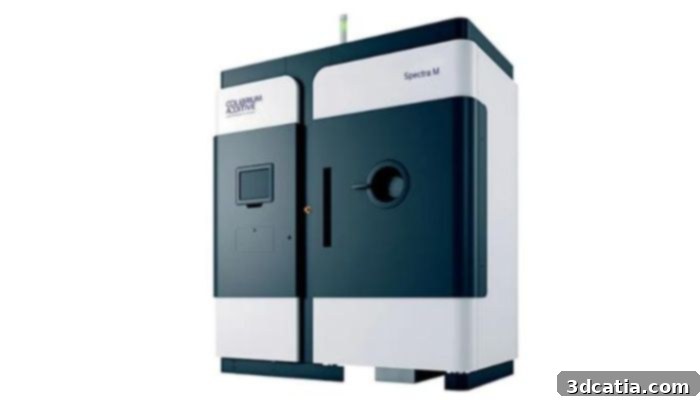
The new Spectra M EB-PBF 3D printer (Photo Credits: Colibrium Additive)
NASA Publishes Iconic 3D Model of the Pillars of Creation, Inspiring a New Generation
Earlier in the week, we touched upon exciting applications of 3D printing in space, specifically mentioning innovative 3D-printed LEGO bricks crafted from moon dust, designed to ignite curiosity and passion for space exploration among young minds. Carrying on this theme of making the cosmos tangible, NASA has recently achieved another significant milestone by publishing a detailed visualization and a fully downloadable 3D model of the iconic Pillars of Creation. This celestial wonder, a breathtaking star-forming region nestled 6,500 light-years away from Earth within the Eagle Nebula, is one of the most recognized and awe-inspiring images in modern astronomy.
The Pillars of Creation, aptly named for their role as stellar nurseries, are colossal structures composed of dense interstellar gas and dust. These majestic columns are not only visually stunning but also scientifically profound, representing the dynamic processes of star birth and stellar evolution. They were first famously captured by the Hubble Space Telescope in 1995, an image that quickly became a cultural touchstone. NASA’s new visualization offers an even more intricate view, combining the foundational data from the Hubble with the unprecedented clarity and detail provided by the newer James Webb Space Telescope. The James Webb’s infrared capabilities allow scientists to peer through the obscuring dust and gas, revealing nascent stars hidden within, thus offering a more complete and three-dimensional understanding of these cosmic giants.
The truly exciting aspect for enthusiasts and educators alike is the accessibility of this 3D model. By making the digital model available, NASA empowers anyone with a 3D printer to recreate these legendary cosmic structures right in their own homes or classrooms. This initiative democratizes access to cutting-edge scientific imagery and serves as a powerful educational tool, allowing students and hobbyists to physically interact with a piece of astronomical history. For those seeking to capture the intricate nuances and breathtaking fine details of the Pillars, a resin 3D printer is highly recommended. Resin printers, utilizing technologies like Stereolithography (SLA) or Digital Light Processing (DLP), are renowned for their ability to produce exceptionally smooth surfaces and high-resolution features, making them perfect for rendering the delicate textures and complex geometries of such an ethereal object. This brings the grandeur of the universe within reach, inspiring future astronomers, engineers, and scientists.
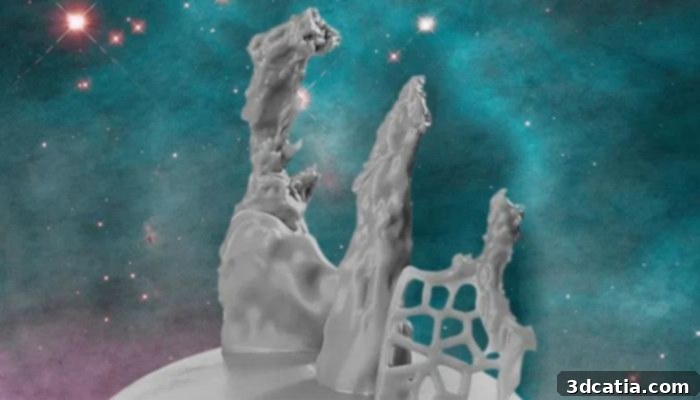
(Photo Credits: NASA)
HP Unveils Comprehensive Innovations in the Metal Additive Manufacturing Sector at RAPID + TCT 2024
HP, a global leader in printing and digital manufacturing solutions, made a series of pivotal announcements at RAPID + TCT 2024 in Los Angeles, signaling a significant acceleration in its commitment to the metal additive manufacturing industry. These strategic revelations are designed to expand the reach and capabilities of HP’s innovative Metal Jet technology, which utilizes binder jetting – a process renowned for its ability to rapidly produce high-quality metal parts at a lower cost compared to other metal 3D printing methods. Binder jetting involves selectively depositing a liquid binding agent onto a thin layer of powdered metal, fusing particles together layer by layer, followed by a post-processing step to achieve final part density and strength.
Among the key highlights were crucial updates to the HP Metal Jet S100 printer, which continues to set benchmarks for productivity and precision in metal binder jetting. These updates likely encompass enhancements in hardware, software, or material compatibility, further refining the printer’s ability to produce complex, functional metal parts for a variety of industrial applications. Complementing this, HP officially launched the HP Metal Jet Production Service. This new service is a game-changer for businesses that want to leverage HP’s metal 3D printing capabilities without the initial investment in their own equipment. It provides a pathway for companies to quickly prototype and produce end-use metal parts, thereby accelerating their product development cycles and time-to-market.
Further solidifying its commitment to widespread adoption, HP also announced the opening of a dedicated Metal Jet Adoption Center in Corvallis, Oregon. This state-of-the-art facility will serve as a hub for customers, partners, and experts to collaborate, learn, and experiment with HP Metal Jet technology. The center will offer training, application development support, and a hands-on environment for companies to explore the full potential of metal binder jetting, fostering innovation and facilitating the seamless integration of additive manufacturing into their production workflows. It’s a crucial step in de-risking the adoption process for new users and enabling greater industrial scalability.
Recognizing the importance of a robust ecosystem, HP expanded its strategic partnership with Autodesk, a leader in 3D design software, ensuring tighter integration and optimized workflows from design to print. Moreover, HP forged new collaborations with industry stalwarts such as Altair, specializing in simulation and optimization software; CoreTechnologie, known for its CAD/CAM software solutions; and Dyndrite, a pioneer in accelerated computation for additive manufacturing. These partnerships are instrumental in creating a comprehensive, end-to-end digital workflow for Metal Jet users, optimizing everything from initial design and topology optimization to print preparation and quality control, ultimately leading to more efficient and successful metal 3D printing outcomes.
In another exciting development, HP teamed up with Leopoly, a leading provider of 3D and XR software, to develop the HP 3D Texture Visualizer. This innovative new tool empowers designers and engineers to apply and visualize intricate 3D digital textures directly onto their CAD models in real-time. This capability is transformative for product design, allowing for rapid iteration on aesthetic and functional textures – such as grip patterns, surface finishes, or branding elements – without the need for physical prototypes at early stages. It significantly streamlines the design process, enhances creative freedom, and ensures that the final printed part accurately reflects the intended design, bridging the gap between digital ideation and physical realization in metal additive manufacturing.
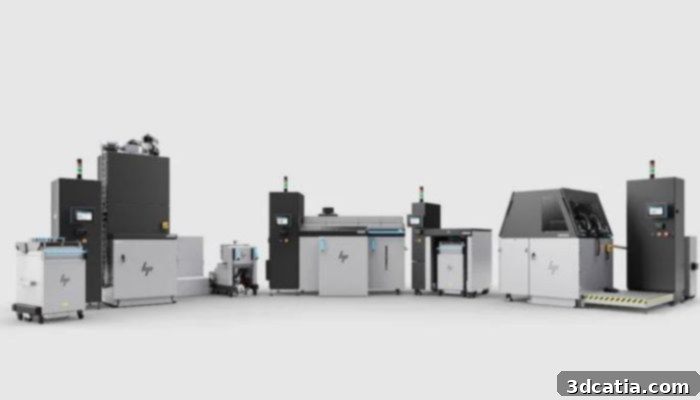
HP Metal Jet S100 and a range of metal 3D printed components (Photo Credits: HP)
Introducing Kimya PA Carbon: A High-Performance Technical Filament for Demanding Industrial Applications
Materials remain at the heart of innovation in additive manufacturing, continually expanding the possibilities of what can be 3D printed and where these parts can be utilized. In this edition of #3DExpress, we highlight an exciting new technical material introduced by Kimya, a reputable name in advanced filaments: Kimya PA Carbon. This isn’t just another filament; it’s a carbon-filled nylon meticulously engineered for industrial-grade applications, distinguishing itself with a trio of exceptional properties: outstanding mechanical performance, superior heat resistance, and remarkable chemical resistance.
Kimya PA Carbon’s formulation incorporates carbon fibers into a nylon base, creating a composite material that offers significant enhancements over standard nylon. The integration of carbon fibers dramatically increases the material’s stiffness and tensile strength, making it ideal for producing rigid, robust parts capable of withstanding considerable mechanical stresses without deformation or failure. This high mechanical performance is crucial for functional prototypes, end-use parts, and tooling in demanding environments. Furthermore, its elevated heat resistance allows components printed with Kimya PA Carbon to maintain their structural integrity and performance even when exposed to high-temperature operating conditions, far exceeding the capabilities of many conventional thermoplastic filaments. The inherent chemical resistance of this material also makes it suitable for use in environments where exposure to various solvents, oils, and other aggressive chemicals is a concern, preventing degradation and extending the lifespan of printed parts.
These combined properties make Kimya PA Carbon an invaluable asset for various industrial sectors. It is perfectly suited for manufacturing components for the automotive industry, where lightweight yet strong parts are essential; for aerospace applications requiring materials that can endure extreme conditions; and for creating durable jigs, fixtures, and other tooling that demand precision and longevity on the factory floor. Its ability to create parts that are both lightweight and incredibly strong opens up new avenues for design optimization and functional integration in complex systems. Moreover, the material is compatible with a wide range of open chamber 3D printers, which is a significant advantage for manufacturers as it does not necessitate specialized, expensive equipment typically required for some high-performance composites. This ease of printability, coupled with its ability to yield robust parts with increased dimensional stability and an elegant matte finish, makes Kimya PA Carbon a highly attractive option for engineers and designers looking to push the boundaries of their additive manufacturing capabilities. It truly represents a step forward in making advanced material properties more accessible for mainstream industrial 3D printing.
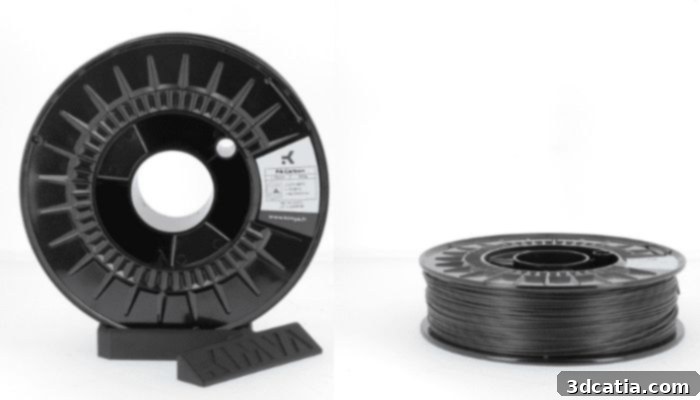
Kimya PA Carbon technical filament (Photo Credits: Kimya)
Bryson DeChambeau Dominates US Open with Revolutionary 3D Printed Golf Clubs from Avoda Golf
The world of professional sports is increasingly embracing cutting-edge technology to gain a competitive edge, and this week provided a stellar example: golf superstar Bryson DeChambeau clinched the prestigious US Open, crediting a significant portion of his success to revolutionary 3D printed golf clubs provided by Avoda Golf. This monumental win underscores the tangible impact that advanced manufacturing technologies, particularly 3D printing, are having on athletic performance at the highest levels.
DeChambeau’s coach enthusiastically revealed that the golfer’s recent triumph was immensely aided by the strategic integration of these uniquely designed, 3D printed curved clubs. The coach’s emphatic statement that the clubs contributed “100,000%” highlights not just their effectiveness, but also the profound psychological and performance boost they provided. These are not merely off-the-shelf clubs; they are custom-designed, precision-engineered instruments, meticulously tailored by Avoda Golf to DeChambeau’s unique biomechanics, swing dynamics, and specific playing style. The ability of 3D printing to create highly intricate and non-conventional geometries that are impossible or cost-prohibitive with traditional manufacturing methods allows for radical innovation in golf club design. Factors such as weight distribution, moment of inertia, clubhead aerodynamics, and even face curvature can be optimized to an unprecedented degree, offering a bespoke advantage.
Avoda Golf’s expertise in leveraging additive manufacturing for golf equipment demonstrates a forward-thinking approach to sports technology. By using 3D printing, they can rapidly iterate on designs, create complex internal structures for optimal balance and feel, and produce clubs that precisely match the specifications required by elite athletes like DeChambeau. This level of customization ensures that every aspect of the club is harmonized with the player’s physical attributes and strategic approach, potentially leading to greater consistency, power, and accuracy on the course.
This achievement with Bryson DeChambeau serves as a powerful testament to the growing influence of additive manufacturing across various sports. Beyond golf, 3D printing is being utilized to create personalized protective gear, custom athletic footwear, specialized training aids, and even high-performance components for racing bicycles and other sporting equipment. The flexibility, speed, and design freedom offered by 3D printing are democratizing bespoke equipment, moving beyond mass-produced items to perfectly optimized tools that empower athletes to unlock their full potential. DeChambeau’s US Open victory is a landmark moment, showcasing how sophisticated digital manufacturing can translate directly into championship-level performance and redefine the boundaries of what’s achievable in competitive sports.

What an exhilarating week for the world of 3D printing and additive manufacturing! From groundbreaking industrial printers and advanced materials to making cosmic wonders tangible and revolutionizing sports equipment, the pace of innovation continues to accelerate. Each development we’ve explored this week – be it Colibrium Additive’s compact EB-PBF system, NASA’s accessible Pillars of Creation model, HP’s holistic metal AM ecosystem, Kimya’s robust PA Carbon filament, or Avoda Golf’s game-changing clubs for Bryson DeChambeau – underscores the versatility and transformative power of this technology. It’s a clear indication that additive manufacturing is not just a niche industry but a pivotal force driving progress across countless domains.
We’d love to hear your thoughts on this week’s #3DExpress news! Which innovation impressed you the most? Are you planning to 3D print your own Pillars of Creation? Share your opinions in a comment below or connect with us on our LinkedIn, Facebook, and Twitter pages! To stay at the forefront of the latest 3D printing news and insights, don’t forget to sign up for our free weekly newsletter here, delivered straight to your inbox. You can also explore all our engaging video content and interviews on our YouTube channel. Thank you for joining us, and we look forward to bringing you more exciting updates next week!