
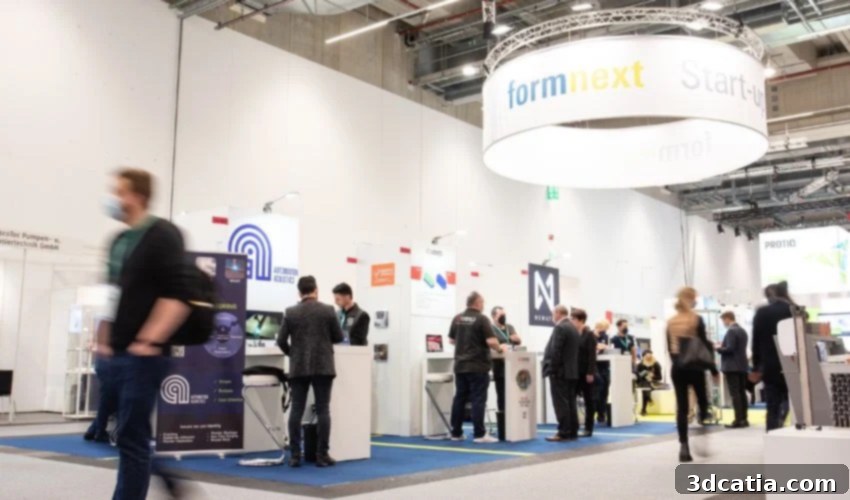
Formnext 2022 Innovation Spotlight: Unveiling the Pioneering Winners of the Start-Up Challenge
As the global additive manufacturing community eagerly anticipated Formnext 2022 in Frankfurt, which took place from November 15-18, the excitement was palpable. This premier international trade fair for additive manufacturing and industrial 3D printing solutions marked a significant return to near pre-pandemic attendance levels, building on the success of over 17,800 visitors in 2021. Formnext serves as a vital platform for showcasing the latest advancements, fostering connections, and setting the future direction of the industry. While the event offered an extensive array of exhibitors, groundbreaking news, and insightful conferences, a particular highlight each year is the recognition of emerging talent. Today, we shine a spotlight on the five visionary start-ups that emerged victorious in the prestigious Formnext Start-Up Challenge 2022. These innovators — Spherecube (Italy), Rivelin Robotics (UK), Alpha Powders (Poland), Photosynthetic (Netherlands), and Lattice Medical (France) — represent the cutting edge of additive manufacturing, each bringing unique and impactful solutions to the fore. Notably, Lattice Medical also earned the distinguished AM Ventures Impact Award, further emphasizing its significant contributions to sustainable and socially responsible innovation.
Fostering Innovation: The Formnext Start-Up Challenge Ecosystem
The Formnext Start-Up Challenge is a cornerstone initiative designed to champion the most promising new companies in the additive manufacturing sector. This highly sought-after competition provides winners with invaluable resources, including complimentary participation in the trade fair with their own dedicated booth and a comprehensive marketing package. This strategic support has, over the years, proven instrumental in propelling numerous start-ups into the limelight, enabling them to forge critical connections with investors, established industry leaders, media representatives, and other essential stakeholders. It’s a testament to Formnext’s commitment to nurturing the next generation of AM pioneers and fostering an ecosystem of continuous innovation. The challenge isn’t just about winning; it’s about providing a platform for growth, collaboration, and market entry for disruptive technologies.
Beyond the exhibition space, the challenge offers winners an exceptional opportunity to present their innovations directly to fair attendees during a dynamic pitch event known as Pitchnext. In 2022, this engaging session was held on November 15 at 2 p.m. in the AM4U area, located in Hall 11.0, D72. During Pitchnext, each winning start-up has a limited but impactful window to articulate their vision, technology, and business model to a captivated audience of potential partners, customers, and investors. Such direct exposure is crucial for start-ups looking to gain immediate visibility, attract strategic partnerships, and secure vital funding, making the Formnext Start-Up Challenge an unparalleled springboard for success in the competitive additive manufacturing landscape. The rigorous selection process ensures that only the most creative and commercially viable business models, poised for significant industry impact, are recognized and given this invaluable platform.
The Formnext Start-Up Challenge 2022 Winners: A Focus on Sustainability and Feasibility in AM
A clear and increasingly dominant trend from previous Formnext editions, and especially pronounced in 2022, is the growing emphasis on sustainability within Additive Manufacturing and across broader industrial applications. It is no mere coincidence that a shared commitment to environmental stewardship permeates the innovations presented by this year’s winning start-ups. The official press release from Formnext underscored the dual criteria for selection, noting that “the innovations of these start-ups were selected for both the high level of creativity demonstrated in product development and the feasibility of the business models.” This recognition highlights a significant shift towards solutions that are not only technologically advanced but also economically viable, scalable, and environmentally responsible. It underscores the industry’s drive to leverage 3D printing’s potential for waste reduction, localized production, and improved material utilization. Let’s delve deeper into the ground-breaking work of each of these five remarkable companies, exploring how their unique contributions are shaping the future of additive manufacturing.
Spherecube (Booth 12.0-B81A): Revolutionizing Composite 3D Printing for Automated Production
The Italian start-up, Spherecube, is making significant waves with its innovative 3D printing technology for composite materials. Their system offers the capability to produce complex composite parts fully automatically, overcoming traditional geometric limitations and entirely eliminating the need for complex, time-consuming molds. Crucially, their method also boasts a significantly lower environmental impact compared to conventional composite manufacturing processes. At the heart of Spherecube’s patented approach is their proprietary Thermal Laser Curing system. This sophisticated technology leverages the precise and controlled interaction of laser sources with specific raw materials to fabricate high-performance composite parts featuring continuous fiber reinforcement and a thermoset matrix, all in a single, streamlined process.
What truly sets Spherecube apart in the competitive landscape of composite manufacturing is its uniquely designed heat source curing system. This system is meticulously engineered to enhance the wetting and bonding of fiber reinforcements within the matrix, ensuring optimal material integration. Furthermore, it crucially improves adhesion and mechanical integrity between different 3D printed layers, leading to parts with superior structural properties and reliability. This innovative approach directly addresses key challenges faced in traditional composite fabrication, such as material waste, labor intensity, and geometric constraints. By offering a solution that is not only automated and versatile but also environmentally conscious and capable of producing intricate geometries, Spherecube is poised to transform how high-performance composite components are designed and produced, opening new avenues for aerospace, automotive, marine, and other demanding industries seeking lightweight and strong materials.
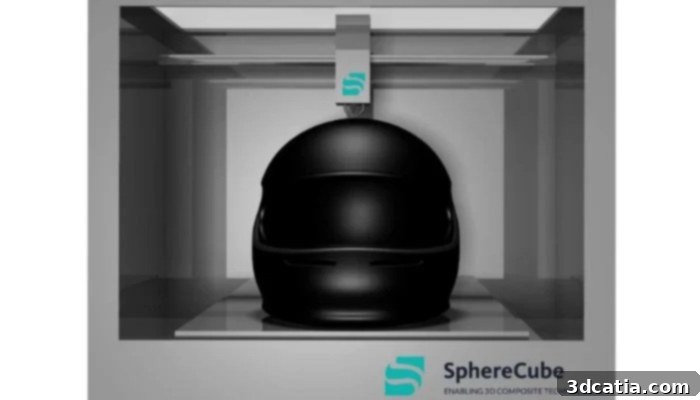
Photo Credits: SphereCube
Rivelin Robotics (Booth 12.0-B41): Automating Metal AM Post-Processing for Efficiency
From the United Kingdom, Rivelin Robotics is tackling one of the most persistent and costly bottlenecks in metal additive manufacturing: post-processing. At Formnext 2022, the British startup unveiled its advanced solution dedicated to the automated, fast, and highly reliable post-processing of metal AM parts and components. It’s widely recognized that manual or semi-automated post-processing can account for over 30 percent of the unit cost of a 3D printed metal part, presenting a significant barrier to wider industrial adoption and scalability for series production. Rivelin’s innovative answer to this challenge lies in its NetShape robots, which are specifically designed to handle the crucial and labor-intensive tasks of support structure removal and precision surface finishing.
These sophisticated robots are seamlessly guided by Rivelin’s proprietary NetShape control software, which employs advanced algorithms, machine learning, and sensor fusion to ensure unparalleled precision and consistency. The system intelligently analyzes part geometry and material properties to execute optimal post-processing strategies. The result is a fully automated solution for media removal and finishing that dramatically reduces costs associated with poor quality by an impressive 90%. Furthermore, by automating these often hazardous, repetitive, and ergonomically challenging tasks, Rivelin’s technology significantly mitigates human risk and variability. This leads to higher throughput, consistently improved part quality, reduced rework, and ultimately, a safer, more predictable, and more efficient working environment. Robert Bush, CEO of Rivelin Robotics, expressed the team’s enthusiasm for the recognition, stating, “It is both thrilling and encouraging to have the work of the Rivelin Robotics team recognized in this way. We have been working tirelessly to develop and demonstrably prove our solution for automated post processing of metal parts. We are now in a position where we can do just that and we can’t wait to show visitors at Formnext how far we have come and the solutions that we can offer them for their metal AM production applications.” This recognition underscores the critical need for robust automated solutions to unlock the full potential of metal AM for high-volume, cost-effective industrial production.
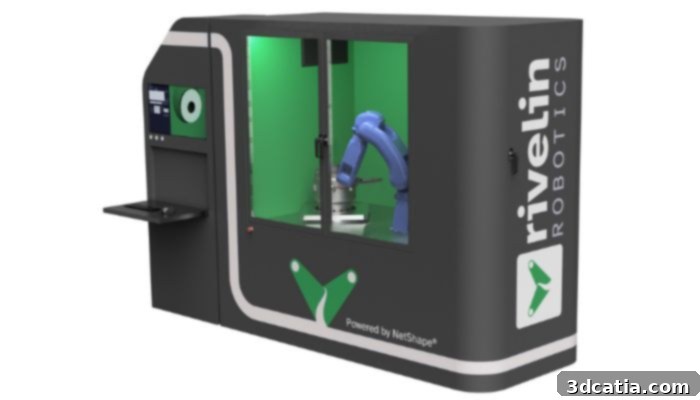
Photo Credits: Rivelin Robotics
Alpha Powders (Booth 12.0-B81G): Enhancing Polymer Powders for Superior SLS 3D Printing
The Polish start-up, Alpha Powders, has patented and developed a groundbreaking technology aimed at on-demand modification of polymer powders, a critical aspect for achieving high-quality Selective Laser Sintering (SLS) 3D printing results. Their innovative SpheroNANO solution is capable of dramatically improving the sphericity and roundness of a diverse range of polymeric inputs, including challenging post-industrial powders and those that might otherwise be considered unsuitable for high-performance applications. In SLS 3D printing, the flow properties of polymer powder are paramount; the higher the sphericity and roundness of individual powder particles, the better the material flows within the printer’s recoater system, leading to more consistent and denser layers, and ultimately, overall higher print quality and mechanical properties in the final part. Poor powder flow can result in uneven layers, internal voids, surface defects, and ultimately, defective or compromised parts.
Alpha Powders’ technology directly addresses these fundamental issues, enabling the effective use of recycled or less-than-perfect virgin powders, which has significant positive implications for both cost reduction and sustainability in additive manufacturing. By improving the material characteristics at the foundational level, SpheroNANO not only broadens the applicability of SLS technology but also enhances its reliability and opens doors for new material formulations. The company is currently focused on developing compact devices specifically tailored for R&D labs that are actively working on developing and characterizing new SLS powders, thereby accelerating material innovation and development cycles. Dominik Zdybal, Co-founder and CEO of Alpha Powders, articulated the company’s ambitious vision: “We at Alpha Powders are on a mission to revolutionize the powder printing industry by introducing scalable technologies that will lower the cost of existing materials for the consumer and enable the rapid development of new functional and sustainable products.” This commitment positions Alpha Powders as a key enabler for the future of advanced, sustainable, and cost-effective polymer 3D printing across various industries.
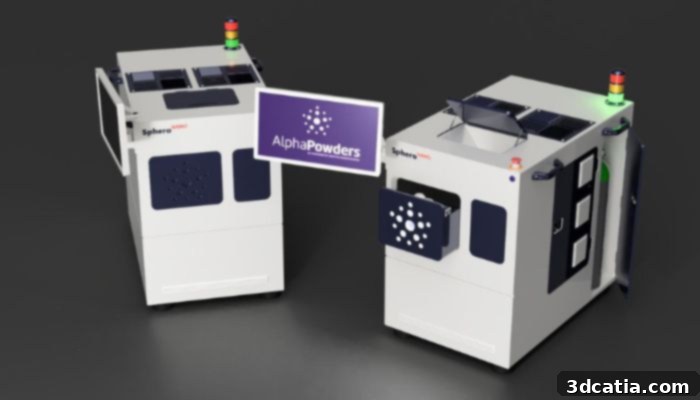
Photo Credits: Alpha Powders
Photosynthetic (Booth 12.0-B81H): Ultrafast and Cost-Effective Micro 3D Printing for Mass Production
Photosynthetic, a pioneering Dutch start-up, is revolutionizing the challenging field of micro 3D printing with a solution that is both exceptionally fast and remarkably cost-effective. Traditional methods for producing micro-scale 3D prints, such as two-photon lithography (TPL), stereolithography (SLA), and optical grayscale lithography (OGL), often come with inherent limitations in terms of speed, design freedom, prohibitive cost, or ultimate resolution. Photosynthetic’s patented technology directly tackles these constraints through a unique combination of an advanced optical system, specialized resins based on single-photon polymerization, and sophisticated computer algorithms that precisely control the printing process down to the sub-micron level.
This innovative synergy allows Photosynthetic to achieve unprecedented performance in microfabrication. Their micro 3D printer boasts an impressive printing speed of 50 mm³/hour in high-resolution mode, capable of producing features finer than 1 micron. This level of speed and precision far surpasses many conventional microfabrication techniques, opening up entirely new possibilities for the mass production and rapid prototyping of intricate microsystems. From complex medical devices and advanced micro-robotics to high-precision optics, microfluidic components, and MEMS (Micro-Electro-Mechanical Systems), the potential applications are vast and transformative. Photosynthetic’s overarching goal is to make ultrafast, cost-effective microprinting machines widely accessible, thereby democratizing access to high-resolution microfabrication and enabling the creation and market introduction of other groundbreaking technologies that were previously limited by the capabilities or cost of existing micro-manufacturing methods. Their work represents a significant leap forward in the ability to precisely and efficiently manufacture at the micro-scale, pushing the boundaries of what is possible in miniaturized technology.
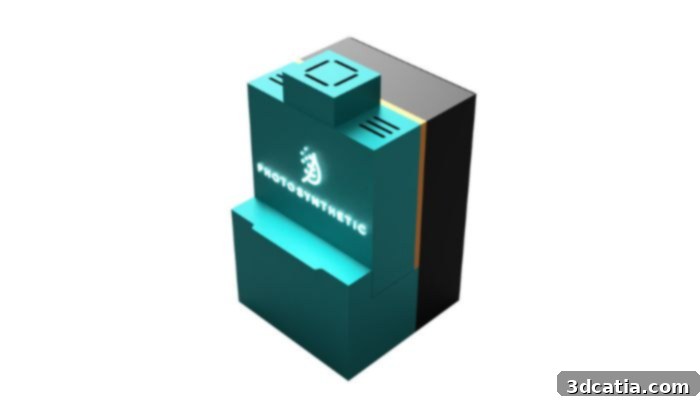
Photo Credits: Photosynthetic
LATTICE MEDICAL (Booth 12.0-B81B): Pioneering Bioprosthetics for Natural Breast Regeneration
Lattice Medical, a visionary French start-up, is at the forefront of medical innovation with its revolutionary approach to breast reconstruction. In close collaboration with the CHU (University Hospital Center) in Lille, France, Lattice Medical has developed a patented 3D technology that facilitates the printing of personalized breast implants. These implants are meticulously crafted from a resorbable biopolymer, designed to act as a temporary scaffold that encourages the natural regeneration of a patient’s own breast tissue over a period of three to six months. The core of their innovation is the Mat(t)isse bioprosthesis, which is custom-adapted to a patient’s individual morphology, ensuring a perfectly tailored fit, natural contour, and superior aesthetic outcome.
A truly transformative aspect of this technology is that it allows breasts to regenerate entirely from the patient’s own fat tissue, crucially eliminating the need to introduce foreign bodies or synthetic implants. This represents a monumental leap forward in breast implant procedures, dramatically improving both the long-term aesthetic results and the healing process for patients. It directly addresses long-standing challenges associated with traditional silicone implants, such as the risk of rupture, capsular contracture, and the potential need for repeated surgeries and implant exchanges throughout a patient’s lifetime. By harnessing the body’s natural regenerative capabilities, Lattice Medical offers a safer, more natural, durable, and patient-centric solution for breast reconstruction, significantly enhancing the quality of life and psychological well-being for countless individuals, particularly those recovering from mastectomy.
Furthermore, Lattice Medical’s profound commitment to impactful and responsible innovation was recognized with the prestigious AM Ventures Impact Award 2022. This significant accolade is bestowed upon the start-up that demonstrates the highest dedication to addressing critical issues such as sustainability, ethical considerations, and social responsibility within the additive manufacturing landscape. The award highlights the profound potential of additive manufacturing not just for industrial advancement, but more importantly, for tackling major global challenges, particularly in the realm of personalized medicine and life-changing patient care, showcasing AM’s role in creating a healthier, more sustainable future.
The Future of Additive Manufacturing: Insights from Formnext Leadership
Sascha F. Wenzler, Vice President of Formnext, provided insightful commentary on the profound significance of the Formnext Start-Up Challenge 2022. He remarked, “Every year, the start-ups in the AM industry take technology and application innovations to the next level and continue to impress with the rising quality of their developments and business planning. Once again, these companies have showcased the great potential of this industry, highlighting the fact that the sector produces significant developments that, in the future, will influence our industry, medicine, and other areas of life.“ Wenzler’s statement perfectly encapsulates the vibrant spirit of Formnext and the vital role played by these pioneering start-ups. Their ingenuity not only pushes the technical boundaries of what’s possible in additive manufacturing but also lays the groundwork for transformative changes across diverse sectors, from advanced industrial production and critical medical breakthroughs to innovative environmental solutions and significant enhancements in everyday life. The consistent evolution and increasing sophistication of these emerging companies underscore the dynamic, forward-looking, and increasingly impactful nature of the entire additive manufacturing ecosystem.
The Formnext Start-Up Challenge truly acts as a barometer for future trends and pivotal shifts in the additive manufacturing industry. The 2022 winners, with their distinct focus on sustainable materials, automated post-processing, enhanced material properties, high-resolution microfabrication, and life-changing medical applications, illustrate a clear and promising path toward a more efficient, environmentally friendly, and human-centric industrial future. As additive manufacturing continues to mature and integrate further into mainstream production, these start-ups are not just developing new products; they are actively shaping new paradigms for how things are made, how industries operate, and how some of the most pressing global challenges are addressed. Their success is a testament to the boundless potential of 3D printing to drive innovation and create a better world.
What are your thoughts on the groundbreaking innovations presented by the winning start-ups in the Formnext Start-Up Challenge 2022? We encourage you to share your insights in a comment below or engage with us on our LinkedIn, Facebook, and Twitter pages! For the latest updates and exclusive insights into the world of 3D printing, don’t forget to sign up for our free weekly Newsletter here, delivered straight to your inbox. You can also explore all our compelling videos and interviews on our YouTube channel!
*Cover Photo Credits: Mesago Messe Frankfurt GmbH/Mathias Kutt