
LightArt: Illuminating the Future with Sustainable 3D Printed Ocean Plastic Lighting
Emerging from the eras of stone, bronze, and iron, humanity now finds itself deeply entrenched in what is increasingly referred to as the “Plastic Age.” This pervasive material, explored critically in Werner Boote’s compelling 2006 documentary “Plastic Planet,” has become an undeniable fixture in nearly every facet of modern life. Its widespread adoption stems from an unparalleled combination of affordability, remarkable durability, and exceptional longevity, making it a go-to choice for manufacturers across countless industries. From packaging and construction to medical devices and consumer goods, plastic offers unmatched versatility and cost-effectiveness. However, this very longevity, while beneficial in product design, presents a monumental ecological challenge, particularly as vast quantities of plastic waste infiltrate our natural environments, most notably our precious oceans.
The scale of plastic pollution is staggering. Millions of tons of plastic enter our oceans annually, breaking down into microplastics that permeate marine ecosystems, endanger wildlife, and even enter the human food chain. This looming crisis has spurred a global movement, prompting a diverse array of companies, environmental organizations, and visionary artists to commit to transforming this waste into valuable resources. Their mission: to work extensively with recycled materials, especially plastics recovered from marine environments. Yet, the path to repurposing plastic waste is fraught with complexity, as not all plastics are created equal. Each type — from polyethylene terephthalate (PET) to high-density polyethylene (HDPE) and polypropylene (PP) — possesses unique chemical compositions and physical characteristics, making sorting, cleaning, and processing ocean plastic a formidable undertaking. Contamination and material degradation further complicate effective recycling. Nevertheless, with innovative research and advanced techniques, it is possible to transform this heterogeneous waste into new, desirable forms.
Among the most promising avenues for sustainable upcycling is additive manufacturing, commonly known as 3D printing. This technology offers unparalleled design freedom and efficiency, allowing for the creation of intricate objects with minimal material waste. It also proves highly adaptable for processing recycled plastic granules. Leading the charge in this innovative intersection of sustainability and design is LightArt, a company celebrated for crafting exceptional lighting fixtures. LightArt champions additive manufacturing not merely as a production method but as a fundamentally responsible approach, demonstrating how design excellence and ecological stewardship can harmoniously coexist, turning environmental challenges into artistic opportunities.

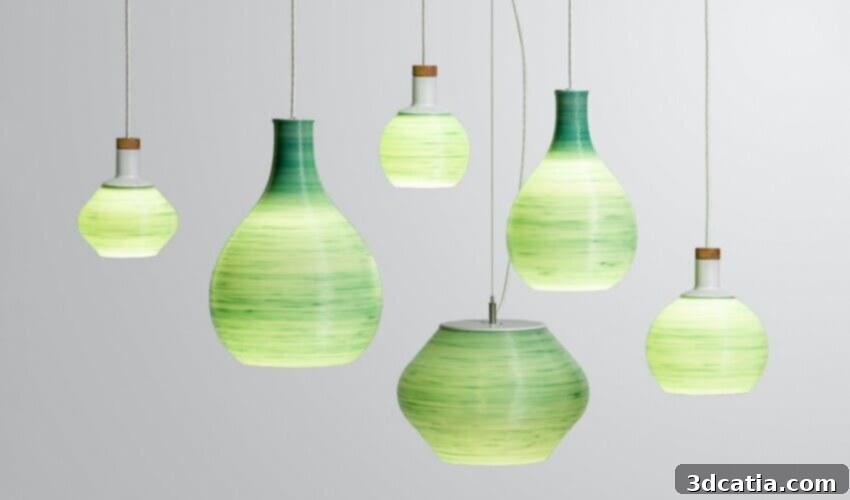
LightArt makes lighting fixtures from recycled plastic using 3D printing.
From Waste to Watt: LightArt’s Visionary Approach
Established in 2005 and operating from its studios in Seattle and Salt Lake City, LightArt is an American company founded by XY, whose extensive architectural background informs every facet of their design philosophy. This deep-rooted understanding of spatial aesthetics and structural integrity allows LightArt to create remarkable, large-scale lighting fixtures that transcend mere illumination, becoming sculptural art forms in their own right. Ryan Smith, the company’s chairman and creative director, eloquently articulates this ethos: “Our profound understanding of architecture, sculpture, and lighting enables us to grasp the essence of a space’s vision and utilize the art of light to enhance the desired aesthetic.” This holistic approach ensures that each fixture not only provides light but also defines and enriches its environment.
Central to LightArt’s methodology is an unwavering commitment to quality, exceptional craftsmanship, and the exploration of unique materials. This dedication fuels their continuous search for novel substances, with a particular emphasis on utilizing recycled and waste materials. They believe that true innovation lies not just in creating beautiful objects, but in doing so responsibly. This commitment to both design integrity and environmental sustainability is profoundly and beautifully exemplified in their groundbreaking Coil Collection, a testament to their ability to transform discarded materials into high-value design pieces. The Coil Collection represents a significant leap forward in sustainable lighting design and material science, pushing the boundaries of what is possible with recycled content and additive manufacturing.
The Coil Collection is a triumph of circular economy principles applied to product design. These exquisite lamps are crafted entirely from 100% recycled polypropylene (PP), a common plastic often challenging to recycle due to its diverse applications and contamination risks. LightArt’s process begins with transforming this reclaimed polypropylene into high-quality pellets, which then serve as the raw material for their advanced 3D printing operations. The source material for the entire Coil Collection is meticulously derived from diverse waste streams, including discarded items and debris found in oceans and along coastal areas, highlighting a direct intervention in marine pollution.
Achieving this feat required extensive research and development to successfully adapt and process recycled PP for additive manufacturing. Plastic waste, especially marine plastic, often varies in composition and can contain impurities. LightArt’s R&D efforts focused on ensuring material consistency, optimal thermal properties, and reliable flow characteristics crucial for successful 3D printing. By employing the Fused Deposition Modeling (FDM) process, specifically using granular feedstock (often referred to as pellet extrusion 3D printing), they are able to produce impressive, large-scale lighting fixtures in an array of captivating shapes and vibrant colors. This method allows for the creation of complex geometries and seamless forms that would be difficult or impossible to achieve with traditional manufacturing techniques. The resulting pendant lights possess smooth, matte surfaces, evoking the tactile charm and organic elegance of handcrafted pottery, while simultaneously embodying the most rigorous principles of upcycling and sustainable design, offering a powerful narrative of transformation.
LightArt Collaborates with OceanWorks for the Ocean Coil Collection
The initial installment of the Coil series, crafted from the company’s internal plastic waste, quickly garnered widespread recognition and numerous accolades, demonstrating the viability and appeal of sustainable manufacturing. Building upon this foundational success, LightArt proudly introduced the Ocean Coil Collection, marking a significant and ambitious advancement in their commitment to environmental stewardship. This new collection takes the company’s dedication to sustainability even further by meticulously crafting lights from recycled plastic sourced directly from oceans and coastal areas around the globe. This initiative directly confronts the alarming statistic that a staggering amount of eight million tons of plastic waste finds its way into the ocean each year, contributing to widespread ecological damage and forming vast plastic gyres like the Great Pacific Garbage Patch.
To tackle this monumental challenge, LightArt forged a crucial partnership with OceanWorks, an organization dedicated to ocean clean-up and responsible waste management. Through this collaboration, LightArt actively contributes to addressing the global issue of marine plastic pollution while significantly expanding the sustainability credentials of its own brand. OceanWorks plays a pivotal role by collaborating with local teams and communities worldwide to collect and segregate waste from maritime regions. This process is complex, involving not just large-scale cleanups but also community engagement, education, and the development of ethical supply chains for collected waste. Once gathered, this waste undergoes rigorous sorting and initial processing to remove impurities and prepare it for transformation into recycled marine plastic. In the specific case of LightArt, this material is further processed into high-quality granules, which are essential for its precision 3D printing purposes.
The partnership with OceanWorks ensures a consistent and ethically sourced supply of recycled marine plastic, allowing LightArt to scale its sustainable production. This collaboration exemplifies how inter-organizational efforts are crucial in tackling complex environmental problems, connecting local clean-up initiatives with advanced manufacturing solutions. With the introduction of the Ocean Coil Collection, LightArt has also thoughtfully integrated two new, aesthetically pleasing shapes and two evocative new colors into the range: ‘Seagrass’ and ‘Sea Foam.’ These colors are not arbitrary; they are carefully chosen to reflect the natural hues of the marine environment from which the materials are sourced, further enhancing the narrative of sustainability and connection to nature. The lamps of the Ocean Coil Collection are therefore captivating not only because of their profound sustainability story but also because of their serene colors and elegantly sculpted shapes, offering a blend of environmental responsibility and sophisticated design that appeals to discerning consumers and designers alike. You can find more information about LightArt’s innovative work and collections HERE.
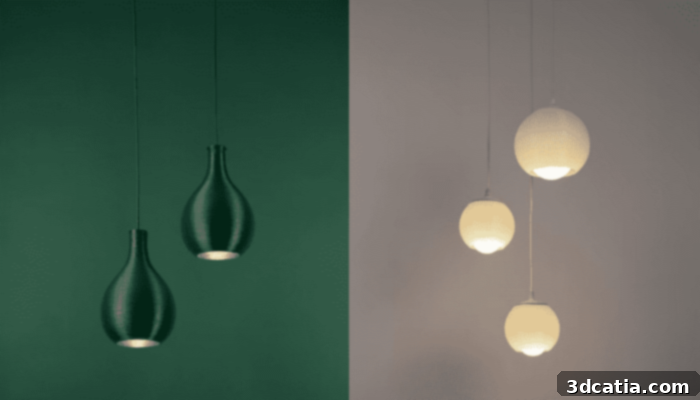
As part of the Ocean Coil Collection, LightArt also offers two new shapes and colors: Seagrass and Sea Foam.
LightArt’s commitment to using ocean plastics in their designs represents more than just a product line; it signifies a powerful statement about the potential of sustainable manufacturing and the circular economy. By transforming discarded plastic into beautiful, functional, and high-quality lighting fixtures, they are not only removing waste from our oceans but also inspiring a new generation of designers and consumers to consider the environmental impact of their choices. This model demonstrates that ecological responsibility does not have to come at the expense of design, aesthetics, or quality. It highlights the critical role that advanced technologies like 3D printing can play in creating a more sustainable future, where waste is seen not as an endpoint, but as a valuable resource waiting to be reimagined.
What do you think of lights made from ocean plastics and the potential of additive manufacturing in combating plastic pollution? We invite you to share your thoughts and insights in a comment below or connect with us on ourLinkedIn,Facebook, andTwitter pages! Don’t forget to sign up for our free weeklyNewsletter here, to receive the latest 3D printing news straight to your inbox! You can also find all our compelling videos and interviews on ourYouTube channel, exploring the cutting edge of additive manufacturing innovations.
*All Photo Credits: LightArt